Why, After 34 Years, Has the Former Color TV Leader Reached the Point of Delisting? "Konka, Delisting, Color TV, Price War, China Resources"
 10/21 2026
 398
Delisting does not necessarily mean bankruptcy, but for the capital market, the story of the "first color TV stock" concludes here.
On the evening of August 27, Konka Group Co., Ltd. announced on the Shenzhen Stock Exchange its intention to voluntarily withdraw its A-share and B-share listings from trading through a resolution of the shareholders' meeting. Following delisting, the shares will be transferred to the delisting section of the National Equities Exchange and Quotations. The announcement revealed that the exercise price for the A-share cash option is 2.48 yuan per share, representing a 6.44% premium over the pre-halt closing price of 2.33 yuan. The B-share cash option exercise price stands at 0.73 Hong Kong dollars per share, a 4.29% premium. The exercise funds for dissenting shareholders of A-shares and B-shares will be provided by Panshi Runchuang and Hemao Company, respectively, both subsidiaries of the controlling shareholder, China Resources.
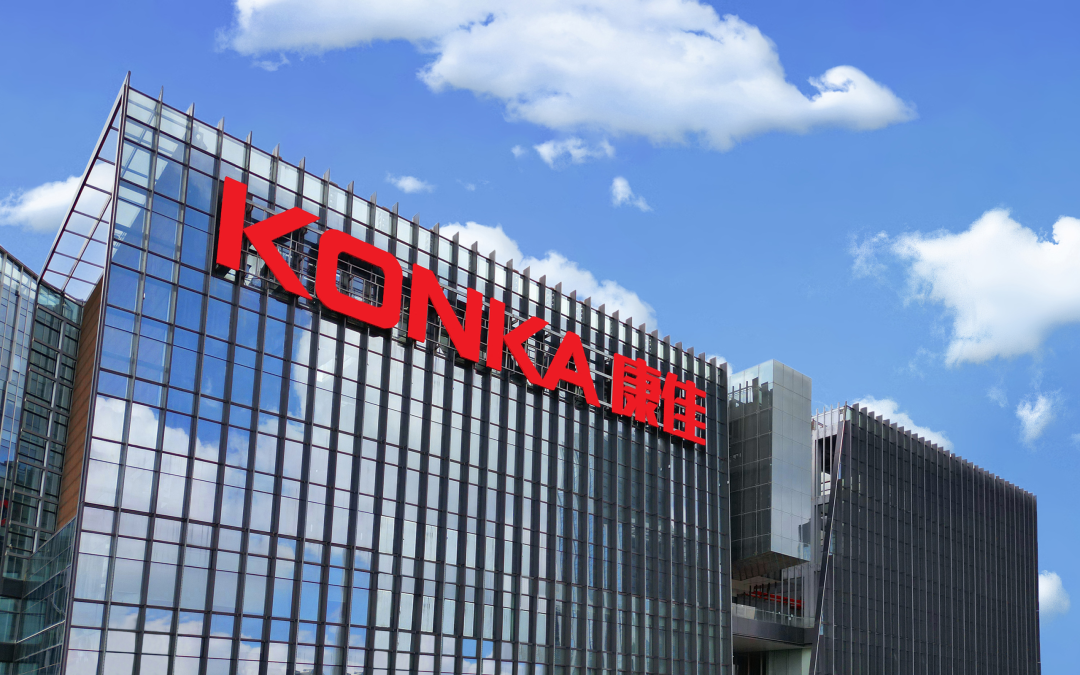
Image source: Business School Magazine
As one of the industry's oldest companies, Konka has witnessed the entire transformation of China's home appliance industry from its nascent stages to its current strength. However, unlike Haier and TCL, which have maintained significant industry influence, Konka has embarked on its countdown to delisting.
It's worth recording how this once-leading color TV giant reached this juncture.
From Sales Champion to a 1.7 Billion Yuan Land Purchase
Konka, originally known as Guangdong Guangming Overseas Chinese Electronics Industry Company, began operations in May 1980 as the first Sino-foreign joint venture electronics enterprise post-China's reform and opening-up. In 1984, it established its first color TV assembly line and became the first industrial enterprise in Shenzhen to achieve annual revenue exceeding 10 billion yuan.
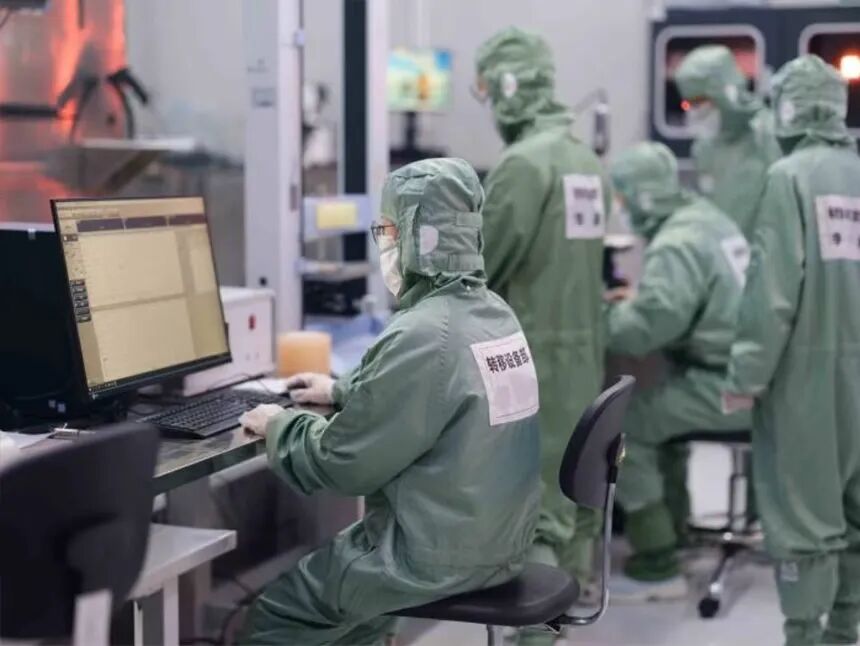 Image source: Konka's official website
However, Konka's ascent to the top was triggered by the price war in 1996.
The price war was sparked by tariffs. On April 1, 1996, China reduced the import tariff on color TVs from 35.9% to 23%. According to People's Daily, Panasonic stated its intention to "spare no expense of $3 billion to secure an absolute share of China's color TV market" and set a goal to "defeat one enterprise and dominate one industry." Prior to the price cuts, foreign brands dominated the large-screen color TV market, accounting for nearly a quarter of all color TVs sold domestically.
Changhong made the first move. According to "China's Turbulent Thirty Years," Changhong had around 1 million color TVs in inventory, valued at over 2 billion yuan. Ni Runfeng, Changhong's chairman, stated at a company meeting, "An acute illness requires an acute remedy. There is only one way, and that is to use our price advantage to outcompete the brand advantage of our competitors." On March 26, 1996, Changhong announced price cuts of 100 to 850 yuan per unit for 17- to 29-inch color TVs, representing reductions of 8% to 18%.
Konka followed suit on June 6, announcing price cuts across all color TV models, with a maximum discount of 20% and a maximum reduction of 1,200 yuan per unit. Konka's ability to follow suit was due to its previous capacity expansion. According to reports at the time, in 1992, Konka invested over 100 million yuan raised from its listing in Dongguan, Guangdong, to build the Konka Electronics City, three times the size of its Shenzhen headquarters. In February 1993, it invested 18 million yuan to acquire a 60% stake in the Mudanjiang Television Factory, establishing Mudanjiang Konka Industrial Co., Ltd. In May 1995, it merged with the Shaanxi Ruyi Television Factory, establishing Shaanxi Konka Electronics Co., Ltd., with an annual color TV production capacity of 400,000 units. By 1996, Konka's annual production capacity had risen to 3 million units. Shenzhen-Dongguan-Mudanjiang-Xi'an, People's Daily called it "gradient development," enabling Konka to establish a new pattern based in Shenzhen, relying on the mainland, and facing overseas markets, with cost control as its strength at the time.
By the end of 1996, the price war had reshaped the market. Changhong's market share rose from 22% to 35%, becoming the national leader. Changhong, Konka, TCL, and Panda accounted for 71.1% of the market share. Konka remained among the top two in the industry. In 1997, "KONKA Konka" was recognized as a well-known trademark in China. In 1998, Konka led the national market share. In 1999, it sold 5.91 million color TVs, with revenue exceeding 10 billion yuan, becoming the first industrial enterprise in Shenzhen to reach this milestone. During the National Day parade in 1999, the first high-definition digital TV developed by Konka was used at Tiananmen Gate. From 2003 to 2007, Konka ranked first in color TV sales in China for five consecutive years, with peak annual sales exceeding 10 million units.
However, during these five years of leadership, brand quality did not improve correspondingly. According to Konka's financial reports, from 2002 to 2007, its net profit margins were 0.58%, 0.90%, 1.20%, 0.17%, 0.82%, and 1.76%, respectively, far lower than the 5.27% in 1998. To maintain its position as the sales leader, Konka pushed prices to the industry's bottom line: a 15-inch LCD TV sold for 3,800 yuan by Konka, compared to 7,000 to 9,000 yuan by foreign brands and 5,000 to 6,000 yuan by domestic brands on average. For CRT TVs of the same grade, Changhong sold for 3,100 yuan, TCL for 3,050 yuan, and Konka for 2,999 yuan, with some special models sold at a loss.
During these five years, Konka also tasted the benefits of real estate for the first time. In 2001, Konka invested in a real estate project of its major shareholder, earning tens of millions of yuan in profit in one year. In the same year, its main color TV business suffered a loss of nearly 700 million yuan.
The real turning point came in 2007. During the transition from CRT to LCD, Hisense built a module factory, and TCL subsequently established CSOT, securing control over the panel sector. Meanwhile, Konka invested 1.7 billion yuan in real estate, with its Kunshan LCD base not commencing production until the end of 2009.
The cost of business choices can be gauged based on the proportion of panel costs. According to the prospectus at the time, direct materials accounted for 96.7% of color TV costs, with LCD panels alone accounting for about 57.4%. A 10% increase in panel prices would result in a corresponding 5.74% rise in the cost of color TV sets. Around 2005, LCD panels were the second-largest category of single industrial product imports in China, after integrated circuits and crude oil. Industry analysis showed that after deducting marketing, distribution, and assembly labor costs, downstream TV manufacturers generally had net profit margins of only 1% to 3%, with profits concentrated upstream among panel manufacturers. Manufacturers without panels had their profits locked in the thin assembly link (assembly process).
But why did Konka invest in real estate? This was directly related to its shareholding structure. From its first day of listing, Konka's controlling shareholder was China Overseas Land & Investment (COLI), a central enterprise primarily engaged in cultural tourism and real estate. Some professionals told the media that COLI had not invested in core upstream components of home appliances nor had retail channels, offering limited support to Konka's main color TV business.
Thus, the strategic misalignment between the controlling shareholder and the listed company sowed the seeds for future conflicts.
Years of Internal Conflict
Konka's relationship with COLI dates back to its establishment. According to Konka's official website, its predecessor, Guangdong Guangming Overseas Chinese Electronics Industry Company, was established as a joint venture in 1979 and commenced operations in May 1980, with an initial investment of 43 million Hong Kong dollars. It was the first Sino-foreign joint venture electronics enterprise post-China's reform and opening-up, with Chinese shareholders from the Guangdong Provincial Overseas Chinese Enterprise System. In December 1986, the Shenzhen Municipal Government approved the transfer of all enterprises and institutions within the OCT area from the Guangdong Provincial Overseas Chinese Industrial Corporation and the Guangdong Provincial Shahe Overseas Chinese Enterprise Company to the OCT Economic Development Company. In March 1992, Konka was listed on the Shenzhen Stock Exchange, with COLI holding a 36.26% stake as the largest shareholder, according to securities research reports.
However, COLI's main business was cultural tourism and real estate. In 1989, it built China's first theme park, Splendid China. In 1997, COLI was listed on the Shenzhen Stock Exchange, with projects such as Windows of the World and Happy Valley. Konka also tasted the sweetness of real estate. According to public information, since 2001, Konka has invested in COLI's real estate projects, earning tens of millions of yuan in investment income annually, sometimes comparable to the profits of its main home appliance business.
Against this backdrop of both parties being involved in real estate, COLI's shareholding in Konka gradually declined in the 2000s. By the end of 2008, COLI's direct shareholding had dropped to 16.68%, a historical low. Meanwhile, as COLI's shareholding decreased, land prices in the OCT area of Nanshan District, Shenzhen, where Konka's headquarters was located, soared. In 2011, the site was included in Shenzhen's urban renewal unit planning scope. At this point, disputes arose between Konka and its controlling shareholder, COLI, over the development rights and equity distribution of the headquarters factory renewal project.
Image source: Konka's official website
According to media reports, if the site were developed into office buildings for rent, it could bring Konka an annual net profit of 135 million yuan. If sold outright, conservative estimates suggested a profit of 2.6 billion yuan. COLI opposed Konka's independent development and pushed for cooperation between the two parties.
The crux of the dispute was land ownership, which traced back to the joint venture agreement signed when Konka was established. According to the arbitration award, in 1979, the Guangdong Provincial Overseas Chinese Enterprise Company signed an agreement with Hong Kong Wah Hong Electronics Enterprise Co., Ltd., with the Chinese side contributing 6 million Hong Kong dollars in the form of a 10-year land use right. Subsequently, the duration of the land use right was extended, and the Guangdong Provincial Overseas Chinese Enterprise Company underwent institutional changes and was incorporated into the COLI system. However, COLI claimed in the arbitration that the nature of the land contribution as a "land use right for a certain period" had not changed. According to this claim, Konka only had a limited-term land use right for the factory site, not full land ownership. COLI also argued that the agreed duration of the land use right was about to expire, and it had the right to request Konka to return the land.
The difficulty lay in the fact that both parties had evidence favorable to themselves. According to media reports, in 1998, Konka Group obtained an administrative allocation property certificate for the site, with Konka Group Co., Ltd. as the right holder and a recorded area of 39,160.5 square meters for industrial storage. COLI's basis came from two earlier and later documents: in 1985, the State Council approved the establishment of OCT in the Shenzhen Special Economic Zone, allocating 4.8 square kilometers of land from the Shahe Overseas Chinese Industrial Zone for development, with Konka's headquarters factory located within this area. In 2003, COLI signed a land use agreement with relevant departments of the Shenzhen Municipal Government to resolve land use issues in the OCT area, with a total land area of 210,400 square meters for industrial land valuation, including the disputed site.
As the planning progressed, the dispute entered the procedural realm. In March 2012, the Shenzhen Municipal Planning and Land Resources Committee approved the renewal unit plan submitted by Konka. On December 21, 2012, it confirmed Konka as the implementation entity for the renewal unit project. In August 2013, COLI submitted an "Opinion Letter Opposing Konka Group as the Sole Implementation Entity for the 'Konka Group Headquarters Factory Urban Renewal Project'" to the Nanshan District Urban Village Renovation Office in Shenzhen. According to Konka's announcement, the office subsequently issued an opinion letter suspending relevant project procedures. On March 10, 2014, Konka applied for arbitration with the Shenzhen International Arbitration Court, requesting confirmation of itself as the sole development entity. COLI argued that Konka was not the land use right holder of the disputed site. On July 31, the Shenzhen International Arbitration Court ruled against Konka's arbitration request. According to media reports, a key basis for the ruling was that although Konka had paid the initial land transfer fee, it had not yet signed a land transfer contract for the urban renewal project with the planning and land department.
While land disposal was stalled, Konka's main business continued to decline. From 2011 to 2013, Konka's core net profits were -112 million yuan, -54.09 million yuan, and -69.01 million yuan, respectively. In 2014, revenue was 19.4 billion yuan, a year-on-year decline of 2.92%, with a net loss of 475 million yuan. For Konka, the site was an important source of funds during its business transformation. For COLI, Konka played a significant role in supporting its financial data. In 2014, COLI Group's annual sales revenue exceeded 40 billion yuan, making it difficult to relinquish both Konka's consolidated value and the site's benefits. The parties failed to reach an agreement on land ownership and development benefits, leading to the accumulation of dissatisfaction among Konka's minority shareholders.
Dissatisfaction needed an institutional outlet to be expressed. On May 15, 2015, professional investor Huang Mushun submitted a provisional proposal to the shareholders' meeting, urging minority shareholders to act in unison and elect representatives to the board. According to media reports, the proposal voiced dissatisfaction with Konka's recent performance—mediocre results and a steady decline in its industry standing—and aimed to capitalize on the deepening of state-owned enterprise reform and the rise of smart TVs to propel industrial upgrading and strategic transformation. On May 28, Konka convened its 2014 annual shareholders' meeting at the Konka R&D Building in Shenzhen to elect a new board. With 788 shareholders present and participating in online voting, candidates nominated by minority shareholders secured four seats, reducing COLI's representation from seven to three. This marked the first instance in Chinese securities history where a listed company's board was effectively controlled by minority shareholders.
In March 2017, Konka appointed Zhou Bin, aged 38, as president through a public selection process. The following year, at its 38th anniversary celebration, Konka set an ambitious goal of achieving RMB 100 billion in revenue by 2022. Revenue continued to climb in subsequent years, rising from RMB 20.3 billion in 2016 to RMB 55.1 billion in 2019, with a compound annual growth rate of nearly 40%. Following the announcement of its transformation, its stock price surged by approximately 180% at its peak. However, the composition of revenue also shifted: in 2017, revenue from supply chain management surpassed that of its core color TV business, becoming its largest segment. The gross profit margin of the color TV business once plummeted to a mere 0.39%. During the same period, Konka acquired Xinfei Electric for RMB 455 million, which generated RMB 2.3 billion in sales and turned profitable in 2019. By 2019, the color TV business accounted for only one-fifth of the total revenue of RMB 55.1 billion. Diversification led Konka down a different path, but true crises soon emerged.
Collapsing Empire
In 2020 and 2021, Konka's revenue hovered around RMB 50 billion for two consecutive years. Public data indicated a profit of RMB 905 million in 2021, marking Konka's last annual profit. From 2022 onward, it entered a period of consecutive losses, accumulating over RMB 20 billion in losses over four years. In reality, signs of instability in Konka's core operations had surfaced more than a decade earlier. According to financial reports, Konka's non-recurring net profit had been negative for 15 consecutive years since 2011—even in 2019, when revenue reached RMB 55.1 billion, its core business never truly turned a profit. The contraction from RMB 55.1 billion to RMB 9.835 billion occurred through two distinct pathways: businesses voluntarily exited by the company and those that shrank amid market competition. Both pathways originated from the 2017 transformation.
The exited business was supply chain trade. According to Konka's 2019 private placement plan, this business commenced in 2016, involving the procurement of IC components, LCD panels, metal raw materials, and other products from upstream suppliers, which were then resold to downstream manufacturers at a markup, with profits derived from the price differential. Additionally, a portion of revenue came from charging service fees for warehousing, logistics, and import/export customs clearance for other enterprises. In 2017, this business generated RMB 13.6 billion in revenue, accounting for 43.72% of total revenue, surpassing color TVs to become the largest segment. Its share further rose to 61.46% in 2018. However, it supported scale rather than profit—public data showed a gross profit margin of just 1.11% for this segment. The nature of trade operations required significant capital occupation: upfront payments for procurement followed by delayed collection of sales proceeds, meaning larger scales tied up more cash. From 2016 to 2018, Konka's net cash flow from operating activities was negative for three consecutive years, at -RMB 972 million, -RMB 3.23 billion, and -RMB 4.314 billion, respectively. By the end of 2018, current liabilities exceeded current assets by RMB 22.676 billion versus RMB 21.843 billion. In 2023, Konka established a new framework centered on electronic technology, gradually exiting supply chain trade. By 2025, this business had disappeared from the six major segments listed in its annual report, and Konka's revenue fell below RMB 10 billion from the RMB 50 billion range.
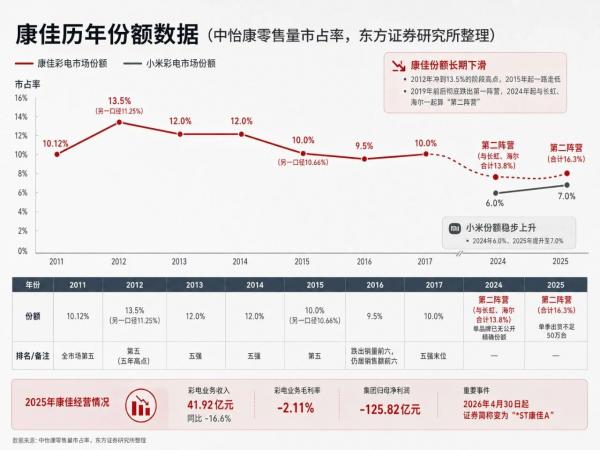
After the exit of trade operations, the remaining businesses shrank in their respective markets, with the color TV segment experiencing the steepest decline. When the 2017 transformation began, the color TV industry was entering a new competitive phase: companies like LeEco and Xiaomi entered the market, redefining televisions with content and internet services. According to media reports, Konka responded by cutting prices—data from Aowei Cloud showed that the average price of Konka TVs dropped from RMB 3,200 per unit in 2015 to RMB 1,800 per unit in 2020. However, price cuts failed to secure market share. In the first half of 2015, Konka held about a 9% market share in color TVs, compared to Skyworth's 20%, Hisense's 18%, TCL's 16%, and Changhong's 11%. By the first half of 2018, its market share had dwindled to 6.1%, ranking 11th in global color TV shipments and dropping out of the first tier. Concurrently, R&D investment contracted: according to Konka's financial reports, R&D spending in the first half of 2016 declined by 15.56% year-on-year. By 2024, Konka's total R&D expenditure was RMB 980 million, with the TV business accounting for less than 30%, and overall R&D spending decreased by 16.38% year-on-year. Meanwhile, competitors built barriers upstream and downstream: TCL secured panel production through CSOT, Hisense developed its own picture quality chips, and Skyworth invested in OLED. By 2025, Konka's color TV revenue was RMB 4.192 billion, down 16.62% year-on-year, just one-third of its level a decade earlier. Operating costs reached RMB 4.281 billion, resulting in a gross profit margin of -2.11%. The annual report attributed this to "insufficient product competitiveness" and "gross profit failing to cover expenses effectively." In the same year, TCL Electronics' color TV revenue reached HKD 64.708 billion, approximately 15 times that of Konka.
Beyond color TVs, white goods were Konka's second-largest revenue segment, generating RMB 3.815 billion in 2025, down 7.56% year-on-year, with a gross profit margin of 5.49%. The core of this business was Xinfei Electric, acquired for RMB 455 million in 2018. Among Konka's diversified ventures, Xinfei was a rare profitable project: media reports indicated that Xinfei's online sales ranking entered the top 15 in 2019, rose to 8th in 2020, and reached 6th in the industry with a 3.46% online market share in 2023. However, the pricing and positioning of white goods limited profit margins: the refrigerator and washing machine markets were dominated by Haier and Midea, while air conditioners were largely controlled by Gree, Midea, and Haier. Xinfei focused on mid-to-low-end products, with a 5.49% gross profit margin below industry leaders, insufficient to cover sales, management, and R&D expenses. The annual report showed that the consumer electronics segment, including white goods, remained unprofitable overall.
Image source: Business School Magazine
Heavier investments were made in semiconductors, environmental protection, and industrial parks. In 2019, Konka proposed a "technology + industry + park" model: semiconductors established industrial parks in Hefei and Chongqing, environmental protection secured 16 PPP projects across nine provinces with contracts totaling RMB 11.3 billion, and seven tech industrial parks planned total investments exceeding RMB 40 billion. Media reports also noted approximately RMB 2 billion invested in deploying the full MLED industrial chain. These projects shared characteristics of being capital-intensive and long-cycle, with returns dependent on government payments or industry maturation, mismatched with Konka's contracting cash flow at the time. By 2025, semiconductor revenue was RMB 162 million, accounting for 1.65% of total revenue. The annual report stated, "It remains in the early stages of industrialization, has not yet achieved scaled or profitable output, and overall operations are unprofitable." Bad debt provisions for accounts receivable reached RMB 1.467 billion, primarily related to such projects. Impairment losses on RMB 3.176 billion in long-term equity investments also stemmed mainly from cross-border projects in semiconductors, real estate, and environmental protection.
Cross-border project assets concentrated on the balance sheet in 2025. That year, Konka recognized RMB 7.697 billion in asset impairment provisions: RMB 3.176 billion in long-term equity investment impairments, RMB 1.467 billion in accounts receivable bad debts, RMB 749 million in inventory write-downs, and RMB 2.305 billion in impairments for fixed assets and goodwill, mostly confirmed in the fourth quarter, resulting in a quarterly loss of approximately RMB 11.6 billion. By the end of 2025, cash holdings were RMB 4.87 billion, with current liabilities at RMB 18.314 billion and a debt-to-asset ratio of 126.22%. Starting April 30, 2026, its stock ticker changed to *ST Konka A, a delisting risk warning issued by the exchange.
Beyond operating data, personnel shakeups occurred during the same period. Media reports indicated that several former executives, including former president Zhou Bin, were investigated. On July 22, 2025, Overseas Chinese Town Group transferred its shares to Panshi Runchuang and Hemao Company, subsidiaries of China Resources, which collectively held 30% of shares, making China Resources the de facto controller. Wu Jianjun, former chairman of China Resources Pharmaceutical Commercial, became chairman, with four of the five non-independent directors hailing from the China Resources system.
China Resources' arrival did not alter Konka's operating results. In the first quarter of 2026, revenue was RMB 1.931 billion, down 24.08% year-on-year, with a net loss attributable to shareholders of RMB 183 million. In the first half of 2026, revenue was RMB 3.852 billion, down 26.60% year-on-year, with a net loss attributable to shareholders of RMB 173 million and net assets falling to -RMB 6.227 billion. According to Shenzhen Stock Exchange rules, if net assets remain negative after the 2026 audit, the company will be forcibly delisted. On the evening of August 27, Konka chose to exit voluntarily before the rules took effect.
Thus, Konka reemerged in its current form. From commencing production in May 1980 to its last trading day on September 22, 2026, Konka spanned 46 years; counting from its listing in March 1992, it lasted 34 years. It had been a sales champion and the first company in China's securities history where minority shareholders effectively controlled the board. Its final identity was a company with negative net assets and marked with *ST. Zhang Ruimin of Haier once said, "There are no successful enterprises, only enterprises of the era." After September 22, Konka A will disappear from the Shenzhen Stock Exchange's market list and transfer to the delisting segment of the National Equities Exchange and Quotations. Factories remain operational, and Xinfei and KONKA continue normal business operations—delisting does not equate to bankruptcy, but for capital markets, the story of the "first color TV stock" ends here.
-
New Chips Frequently Emerge, RISC-V Fuels the AI Era
-
Raccoon Carries SenseTime to the Top of the AI Wave
-
Huaqiangbei-Based Company Replicates Huawei’s Popular Wide Straight Slab Phone
-
![]()
Optical Manufacturing Drives Life and Health Forward! Goertek Optics and Nearview Technology Forge Strategic Alliance
-
RMB 37.49 Billion Long-Term Contract: What Is Xiechuang Data Wagering On?
-
![]()
Why, After 34 Years, Has the Former Color TV Leader Reached the Point of Delisting? "Konka, Delisting, Color TV, Price War, China Resources"
-
![]()
Xiaomi Restructures Business, Eyes AI as Next Growth Engine
-
![]()
Amid Business Reorganization, Xiaomi Sets Sights on AI for Future Growth