Smartphone Specs Slashed Across the Board: Hardware Downgrades Leave Users in a Bind
 11/04 2026
 341
Smartphone consumption is quietly heading into a downgrade era.
The smartphone market in 2026 is enduring a harsh winter. According to data released by IDC, global smartphone shipments in the third quarter of 2026 plummeted 20% year-on-year, hitting the lowest level since 2013, while shipments in the Chinese market also fell sharply by 15.2%. For ordinary consumers, the most intuitive takeaway is simple: phones have gotten more expensive.
The core driver behind widespread phone price hikes is runaway storage costs. As global demand for AI computing power continues to surge, storage giants have reallocated capacity toward higher-margin businesses such as HBM, directly causing a sharp drop in supply and soaring prices for smartphone memory and flash storage.
By the second half of 2026, storage costs accounted for an increasingly large share of total device costs for flagship models. Data estimated by TrendForce shows that in the third quarter of this year, storage costs made up 34% of the total cost of the iPhone 18 Pro, and that figure is expected to rise to 42% in the first half of next year.
Under enormous cost pressure, phone manufacturers—seeking to maintain the basic pricing range of their product lines and preserve necessary profit margins—have gradually cut corners on hardware specifications that consumers are less likely to notice, making hidden reductions and configuration downgrades a kind of tacit, unspoken rule.
Not Just Storage: Smartphone Specs Are Being Cut Across the Board
Looking back at the development history of smartphones over the past decade or so, the direction of phone evolution has always been toward continuously stronger performance and more features at no extra cost. But by 2026, the market situation has changed. At a time when smartphones are broadly becoming more expensive, models at every price point are "cutting costs and boosting efficiency" in various forms, with regressing configurations. Some are out in the open and visible at a glance; others are buried very deeply, yet still affect the user experience.
1. Storage: Beyond Capacity, Chip Type, Speed, and Lifespan Have All Been Compromised
First, capacity reductions are real. A few years ago, there was a wave of large-storage popularization in the phone market, and mid-range phones even offered affordable 16+1TB versions. Some flagship models even canceled the 256GB version outright and started at 512GB, while 12GB of memory became the baseline. But now the situation has changed. 8GB memory has reappeared, and many mid-range phones as well as the "small cup" models in some flagship lineups start at 8GB of memory; even for flagship models, the base version usually has only 256GB.
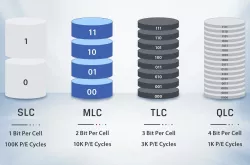
Second, in places users cannot see, storage specifications have also regressed. Take the iPhone 18 Pro series as an example: for the 1TB and 2TB high-capacity versions, the chips were switched from TLC to QLC. Compared with TLC, QLC has more stacked layers and lower cost for the same capacity, but the trade-off is a much shorter lifespan.
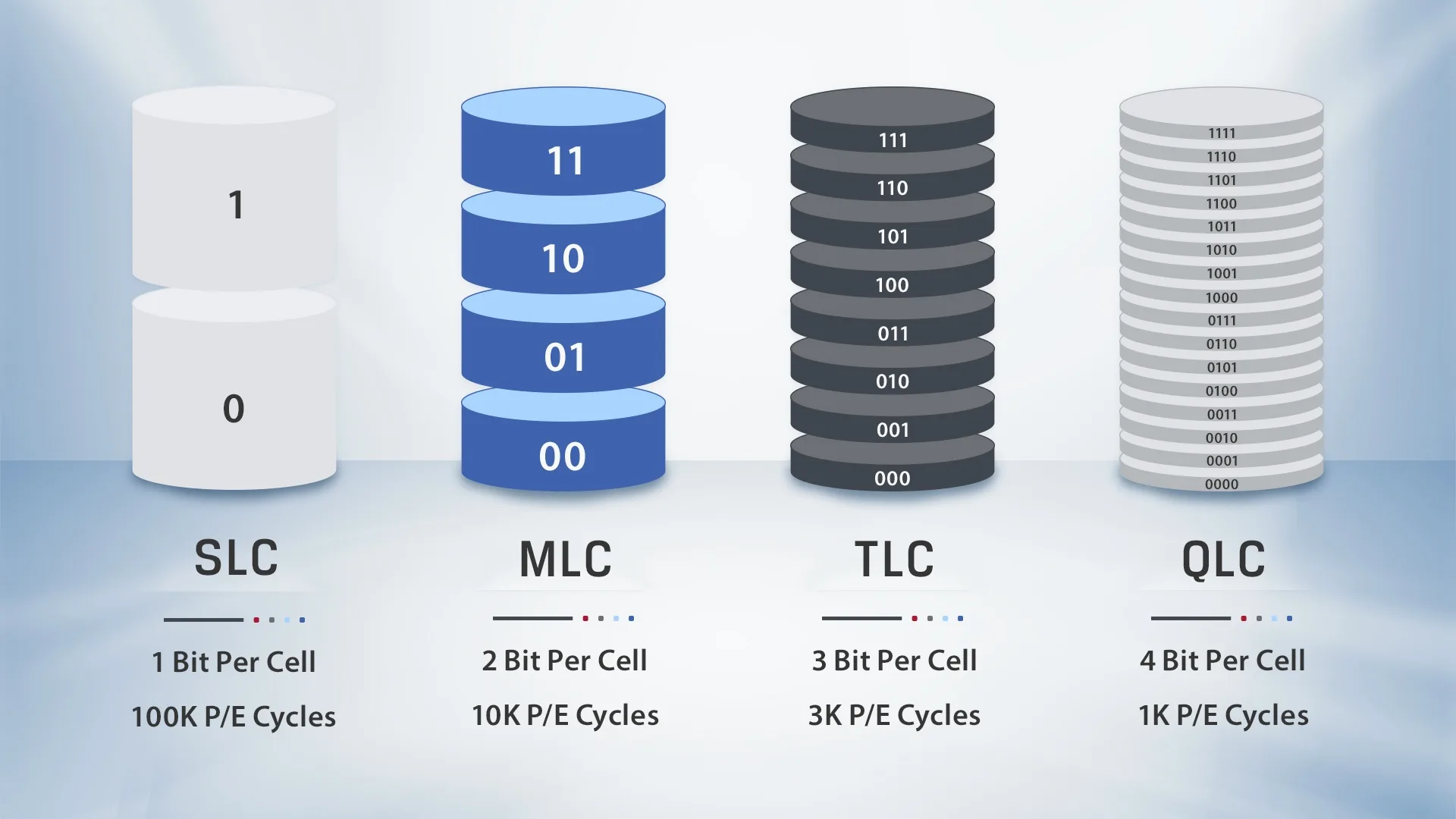
(Image source: Kingston)
At the same time, QLC is also slower. Once the cache of phone flash storage is exhausted, read and write speeds drop off a cliff. According to HOMOLAB testing, after the flash storage usage of the iPhone 18 Pro Max 1TB version exceeds 60%, the average write speed drops to 45MB/s.
The good news for now, however, is that the models using QLC flash storage on a large scale are temporarily limited to the high-capacity versions of the iPhone 18 Pro Max. In the Android camp, no such situation has been exposed yet, and the vast majority of models still use TLC flash storage. However, if storage supply becomes further strained in the future, more brands may be forced to adopt QLC.
2. Screen: Resolution and High Refresh Rate Remain Unchanged, but Emissive Materials Are a Blind Box
Phone screens have continued to evolve in recent years. After domestic OLED technology entered maturity, the cost of OLED screens has been declining. But rising storage prices have led some manufacturers to try to squeeze some cost out of the screen. Screen specifications are numerous. Core parameters such as resolution, refresh rate, and brightness are familiar to ordinary consumers and easier to perceive, so even when manufacturers choose low-cost screens, they will not tamper with these aspects.
But in fact, there are still many factors affecting the actual screen experience, such as the crucial emissive material. The emissive layer of an OLED screen plays a decisive role in screen quality and basically determines its power consumption, color, lifespan, and more. In the past, phone manufacturers liked to use next-generation emissive materials as one of the core promotional points for phone screens.
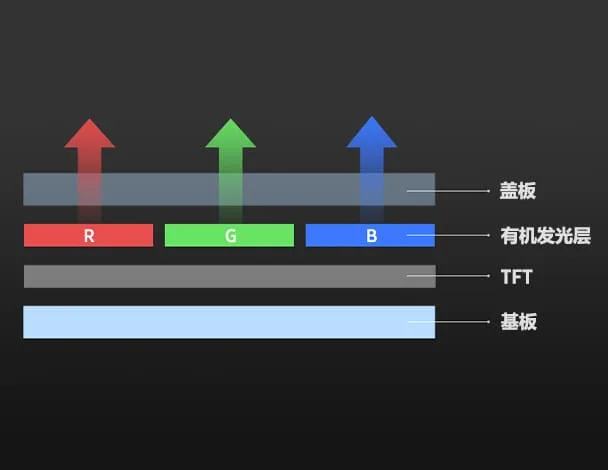
(Image source: Samsung)
According to relevant leaks, the iPhone 18 standard version, delayed until early next year, will have its screen downgraded, with the emissive material dropping from M14 to M12—regressing to the level of the iPhone 14 Pro in 2022. Meanwhile, there are also reports that Samsung's low-end phones will purchase screens from third-party suppliers in the future, and both the emissive materials and overall screen quality may regress.
The downgrade of emissive materials is more hidden than other screen parameters. As long as manufacturers do not label it, users can hardly tell.
3. Chips: Old Chips Revived, New Chips Rebranded
In the recent wave of new phone launches, Leitech (ID: leitech) noticed a phenomenon: some new flagship phones include a "small cup" product within the same series. Although such models ride on the flagship name, they actually use old-generation chips. The reason manufacturers do this is simple: to push costs down in this way while creating the illusion that the starting price of the new flagship is still relatively cheap.
For example, the "small cup" model in a flagship series released recently by a domestic brand does not use the Dimensity 9600 series chip, but the previous-generation Dimensity 9500 series. The performance of old chips is certainly not weak, but there is still a gap compared with the latest flagship processors. Through this approach, the starting price of that flagship series was kept below 5,000 yuan.
Recently, Xiaomi Mall listed a model called REDMI M100 Pro, with only one storage version, 12+256GB, priced at 2,499 yuan. But judging from its appearance and specifications, it should be the same model as the Redmi Note 14 Pro released in 2024.
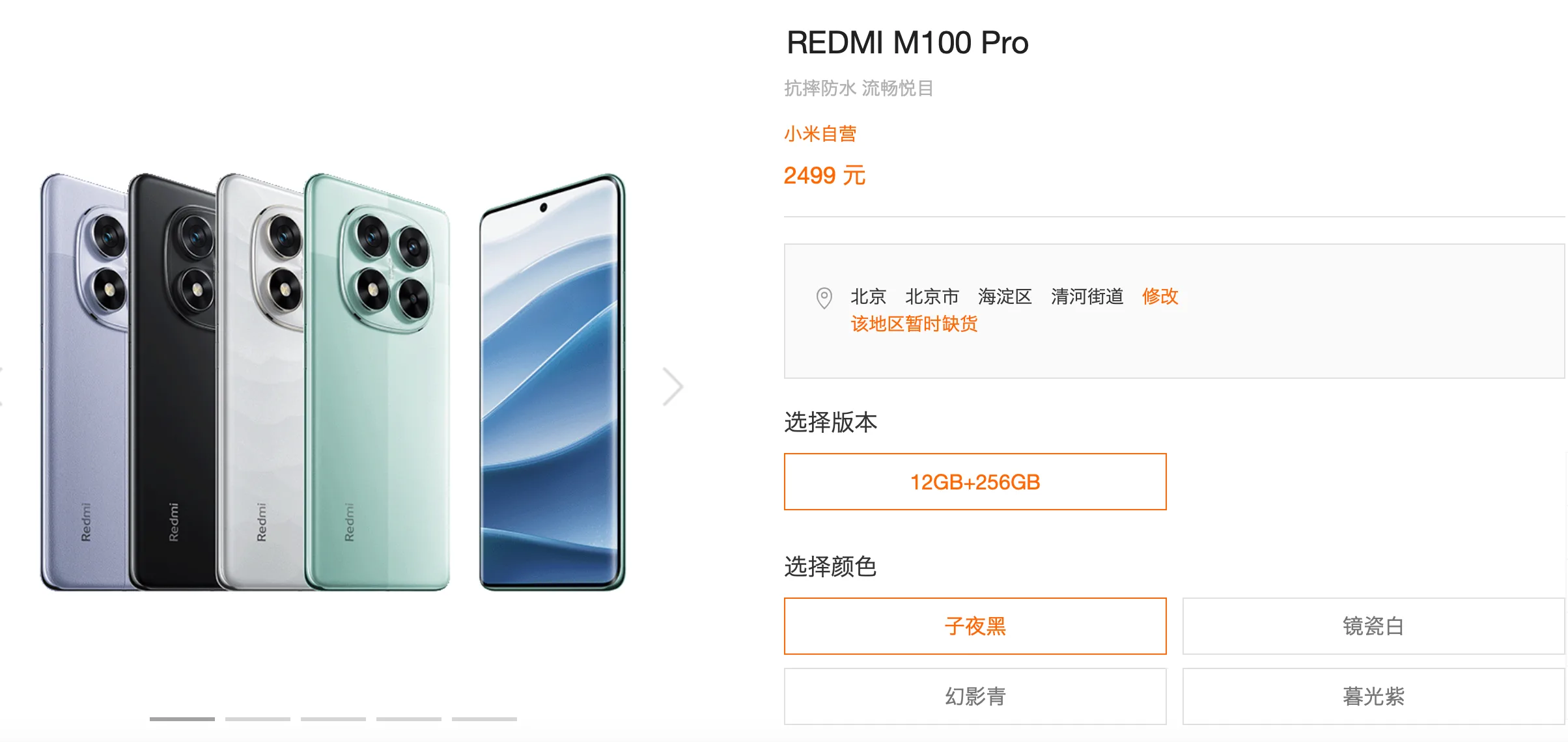
(Image source: Xiaomi)
At that time, the first-sale price of the Redmi Note 14 Pro 12+256GB was about 1,699 yuan. The model revived by REDMI this time may be inventory product, and the Dimensity 7300-Ultra chip it carries is also a mid-range chip released in 2024.
In addition, some chips, although their names suggest new processors, still have core architectures and specifications similar to older chips. Such rebranded chips essentially also exploit information gaps with new names, and mostly appear in low-end and mid-range chips.
With Major Hardware Downgrades, How Can Users Choose Phones to Avoid Pitfalls?
When price increases and configuration reductions have become the norm in the current smartphone market, the era of consumers buying new phones with their eyes closed is over. As ordinary consumers, if we want to avoid falling into pitfalls in this environment of information asymmetry, we need to reorganize our purchasing approach. We can summarize this pitfall-avoidance guide into the following points.
First, we need to look past promotional selling points and focus on more core specifications.
Whether on a brand's official product introduction page or a detail page on an e-commerce platform, the selling points highlighted in large fonts are often what manufacturers most want to promote, and may be accompanied by more attractive marketing language. In contrast, small-print notes and plain specification tables deserve more attention. Although manufacturers may not necessarily list all configuration information, some useful information can still be obtained from basic specifications, such as memory and flash storage specifications, camera aperture, focal length, pixels, and other configurations.
At the same time, we can also obtain more detailed information through forums, social platforms, and other users' shared experiences and teardowns. Whether it is the results of their benchmark tests or their subjective analysis and impressions, they provide us with more information for understanding the corresponding product.
Second, we can consider buying old models, especially old flagship models.
After all, when manufacturers play tricks and downgrade configurations on new phones, it is largely out of helplessness. Rising prices of core components such as storage, coupled with the already thin profit margins of phones themselves, mean new phones either increase in price or can only take the route of configuration regression.
Since newly released mid-range phones and flagship standard versions have undergone various hidden cuts to protect profits, then with the same or even lower budget, directly buying old flagship phones may be a more cost-effective approach.

(Image source: OPPO)
For example, flagships released last year usually have already dropped considerably in price one year after launch. They did not face such extreme storage cost pressure as in 2026 when they were designed, so many of them retain high-quality screens, full versions of SoCs, high-speed storage, and more. In terms of overall configuration and user experience, a discounted old flagship may well perform better than a new mid-range phone or entry-level flagship.
Of course, when buying old flagship phones, you still need to rely on trustworthy platforms. Some old flagships have already been removed from official channels, and the remaining inventory often circulates on e-commerce platforms. At such times, we should preferably choose relatively reliable channels such as self-operated stores and subsidy programs.
Final Thoughts
In summary, the harsh winter in the phone industry in 2026 caused by soaring storage costs has not only left phone manufacturers repeatedly struggling between pricing and profit, but also greatly diminished the phone-buying experience for ordinary consumers.
Hidden downgrades, old wine in new bottles, and shrinking core components will likely accompany us for quite a long time. Before storage capacity normalizes, this phenomenon of hidden cuts in product configurations will be difficult to eliminate completely.
Since the overall environment is like this, what we as ordinary consumers can do is try our best to avoid pitfalls. The past purchasing strategy of buying new rather than old is no longer fully applicable in today's somewhat surreal phone market. Relatively speaking, old flagship phones with less cost pressure may offer a better daily experience than current new phones that are pieced together to keep prices in line.
In addition, for users who do not pursue the latest technology and product features, there is another relatively rational choice: tighten your wallet, let go of the obsession with first launches, and temporarily hold off on upgrading. After all, in an era when consumer electronics are all rising in price, we really do not have a perfect solution.
Source: Leitech
Images in this article are from: 123RF licensed image library Source: Leitech
-
![]()
Nut Pandownload Ownership Change: The Logic of Large-Screen Projectors Replacing TVs Is Failing
-
Thanks to Chinese Support, Apple's China Revenue Surges 21%, with Revenue and Profit Hitting New Highs Again
-
![]()
Two-Trillion Sprint Tier: Benchmarking Analysis of Industries in Nanjing, Ningbo, Tianjin, and Qingdao
-
![]()
Cloud Computing in the AI Era: Prosperity for the Few | Juchao
-
![]()
Smartphone Specs Slashed Across the Board: Hardware Downgrades Leave Users in a Bind
-
![]()
Apple "Wins by Default" Against Nvidia
-
AI Comic Dramas: The 10 Fastest-Growing and Most Profitable Companies
-
Apple Earnings: Revenue Tops Forecasts, but Growth Cools and Greater China Falls Short