Phone Prices Are Rising Across the Board—So Why Is Apple the Only One Selling More?
 11/18 2026
 478
Something hard to explain happened in the phone industry in November.
Android makers raised prices across the board, while Apple, in that same month, swept the top two spots on the sales chart. Prices climbing on one side and sales exploding on the other is no coincidence.
01
An Unusual November
By November 7 (week 45), the iPhone 18 Pro series had been on sale in China for seven weeks, with cumulative sales of 7.8287 million units—just one step away from 10 million. On the week 44 sales chart, the Pro and Pro Max took the top two spots outright, with the Pro Max far ahead in first place, and Apple claimed four of the top five spots.
Meanwhile, Android was adjusting prices: in the China market, the starting prices of the Samsung Galaxy S26 standard edition and S26+ rose by 1,000 yuan, and OPPO and vivo also successively adjusted the suggested retail prices of some models on sale.
Raising prices while selling explosively shows that price is no longer the only variable in this market.
02
What's Rising Isn't the Phone—It's the Memory
The source of this round of price hikes isn't the device makers—it's upstream.
The DRAM shortage has dragged on all year. TrendForce statistics show that in the first quarter of 2026, DRAM contract prices rose by about 90% quarter on quarter, then narrowed quarter by quarter, and in the fourth quarter the increase for general-purpose DRAM was still 10%–15%.
The increase is falling back, but prices remain at a high level.
What's more counterintuitive is the configuration. TrendForce data shows that although memory has become more expensive, the baseline storage of phones in 2026 is instead continuing to climb: low-capacity chips are being phased out, and on-device AI is consuming even more memory.
In other words, manufacturers are building larger capacities on more expensive components.
The cost is borne by everyone together. So the real question has never been whether prices should rise, but after they rise, what do you offer to make people still willing to buy.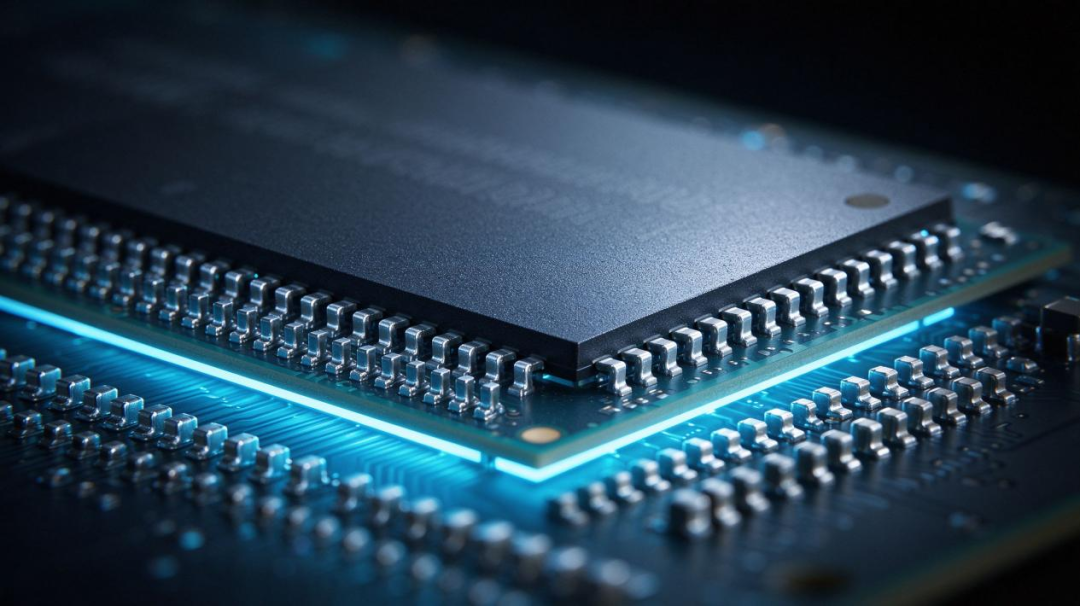 Image source: Internet
03
Same Cost, Two Outcomes
Apple's answer is to turn price hikes into profit.
Its high-end models have enough brand premium and ecosystem stickiness. The reason users upgrade is not that it is cheap, but that they are used to this system. For Apple, raising prices by a few hundred yuan is just addition and subtraction on gross margin.
Android is in a harder position.
There are many models at the same price and many alternatives, and users often still put price first; once prices rise, the first to leave are those who would rather wait and see.
There is only one way to break through, and that is to offer a visible difference.
The domestic Android sales champion in October was Honor, relying on a recovery in shipment rhythm; it made all three upcoming models in the 700 series with rear displays, and combined battery, screen, imaging, and health measurement.
A rear display may not be a must-have, but it is a differentiation point that can be perceived without looking at a spec sheet. Image source: Internet
04
Price Hikes Are an Industry Medical Checkup
This round of price hikes is essentially a medical checkup for the entire industry.
It turns homogenization from an adjective into a bill. In the past, share gained by stacking specs and relying on low prices immediately becomes untenable when costs rise.
So I offer three criteria to measure whether a new phone at this point in time is worth buying:
Does it have a difference that can be explained without looking at a spec sheet;
Is this difference used every day, rather than only once on unboxing day;
Three years later, can it still give you a reason not to switch phones.
If it cannot answer all three, then what it raises is not the price, but the interval until your next phone upgrade.
05
In Closing
Back to that unusual November.
What is truly worth remembering is not the number 7.8287 million, but the signal behind it: the phone industry has moved from an era of who is cheaper into an era of who is more worth it.
Price hikes will not stop, and memory will not become cheap overnight. Those who survive will not be the best at talking specs, but the best at answering why.
Next time you stand at the counter, you might first ask yourself: what exactly am I buying with the few hundred yuan more I am willing to pay for it?
#PhoneMarket
-
![]()
1.881 billion! Another central enterprise wins the bid for a big data center project
-
Will the Fangchengbao Titan 9 Go on Sale Tomorrow? Is the Predicted Official Price Range of 300,000–380,000 Yuan Accurate?
-
Top 10 Fastest-Growing and Most Profitable Companies in the Token Export Sector
-
![]()
JieJie Microelectronics Bets Another 1.5 Billion Yuan on High-Voltage Chips: The Ambition Behind the Layout
-
![]()
Phone Prices Are Rising Across the Board—So Why Is Apple the Only One Selling More?
-
Forecasting the Official Launch Price Range of the iCAR V25 from V23 and V27 Sales Trends
-
![]()
In the AI Era, Tokens Are This Small Chinese City's "New Local Specialty"
-
![]()
Global Smartphone Shipments to Decline for Second Consecutive Year, Yet Apple's iPhone Defies the Trend with Year-over-Year Growth: Consumers Increasingly Favor Huawei and Apple