Explosive Debut! Lei Jun’s Xiaomi Pengcheng: First-Week Performance Unveiled—One Disappointment, One Triumph
 09/17 2026
 514
514
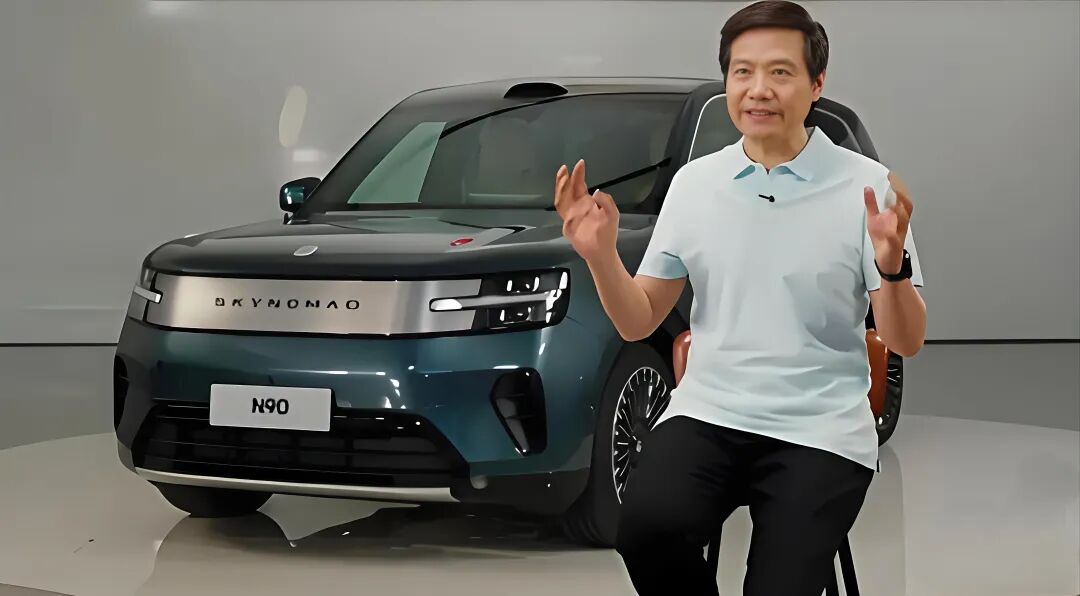
Image Source: Weibo
Xiaomi Auto has once again sent shockwaves through the automotive industry.
The launch of the Pengcheng Extended-Range SUV on the evening of September 7 instantly sparked excitement across the sector. Following the leak of channel data, the industry was abuzz with a mix of excitement and skepticism.
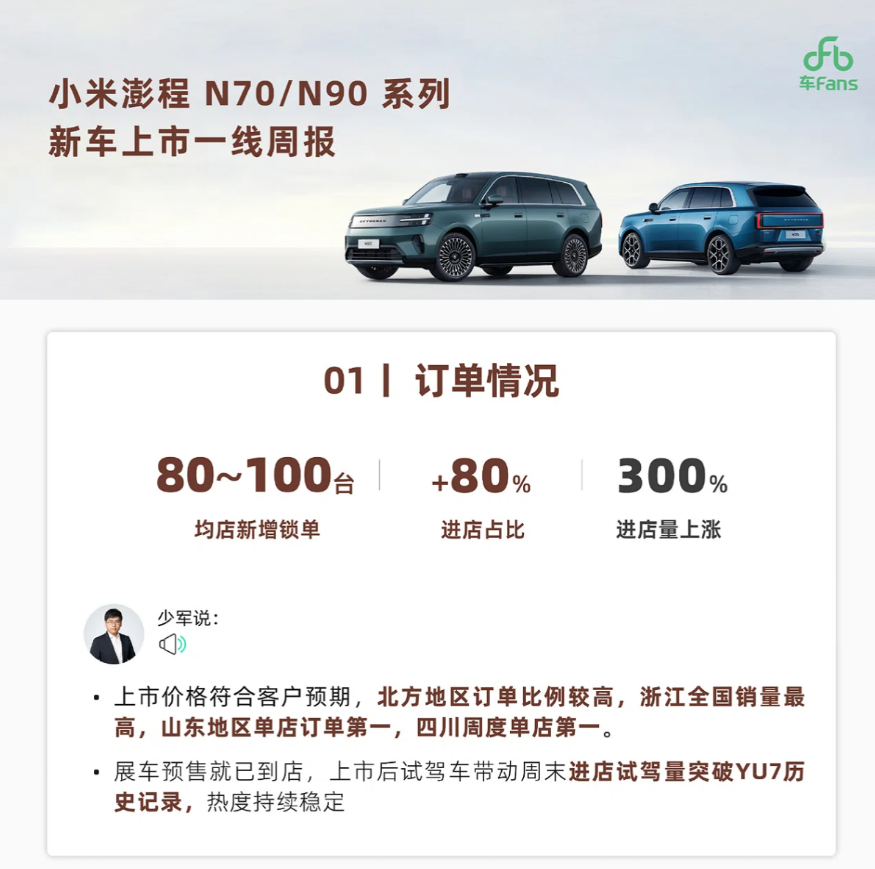
Image Source: Car FANS
Let's delve into the core data: In the first week alone, total orders reached 47,750, marking a staggering 635% week-over-week increase, with order volume nearly sixfold. The Pengcheng series dominated the orders. Offline store traffic also surged, with footfall increasing by 300%. Weekend test drives were fully booked, surpassing those for the YU7. The northern regions witnessed a significant spike in orders, with Zhejiang leading the national sales, while Shandong, Sichuan, and other regions reported their dealerships' order books as completely full.
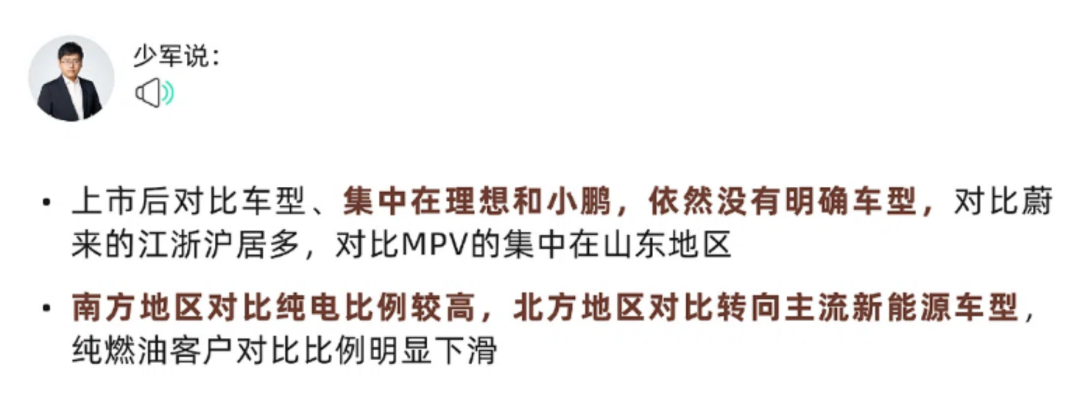
Image Source: Car FANS
Beneath this initial frenzy, two key truths emerge: one disappointing piece of news and one remarkable achievement.
1. Disappointing News: Despite the First-Week Surge, the 550,000 Annual Target Seems Unreachable
Let's face the facts head-on, without sugarcoating.
Xiaomi has set an ambitious target for 2026: 550,000 annual deliveries. With two-thirds of the year already passed, the progress is not promising.
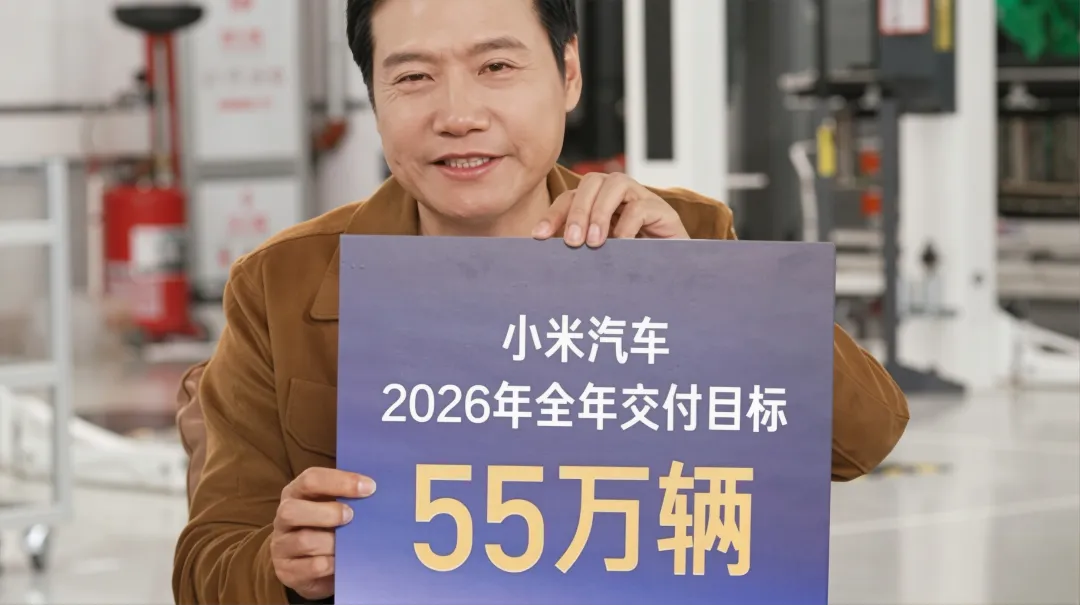 Image Source: Lei Jun's Weibo
After eight months, cumulative deliveries stand at 246,000 units, with an overall completion rate below 45%, leaving a substantial gap of 304,000 units. To meet the target, monthly deliveries must average 76,000 units over the remaining four months.
However, the reality is stark: The monthly delivery baseline for the SU7 + YU7 pure electric models is only around 30,000 units, with limited room for further expansion. Even if Pengcheng's production ramps up fully to deliver over 20,000 units monthly, the overall monthly delivery total will still struggle to reach the 76,000-unit threshold.
Adding to the challenge is the severe polarization in the order structure: Pengcheng is seeing a high-spec frenzy, while entry-level models are flopping.
The N90 series (priced between 269,900–299,900 yuan) accounts for 75% of orders, with the top-spec Explorer Edition being snapped up far exceeding Xiaomi’s internal expectations.
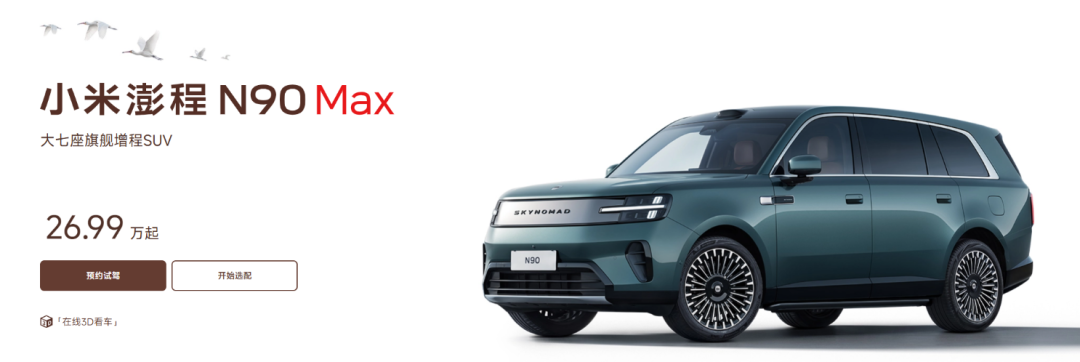
Image Source: Weibo
The N70 entry-level variant accounts for just 25%, with the N70 Pro (starting at 209,900 yuan) becoming more of a showroom ornament—plenty of onlookers, but few buyers.
Consumers are voting with their wallets: They are willing to spend 270,000–300,000 yuan for a large seven-seater family version but rarely opt for the low-spec to help boost brand sales.
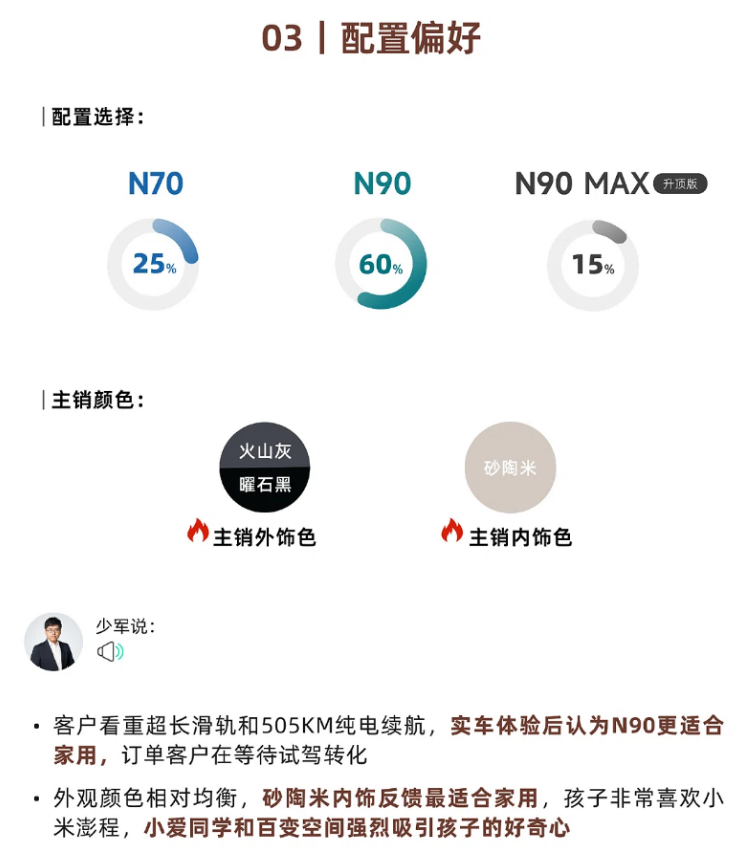
Image Source: Car FANS
The first week of a new car launch is typically the peak of hype, with buzz from the release event, curiosity from shop reviews, and early adopters all converging. Subsequent interest will inevitably decline, with orders naturally tapering off. Moreover, the extended-range segment is already fiercely competitive, with Li Auto and Seres heavily fortified and competitors constantly launching price wars.
Relying on a new car that sells well in high-spec but stalls in low-spec to fill a 300,000+ unit gap is unrealistic. Based on current trends, the 550,000 annual target is almost certainly unattainable.
2. Good News: The Real Explosion Isn’t in Order Numbers—It’s in Market Penetration!
If you focus solely on KPIs, Pengcheng had a disappointing start. However, from a brand perception standpoint, Pengcheng delivered Xiaomi Auto’s most impressive performance yet.
Looking back at previous products: The SU7 targeted tech enthusiasts and young performance lovers; the YU7 catered to young middle-class families prioritizing aesthetics. Both were strong but trapped in relatively closed user circles, mostly concentrated among young internet users, struggling to appeal to family users or older consumers.

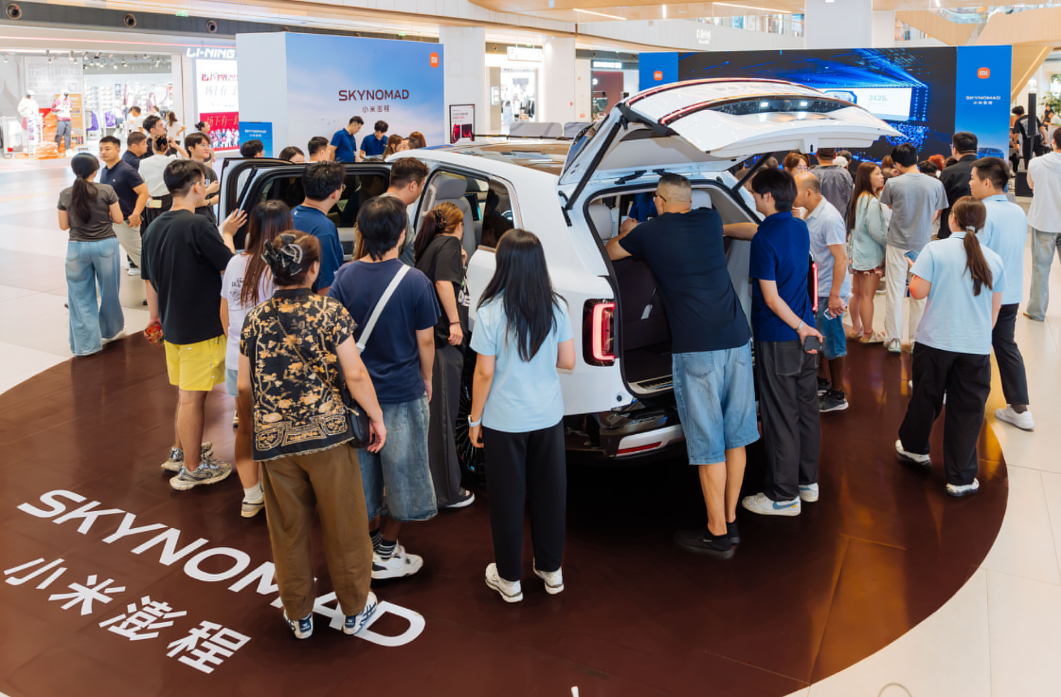
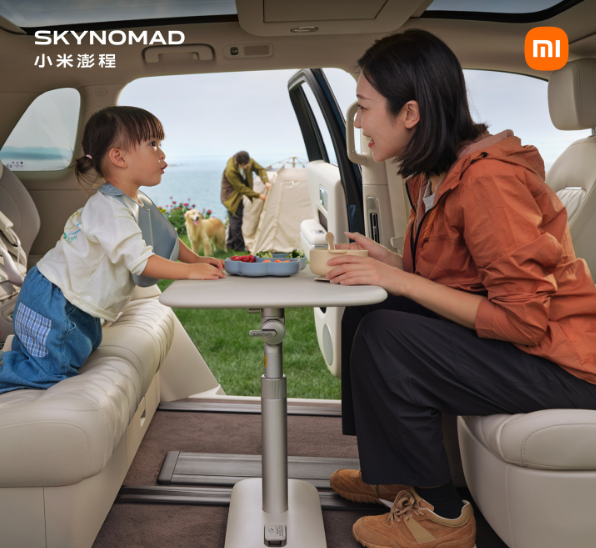 Image Source: Xiaomi Pengcheng Weibo
Pengcheng shattered demographic barriers, with middle-aged, elderly, young, and even children becoming part of the family decision-making process for this car.
Middle-aged buyers are the real spending powerhouse.
The core demographic is concentrated among 30–45-year-olds, 80% male, with a trade-in ratio as high as 80%. This group rarely attends launch events, avoids tech jargon, and doesn’t pay for nostalgia—their criteria are simple: practicality for family use and cost-effectiveness. The large seven-seater layout, extended-range eliminating range anxiety, and standard high-level intelligent driving across all variants, with a starting price just over 200,000 yuan, directly poached massive numbers of family-oriented customers from Li Auto and Seres.
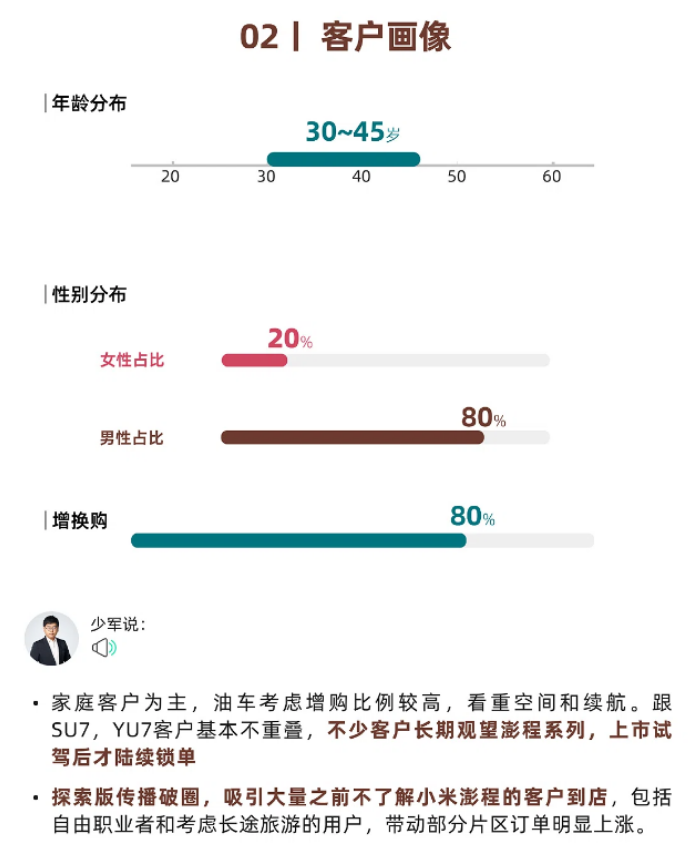
Image Source: Car FANS
Elderly buyers have dropped their ingrained biases against new energy vehicles.
The surge in northern orders is no coincidence. Extended-range models can use both gas and electricity, eliminating the winter range collapse pain point of pure EVs—just refuel for trips back home or long-distance travel. The spacious interior with flexible adjustable seating suits child drop-offs and family outings perfectly. Many elders who previously mocked EVs as unreliable in family group chats are now sharing Pengcheng content—a rare cognitive shift.
Young buyers have become free brand ambassadors.
The factory-installed pop-up camping roof and crossover design (SUV body + MPV cabin) have sparked simultaneous buzz and criticism. Many young people won’t buy yet but love browsing content, discussing specs, and tagging family members for purchase consideration—completing free viral dissemination on social platforms.
Children are severely underestimated as hidden family decision-makers.
Channel feedback reveals an easily overlooked detail: the homey interior, Xiao Ai assistant, and versatile sliding rail space make many kids refuse to leave the car once seated. For many families, while adults compare prices and specs, whether the child likes it and the riding experience directly influences the final purchase consensus.
Most crucially, Pengcheng users barely overlap with SU7 or YU7 buyers.
It’s not cannibalizing existing Xiaomi fans but poaching competitors’ customers. Consumers originally eyeing Li Auto, XPeng, or even traditional MPVs like Buick GL8 and Voyah Dreamer are being lured to test drives. Orders may cool as hype fades, but the family user mindshare won’t vanish overnight. Orders are short-term numbers; the user dividend from market penetration is Pengcheng’s most precious victory.
3. Why Is Everyone Upgrading Their Budget? Xiaomi’s Pricing Strategy is a Masterclass
Many netizens ask: With a starting price of 209,900 yuan looking attractive, why are most buyers opting for high-spec variants? It’s not that consumers are reckless with money—Xiaomi’s tiered pricing perfectly manipulates buyer psychology.
The four configurations have just a 30,000 yuan price gap per tier, but the experience jumps are transformative:
1. N70 Pro | 209,900 yuan: Basic functionality, mechanical suspension, average battery specs, mediocre performance;
2. N70 Max | 239,900 yuan: +30,000 yuan unlocks four-wheel drive, larger battery, air suspension + CDC, drastically improving the overall experience;
3. N90 Max | 269,900 yuan: +30,000 yuan upgrades from a 4.96-meter five-seater to a true 5.28-meter seven-seater with a 3.08-meter wheelbase, second-row zero-gravity seats, and built-in fridge;
4. N90 Max Explorer Edition | 299,900 yuan: +30,000 yuan adds factory-installed electric pop-up roof, completing camp setup in 26 seconds for ultimate sleep freedom.
For car-buying budgets, 30,000 yuan isn’t a fortune, but when comparing config gaps, it easily triggers the “adding 30,000 is insanely cost-effective” mindset. This gradually guides buyers from a 200,000 yuan budget to the 270,000–300,000 yuan range. The N70 Pro isn’t flawed, but its appeal crumbles when compared to high-spec temptations, reducing it to a placeholder variant.
Friendly advice: If you camp fewer than 3 times a year, think twice about the Explorer Edition—the 30,000 yuan premium could cover multiple homestay stays.
4. Don’t Misidentify the Competitor: Pengcheng Isn’t Just Stealing SUV Sales—It’s After MPVs Too
The industry initially assumed Pengcheng would compete solely against Li Auto’s L series and XPeng’s G series family SUVs. After channel data revealed true competitor ratios, its real battleground became clear: 30% Li Auto users, 30% XPeng users, and a shocking 20% from traditional MPV prospective buyers like Voyah Dreamer and Buick GL8.
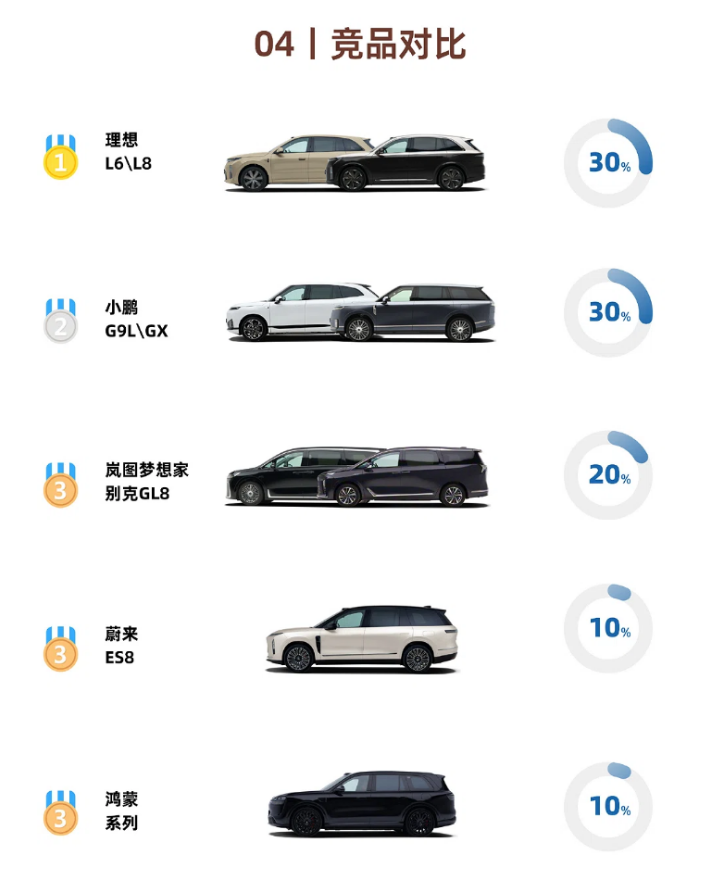
Image Source: Car FANS
Pengcheng employs a dimensional-reduction crossover strategy: an SUV exterior housing an MPV-grade cabin.
Compared to Li Auto, it’s larger and more competitively priced; against XPeng, it boasts dual LiDAR and comparable intelligent driving hardware; versus traditional MPVs, it offers better drivability and parking ease, with controllable battery-depleted fuel consumption for daily commutes and family road trips. Attacking both SUV and MPV segments simultaneously, it’s less about joining the rat race and more about reshaping market dynamics.
Final Thoughts: Exploding Orders Are Just the Appetizer—The Real Test Begins Now
The 47,700 first-week reservations look glamorous, but remember: refundable reservations ≠ final deliveries. Xiaomi faces three critical challenges: 1) How many prospective orders convert to locked-in sales; 2) Whether production can keep up with high-spec order clusters without extending delivery timelines; 3) Whether real-world energy consumption and reputation hold steady post-mass delivery.
The 550,000 annual target may remain out of reach, but that doesn’t overshadow Pengcheng’s value. It fills Xiaomi Auto’s biggest gap: transforming from a young person’s performance toy to a family car seriously considered by all.
Lu Weibing confirmed the YU9 will debut this year. After Pengcheng cracks the family market, YU9 will follow up, with Xiaomi launching a full-scale assault on the 20–40 million mainstream market. Short-term sales may disappoint, but long-term, Xiaomi Auto has truly entered ordinary families’ car-buying considerations.
Interactive Topic:
Do you think Pengcheng can sustain its hype? If buying, would you splurge on the N90 or pragmatically choose the N70? Share your thoughts in the comments!
Disclaimer: This article is purely financial commentary on major companies and does not constitute investment advice. All corporate data and regulatory events mentioned are from public information and for reference only—official announcements prevail. Images sourced from the internet; please contact for copyright removal if needed.
-
Huawei Relinquishes AITO, Seres Assumes Control
-
Entering a New Phase of Auto Exports: BYD and Chery Pursue 'Vehicle Parity Growth'
-
Seres’ Ascendancy in AITO: A Journey Built Over Time
-
![]()
An Apple Product Seven Years Late Enters a Market Where It Can't Set Prices
-
![]()
2026 China Automotive Net Promoter Score (NPS) Index Research: Product Experience Fuels Word-of-Mouth, Brand Marketing Holds the Key to Breakthroughs
-
![]()
Beauty Joins In, ByteDance Ramps Up Investment Game
-
![]()
Jensen Huang Hits Back at Ray Dalio: Is AI the Next Big Financial Bubble?
-
![]()
Battle for the Gateway to the World Model: ByteDance Leans Left, JD.com Leans Right