Seres’ Ascendancy in AITO: A Journey Built Over Time
 09/17 2026
 328
328
The alteration in the collaborative dynamic between Seres and Harmony Intelligent Mobility Alliance has sparked significant debate within the market.
On September 15, AITO and Harmony Intelligent Mobility Alliance jointly declared a modification to their partnership framework. Seres will now assume a leading role in areas including product definition, design, brand marketing, channel retail, and service systems, with Huawei’s consumer business continuing to offer support. For other brands such as MAEXTRO, STELATO, LUXEED, and SHARK, the Huawei-led cooperation model will persist. AITO remains within the Harmony Intelligent Mobility Alliance ecosystem, but the operational leadership has shifted.
Broadly speaking, as the most successful example of cross-industry collaboration in the automotive sector, this adjustment also mirrors, to some extent, a significant shift in industry relationships: tech companies provide intelligent capabilities, while automakers handle vehicle products and user operations. The distribution of responsibilities between the two sides is transitioning from prioritizing efficiency and results in the early stages of cooperation to defining long-term operational boundaries.
For Seres, this change signifies regaining full control over the decision-making process for products and user operations. Automakers must decide which products to produce, at what price to sell them, through which channels to reach users, and assume long-term responsibilities for R&D, manufacturing, inventory, and after-sales service.
Over the past five years, AITO has swiftly completed its brand transformation, leveraging Huawei's product capabilities, technological expertise, marketing system, and sales services. Moving forward, Seres needs to transform the experience gained from the collaboration into its own organizational capabilities and manage AITO according to its own product cycles and operational rhythms.
I. Redefined Roles in the Partnership
Understanding the changes in the cooperation model goes beyond merely identifying 'who takes the lead.' The more crucial aspect is that AITO has evolved from a brand that relied on external capabilities for market validation into Seres' most vital business asset. As the brand, models, supply chain, production system, and consumer relationships gradually take shape, the company naturally seeks more comprehensive operational authority.
AITO's rapid development demonstrates that Huawei's involvement in product development and sales services can significantly expedite the entry of traditional automakers into the high-end new energy vehicle market.
From a timeline perspective, the two sides confirmed their joint development direction for new energy vehicles in 2021. In about five years, AITO's cumulative sales have exceeded 1 million units, with the 1 millionth vehicle rolling off the production line in January 2026, taking approximately 46 months to reach this milestone from scratch. This substantial user base provides a solid foundation for Seres to further develop the brand.
The previous deep collaboration addressed 'how to swiftly create high-end new energy vehicles that consumers are willing to buy,' while the new cooperation arrangement tackles 'who is responsible for the ongoing operation of a mature brand.'
With Seres taking the lead in product definition, design, marketing, channels, and services, product costs, launch timelines, pricing policies, and user operations can now be integrated into a more unified decision-making system. Huawei's continued provision of technological and ecological capabilities preserves AITO's competitive edge in intelligent cockpits, assisted driving, and the Harmony Intelligent Mobility Alliance ecosystem.
The objectives of the two companies have thus become clearer. Huawei aims to develop Harmony Intelligent Mobility Alliance into an intelligent automotive cooperation platform encompassing multiple brands, meaning resources cannot remain concentrated on a single brand indefinitely. Seres, on the other hand, needs to establish AITO as a core brand capable of independent planning, operation, and sustained profitability. The former emphasizes the broad application of technological capabilities, while the latter focuses on the long-term control of brand assets by the automaker. The shift in the cooperation model from full-process leadership to automaker-led with Huawei's support represents a redefined division of roles following changes in the business development stages of both parties.
In 2024, Seres has already paid RMB 2.5 billion to acquire 919 text and graphic trademarks of the AITO series, along with 44 automotive design patents. After the brand assets were transferred, operational authority further returned to Seres, indicating that the long-term understanding of the cooperation between the two sides has long surpassed mere short-term sales collaboration. AITO remains part of the Harmony Intelligent Mobility Alliance family, but brand management requires a clearer responsible entity.
II. Seres Advances at Its Own Pace
After gaining increased control, the most noteworthy aspect is not marketing hype but whether Seres can organize AITO's product capabilities, manufacturing capabilities, and user services according to its own rhythm.
Seres already has a solid foundation. By 2025, the company achieved operating revenue of RMB 165.054 billion, net profit attributable to shareholders of RMB 5.957 billion, sold 472,269 new energy vehicles, and reached a gross profit margin of 28.76% in its new energy vehicle business, up 2.55 percentage points year-on-year. Annual R&D investment reached RMB 12.51 billion, indicating that the company now possesses a complete R&D, manufacturing, and delivery system for new energy vehicles.
In the first half of 2026, Seres' operating revenue was RMB 57.493 billion, with new energy vehicle sales reaching 178,800 units during the same period, up 3.87% year-on-year. R&D investment was RMB 7.007 billion, up 34.8% year-on-year.
Among the existing operational data, AITO's product performance remains notable. Cumulative deliveries of the AITO brand increased by 10.2% year-on-year. The all-new AITO M9 surpassed 20,000 deliveries within seven weeks of launch, with cumulative deliveries across the lineup exceeding 300,000 units, ranking among the top sellers in the RMB 500,000+ market segment for two consecutive months. The AITO M6 achieved cumulative deliveries exceeding 40,000 units within 97 days of its launch.
Overall, the M5, M6, M7, M8, and M9 form a product lineup covering the price range from RMB 250,000 to RMB 650,000, maximizing their presence and influence. The completion of this lineup allows Seres to further determine replacement speeds based on technological maturity, production capabilities, and user feedback, without frequently altering product arrangements in response to short-term market reactions. It can also reuse extended-range, electric drive, and intelligent technologies across more models through platform-based R&D, reducing redundant development costs.
In the past, AITO's sales performance exhibited strong product cycle characteristics: after a new model launch, orders would concentrate, and once the delivery peak ended, the market would await the next product update. Such a rhythm could create phased growth but also tended to push older models into a wait-and-see period prematurely.
After gaining control over product definition and marketing, Seres needs to shift model updates from being 'launch-driven' to 'product system-driven,' allowing flagship models to represent brand stature, mid-range models to expand user coverage, and basic models to maintain stable sales, forming a more continuous product relay.
Additionally, the market's greatest concern is that leading operations will also change cost management approaches.
Data shows that Seres' procurement from Huawei's ecosystem gradually increased from RMB 5.802 billion in 2022, with its proportion of total procurement rising from 14.5% to 33.78% and its proportion of revenue increasing from 17.04% to approximately 33%.
Technology procurement, sales services, and channel services once supported AITO's rapid growth but also constituted operational costs that the automaker needed to account for in the long term. After product definition returned to Seres, the company could compare in-house R&D and external procurement plans based on model positioning, target pricing, and technological requirements, allowing for advance arrangement of the cost structure.
Autonomous selection does not mean rejecting Huawei. For capabilities such as assisted driving, intelligent cockpits, and the Harmony ecosystem, Seres can still continue procurement. The difference is that procurement will now better serve model positioning rather than being automatically determined by the cooperation relationship. Clear boundaries between technology use, brand management, and user services will ensure that each investment corresponds to specific product value.
III. AITO's New Phase Focuses on Brand Strength
While most people only focus on the division of interests between the two companies, they overlook the industry significance of AITO now being led by Seres.
In the era of intelligent vehicles, cooperation between automakers and tech companies is entering a mature phase. Tech companies possess advantages in software, chips, algorithms, and ecosystems, while automakers control manufacturing, quality, supply chains, and user delivery capabilities. Cooperation efficiency stems from complementary capabilities, while long-term value depends on whether the two sides can form a stable, clear, and sustainable division of roles.
AITO's rapid growth in the past has already proven that cross-border cooperation can help automakers achieve a high-end transformation. Seres' transition from a traditional automaker to a high-end new energy enterprise cannot be attributed to a single technology or model but rather results from the combined effects of product development, factory manufacturing, supply chain management, and intelligent cooperation. AITO surpassing 1 million cumulative deliveries also indicates strong market recognition of the brand.
Now, the task in the new phase is to make consumers believe that buying AITO means not just purchasing a product co-created with Huawei but also investing in a brand and services continuously managed by Seres.
Trust needs to be delivered through products. Seres needs to maintain AITO's product quality in the high-end market while reducing positioning overlaps between models, clearly arranging the roles of the M6, M7, M8, and M9 in family travel, business travel, and high-end user markets.
Currently, several representative products reflect Seres' strategic thinking. For example, the starting price of the M9 Ultimate Extended Edition has been raised to RMB 600,000, indicating that AITO is still exploring higher-end market segments. The M6 achieving over 40,000 deliveries within 97 days of launch shows that the brand also needs to maintain broad user coverage. A high-end image and scalable operations are not contradictory; the key lies in whether product divisions are clear and pricing systems are stable.
In terms of service systems, Huawei's previous involvement in channels and sales services provided a unified terminal experience. After Seres takes over, it needs to internalize store management, lead follow-up, delivery coordination, after-sales response, and user operations as its own long-term capabilities. Vehicle purchases are infrequent, and usage cycles are long, so consumers often judge services based on post-delivery experiences. Whoever handles services bears the accumulation of brand reputation and the responsibility for problem resolution.
Even before this division, Seres had already been seeking paths for technological cooperation and organizational capability-building outside of Huawei. For example, Saido Tech launched AIVA and introduced Volcano Engine to provide large models and intelligent cockpit technologies. Phoenix Technology also collaborated with Volcano Engine on embodied intelligence. Seres' technological partners have always been diverse, and it is building the capability to select partners on a project-by-project basis to achieve its strategic goals.
Therefore, rather than fixating on a so-called 'relationship,' it is better to focus on Seres' own resilience.
As of the end of the second quarter of 2026, Seres had RMB 73.15 billion in monetary funds on its balance sheet, with monetary funds accounting for 57.0% of total assets. Sufficient cash supports R&D, channel, and service system construction, allowing the company to operate according to product cycles rather than solely arranging resources around short-term sales.
This is a new starting point for Seres and AITO. Facing market doubts, they are ready to provide answers.
Source: Songguo Finance
-
![]()
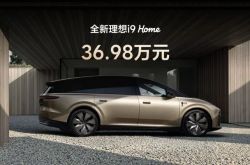
Experience Over Opulence: The Li Auto i9, Priced at 369,800 Yuan, Redefines Flagship Expectations
-
Seres ‘Rebels’ Against Huawei, Revealing the Contradiction in Its ‘Non-Car-Manufacturing’ Position, with ‘Soul’ as the Crux
-
Huawei Relinquishes AITO, Seres Assumes Control
-
Entering a New Phase of Auto Exports: BYD and Chery Pursue 'Vehicle Parity Growth'
-
Seres’ Ascendancy in AITO: A Journey Built Over Time
-
![]()
An Apple Product Seven Years Late Enters a Market Where It Can't Set Prices
-
![]()
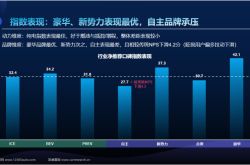
2026 China Automotive Net Promoter Score (NPS) Index Research: Product Experience Fuels Word-of-Mouth, Brand Marketing Holds the Key to Breakthroughs
-
![]()
Beauty Joins In, ByteDance Ramps Up Investment Game