FAW Acquires Stake in Leapmotor
 09/18 2026
 437
437
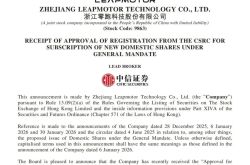
On the evening of September 16, Leapmotor made an announcement stating that it had secured the 'Approval on the Registration of Share Issuance to Specific Objects by Zhejiang Leapmotor Technology Co., Ltd.' from the China Securities Regulatory Commission (CSRC). This approval greenlit the company's application to issue domestic shares to FAW Equity Investment (Tianjin) Co., Ltd. (hereinafter referred to as 'FAW Equity') and Zhejiang Jinhua Jinyi High-Tech Industrial Investment Group (hereinafter referred to as 'Jinyi High-Tech'). The total proceeds from this private placement amount to approximately RMB 6.744 billion.
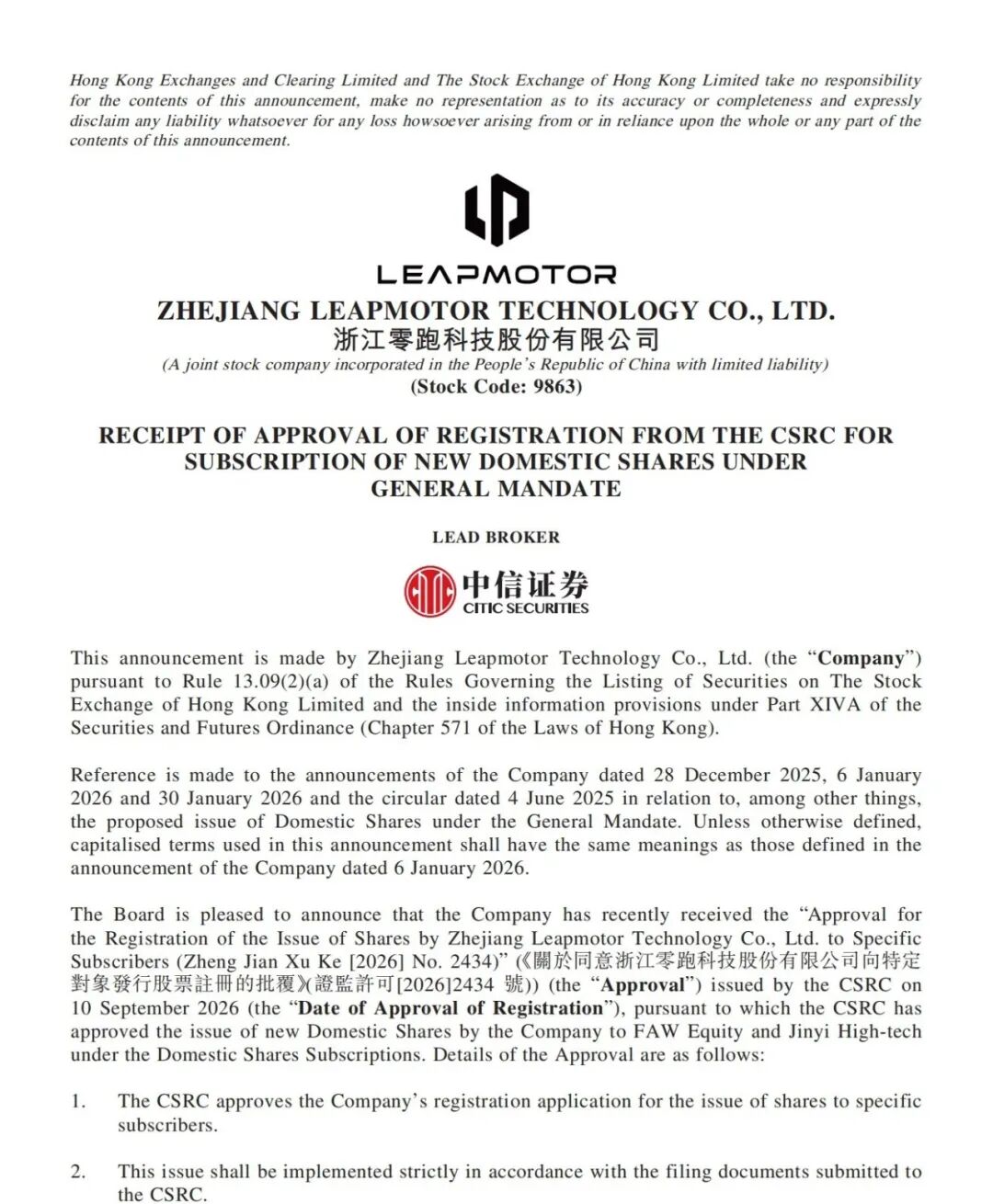
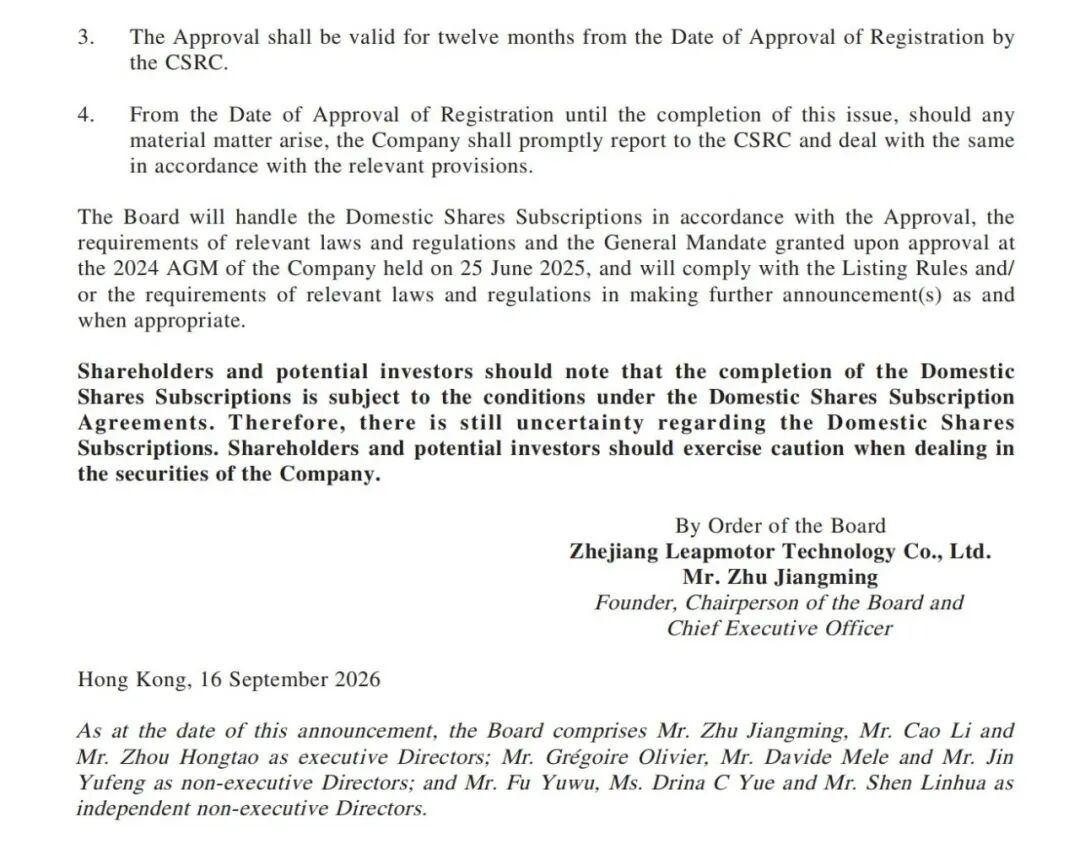
As per the previously disclosed plan, Leapmotor intends to issue 74.8322 million domestic shares to FAW Equity and 59.9640 million domestic shares to Jinyi High-Tech, bringing the total to 134.8 million shares, at a price of RMB 50.03 per share. FAW Equity will contribute approximately RMB 3.744 billion and, following the subscription, will hold around 5% of Leapmotor's shares. Meanwhile, Jinyi High-Tech will contribute approximately RMB 3 billion and will own roughly 4% of the shares. Approximately RMB 4.721 billion (about 70%) of the raised funds will be allocated to R&D investment, with the remaining approximately RMB 2.023 billion earmarked for supplementing working capital, expanding sales and service networks, and other uses.
The entire transaction, from signing to approval, spanned roughly nine months. In March 2025, China FAW Group and Leapmotor signed a memorandum of understanding on strategic cooperation, marking the beginning of a two-way exploration of technology and capital. On December 28 of the same year, FAW Equity and Leapmotor officially inked an investment agreement, confirming that FAW Equity would acquire a stake in Leapmotor through the issuance of additional domestic shares, thus becoming its strategic shareholder. On January 6, 2026, Leapmotor entered into a subscription agreement with Jinyi High-Tech, a local state-owned platform in Jinhua. FAW's acquisition of a stake in Leapmotor represents the first instance of a central state-owned enterprise investing in a new automotive player. However, FAW only holds a minority stake of 5% and does not participate in Leapmotor's daily operations or have a board seat, with Leapmotor's founding team retaining actual control.
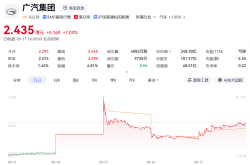
Just two days prior to the approval of Leapmotor's private placement, FAW made another significant capital-level move. On the evening of September 14, GAC Group announced that it had signed an 'Intent Agreement' with China FAW Group Co., Ltd., planning to acquire a portion of the equity in a vehicle manufacturing joint venture held by FAW Group through the issuance of shares and raise matching funds (supporting funds). Upon completion of the transaction, FAW Group will become GAC Group's second-largest shareholder and a shareholder with strategic influence. This transaction is expected to constitute a major asset restructuring and related-party transaction but does not amount to a restructuring listing.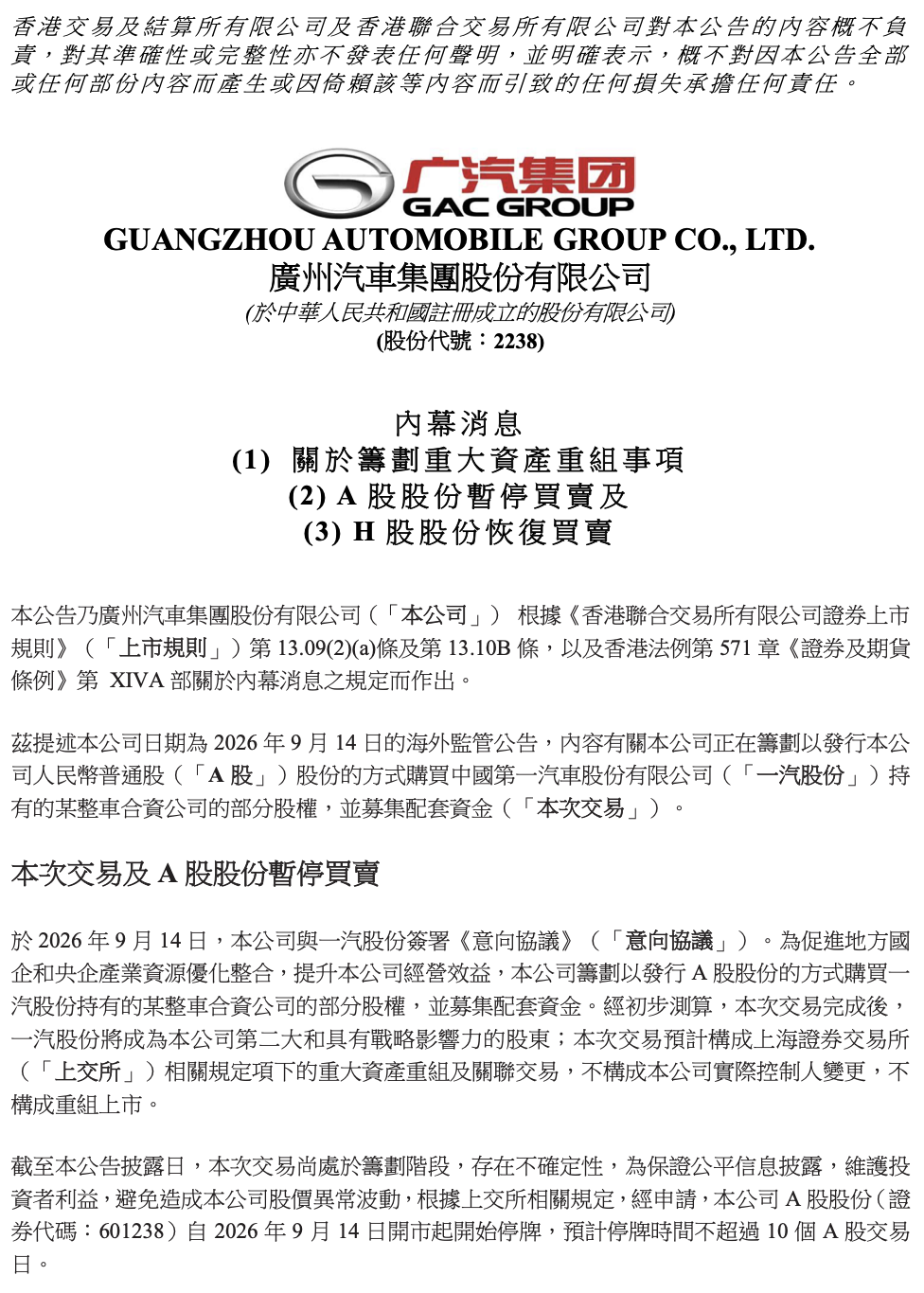
Within a week, FAW made strategic moves in both the private new-force automotive sector and the local state-owned automaker sector. Although the nature of the two transactions differs—the stake in Leapmotor involves a cash subscription, while the cooperation with GAC is a share swap—they share the same underlying logic: using capital as a bridge, adopting minority equity investments, refraining from competing for control of listed companies, and selectively collaborating in areas such as R&D, supply chains, and components.
This reflects the accelerating consolidation in the automotive industry. In the first half of 2026, the average profit margin in the vehicle manufacturing sector plummeted to 1.5%, the lowest in nearly a decade. Domestic total vehicle production capacity surpassed 40 million units, with capacity utilization falling below 70%. The '15th Five-Year Plan for the Development of the Intelligent Connected New Energy Vehicle Industry,' recently issued by nine departments, including the Ministry of Industry and Information Technology, explicitly calls for increasing the intensity of mergers, reorganizations, and cross-regional integrations of automotive enterprises in accordance with the law, and promoting the orderly exit of backward and inefficient production capacity through market-oriented and legalized means.
For FAW, the direct impetus for acquiring a stake in Leapmotor stems from the SASAC's separate assessment of central state-owned enterprises' new energy vehicle businesses. Starting from January 2026, FAW Group will include Leapmotor's sales in its official sales statistics (an agreement at the industry statistical level, not financial consolidation). After excluding Leapmotor's contribution, there is a significant gap between FAW's actual self-owned new energy vehicle sales and those of its peers. Leveraging Leapmotor's sales data and full-domain self-research capabilities is a pragmatic choice for FAW to address its shortcomings in the new energy transition.
For Leapmotor, bringing in industrial capital like FAW not only provides RMB 6.7 billion in funding for R&D and expansion but, more crucially, grants access to the central state-owned enterprise's manufacturing system, supply chain resources, and policy channels. The first model jointly developed by the two parties is expected to be officially launched within 2026, and Qixin Power's hybrid engine is already providing supporting services for Leapmotor's global models.
However, it should be noted that the relevant subscription matters are still contingent upon the fulfillment of conditions under the subscription agreement and thus remain somewhat uncertain.
-
![]()
The 'AI Apocalypse' Drama Staged by Five Individuals
-
![]()
Doubao Mobile Phone II: Can Its 'Knock' Feature Secure 380 Million Monthly Active Users Amidst Ecosystem Openness and Scheduling Rights Challenges?
-
![]()
Can Doubao Mobile Phone II, Which Has Learned to 'Knock,' Exchange 380 Million Monthly Active Users for Ecosystem Openness and Scheduling Rights?
-
Congratulations! In iPhone Duo, China’s Supply Chain Secures a Leading 40% Value Share
-
![]()
GAC Acquires Stake in FAW Toyota: The Merger of North and South Toyota Unveils the Complex Landscape of China’s Auto Market
-
![]()
[Electrical Equipment] 45 BRT Pure Electric Mining Trucks Supplied to Chaonaoliang Coal Mine
-
![]()
FAW Acquires Stake in Leapmotor
-
![]()
From Booming Stocks to Trading Halt: Why is the Market So Optimistic About FAW's Investment in GAC?