Why Has Leapmotor Become the 'Model Student' Among New Energy Players?
 09/19 2026
 429
429

Original content from New Energy Outlook (ID: xinnengyuanqianzhan)
Full text: 2,416 characters | Reading time: 7 minutes
For a condensed version, watch the video; for details, continue reading
A new energy vehicle maker has achieved monthly sales exceeding 100,000 units for two consecutive months and profitability for three consecutive half-year periods, becoming the 'model student' others envy. How did it pull this off?

Figure: Leapmotor's monthly sales exceed 100,000 units for two consecutive months
Source: Internet, screenshot from New Energy Outlook
Recently, Leapmotor revealed that its 'confidence' comes from five technological pillars: vehicle architecture, electronics, batteries, electric drives, and intelligent driving.
At its Tech Day event, Leapmotor—a company with a 'tech-focused' ethos—avoids buzzwords like 'ecosystem' or 'disruption.' Instead, it emphasizes metrics like wire harness length, cabin space efficiency, and electric drive weight. For example, the LEAP 5.0 architecture reduces a vehicle's wire harness length to 500 meters and achieves over 100% cabin space efficiency.
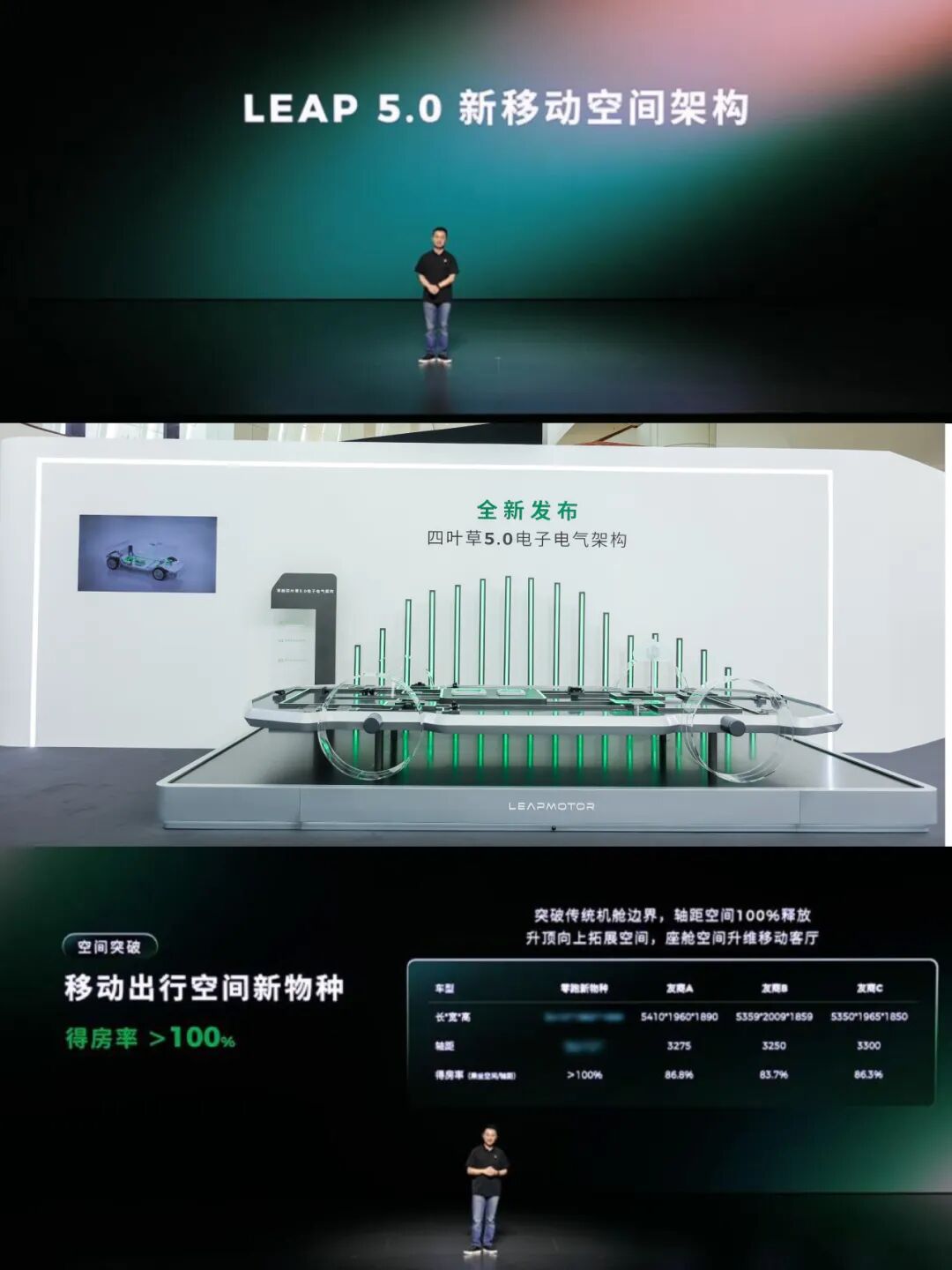
Figure: LEAP 5.0 architecture
Source: Internet, screenshot from New Energy Outlook
Of course, Leapmotor's 'ambitions' were also evident at the event. Zhu Jiangming, founder, chairman, and CEO of Leapmotor, aspires to make Leapmotor the 'Apple of the automotive industry,' hoping its second brand will deliver 'the feeling of smartphones replacing feature phones.'
Given Zhu's track record of delivering on bold promises and Leapmotor's consistent lead in sales and profitability among new energy players, its next-generation products are worth anticipating.
But has Leapmotor truly 'made it'?
1. Leapmotor: The Only New Energy Player with Three Consecutive Half-Year Profits
With NIO releasing its H1 2026 financial results in early September, the half-year reports of the top four new energy players are now complete, revealing surprising outcomes.
NIO led with RMB 57.67 billion in revenue, ranking first among new energy players, and achieved RMB 270 million in operating profit for H1, marking three consecutive quarters of operational profitability. However, its net loss attributable to ordinary shareholders was still RMB 860 million, a 92.68% year-on-year reduction.
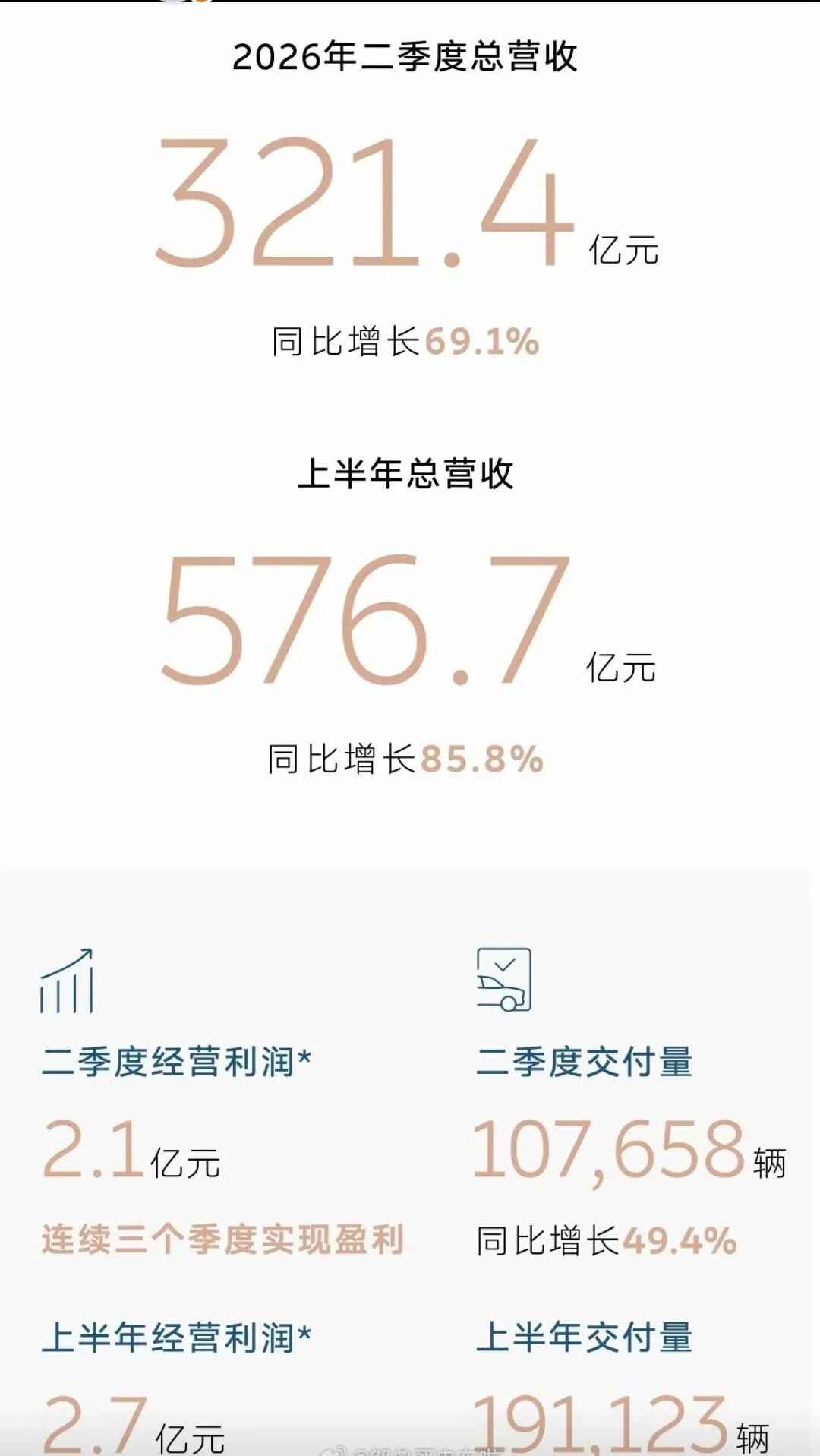
Figure: NIO's profit and loss
Source: Internet, screenshot from New Energy Outlook
Li Auto reported RMB 48.65 billion in revenue but incurred an operating loss of RMB 5.3 billion in H1, compared to an operating profit of RMB 1.1 billion in the same period last year. Its net loss attributable to shareholders was RMB 3.994 billion, versus a profit of RMB 1.743 billion last year, shifting from profitability to loss.
XPeng generated RMB 32.78 billion in revenue, with an operating loss of approximately RMB 3.02 billion in H1, worse than last year's RMB 2.1 billion loss. Its net loss attributable to shareholders was RMB 3.12 billion, a 173.7% year-on-year increase, making it the most pressured by losses among the three.
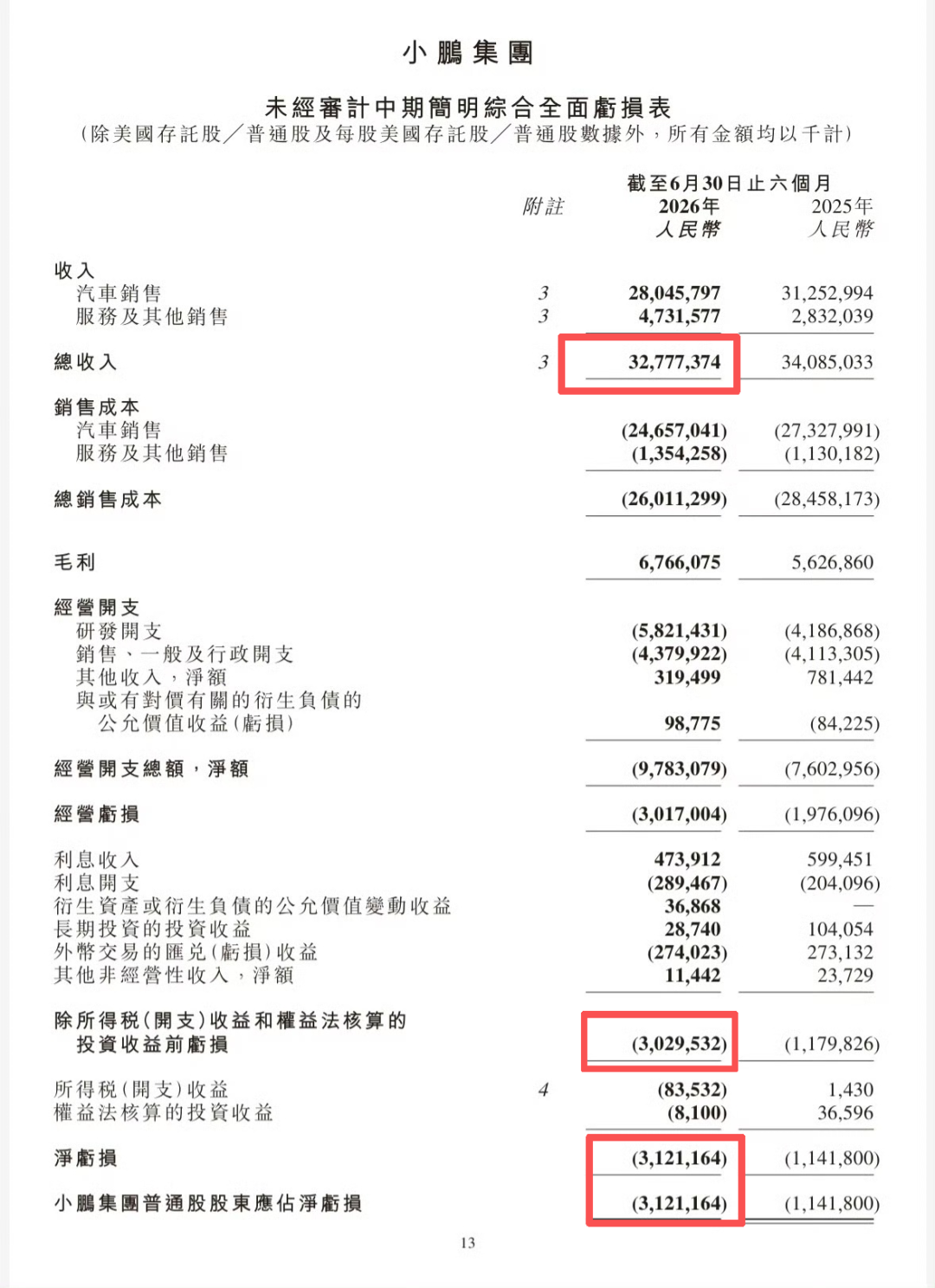
Figure: XPeng's profit and loss statement
Source: XPeng financial report
In contrast, Leapmotor achieved RMB 38.11 billion in revenue in H1, a record high for the period, and RMB 210 million in net profit, marking three consecutive half-year periods of profitability. Its Q2 gross margin rose sequentially to 12.6%.
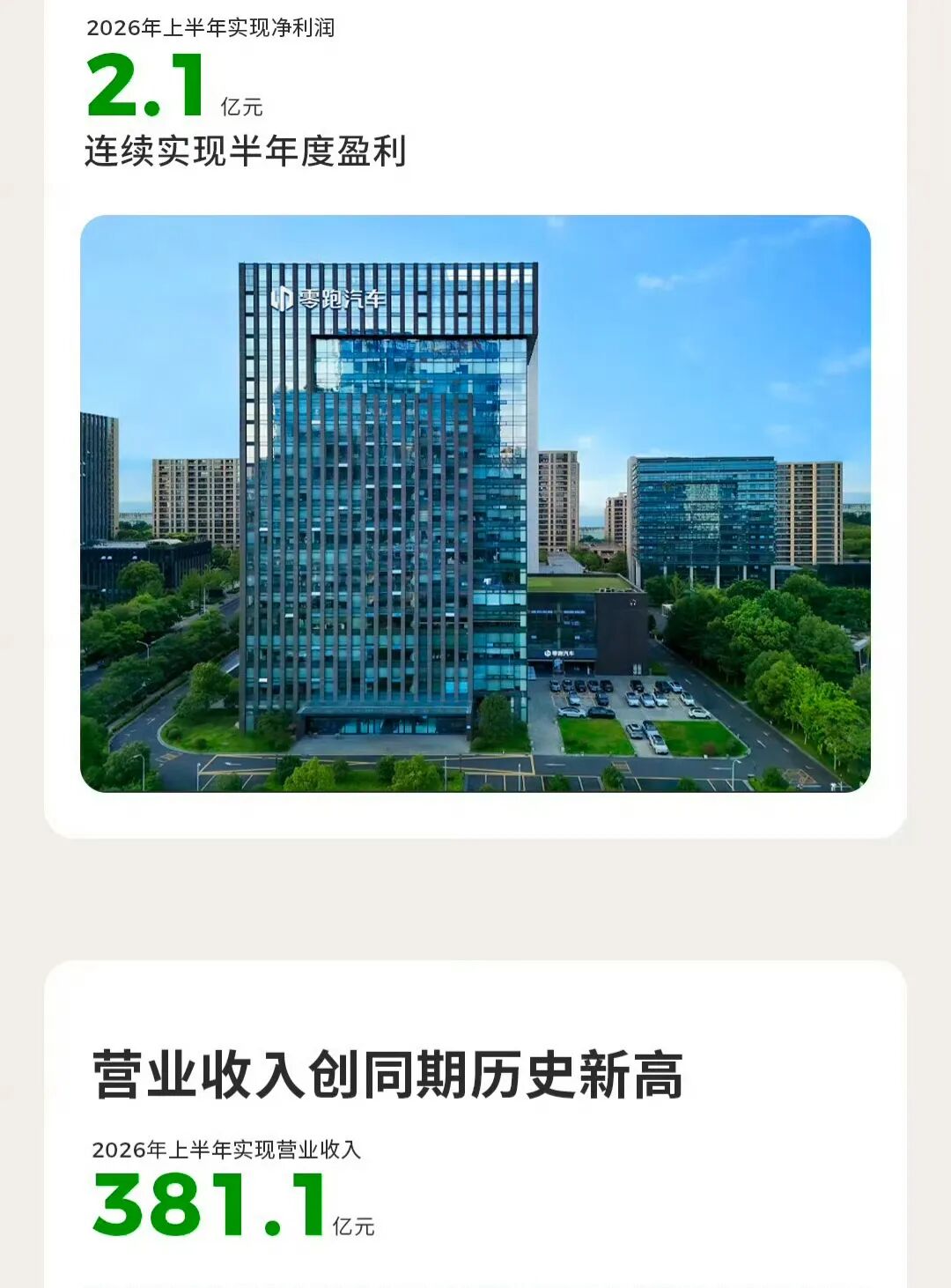
Figure: Leapmotor's H1 revenue reaches RMB 38.11 billion, net profit RMB 210 million
Source: Internet, screenshot from New Energy Outlook
In summary, NIO achieved operational profitability, while Li Auto and XPeng remained unprofitable. Only Leapmotor achieved sustained profitability.
In terms of sales, Leapmotor also led decisively. It delivered 356,487 units globally in H1, a 60.8% year-on-year increase. NIO delivered 191,123 units (+67.4%), Li Auto 193,472 units (-5.1%), and XPeng 165,977 units (-15.8%).
Calculating roughly by net profit per delivery, the gap widens: Leapmotor earned ~RMB 590 per vehicle delivered, while NIO lost ~RMB 4,500, XPeng ~RMB 18,800, and Li Auto ~RMB 20,500 per vehicle.
More notably, in July, Leapmotor became the first new energy player to exceed 100,000 monthly deliveries, with its A10 model outselling Tesla's Model Y to claim the SUV sales crown. Meanwhile, NIO, Li Auto, and XPeng saw sequential sales declines, showing no signs of explosive growth.
2. Behind the Success, Leapmotor Has Faced Challenges
Leapmotor's profitability stems directly from sales volume driving scale effects, which amortize fixed costs like R&D, factory construction, production, and marketing. Additionally, in-house control over most components is a core reason for its sustained profitability.
To date, Leapmotor independently manages 65% of vehicle costs, operates 18 component factories, and achieves over 88% platform commonality. From cells to battery packs, motors to controllers, and components to headlights, it has achieved full in-house R&D and deep manufacturing for core and high-value parts.
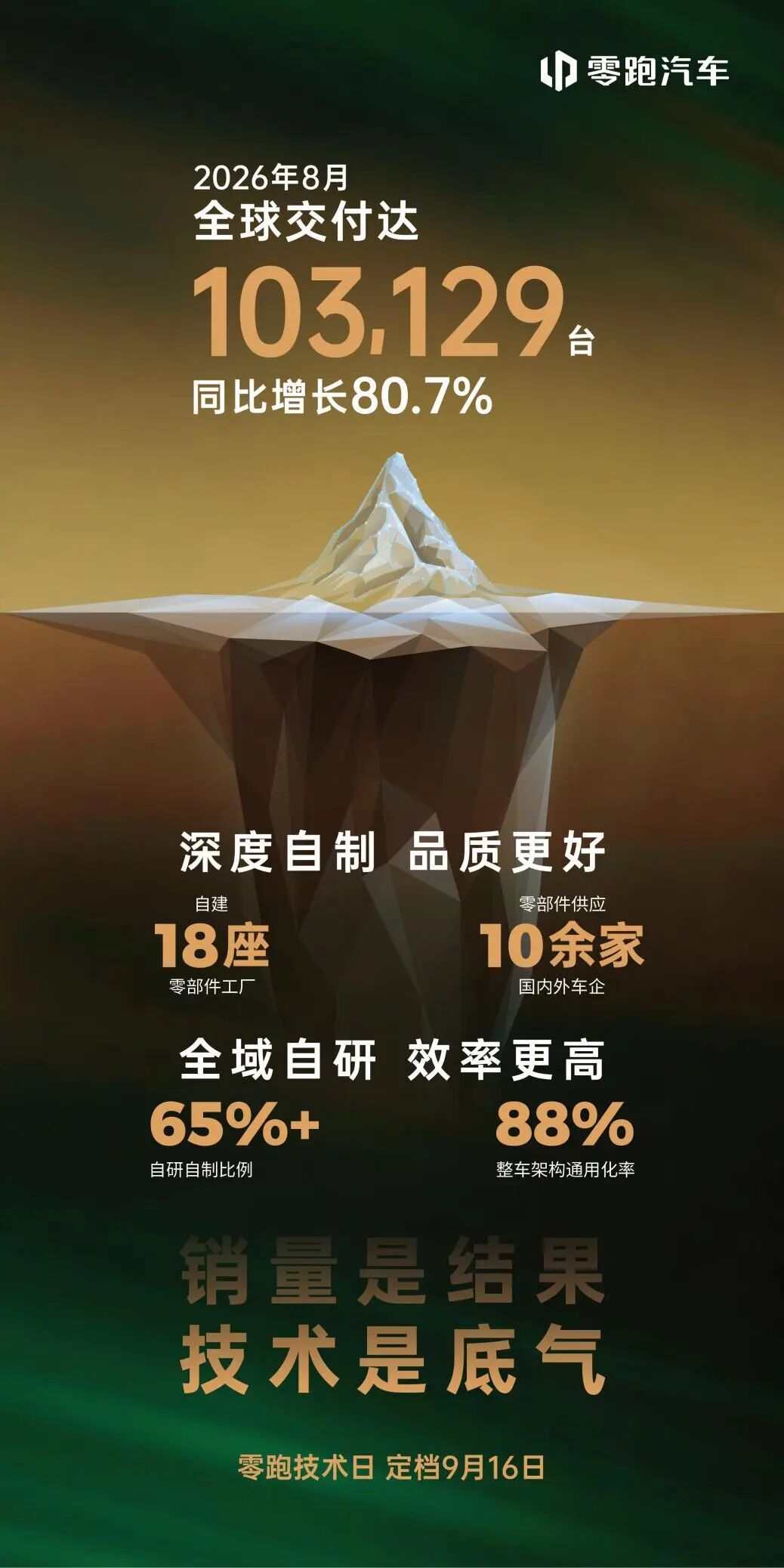
Figure: Leapmotor self-develops and manufactures over 65% of components, operates 18 factories, and achieves over 88% vehicle commonality
Source: Internet, screenshot from New Energy Outlook
Zhu Jiangming explained it bluntly: 'If Leapmotor relied on suppliers like traditional automakers, it would struggle to keep pace with technological innovation and face high costs, severely limiting success.'
Leapmotor's main products are priced around RMB 100,000, relying on high volume at low margins. However, thin margins demand strict supply chain cost control, sometimes at a cost.
The most direct consequence was battery complaints in the B series.
On platforms like CheZhiWang, B10 complaints focused on severe range overestimation. One owner reported that their 510km-range model, purchased less than two months ago, achieved less than 45% of the advertised range under normal driving conditions, a significant discrepancy. Another owner noted that the same 510km model delivered 270km in summer but only ~150km in winter, severely impacting usability.
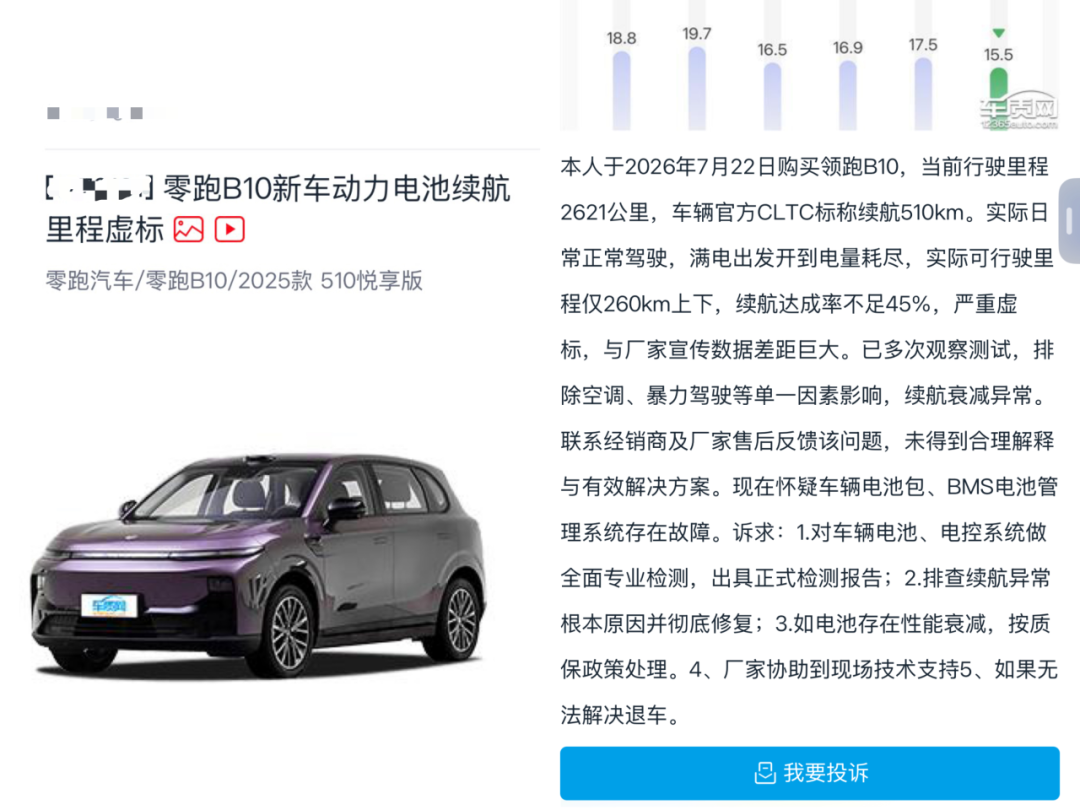
Figure: B10 complaints on CheZhiWang
Source: CheZhiWang
The B01 faced similar issues. One owner reported that a model with a 302km 'dynamic range' could only travel ~100km, a 30% range achievement rate, with air conditioning accounting for 40% of power consumption.
These complaints stem from the same issue: B series battery solutions were chosen based on cost and Leapmotor's self-developed CTC (cell-to-chassis) technology. By procuring cells and integrating them with the vehicle structure via CTC, Leapmotor aimed to reduce costs—a recognized industry approach. However, inconsistencies emerged during mass production.
Additionally, Leapmotor's C10 faced recurring complaints on platforms like CheZhiWang, including trunk rattles, brake noises, and charging failures after OTA updates.
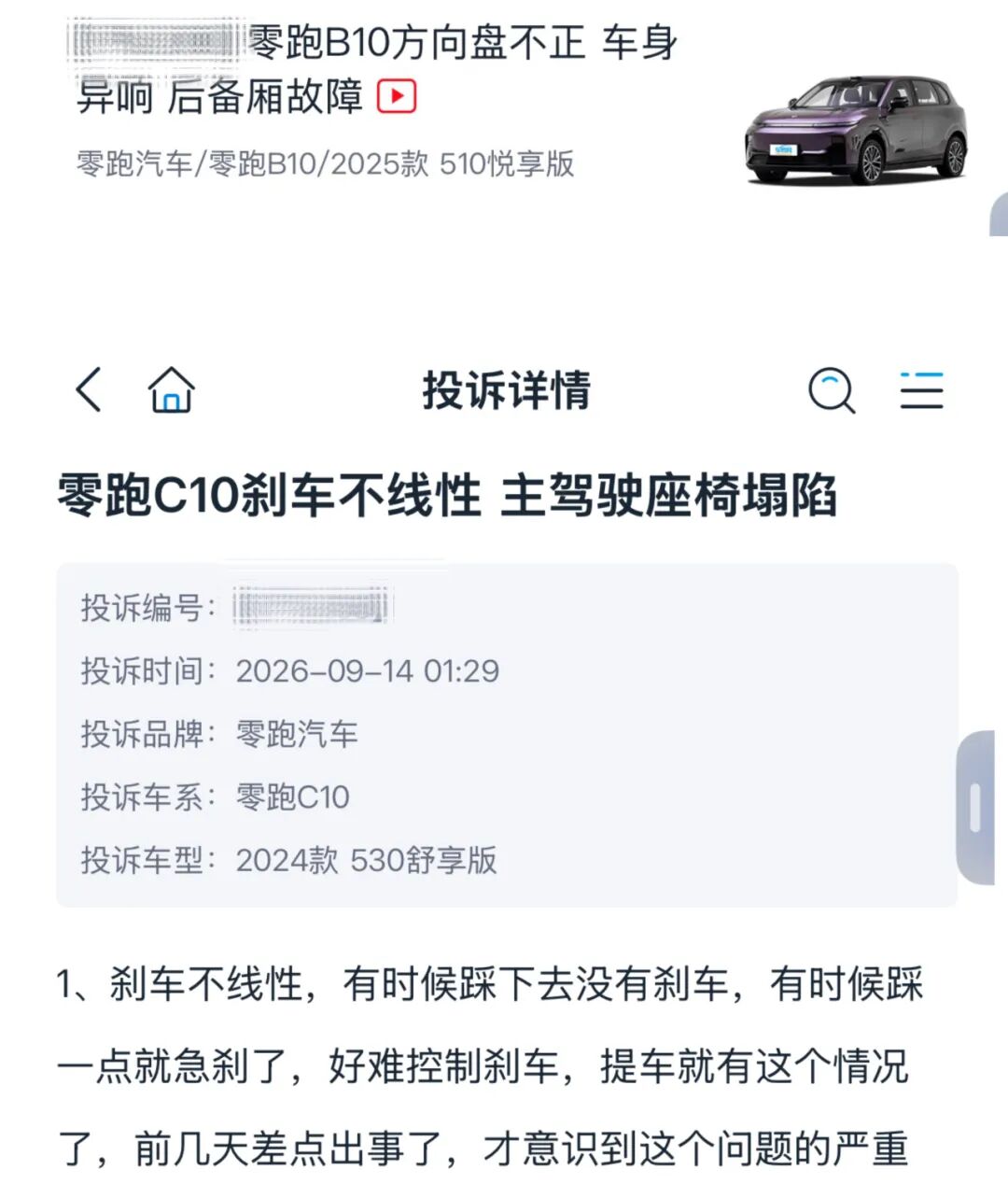
Figure: Various C10 complaints on platforms
Source: CheZhiWang
For the same company and system, consumer experiences felt like parallel universes.
3. Leapmotor Adjusts Course, Brand Ascends
What truly made the industry reevaluate Leapmotor was its high-end product strategy.
In October 2025, Leapmotor launched its flagship D platform, with the D19 featuring CATL cells, Bosch steering, Continental braking, and Konghui air suspension.
By 2026, the D99 debuted, exclusively using CATL's 115kWh super hybrid cells, supplied solely by CATL. In August 2026, CATL Chairman Zeng Yuqun became a D99 owner, with Zhu Jiangming personally delivering the vehicle.
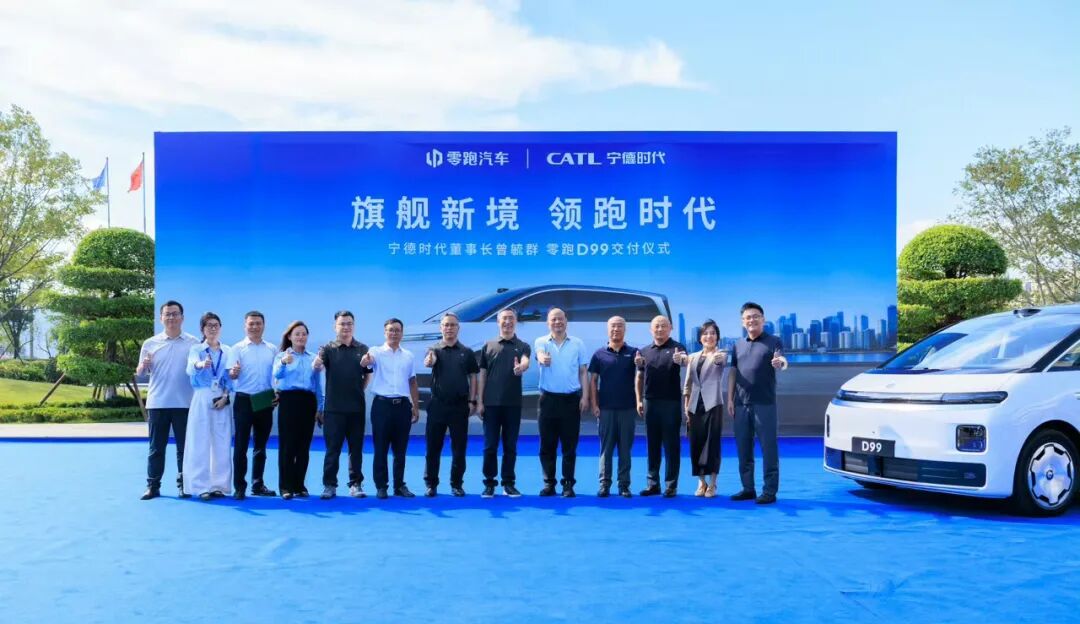
Figure: D99 launch. CATL Chairman Zeng Yuqun becomes a D99 owner, with Zhu Jiangming delivering the vehicle
Source: AI-generated
This move warrants closer inspection.
After facing setbacks with cost-optimized self-developed solutions in the B series, Leapmotor pragmatically chose CATL for the D series—not a 'retreat' but a pragmatic shift.
Zhu Jiangming neither outright rejected suppliers nor stubbornly insisted on 'in-house batteries for all.' The choice of battery solution depends on user expectations for range and reliability at each price point.
This pragmatism extends to Leapmotor's globalization strategy. By forming a joint venture with Stellantis, Leapmotor ceded overseas channel control in exchange for over 850 European sales and service outlets. In H1, it exported 96,294 units, a 372.6% year-on-year increase, surpassing total exports in 2025.
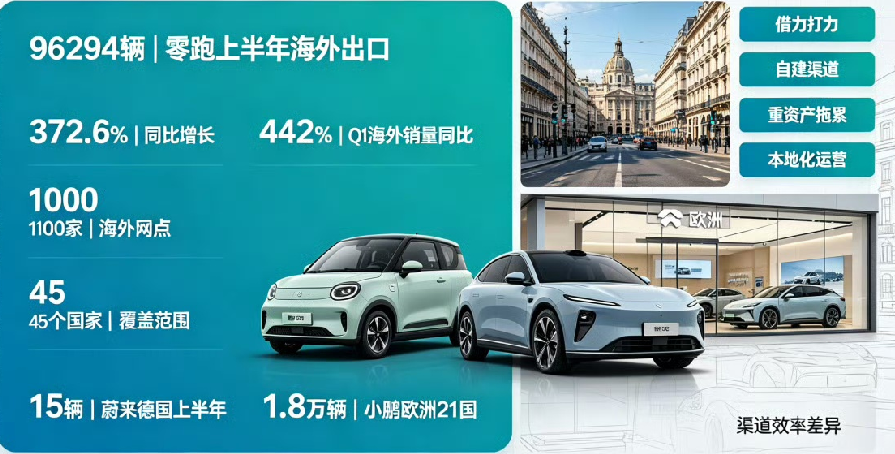
Figure: Leapmotor's H1 overseas exports reach 96,294 units, a 372.6% year-on-year increase
Source: Internet, screenshot from New Energy Outlook
Leapmotor's progress is undeniable, but success remains elusive. For example, its 2026 net profit target is RMB 5 billion, yet it only achieved RMB 210 million in H1—a nearly impossible task. Leapmotor CFO Li Tengfei admitted on the earnings call, 'Achieving RMB 5 billion in net profit is extremely difficult; we expect ~RMB 3 billion for the full year.'
Leapmotor's gross margin is also under pressure, slipping from 14.1% to 11.7% in H1, as low-priced models like the A10 dragged down the average selling price.
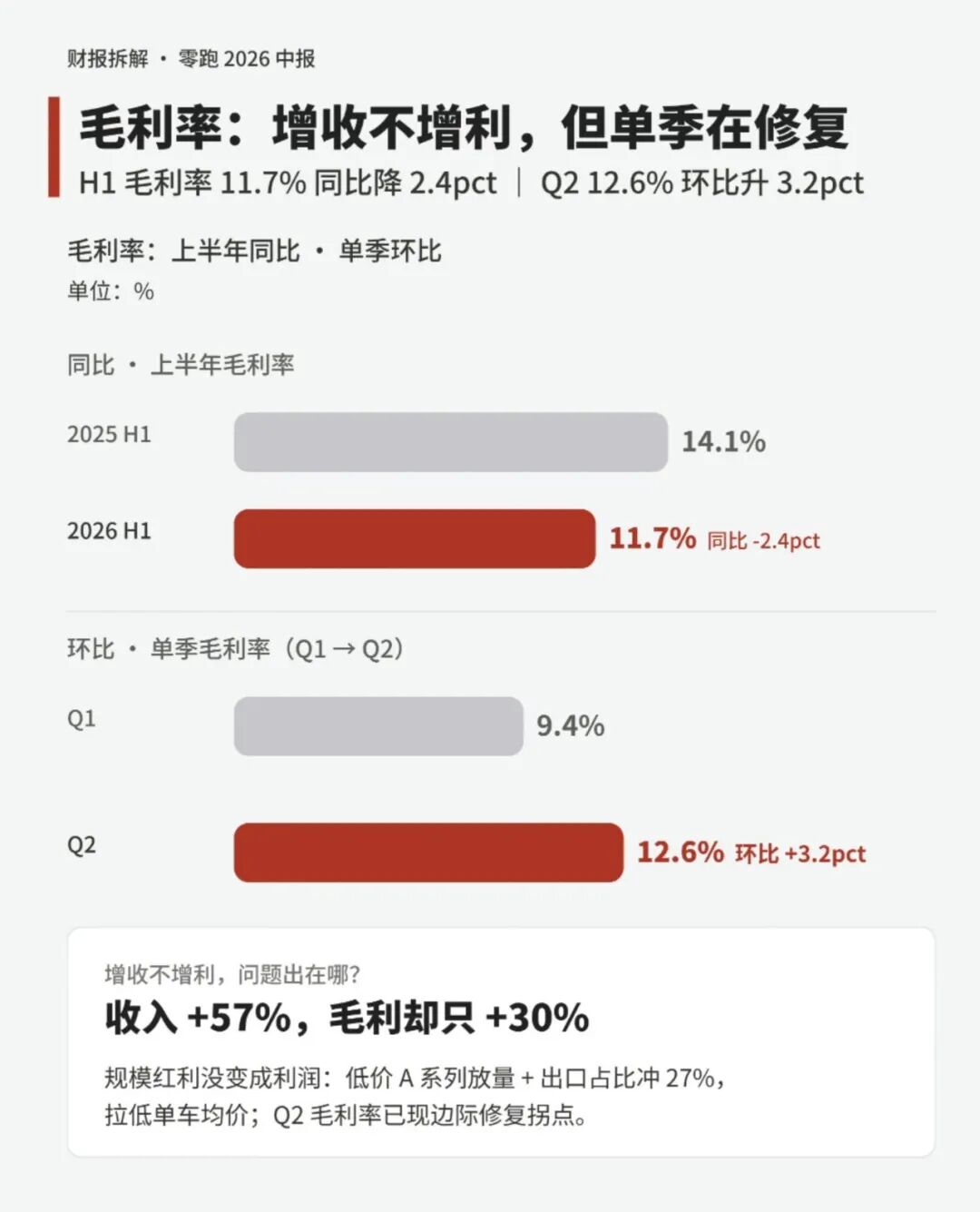
Figure: Leapmotor's H1 gross margin slips from 14.1% to 11.7%
Source: Internet, screenshot from New Energy Outlook
Founded in 2015, Leapmotor has proven in 11 years that a 'capital-intensive, deep self-research' approach can work, but it's not perfect. Battery and other complaints in the B and C series are real, as are quality control issues.
Amid calls by some automakers to 'de-CATL-ize,' Leapmotor's firm choice of CATL for high-end models creates mutual empowerment. Its direction is clear: build core capabilities, control costs, solidify technology, and offer consumers a reasonable price.
More in the new energy sector favor Leapmotor not because it's the fastest, but because it knows where to focus its efforts.
[Header image generated by AI]
-
AI News丨Sugon and China-ASEAN AI Application Cooperation Center Sign Strategic Cooperation Agreement
-
Industry丨Concentrated Launch of Foldable Flagships: Hinges Become Key Battleground in Supply Chain
-
![]()
Post-GoPro Era: From Three-Way Contest to Duopoly in Smart Imaging
-
The Post-GoPro Era: How the Smart Imaging Market Evolved from a Three-Way Contest to a Two-Way Showdown
-
![]()
Why Has Leapmotor Become the 'Model Student' Among New Energy Players?
-
Ant Group, Baidu's Du Xiaoman, Huawei, and Tencent: Who Will Be the First to Penetrate the Banking Sector with Financial AI?
-
Alibaba Doesn't Need Wu Zhao
-
Has Seres, with Its Extensive Store Network, Foreseen AITO's Current Success?