Gross Margin Dips Below 10%, Li Auto Temporarily Sets Aside Its 'Competitive Edge'
 09/21 2026
 382
382
Facing pressure on car sales, Li Auto opts to 'open up' its technologies.
On September 18, 2026, 36 Krypton reported that multiple industry insiders revealed Li Auto has initiated plans to supply several core technologies externally. These include its self-developed Mach chips, silicon carbide modules, and range extenders.
Li Auto's technologies have piqued the interest of some industry players. According to the 21st Century Business Herald, during the 2026 Beijing Auto Show, several former Li Auto executives, in meetings with CEO Li Xiang, frequently inquired, "Can the Mach M100 be supplied externally?" Against this backdrop, Li Auto began promoting independent and corporate operations for its chip and silicon carbide businesses.
However, delving deeper, Li Auto's decision to open up its technologies is not solely to cater to the entrepreneurial ventures of former executives. The company is also under performance pressure and urgently needs to explore new growth avenues by selling technologies.
While widespread procurement by external companies can indeed help Li Auto reduce R&D costs and achieve economies of scale, opening up its core technologies may also diminish Li Auto's exclusivity in the market.
From Profitability to Losses: Li Auto's Urgent Need to Reduce Costs
At one point, Li Auto, leveraging the strong first-mover advantage of its range-extended SUVs, became the first new-energy vehicle (NEV) startup in China's auto industry to achieve annual profitability.
However, Li Auto's success was short-lived. On one hand, as pure electric vehicles (EVs) closed the configuration gap, the market dividends for range-extended vehicles gradually diminished. On the other hand, competitors continuously launched range-extended products with superior configurations, placing Li Auto under significant downward pressure.
Financial reports indicate that in the first half of 2026, Li Auto delivered 193,500 vehicles, a year-on-year decrease of 5.1%, completing only 39.7% of its annual delivery target. During the same period, Li Auto's overall gross margin was just 9.5%, a year-on-year decrease of 10.8 percentage points, falling below the healthy threshold of 15%-20% mentioned by Li Xiang.

Despite sluggish car sales, to weather the downturn, Li Auto had to increase its R&D investment. In the first half of 2026, Li Auto's R&D expenses reached RMB 5.498 billion, a year-on-year increase of 3.3%, with an R&D expense ratio of 11.3%, up 1.8 percentage points year-on-year. Li Auto anticipates its R&D expenses to reach RMB 12 billion in 2026, with 50% allocated to AI.
The decline in gross margin in the first half of 2026, coupled with increased R&D expenses, ultimately resulted in Li Auto's net profit attributable to shareholders shifting from RMB 1.744 billion in the same period last year to a loss of RMB 3.981 billion.
To offset the pressure of sluggish growth in range-extended SUVs, Li Auto has been actively venturing into the pure electric vehicle sector in recent years, launching products such as the Li Auto MEGA, i8, i6, and i9. However, overall, as the penetration rate of NEVs rises, the ceiling of China's NEV retail market is gradually becoming apparent.

Data disclosed by the China Passenger Car Association (CPCA) shows that in the first eight months of 2026, China's NEV retail sales reached 6.674 million units, a year-on-year decrease of 12.1%. Retail sales of pure electric, plug-in hybrid, and range-extended vehicles were 4.469 million, 1.6 million, and 606,000 units, respectively, with year-on-year decreases of 3.9%, 27.1%, and 19.3%.
Against this backdrop, Li Auto's decision to supply its core technologies externally is largely a desperate move under the dual pressures of a declining market ceiling and falling capital efficiency.
Struggling to Differentiate: Automakers Move 'Upstream'
With their intelligent capabilities, NEVs can indeed offer differentiated user experiences compared to traditional fuel vehicles. However, overall, as most automakers transition to new energy, the differences between NEVs are becoming increasingly blurred.

For example, Xpeng's selling point used to be intelligent driving, but now, L2-level assisted driving functions are widely available in mid-to-high-end NEV models. Li Auto and NIO relied on range extension and battery swapping to alleviate range anxiety, respectively. Currently, with the popularity of 800V platforms, high-rate batteries, and high-power charging networks, the charging speed of pure electric vehicles is significantly improving.
Against this backdrop, China's NEV industry has fallen into a quagmire of homogeneous competition. Data disclosed by the China Association of Automobile Manufacturers (CAAM) shows that in the first seven months of 2026, China's auto industry generated RMB 6.078 trillion in revenue, a slight year-on-year increase of 2.7%; profits reached RMB 216.2 billion, a year-on-year decrease of 20%; and the profit margin was just 3.6%.
This is precisely the core reason why Apple did not enter the car-making business. Duan Yongping, the founder of BBK and an investor, believes that Apple's decision not to make NEVs "is not a technical issue but what they can actually do. For such a large vehicle, the value Apple can provide is very limited."
To break free from this dilemma, many automakers are transforming into suppliers, aiming to achieve business growth by selling core technologies to traditional automakers.
In July 2023, Volkswagen invested approximately $700 million to acquire a 4.99% stake in Xpeng, and the two companies reached a strategic technology cooperation framework agreement. Subsequently, they further signed a platform and software joint development technology cooperation agreement, as well as an electronic and electrical architecture technology strategic cooperation framework agreement.

Currently, technology cooperation has become a new growth point for Xpeng. In the first half of 2026, Xpeng's revenue from services and other businesses reached RMB 4.732 billion, a year-on-year increase of 67.1%, with technology R&D services being a significant contributor.
More importantly, the high-margin technology services business has significantly bolstered Xpeng's overall gross margin. In the first half of 2026, Xpeng's vehicle gross margin decreased by 0.5 percentage points year-on-year to 12.1%; however, the gross margin for services and other businesses increased by 11.3 percentage points year-on-year to 71.4%, driving the company's overall gross margin up by 4.1 percentage points to 20.6%.
Based on Xpeng's disclosed revenue and gross margin, in the first half of 2026, services and other businesses contributed approximately RMB 3.377 billion in gross profit to Xpeng, a year-on-year increase of 98.4%.
Not just Xpeng, Leapmotor is also actively monetizing its technologies. According to Zhu Jiangming, CEO of Leapmotor, Leapmotor is engaging in platform-level cooperation with FAW and Stellantis, providing core components such as battery packs, electric drives, and controllers to its partners.
However, it is important to note that unlike Xpeng and Leapmotor, which first partnered with heavyweight collaborators before opening up their core technologies externally, Li Auto has only initiated relevant plans at this stage and has not yet gained recognition from leading enterprises.
Extending its reach into the supply chain can indeed help dilute the R&D costs of core technologies, but it will not make automakers qualified suppliers overnight. For Li Auto, launching a plan to supply core technologies externally merely shifts the technologies from internal departments to the external market. The real challenge lies in convincing competitors to make purchases.
Technology Monetization: Li Auto Faces 'Dual Challenges'
As a product manager, Li Xiang does not conceal his admiration for Apple and aspires to transform Li Auto into the 'Apple' of the auto industry. During the 2022 earnings call, Li Xiang explicitly stated, "Ten years from now, looking at our capabilities, I hope we can achieve the same standard as Apple."

Li Auto has previously emphasized vertical integration of hardware and software, a closed collaborative approach that shares some similarities with Apple. The issue is that to maintain a differentiated user experience and a unique brand image, Apple rarely shares its core technologies with external companies, including iOS, macOS, and A-series/M-series chips.
In contrast, Li Auto has chosen to open up its core technologies, such as its self-developed Mach chips, silicon carbide modules, and range extenders. This may bring two challenges: first, it may affect internal product planning; second, external clients may harbor skepticism.
Internally, over the past few years, Li Auto has continuously increased its self-developed R&D investment, with the core strategic goal of creating a closed loop among chips, powertrains, and vehicle software to deliver an outstanding user experience.

For example, to enhance the premium appeal of its flagship models, Li Auto has implemented strict configuration differentiation across its product lineup. Currently, only the all-new Li Auto L8 and L9, priced at over RMB 300,000, are equipped with the third-generation self-developed range extender, while the new-generation Li Auto L6, priced at RMB 249,800, still uses the older range extender.
If the third-generation self-developed range extender is widely supplied externally, competitors could apply this technology to models priced at RMB 200,000 or even RMB 100,000, weakening the differentiation of Li Auto's high-end models and disrupting its internal product hierarchy.
Externally, while the auto industry is not lacking in technology suppliers, traditional Tier 1 suppliers typically do not directly operate vehicle brands to avoid conflicts of interest with their clients.
The reason is that when an automaker simultaneously acts as a supplier and a competitor, it is difficult to completely alleviate external clients' concerns. If Li Auto's proprietary models and external clients use the same technology, external clients will inevitably worry about supply security, product iteration, and the stability of the technological roadmap.
To reduce potential clients' concerns about competitive relationships, Li Auto is promoting independent operations for its related businesses. Take Sikro Semiconductor as an example: it was jointly funded by Li Auto and San'an Optoelectronics and initially reported to Li Auto's manufacturing department. According to 36 Krypton, in February 2026, the company transitioned to independent operations, with its management team reporting to the company's board of directors instead.
However, the equity and control of these businesses remain highly dependent on Li Auto. Tianyancha shows that Li Auto still holds a 70% stake in Sikro Semiconductor. Xinchuangzhine, which encompasses the Mach chip business, is wholly owned by Li Auto.
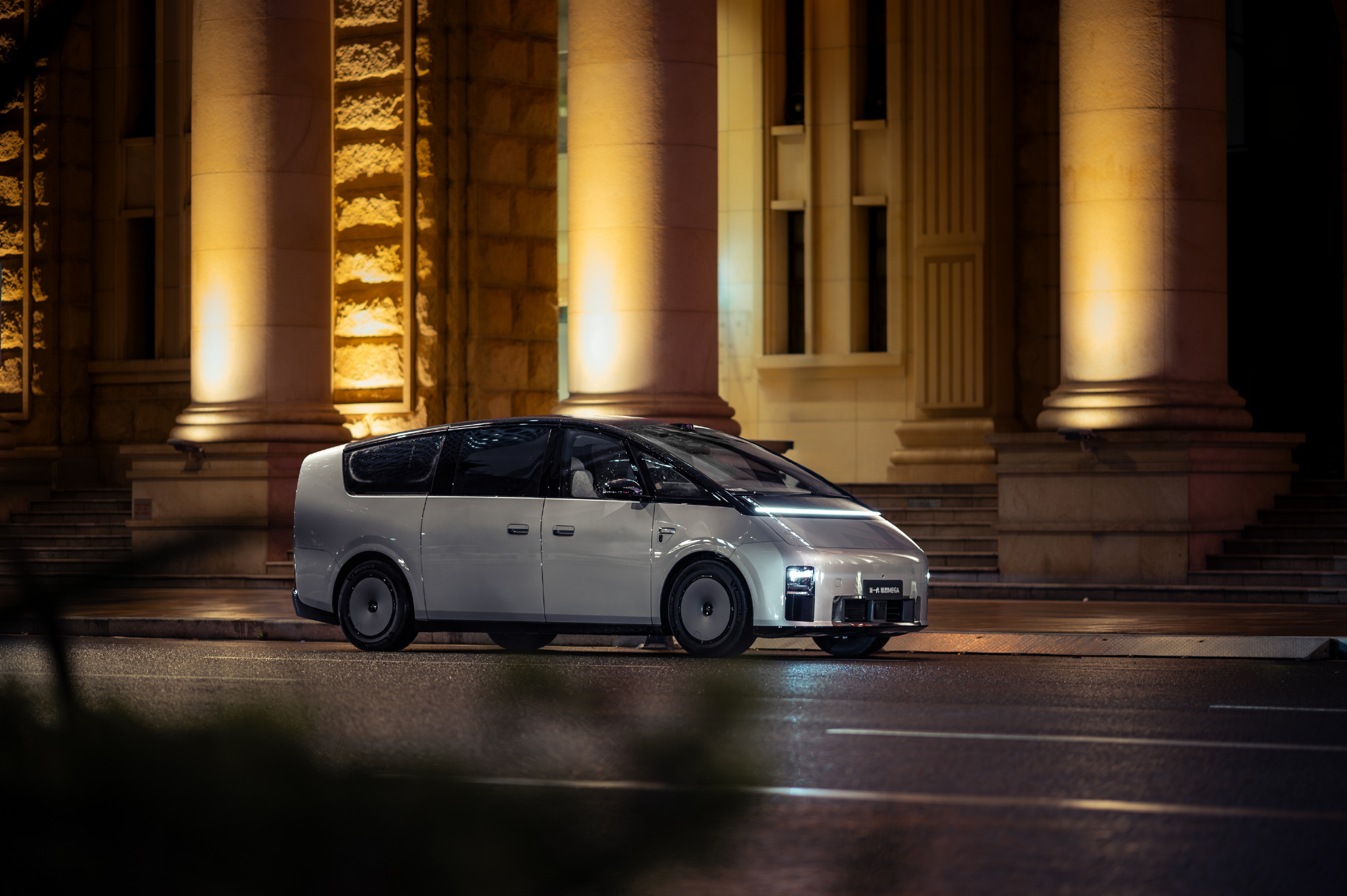
Previously, vertical integration was seen as a symbol of technological leadership and supply chain security. However, in the context of sluggish growth in vehicle sales and intensifying industry competition, heavy self-developed R&D can also erode automakers' profits.
From this perspective, Li Auto's decision to supply its core technologies externally is less about transitioning from a vehicle manufacturer to an ecosystem technology company and more about reevaluating the capital returns of its self-developed technologies.
What Li Auto needs to prove next is not whether the company can continue to produce chips, silicon carbide power modules, and range extenders but whether these technologies can become 'commodities' that other companies are willing to purchase long-term and that can sustainably generate cash flow once they go external.
Before external clients, mass production orders, and independent profitability are disclosed, 'technology external supply' is closer to a cost-dilution plan than a 'second growth curve.'
-
![]()
RoboX’s Breakthrough Year: From Hype to Reality
-
![]()
Nitto Denko Pours $160 Million into New Factory to Bolster Global Polarizer Strategy
-
![]()
Collaborating with XIOPM: Unveiling Huawei's Ambitious Optics Strategy
-
![]()
Monthly Report | Online Market Analysis of Dash Cams in July: Hikvision Maintains Leadership, DDPai Stands Out Against the Trend, and Panoramic Security Features Reshape the Market
-
![]()
Six Dishes and One Soup: The Launch of AITO Grand Hotel, How Seres Takes Over AITO Starting from a Meal
-
![]()
"China Speed" from an Overseas Perspective: The Coordination Revolution of Manufacturers and Suppliers
-
![]()
Founders Fund Allocates SpaceX Shares to Investors: Commercial Space Industry Hits Trillion-Dollar Valuation, Unlocks Liquidity Avenue
-
![]()
Revealed: Tesla’s Robot Team Conducts Factory Inspections, with Top Group, Sanhua Intelligent Controls, and Others Securing Major Orders!