RoboX’s Breakthrough Year: From Hype to Reality
 09/21 2026
 500
500
In 2016, the autonomous driving sector buzzed with the prediction: “Fully autonomous vehicles will hit the roads within two years.”
A decade later, that claim has faded into obscurity. Yet, financial reports and operational data from 2025 have grounded the industry in reality, revealing tangible progress.
Pony.ai reported RMB 116 million in Robotaxi revenue for 2025, marking a 129% year-over-year surge. WeRide’s Robobus segment generated RMB 230 million, a 190% increase, accounting for 34% of its total revenue—surpassing Robotaxi’s 22% share. Mushroom Auto deployed its MOGOBUS autonomous buses in over 20 Chinese cities, serving 200,000+ passengers with a cumulative mileage exceeding 5 million kilometers. Neolix, meanwhile, operated over 16,000 L4 autonomous vehicles, accumulating nearly 80 million kilometers in fleet mileage.
The momentum accelerated in 2026. Pony.ai’s Robotaxi revenue reached RMB 81.92 million in Q2, a 691.2% year-over-year spike, with its revenue share hitting one-third for the first time. H1 2026 Robotaxi revenue soared to RMB 140 million, surpassing 2025’s annual total, with a fleet of 1,975 vehicles. WeRide’s H1 revenue hit RMB 346 million, up 73.3% year-over-year, while its gross margin improved from 30.6% to 36.6%. Globally, the L4 fleet expanded to roughly 3,400 vehicles, including 1,800+ Robotaxis. The industry’s autonomous delivery vehicle inventory surged from 10,000+ units in 2024 to 47,000 units by Q1 2026.
These figures underscore a pivotal shift: RoboX has proven its “usefulness” not as a future promise, but as a present-day reality—generating revenue, replacing human labor, and solving real-world challenges.
Robotaxi: Dual Leaders Turn Profitable, but the Journey Has Just Begun
Robotaxi remains the most commercialized segment within RoboX.
Pony.ai reported RMB 629 million in total 2025 revenue, with RMB 116 million from Robotaxi. After launching its seventh-generation Robotaxi in November 2025, Guangzhou achieved per-vehicle operational profitability the same month. By February 2026, Shenzhen followed suit with full-month average profitability. On March 22, Shenzhen’s seventh-gen Robotaxi set a record: RMB 394 in average daily net revenue per vehicle and 25 orders daily. Q1 2026 Robotaxi revenue reached RMB 59.12 million, a 395.4% year-over-year increase, exceeding half of 2025’s annual total. The company now aims to expand its fleet to 3,500+ vehicles across 20+ cities globally.
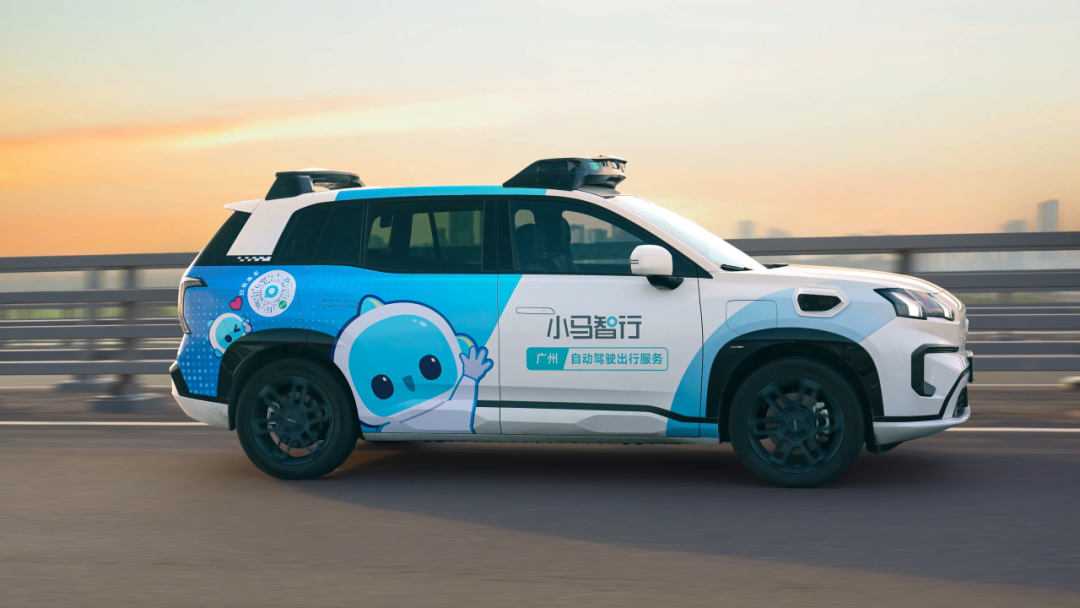
WeRide’s Robotaxi fleet exceeds 1,800 vehicles, operating in 60+ cities across 13 countries. In Q2 2026, domestic per-vehicle daily orders surpassed 21 (a 24% quarterly increase, peaking at 28), while registered users grew 35% quarterly. Quarterly ride-hailing revenue jumped 140% quarterly. Total ownership costs dropped 38% compared to 2024, with remote assistance ratios improving to 1 human per 40 vehicles.
From a market perspective, Guosen Securities estimates China’s taxi and ride-hailing market at RMB 236 billion annually, with Robotaxi accounting for just 0.6% of shared mobility in 2025. This minimal penetration signals vast growth potential.
However, profitability remains confined to Guangzhou and Shenzhen. Pony.ai CFO Wang Haojun stated that deploying 40,000–50,000 Robotaxis is necessary to achieve positive free cash flow. Scaling from two cities to multiple regions—and from 2,000 to 50,000 vehicles—will likely take longer than the initial breakthrough.
Robovan: Steep Growth Driven by Cost Efficiency
If any RoboX segment embodies “logical strength,” Robovan leads the pack.
According to iResearch’s May 2026 white paper, China’s autonomous urban delivery vehicle sales hit ~22,000 units in 2025, with total inventory exceeding 30,000 units—marking the industry’s large-scale operational phase. Sales are projected to reach 89,000 units in 2026 and nearly 1.5 million annually by 2030, with inventory surpassing 3.5 million units.
The market is highly concentrated: Neolix dominates with 51.6% market share, followed by 9Z Robotics at 32.3%, together controlling ~84% of the market. Neolix has deployed 16,000+ L4 vehicles, accumulating nearly 80 million kilometers across 15 countries and 300+ cities. By January 2026, 9Z Robotics’ vehicles operated in 300+ cities globally, delivering 1.5 billion+ orders and cutting client operational costs by 66% on average.
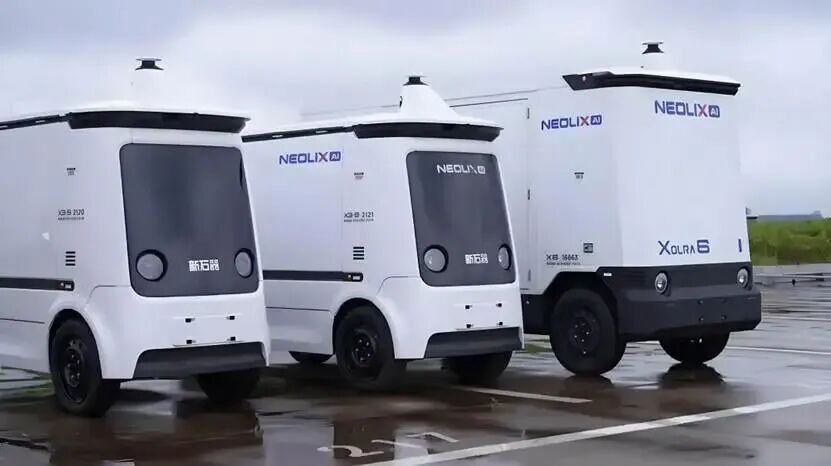
The growth driver is clear: last-mile delivery’s cost-reduction imperative. With rising delivery volumes and falling prices, last-mile costs now exceed 60% of total per-order expenses (up from ~30% a decade ago). Autonomous vehicles convert unpredictable labor costs into predictable asset depreciation, slashing per-order costs to one-third of traditional manned models at scale.
This efficiency gain compels logistics CFOs to adopt the math. Leading firms are shifting from hardware sales to RaaS (Robotics-as-a-Service) models, where clients pay per order or mile without owning vehicles.
Robotruck: Per-Vehicle Profitability Achieved, Scale Remains a Hurdle
Robotruck commercialization hinges on fleet size and per-vehicle economics.
Carl Force stood out in 2025, with 2026 developments even more notable. By April 2026, it operated 400+ L4 autonomous trucks, accumulating 45 million kilometers, and secured China’s only cross-city autonomous platooning remote commercialization pilot. The company achieved per-vehicle profitability in Q2 2025 and unveiled the KargoPlatform Gen 5.0 hardware platform at the 2026 Beijing Auto Show, cutting intelligent driving hardware costs by 50%, ton-kilometer transportation costs by 68%, quintupling annual net profit per vehicle, and reducing payback periods from five years to one. It plans to deploy 1,000 trucks this year, aiming for “10,000 units” within three years and “100,000 units” by 2030.
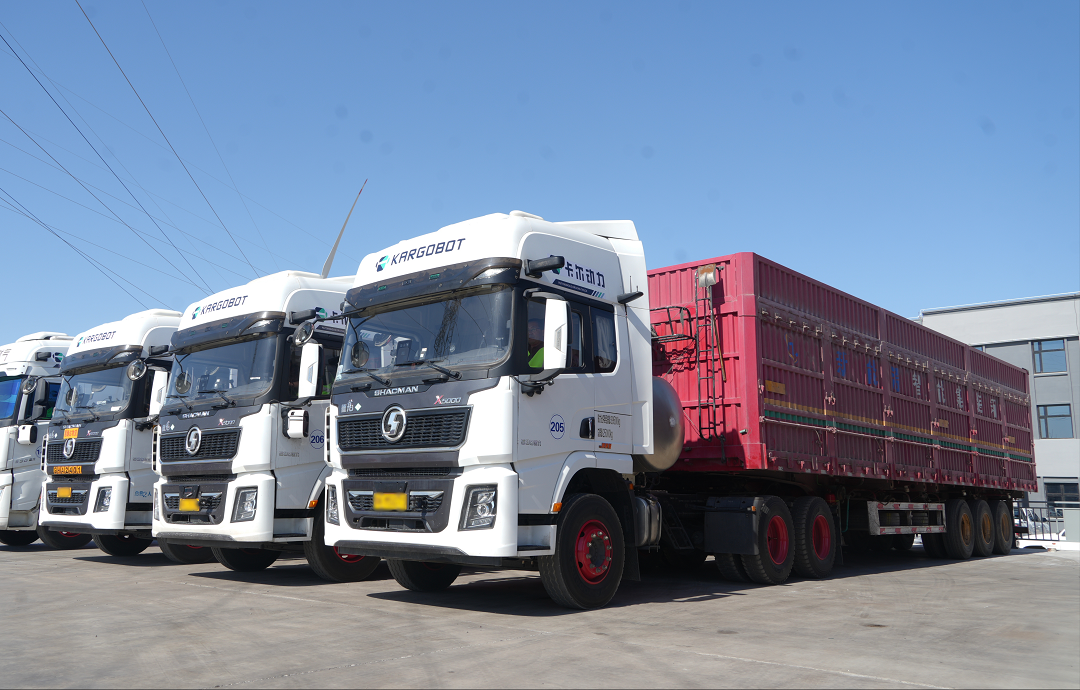
Pony.ai generated RMB 284 million in Robotruck revenue for 2025 and RMB 90.44 million in Q2 2026, a 40.0% year-over-year increase. Its fourth-gen autonomous heavy trucks entered mass production.
Frost & Sullivan projects China’s Robotruck service market will grow from USD 90 million in 2025 to USD 248 billion in 2035 (CAGR: ~121%). However, scaling fleets from hundreds to tens of thousands remains critical. The current 400-truck fleet is a mere fraction of China’s vast long-haul freight market.
Robobus: The Underrated “Global Champion”
Among RoboX’s five segments, Robobus may fly under the radar, but its commercialization certainty is far from low.
iResearch’s “2025 Global and China Autonomous Bus Market Research Report” offers insights: the global autonomous bus market hit USD 1.8 billion in 2024 and is expected to reach USD 5.09 billion by 2029 (CAGR: 23.1%). China’s domestic market, starting at RMB 1.9 billion, could reach RMB 6.63 billion in five years. The report highlights Chinese players like Mushroom Auto and WeRide as global leaders.
Growth is fueled by a global driver shortage: many European and North American countries face a 15–25% gap in bus driver positions, with labor costs exceeding half of total operational expenses. Even with new energy bus purchases, insufficient drivers leave vehicles idle.
Robobus’s commercialization path differs from Robotaxi. It targets standardized scenarios like urban micro-circulation routes, metro shuttles, and park commutes, with fixed routes, low speeds, and simpler road conditions. Revenue comes from government-enterprise partnerships and mobility operations.
WeRide’s financials validate this path. Its Robobus revenue reached RMB 230 million in 2025, a 190% year-over-year increase, accounting for 34% of total revenue (surpassing Robotaxi’s 22%). Its autonomous minibuses operate in Belgium, France, Switzerland, the UAE, and other countries, with commercial pilots in 25 cities across China, Singapore, France, the UAE, Saudi Arabia, and Qatar, alongside ~2,000 letters of intent. Q2 2026 L4 business revenue hit RMB 125 million, a 47% year-over-year and 131% quarterly increase, driven by Robotaxi and Robobus expansion.
Mushroom Auto takes a distinct approach. Its MOGOBUS uses a “mass production + vision-solid-state LiDAR fusion” technical route, equipped with eight solid-state LiDARs and cameras for 360° perception. Its on-time arrival standards match traditional buses—arriving 2 minutes early or 5 minutes late constitutes a breach, impacting operational assessments. MOGOBUS now operates in 20+ Chinese cities, serving high-profile international events.
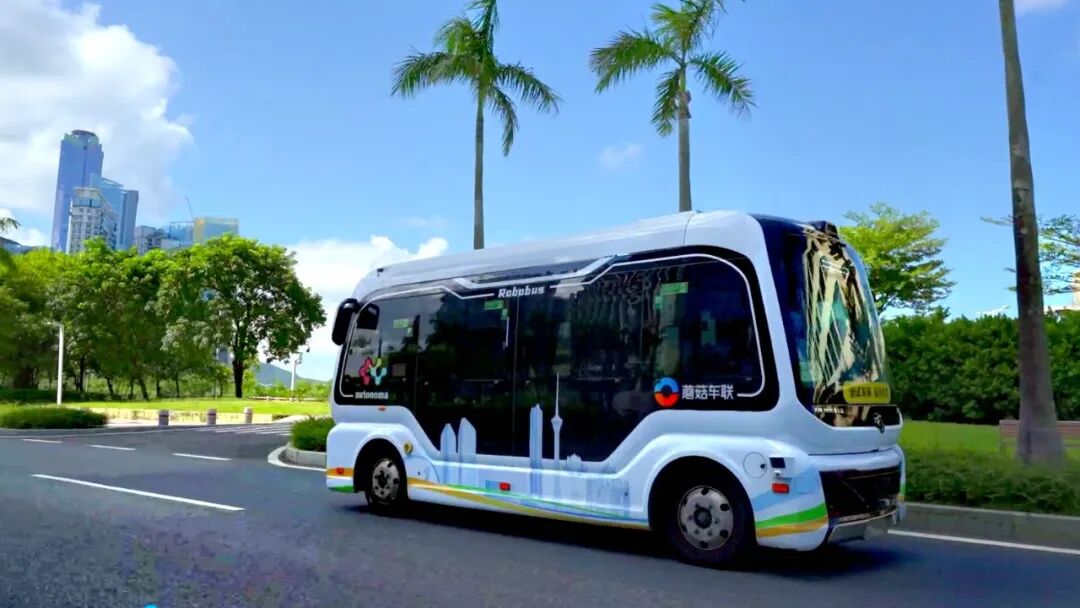
Mushroom Auto’s global edge lies in its overseas expansion. In October 2025, it partnered with BYD and MKX Technologies to win Singapore’s first L4 autonomous bus government project. In March 2026, MOGOBUS launched in Singapore—the city-state’s first attempt to integrate autonomous buses into its urban transit network and the first entry of Chinese autonomous buses into a developed country’s public transit backbone.
Mushroom Auto also launched the right-hand-drive MOGOBUS B4, passing Singapore’s Land Transport Authority M1 test. In February 2026, it struck a strategic partnership with LG Electronics to enter the South Korean market. From Singapore to South Korea, its Robobus strategy is evolving from “single-point wins” to “regional replication.”
Guosen Securities estimates China’s domestic bus market at RMB 15–35 billion annually, with Robobus accounting for <2% of buses currently.
Robosweeper: Smallest Base, Steepest Growth
Robosweeper currently has the smallest footprint in RoboX but the highest long-term growth expectations.
According to WeRide’s prospectus, the global Robosweeper market is expected to grow from USD 4 billion in 2025 to USD 59 billion in 2030 (CAGR: ~74%); the domestic market will expand from USD 2 billion to USD 26 billion (CAGR: ~77%). In 2025, domestic Robosweepers accounted for ~4.7% of sanitation vehicles.
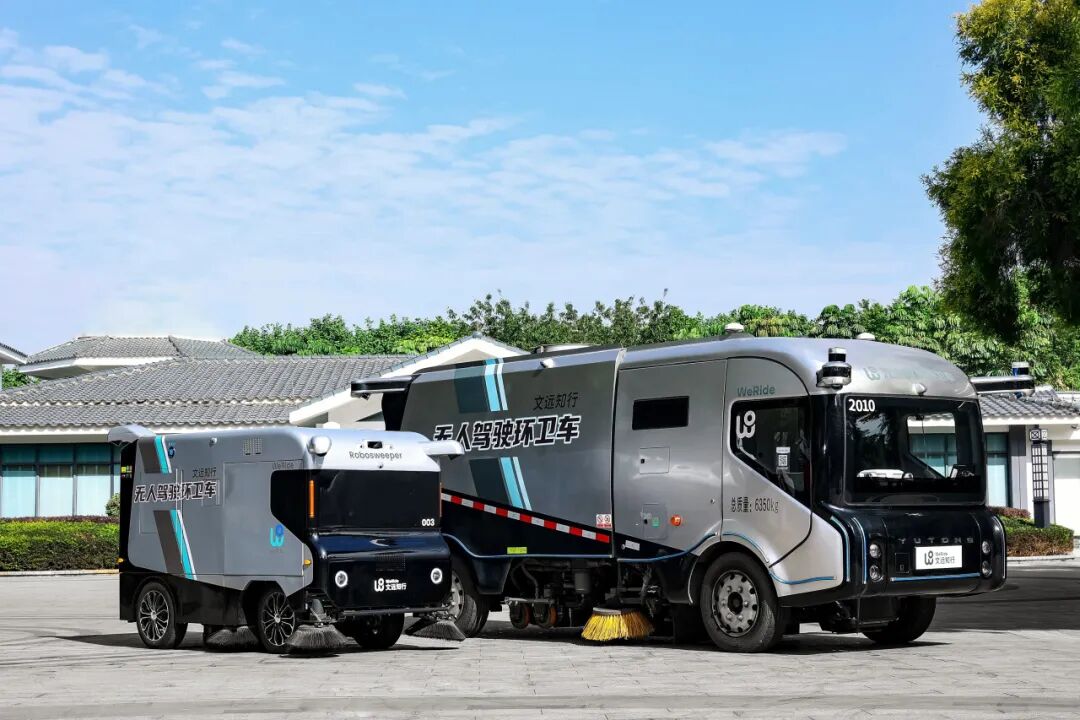
WeRide generated RMB 96 million in autonomous sanitation vehicle revenue for 2025, a 73.7% year-over-year increase, deploying 50+ Robosweepers in Guangzhou for paid commercial pilots covering 800 square kilometers.
Capital Flows: Where Is the Money Headed?
Financing data offers another lens.
AutoThings reports that 35 autonomous driving companies secured funding in 2025, with disclosed totals exceeding RMB 58.2 billion—nearly triple 2023’s “capital winter” levels.
Structure matters more than scale. L4 sub-sectors attracted the most funding, with 14 companies funded annually. Capital flows here due to clear technical boundaries, closed-loop business models, and high profitability certainty. In March 2026, Carl Force completed a USD 100+ million Series B round led by Horizon Robotics and GaoRong Capital, validating investor confidence in Robotruck’s commercial viability.
In autonomous delivery, Q3 2025 financing alone reached RMB 897 million; 9Z Robotics secured a USD 100 million Series B4 round led by Ant Group in October, while Neolix completed a RMB 1 billion Series C+ round in February.
Policy Variables: The Road Ahead
On December 15, 2025, China’s Ministry of Industry and Information Technology (MIIT) approved the first L3 conditional autonomous driving models, with two tailored for urban congestion and highway segments set to begin road trials in Beijing and Chongqing.
At the local level, cities like Beijing, Shanghai, and Shenzhen expanded test road networks in 2025. Shanghai’s Pudong New Area released its third batch of autonomous driving open test road notifications. By H1 2025, only 103 cities nationwide had opened road rights for autonomous vehicles, with scarcity acting as a competitive barrier for leaders. By 2026, over 100 cities had opened road rights for autonomous delivery vehicles, but regulatory details still need refinement to transition from “open roads” to “commercial operations.”
The real test lies in 2027.
“Useful” may seem simple, but it represents a decade-long threshold the autonomous driving industry has strived to cross.
Robotaxi services have already achieved positive profitability in Guangzhou and Shenzhen. The cost per trip for Robovan has decreased to just one-third of that in manned operations. Robobus has successfully integrated into Singapore's core urban public transportation network. Robotruck has shortened the customer payback period to a mere one year—these are not mere glimpses of the future; they are tangible realities that have already unfolded.
However, "useful" does not necessarily equate to "user-friendly," let alone "scalable on a large scale." Carl Force's fleet of 400 vehicles represents just a fraction of China's mainline freight sector. Pony.ai's profitability has been validated in only two cities. Robovan's inventory of 47,000 units remains a minuscule number compared to the national commercial vehicle market.
As we progress beyond the halfway mark of 2026, the true focus should shift to 2027 and beyond.
Firstly, can the per-vehicle profitability achieved in two cities be replicated across multiple cities? Pony.ai aims to deploy 3,500 vehicles across 20 cities by the end of the year, while WeRide boasts a fleet exceeding 1,800 vehicles covering over 60 cities. Expanding from two profitable cities to 20 operational cities requires the operational model to be repeatedly validated under varying road conditions, regulatory frameworks, and user behaviors. This represents the most formidable challenge for organizational capabilities.
Secondly, can Robotaxi surpass the scale threshold by 2027-2028? Pony.ai sets the breakeven threshold at 40,000 to 50,000 vehicles, while WeRide anticipates achieving overall breakeven by 2029. Scaling up from nearly 2,000 vehicles to 40,000 signifies a 20-fold increase. Whether this target can be gradually attained by 2027-2028 will determine whether Robotaxi remains confined to the narrative of "per-vehicle profitability" or truly ascends to the "phase" of "company profitability."
Thirdly, can Mushroom Auto's Robobus expansion abroad extend from Singapore to more countries? The significance of the Singapore project lies not in the two routes themselves but in its validation of an overseas expansion model. This model involves partnering with automakers like BYD to deliver a comprehensive solution encompassing "technology + operations + ecosystem," utilizing factory-installed mass-produced vehicles to meet the highest local standards for market entry, and then leveraging local operator networks to integrate into regular public transportation systems. The crux of this model lies in its replicability. Mushroom Auto is already forging ahead with its next steps: it reached a strategic cooperation with LG Electronics in early 2026 to jointly expand into the South Korean market; the company also disclosed that it has received active procurement inquiries from overseas markets, including Southeast Asia, Japan, South Korea, and the Middle East. The mayor of Wolfsburg, Germany, specifically experienced MOGOBUS during his visit to Shanghai in September 2025, indicating a growing interest from the European market. If Mushroom Auto can replicate the Singapore model in a second and third country by 2027, the narrative of Robobus expansion abroad will evolve from "winning single bids" to "regional replication," providing valuable insights for the overseas pathways of the entire Chinese autonomous driving industry.
Fourthly, can the inventory of unmanned delivery vehicles grow from 47,000 units to the million-unit level predicted by the China Federation of Logistics & Purchasing? A duopoly has emerged between Jiu Shi and Neolix, but the intensity of competition between these two market leaders will determine two key factors: how low per-vehicle costs can be driven down and how swiftly road rights can be expanded. The growth rate of inventory in 2027 will serve as a crucial indicator for testing the sector's ceiling.
Fifthly, can Carl Force achieve its goal of entering the "10,000-unit era"? Scaling up from 400 to 10,000 vehicles represents a 25-fold increase, with a target window of "the next three years." If achieved, Robotruck will become the largest scenario by volume among RoboX applications; if not, it suggests that the scalability bottleneck in mainline freight is far more rigid than anticipated.
The lesson from the past decade in the autonomous driving industry is that every "year zero" is followed by another "year zero." However, this time, revenue curves are beginning to ascend, cost curves are starting to decline, and road rights are expanding. At the very least, the industry is starting to become truly useful. 2027 may not provide all the answers, but at least, the questions have evolved.
-
![]()
RoboX’s Breakthrough Year: From Hype to Reality
-
![]()
Nitto Denko Pours $160 Million into New Factory to Bolster Global Polarizer Strategy
-
![]()
Collaborating with XIOPM: Unveiling Huawei's Ambitious Optics Strategy
-
![]()
Monthly Report | Online Market Analysis of Dash Cams in July: Hikvision Maintains Leadership, DDPai Stands Out Against the Trend, and Panoramic Security Features Reshape the Market
-
![]()
Six Dishes and One Soup: The Launch of AITO Grand Hotel, How Seres Takes Over AITO Starting from a Meal
-
![]()
"China Speed" from an Overseas Perspective: The Coordination Revolution of Manufacturers and Suppliers
-
![]()
Founders Fund Allocates SpaceX Shares to Investors: Commercial Space Industry Hits Trillion-Dollar Valuation, Unlocks Liquidity Avenue
-
![]()
Revealed: Tesla’s Robot Team Conducts Factory Inspections, with Top Group, Sanhua Intelligent Controls, and Others Securing Major Orders!