Guangxi Automobile Group Unveils 'Capacity Matrix' at CAEXPO: Autonomous Vehicles with Volumes from 0.1m³ to 20m³ Initiate 'Tiered Deployment'
 09/21 2026
 448
448
Introduction
On September 17, the 23rd CAEXPO kicked off in Nanning, attracting large crowds to the Guangxi Automobile Group booth in the New Energy and Intelligent Connected Vehicle exhibition area.
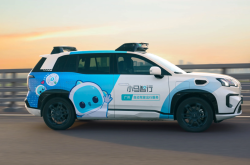
An L4 autonomous logistics vehicle showcased its capabilities by autonomously starting up, driving straight, turning, and avoiding obstacles. It proactively stopped or took detours when encountering spectators, demonstrating its advanced safety features.
More impressively, this Guangxi-based automaker, with decades of experience in vehicle manufacturing, didn't just showcase a single model. Instead, it presented a comprehensive 'capacity matrix' that spans from last-mile 100-meter deliveries to medium- and short-haul freight operations.
While most competitors still rely on a 'one-model-fits-all' approach, Guangxi Automobile Group has opted for a 'corporate group warfare' strategy, leveraging its diverse product lineup to cater to various market needs.
Autonomous Vehicle Era (WeChat ID: wurenchelaiye) offers its observations:
(For further reading, click: 'Guangxi Issues First Batch of Open-Road Test Licenses for Low-Speed Autonomous Vehicles: SAIC-GM-Wuling, Guangxi Automobile Group, Guangxi Hongxin Technology & 9Z Robotics Consortium, and Guangzhou Saite Obtain Approval')
I. From 0.1m³ to 20m³: Autonomous Vehicles Initiate 'Tiered Deployment'
Most companies specializing in autonomous delivery vehicles tend to focus on a single volume segment. However, Guangxi Automobile Group has taken a different path by developing a full product matrix.
This matrix features 0.1m³, 3m³, and 6m³ models as its core offerings, while also researching 10m³ and 20m³ high-capacity variants. This comprehensive range covers all capacity tiers, from last-mile 100-meter deliveries to medium- and short-haul freight.
The 0.1m³ autonomous delivery robot is designed for 'last 100 meters' operations, with a top speed of 15km/h, a turning radius of under 1 meter, and a four-wheel differential drive chassis capable of climbing gradients and wading through water. Its IP55 protection rating makes it suitable for harsh outdoor environments. It supports automatic recharging and can be linked to elevators for indoor delivery.
The 3m³ model strikes a balance between cargo capacity and flexibility. It features a modular chassis-cargo box design that allows for easy switching between van, flatbed, and refrigerated configurations. It also supports full-domain OTA updates and remote diagnostics for enhanced maintenance.
The 6m³ model is tailored for county-level rural areas, supermarket cold chains, industrial parks, and medical hubs. Its integrated lightweight bent-tube frame reduces weight by 20% and cost by 30%. It is equipped with Onebox+RBU dual-redundancy braking for added safety.
The 10m³ and 20m³ models, currently under development, will fill the gaps in medium- and short-haul autonomous freight operations.
From community buildings to rural counties, and from park transfers to medium-haul freight, autonomous vehicles of different volumes are fulfilling specialized roles, thanks to Guangxi Automobile Group's 'capacity matrix'.
II. Automotive-Grade Standards Ensure 'Digital Dossiers' for Every Vehicle
The autonomous delivery industry has a well-known secret: many products are 'retrofitted vehicles'.
These vehicles are often based on consumer-grade chassis with added sensors and algorithms. They may operate briefly but frequently break down after several thousand kilometers, highlighting the need for more robust and reliable solutions.
Guangxi Automobile Group has taken a different approach by ensuring its autonomous logistics vehicle series fully complies with N1 commercial vehicle standards. It has established a closed-loop management system across five key links: vehicle design, material procurement, testing validation, manufacturing, and quality control.
On the technical side, the company leverages its CNAS-accredited national laboratory to create a full-chain closed-loop verification system, from component testing to vehicle road trials. It has completed tens of thousands of kilometers of durability trials, with the axle housing fatigue design exceeding current national standards by 20% to ensure long-term durability under high-frequency operations.
The manufacturing process features a dedicated flexible assembly line supported by heavy-duty AGV transport solutions and 5G industrial scheduling systems. This enables mass delivery capabilities at the 10,000-unit scale, ensuring efficient production and timely delivery.
For quality control, each vehicle generates an independent electronic file with permanent cloud storage of critical process data, including torque, fluid injection, and autonomous driving calibration. This allows for full lifecycle traceability, ensuring that any issues can be quickly identified and resolved.
The validation of this system is evident: monthly deliveries of automotive-grade autonomous logistics vehicles have exceeded 1,000 units, a rarity in the industry.
On May 30, the first batch of autonomous logistics vehicles officially rolled off the production line, marking the Group's entry into mass production and market-oriented delivery in the autonomous driving sector.
The 3m³ and 6m³ models employ L4 end-to-end large models for mapless autonomous driving. They feature BEV fusion perception with 360° surround view and Orin platform computing power of 254TOPS, ensuring all-weather stability in rain, fog, night, and backlight conditions.
III. ASEAN Market Demands 'Deployable Capacity Solutions,' Not Just 'Autonomous Vehicles'
Shifting focus to the ASEAN market, Guangxi Automobile Group's strategy aligns perfectly with the current market dynamics.
Southeast Asia's e-commerce sector is experiencing rapid growth, but labor shortages and weak last-mile delivery infrastructure have become increasingly prominent challenges.
Malaysia and other countries have begun granting road test permissions for autonomous vehicles, while China's policy and market environment for exporting autonomous technologies continue to improve, creating favorable conditions for Guangxi Automobile Group's expansion.
Guangxi Automobile Group holds a key advantage in this market: it's not starting from scratch. The ASEAN market already accounts for nearly 40% of the Group's overseas sales, with component exports exceeding 70%.
By October 2025, the Group had exported 5,000 complete vehicles to ASEAN countries, including Singapore, Malaysia, Vietnam, Thailand, and Indonesia, with a cumulative export value surpassing RMB 200 million.
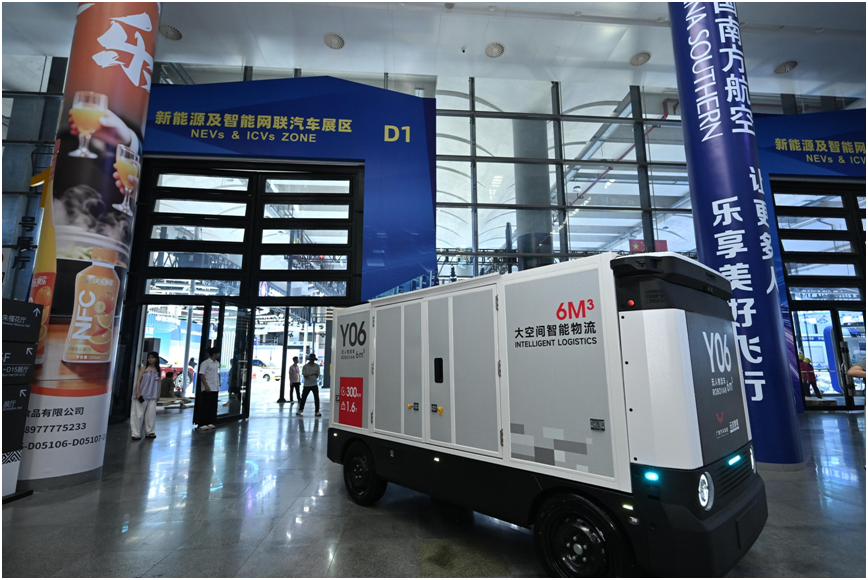
Image Source: Guangxi Automobile Group Official Website
More critically, the Group employs a 'dual-wheel-drive' overseas strategy that combines traditional vehicle exports with autonomous capacity breakthroughs. It maintains localized iteration based on regional conditions to ensure its products meet the specific needs of each market.
Liao Lingyi, Marketing and Investment Manager at Yuankong Zhiku, stated that the company is actively engaging with Southeast Asian and Middle Eastern clients to adapt its products for overseas climates, regulations, and road conditions. This ensures that its autonomous vehicles can operate effectively in diverse environments.
The A211M-R pure electric multi-purpose vehicle unveiled at this CAEXPO was specifically designed for Southeast Asia's high-humidity and high-temperature environments. This localized R&D approach has been fully applied to the autonomous logistics vehicle export system, ensuring that Guangxi Automobile Group's products are well-suited for the ASEAN market.
From the 0.1m³ to 20m³ 'capacity matrix,' from CNAS laboratory validation to 1,000-unit monthly deliveries, and from the Liuzhou production base to ASEAN distribution channels, Guangxi Automobile Group showcased not just isolated autonomous vehicles but a complete capability system spanning R&D, manufacturing, and scenario deployment at CAEXPO.
Conclusion
Autonomous Vehicle Era (WeChat ID: wurenchelaiye) believes that Guangxi Automobile Group's story demonstrates how a traditional automaker can reshape emerging sectors through its industrial capabilities.
From single-point demonstrations to matrix products, from laboratory validation to 10,000-unit mass production, and from Liuzhou streets to ASEAN markets, each step has hit critical commercialization milestones. This showcases the Group's commitment to innovation and its ability to adapt to changing market conditions.
Guangxi Automobile Group has taken the lead, and its 'capacity matrix' may well rewrite the rules of the entire autonomous logistics industry, setting a new standard for others to follow.
What's your take on this development?
References: Media reports from China.org.cn, Lianmeng China, Liuchuanghui, and Guangxi Automobile Group official website
-
![]()
RoboX’s Breakthrough Year: From Hype to Reality
-
![]()
Nitto Denko Pours $160 Million into New Factory to Bolster Global Polarizer Strategy
-
![]()
Collaborating with XIOPM: Unveiling Huawei's Ambitious Optics Strategy
-
![]()
Monthly Report | Online Market Analysis of Dash Cams in July: Hikvision Maintains Leadership, DDPai Stands Out Against the Trend, and Panoramic Security Features Reshape the Market
-
![]()
Six Dishes and One Soup: The Launch of AITO Grand Hotel, How Seres Takes Over AITO Starting from a Meal
-
![]()
"China Speed" from an Overseas Perspective: The Coordination Revolution of Manufacturers and Suppliers
-
![]()
Founders Fund Allocates SpaceX Shares to Investors: Commercial Space Industry Hits Trillion-Dollar Valuation, Unlocks Liquidity Avenue
-
![]()
Revealed: Tesla’s Robot Team Conducts Factory Inspections, with Top Group, Sanhua Intelligent Controls, and Others Securing Major Orders!