Automakers Spare No Effort to Drive Up Sales
 09/28 2026
 456
456
As the Mid-Autumn Festival and National Day holidays draw near, the domestic automotive market is abuzz with activity. On one hand, a plethora of new car models are flooding the market; on the other, numerous brands are rolling out substantial discounts. During the 'Golden September and Silver October' period, major automakers are pulling out all the stops to boost sales.
Since the beginning of this year, the competitive landscape in the domestic automotive market has become fiercer than ever, with automakers facing immense market competition pressure. Public data indicates that in the first half of 2026, many mainstream automakers experienced a sharp decline in performance, with most achieving only 30-40% of their annual sales targets, and fewer than half surpassing this rate. To date, many automakers still have a significant gap to bridge to meet their annual sales targets, making the 'Golden September and Silver October' period the ideal window for boosting sales.
To stabilize market performance, automakers have employed every conceivable strategy. Among these, pricing has emerged as an increasingly common tactic over the past two years. Recently, many automakers have adopted even more aggressive pricing strategies.
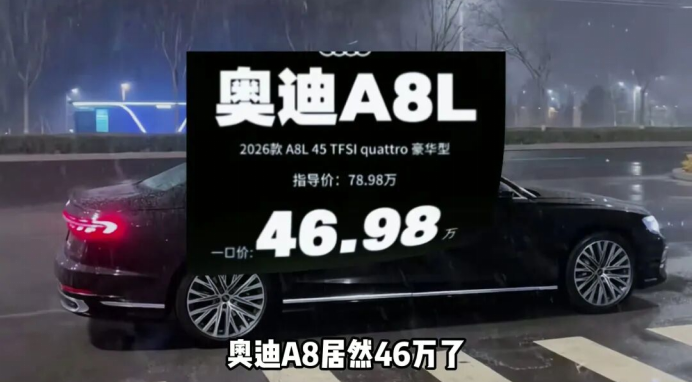
Not long ago, Volvo officially announced that the S90 would be available with comprehensive discounts starting at just 229,900 yuan, with some 4S stores recently offering the base model for as low as 200,000 yuan. In early September, SAIC Audi launched limited-time discounts for two of its flagship models: the Audi A7L starting at 262,800 yuan and the Audi Q6 starting at 279,800 yuan.
Media visits revealed that the entry-level prices for some Cadillac models have now dropped to the 170,000 yuan range, while the Lincoln Z's terminal transaction price can be as low as 150,000 yuan. Information from multiple platforms shows that the Mercedes-Benz E-Class's terminal base model price has dropped to as low as 262,500 yuan. Additionally, an Audi dealer offered the Audi A3 for an ultra-low price of 104,900 yuan, 10,000 yuan cheaper than the Volkswagen Golf.
Recently, a limited-time special offer poster for the Porsche Cayenne surfaced online. The poster indicates that the 2026 Cayenne 3.0T Dream Chaser Edition has an official guide price of 918,000 yuan, with a limited-time base model special offer price of 618,000 yuan, along with a low-interest financing policy for 5 years and 60 installments. It is reported that this price represents a clearance discount offered by some dealers, with most dealers offering higher prices for the Cayenne base model. Nevertheless, this price still sets a new low for the Cayenne.
More notably, an increasing number of automakers are now adjusting prices around the launch of new models. Consequently, various annual facelift models, additional variants, and derivative versions are flooding the market.
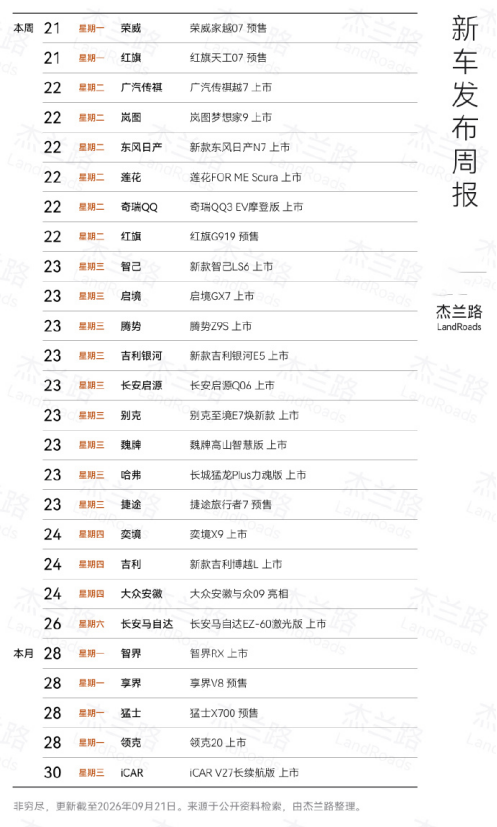
According to statistics, in the first half of this year, approximately 630 new models were launched domestically, averaging 3.5 new models per day. More recently, from September 21 to September 30, a total of 26 new models were densely released. On September 23 alone, nine new models were launched on the same day, creating a 'spectacle'.
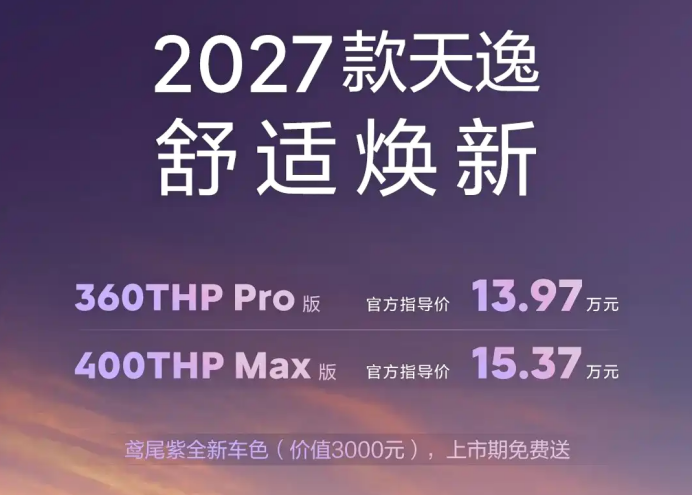
Without exception, these new models not only feature increased configurations and updated technology but also offer prices that are either on par with or lower than their predecessors, resulting in unanimously higher cost-effectiveness compared to older models. All manufacturers are using increasingly extreme cost-effectiveness to attract consumers.
Data shows that in the first half of 2026, the average price reduction for passenger vehicles in the national market reached 12.6%, with fuel vehicle prices dropping by 14.1% and new energy vehicle prices also decreasing by 12%.
However, regardless of whether price cuts are proactive or passive, overt or covert, they can mostly only maintain existing market share. Therefore, while implementing price cuts, automakers are also actively seeking new growth opportunities.
Two years ago, the Xiaomi SU7 burst onto the scene and became an instant hit, dominating the auto market. Subsequently, Xiaomi's YU7 also performed impressively. However, since this year, Xiaomi is no longer the sole standout, as multiple competitors with similar designs, positioning, and pricing have entered the market. The Shangjie Z7 and Qijing GT7 are targeting the Xiaomi SU7, while the Zhijie RX and LanTu ZhuiGuang S have become direct competitors to the Xiaomi YU7.
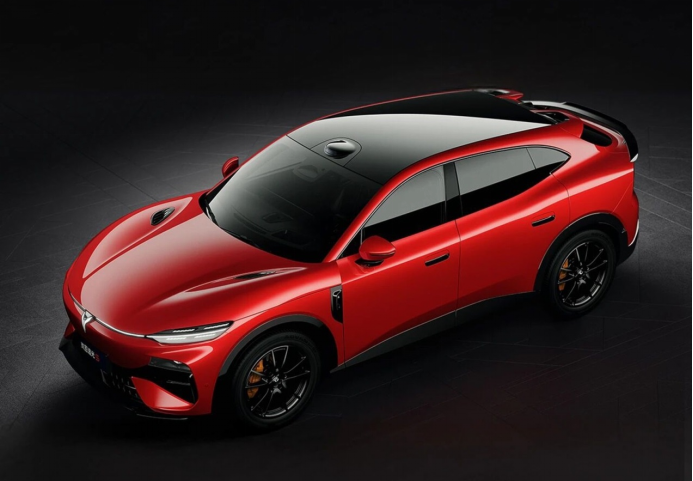
The competition is not limited to the sports car market; many domestic segmented markets are seeing an increasing number of competitors.
In the SUV market over the past two years, the hardcore 'boxy' design has become a new battleground for automakers. After the Ti7 gained market recognition, similarly positioned affordable electric boxy models such as the Chery iCAR V27, GAC Trumpchi Yue7, Yinhe Zhanjian 700, and BAIC Xingtan 5X have emerged. In the premium hardcore 'boxy' market, brands like Tank, Mengshi, and Hongqi have all launched products.
The once relatively niche high-end MPV market has become fiercely competitive, with automakers such as Toyota, Zeekr, LanTu, WEY, Li Auto, Tengshi, Hongqi, Xiangjie, Zhijie, BYD, and Leapmotor vying for market share. The Buick GL8, which dominated the MPV market for over 20 years, has long since lost its top position.
A closer look reveals that from micro-electric vehicles to full-size SUVs, and from MPVs to sports cars, every domestic segmented market is now crowded with competitors. To achieve better development, an increasing number of automakers are setting their sights on overseas markets.
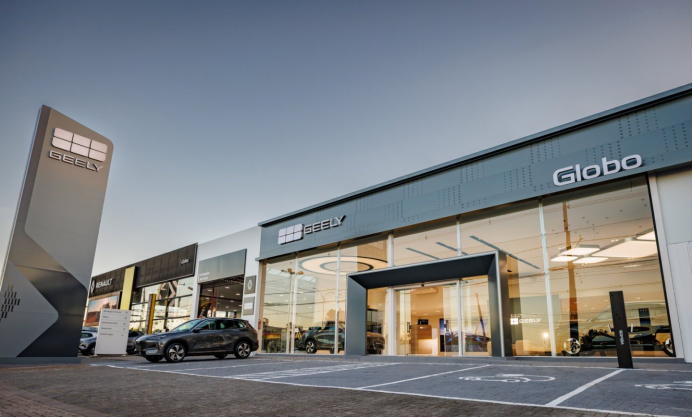
Data from the China Association of Automobile Manufacturers shows that in the first seven months of 2026, China's automobile exports reached 6.14 million units, a year-on-year increase of 66.8%. Notably, in June this year, China's automobile exports exceeded 1 million units for the first time in history, surpassing the total exports for the entire year of 2020. It is predicted that China's automobile exports could exceed 10 million units in 2026.
In the first half of this year, Great Wall Motors exported 291,400 vehicles, a year-on-year increase of 44.5%; SAIC Motor sold 735,000 vehicles overseas, a year-on-year increase of 48.7%; Changan Automobile's overseas sales reached 454,700 vehicles, a year-on-year increase of 51.87%; GAC's self-owned brand exported 121,500 vehicles, a surge of 132%; Geely sold 474,200 vehicles overseas, a staggering year-on-year increase of 158%, with half-year sales surpassing the total exports for the entire year of 2025. In addition to several traditional automakers, Leapmotor, XPeng, and other automakers also saw significant growth in overseas sales. NIO, AITO, Xiaomi, and Li Auto are all increasing their presence in overseas markets.
To date, several domestic automakers have already established or planned to establish factories overseas, achieving localized deep cultivation and building a global operational system, transitioning from 'Made in China' to 'Global Operations'. Overseas markets are no longer just a supplement to sales but a strategic pillar supporting long-term growth.
(Image sourced from the internet, removal upon infringement)
-
![]()
Changsha Computing Power Firm Lands Another Order Worth Nearly 900 Million Yuan
-
![]()
Jiemei Technology’s Restructuring Plan Greenlit: Set to Acquire Afos Technology for 915 Million RMB
-
![]()
Revenue of 200 Million, Then Another 200 Million Invested! Transight Optoelectronics Takes a Bold Bet on Ultra-Precision Optics Pilot Production
-
![]()
What is the True Value of Zhipu's $3 Billion ARR Amid the 'Data Leak' Controversy?
-
![]()
Monthly Report | China's Online Notebook Computer Market in August 2026: Sales Volume Drops 21%, Apple and Xiaomi Buck the Trend to Gain Market Share; Average Price Rises 12%, Share of Models Priced O
-
【Focus】Low-drag disc brake assembly reduces energy loss and holds great potential in new energy vehicles
-
![]()
Lying Flat in a Car: Is There a 4.4-Fold Increase in the Risk of Severe Injury During a Collision?
-
![]()
Honor Magic9 Pro Max Review: Imaging Gets More Exciting, Agent System Impresses