Lying Flat in a Car: Is There a 4.4-Fold Increase in the Risk of Severe Injury During a Collision?
 09/28 2026
 489
489
Zero-gravity seats are emerging as a standard feature touted at new car launches.
From premium new energy vehicles to affordable models priced around 100,000 yuan, these seats are quickly gaining traction. Sales consultants enthusiastically urge you to recline and savor the sensation of weightless relaxation they provide.
However, what you might not realize is that reclining in this position in a car could compromise the effectiveness of your seat belt.
01 How Did Zero-Gravity Seats Gain Popularity?
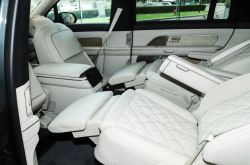
The design philosophy behind zero-gravity seats is to adjust the angle between the torso and legs, enabling the body to mimic a near-weightless state.
Featuring a sharply reclined backrest, an elevated front edge of the seat cushion, and a raised leg rest, these seats distribute body weight evenly to reduce fatigue from extended driving sessions.
This concept originated in the aviation industry before being adapted for automobiles.
Post-2022, the number of car models equipped with zero-gravity seats surged, and by 2026, they had become a key selling point in new car promotions.
Zero-gravity seats come at a premium.
For models priced between 100,000 and 200,000 yuan, the optional cost for a single seat is approximately 6,000 yuan. For models exceeding 200,000 yuan, a single seat typically costs around 10,000 yuan, with a dual-seat package nearing 20,000 yuan.
To entice consumers, many new car launches offer limited-time free upgrades for these seats.
02 Why Is a Sharply Reclined Position Risky?
The danger associated with zero-gravity seats stems from the compromised effectiveness of the seat belt.
Car seat belts are designed with the assumption that occupants are seated upright, with the belt crossing diagonally across the chest from the shoulder, securing the occupant to the seat during a collision.
When the seat back is sharply reclined, this assumption no longer holds true.
The seat belt may shift up to the neck or under the arm, failing to properly restrain the torso.
In a collision, the occupant's body may slide forward and downward—a phenomenon known as "submarining"—where the body slips out from under the belt and collides directly with the dashboard or front seats.
Testing data from the China Automotive Research Institute provides a stark quantitative comparison: in a zero-gravity position, the risk of severe injury is 4.4 times higher, and the risk of critical injury is 5.2 times higher, compared to a normal sitting position.
Zhang Xiang, a researcher at the Automotive Industry Innovation Research Center at the North China University of Technology, suggests that automakers are experimenting with zero-gravity seats using traditional seat safety standards, assuming they are inherently qualified.
03 What Salespeople Might Not Disclose
A visit to several 4S dealerships revealed that zero-gravity seats are a major feature promoted and encouraged for testing. However, some salespeople downplay any associated risks.
When questioned about using the feature while driving, one salesperson acknowledged that official regulations prohibit it but also revealed that the driver's seat would have the function locked, while other seats could still be activated under certain conditions.
This implies that the zero-gravity function for front passenger and rear seats may not be automatically disabled while the vehicle is in motion. Yet, it is precisely these passengers who face heightened risks in a collision.
04 New Regulations Are Stepping In
In 2026, the Ministry of Industry and Information Technology released a draft of the Strength Requirements and Test Methods for Automotive Seats, Seat Anchorage, and Head Restraints, systematically defining safety boundaries for sharply reclined seats. Key requirements include: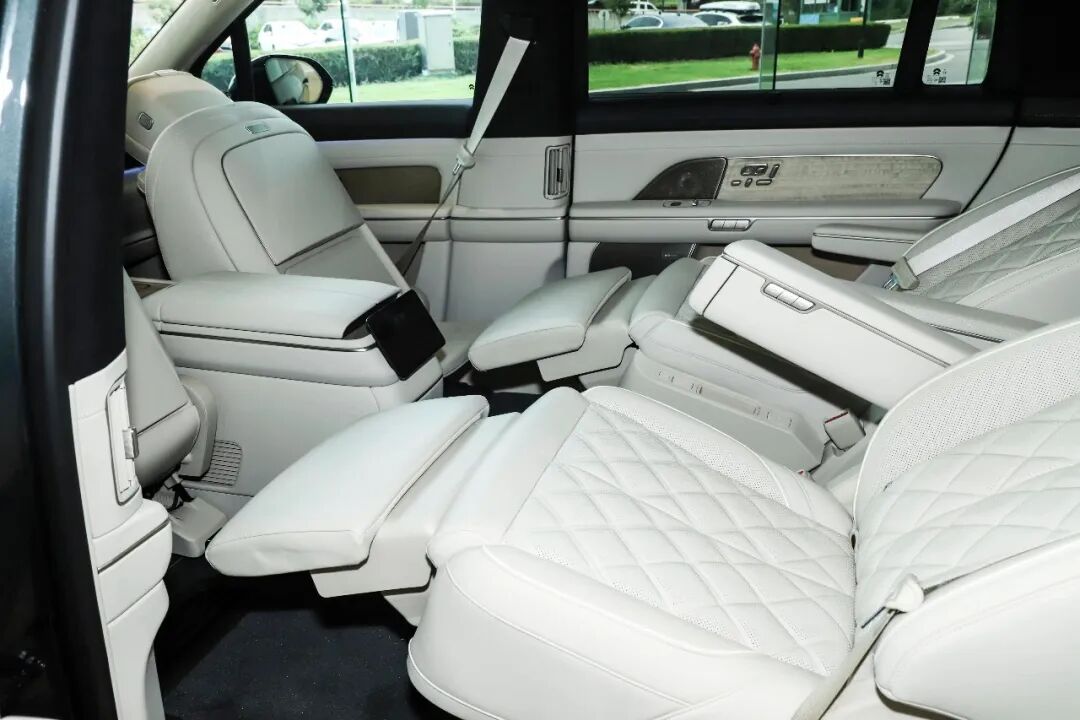
Image Source: Internet
Prohibition of Zero-Gravity Mode While Driving: Seats cannot recline to a sharp angle while the vehicle is in motion.
Driver's Seat Torso Angle Limited to 35 Degrees: Prevents excessive reclining in the driving position.
Mandatory Seat Belt Interlock: If zero-gravity mode is equipped, it must activate the seat belt pretensioner or provide equivalent restraint.
Steep Recline in Park Only: Must be labeled for use only in Park (P) gear, with automatic return to upright position or alarm when shifting out of Park.
05 How Should Ordinary Consumers Choose and Use Zero-Gravity Seats?
Firstly, consider it an experience rather than a necessity. Zero-gravity seats have low actual usage rates, with some owners reporting inadequate neck and waist support and slow transitions back to an upright position. If you rarely use it, the optional cost may not justify the investment.
Secondly, ensure no one reclines while driving. Whether in the front passenger or rear seats, maintain a normal sitting position while the vehicle is in motion. After new regulations take effect, automakers will implement system-level restrictions, but until then, you must be aware of the risks.
Thirdly, clarify details when purchasing. If you desire this feature, ask the salesperson directly: Can the zero-gravity function be activated in the front passenger and rear seats while driving? Will it automatically lock? Does the seat belt interlock with the feature? These are questions salespeople may not proactively address.
Comfort and safety are not mutually exclusive. However, you must first understand what you are paying for and whether the seat belt can still provide adequate protection in that position. #ZeroGravitySeats
-
![]()
Changsha Computing Power Firm Lands Another Order Worth Nearly 900 Million Yuan
-
![]()
Jiemei Technology’s Restructuring Plan Greenlit: Set to Acquire Afos Technology for 915 Million RMB
-
![]()
Revenue of 200 Million, Then Another 200 Million Invested! Transight Optoelectronics Takes a Bold Bet on Ultra-Precision Optics Pilot Production
-
![]()
What is the True Value of Zhipu's $3 Billion ARR Amid the 'Data Leak' Controversy?
-
![]()
Monthly Report | China's Online Notebook Computer Market in August 2026: Sales Volume Drops 21%, Apple and Xiaomi Buck the Trend to Gain Market Share; Average Price Rises 12%, Share of Models Priced O
-
【Focus】Low-drag disc brake assembly reduces energy loss and holds great potential in new energy vehicles
-
![]()
Lying Flat in a Car: Is There a 4.4-Fold Increase in the Risk of Severe Injury During a Collision?
-
![]()
Honor Magic9 Pro Max Review: Imaging Gets More Exciting, Agent System Impresses