Trump Urges Factory Construction, While Detroit Resists: Who’s Playing the Good Cop, and Who’s the Bad Cop?
 09/28 2026
 563
563
"I don’t want Chinese automakers building factories in Mexico and then shipping cars to the U.S." That’s the unvarnished truth.
As China and the U.S. have recently embarked on a new round of diplomatic engagement, the automotive sector has also seen fresh developments.
"Chinese automakers might establish factories in the U.S."
This speculation emerged from reports that Wang Chuanfu, Chairman and President of BYD, may accompany Chinese leaders to Washington for discussions with Trump.
Responding to this speculation, Trump remarked, "If China wants to set up a factory here to manufacture cars, I have no issue with that. Japan does the same; the key is that they employ our workforce."
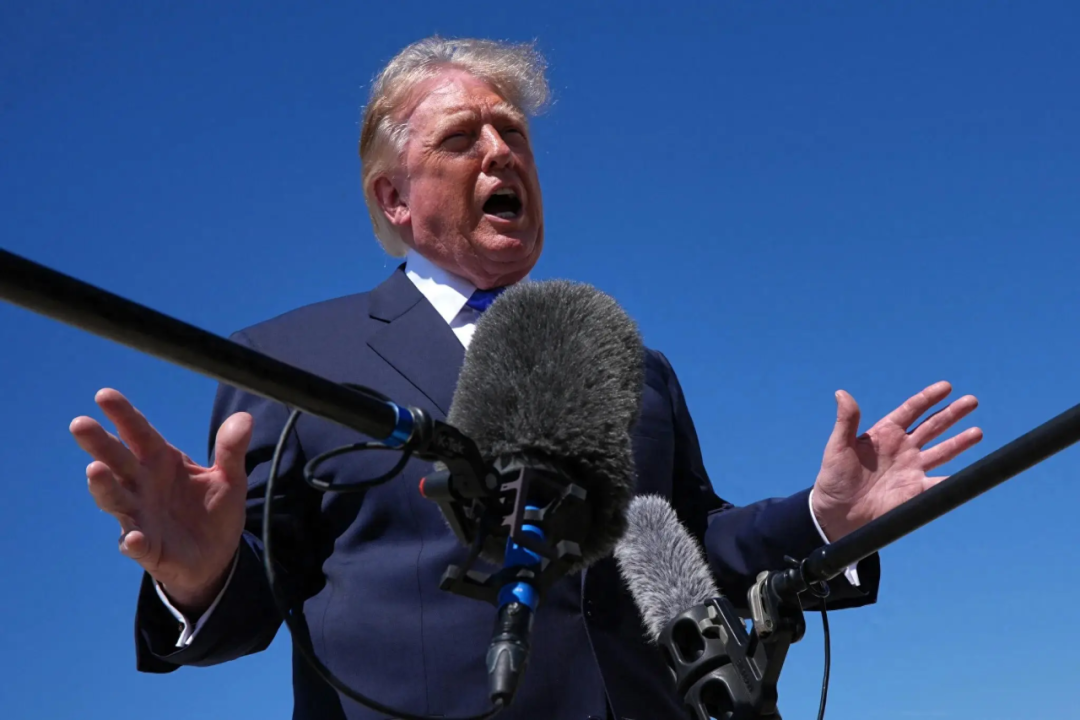
Trump made these comments during a Fox News Channel appearance on September 11. He expressed openness to Chinese automakers building factories in the U.S. and hiring American workers, while explicitly opposing the practice of building factories in Mexico and then exporting to the U.S.
The following day, Reuters reported under the headline, "Trump Could Accept Chinese Automakers Building Factories in the U.S." Thus, during these China-U.S. talks, the proposal for Chinese automakers to build factories in the U.S. and hire local workers may be tabled for negotiation.
Trump has welcomed this possibility. His aim is clear: to leverage external resources to address shortcomings in the U.S. new energy industry. Citing Japanese automakers as an example, he implies bringing over technology, production capacity, and supply chains.
However, industry insiders suggest that Trump is using such statements to garner votes. According to a September poll by the Financial Times, Trump's current approval rating stands at just 33%, the lowest since his return to the White House. Traditional industrial states in the Midwest urgently need to revitalize manufacturing, so he must seek support in terms of votes and employment indicators.
Nonetheless, the U.S. automotive industry’s attitude can be summed up in four words: "steeling for impact."
After all, Commerce Secretary Lutt Nick had previously explicitly rejected the entry of automakers like BYD. Six major industry organizations representing automakers such as General Motors, Ford, and Toyota also jointly signed a letter on September 18, calling for a complete ban on the sale, import, and production of Chinese automobiles in the U.S.
At the time the joint letter was issued, the cost for Chinese automobiles to enter the U.S. market included comprehensive tax rates exceeding 137.5%. Moreover, the current market share of Chinese brand passenger vehicles in the U.S. is nearly negligible.
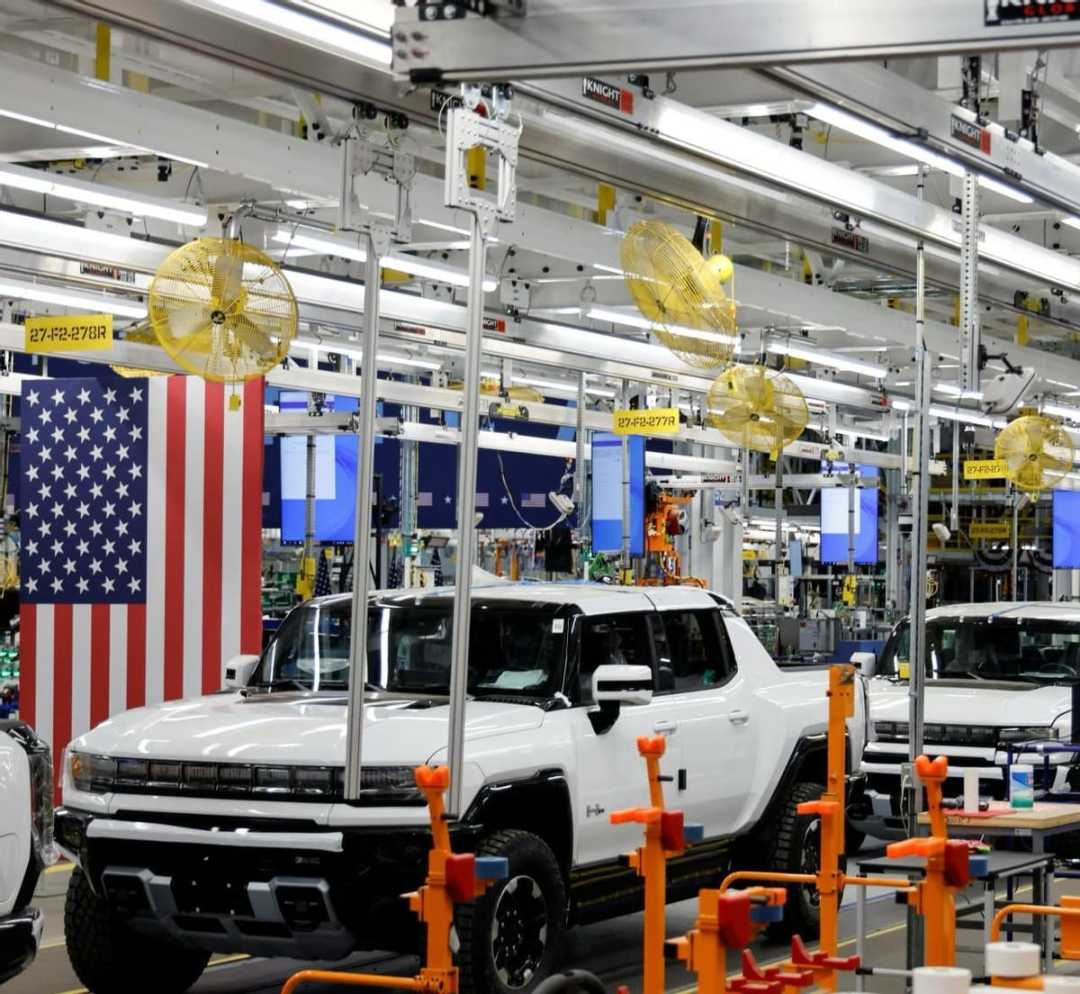
Bloomberg noted that through high tariffs and restrictions imposed by the U.S. Department of Commerce on connected Chinese vehicles and automotive software entering the U.S. market, "Chinese automobiles are effectively excluded from the U.S. market."
Even so, the U.S. automotive industry senses an impending crisis, especially as Chinese electric vehicle manufacturers gain a foothold in markets like Canada and Mexico, intensifying anxiety.
Someone has crunched the numbers. What changes would occur if Chinese automobiles entered the U.S. market?
Market research firm Mobility Global stated that if the U.S. relaxes restrictions on Chinese automakers selling cars in the U.S., by 2038, Chinese automakers could sell up to 1.7 million vehicles annually in the U.S. market.
1.7 million vehicles would represent approximately 11% of the U.S. new car market, meaning existing automakers could lose a corresponding market share. The first to be impacted would likely be Nissan, Hyundai, and Toyota.
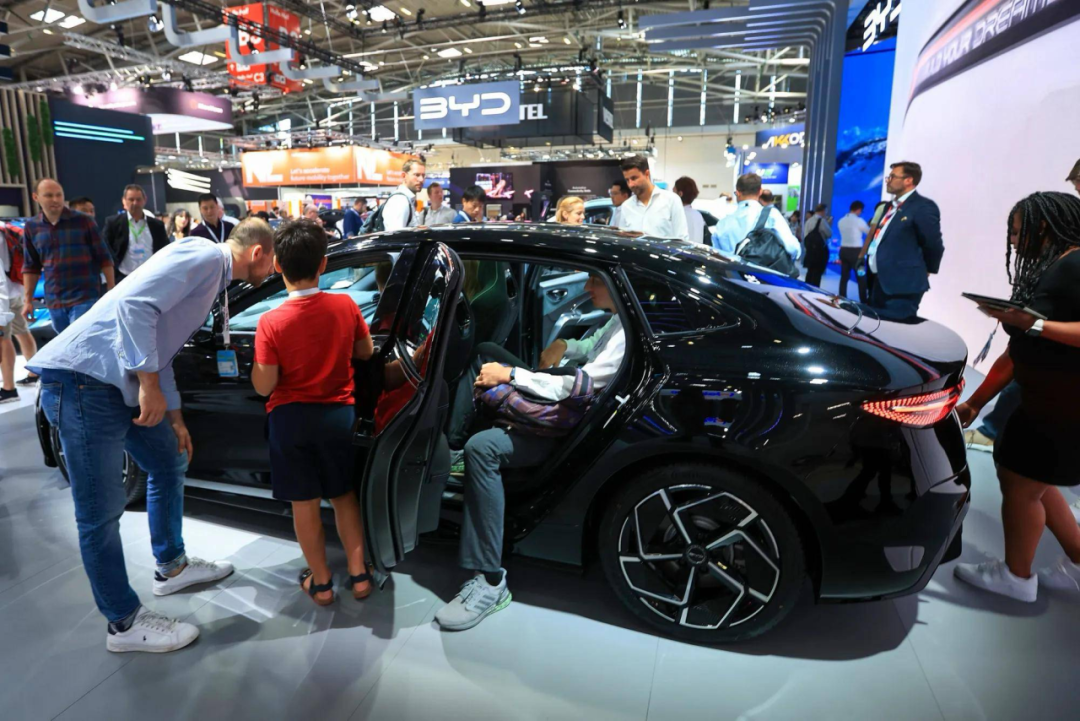
Take Hyundai-Kia as an example. Hyundai and Kia increased their market share in the U.S. to about 12% from January to August this year, ranking as the fourth-largest automotive group in the U.S. market, behind General Motors, Toyota, and Ford.
If Chinese automobiles enter the U.S. market, they will directly challenge Hyundai-Kia's core growth areas: the mid-to-low-end sedan and SUV markets. Moreover, on paper, Chinese automobiles appear highly attractive to U.S. consumers in terms of price.
Jose Muñoz, President of Hyundai Motor, publicly warned, "Chinese manufacturers are expanding in Europe at prices 30-40% lower than competitors. If U.S. protective barriers disappear, the same situation will occur here."
Japanese automakers face a similar situation. If Chinese companies like BYD leverage their pure electric and plug-in hybrid models, Toyota's long-held dominance in the home electrification market could also be impacted.

This would lead to direct competition with U.S. domestic brands.
Therefore, Elissa Slotkin, a Democratic Senator from Michigan, specifically released a video stating that it "would pose a threat to North American automakers, parts suppliers, and dealers."
In response, multiple U.S. automotive industry organizations have issued warnings.
The core argument of the joint letter is that Chinese companies possess a fully China-based supply chain and would not procure parts from U.S. companies. The two-page letter also urges the Trump administration to learn from experiences in other regions.
Hyundai Motor has been the most proactive, with its CEO eager to open Trump's eyes and make him see "what is happening in Europe and other continents."
Flavio Volpe, President of the Automotive Parts Manufacturers' Association, argued, "While nearly all relevant stakeholders publicly oppose it, he continues to signal cooperation possibilities to Chinese automakers, raising a core question: What is he doing? He could put Detroit in a difficult position."
The U.S. automotive industry is fully committed to preventing Trump from "opening the door."
However, is Trump's sudden green light a trap or an opportunity? From a domestic perspective, Trump's statement about "accepting Chinese companies building factories in the U.S." aligns with his previous emphasis on bringing manufacturing back to the U.S. The real-world effects remain to be seen.
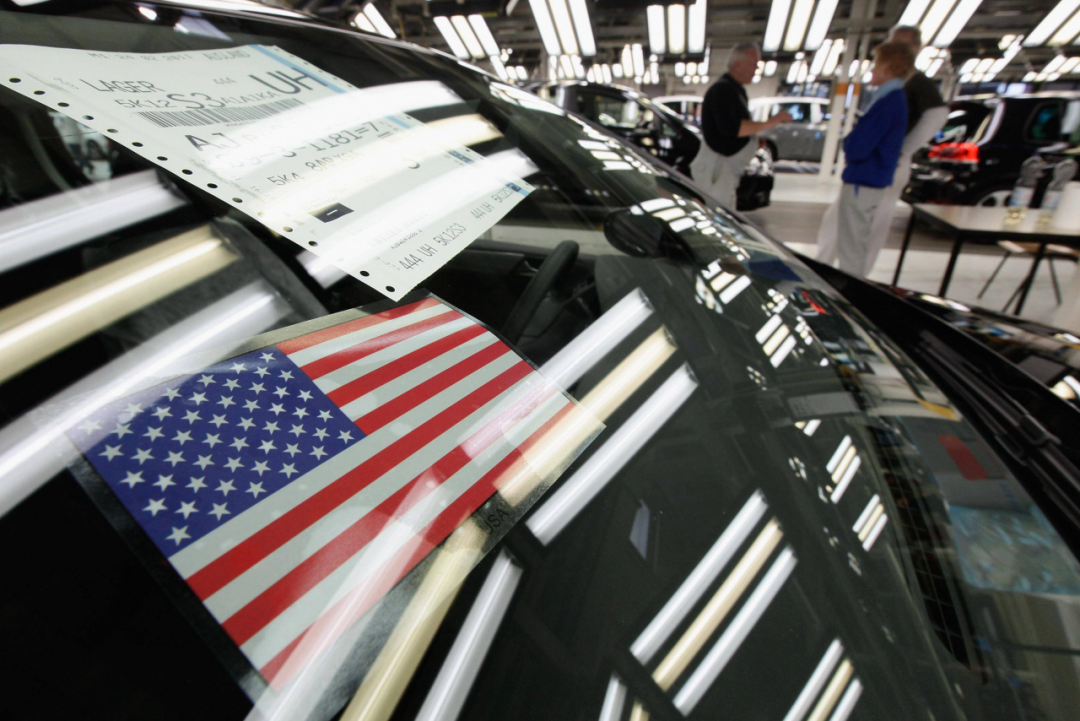
Some say Trump wants to replay "the old playbook of the U.S.-Japan automotive war four decades ago," using the history of Japanese automakers building factories in the U.S. in the 1980s as a reference. Of course, Japanese investment in the U.S. was also "forced" behavior.
At that time, massive exports of Japanese automobiles to the U.S. triggered trade disputes. Japanese automakers like Toyota, Honda, and Nissan saw their market share in the U.S. surge from less than 10% to over 20%. Amid protests in Rust Belt cities where Japanese cars were publicly smashed, the Reagan administration pressured Japan to sign "voluntary export restrictions," capping Japanese car exports to the U.S. at 1.68 million units.
Ultimately, companies like Toyota, Honda, and Nissan invested in and built factories in Ohio and Kentucky, directly establishing automotive production and assembly operations in the U.S.
However, Japan's script and that of Chinese automakers are no longer the same. In the eyes of the U.S. automotive industry, the industrial impact differs significantly.
The reason is the generational gap.
Chinese new energy automakers possess technological advantages across the entire chain, from power batteries and smart cockpits to advanced driver-assistance systems. This is something Japanese automakers lacked back then. Once Chinese automakers "open" the U.S. market, they could leverage their generational technological advantages and complete supply chain to "take over the entire kitchen" of the U.S. automotive industry.
Additionally, the U.S. has indeed imposed multiple barriers against Chinese vehicles, including high tariffs and bans on connected vehicles. The six major U.S. automotive associations are jointly pressuring for a complete ban. Furthermore, starting with the 2027 model year, the use of connected vehicle and autonomous driving software related to China or Russia will be prohibited, and so on.
It is evident that the various costs associated with "building factories in the U.S." are high. In addition to factoring in substantial sunk costs, local union negotiations, and potential policy reversals, one must also consider technological and supply chain sovereignty.
Current information indicates that BYD, Chery, and Xiaomi have no plans to build factories in the U.S. for now. The only one considering it is Geely, which plans to leverage Volvo's factory in South Carolina, operational since 2018, as a test case, with a potential announcement in the next 24-36 months.
However, Trump's true intention is not to let Chinese automobiles "build factories in the U.S." but rather, "I don’t want Chinese automakers building factories in Mexico and then shipping cars to the U.S."
That’s the unvarnished truth.
What he fears is not Chinese cars being produced in the U.S. but Chinese cars using the zero-tariff corridor of the USMCA to enter the U.S. market at low cost from Mexico. Therefore, 27 U.S. Democratic House members directly wrote a joint letter, creating a dynamic reminiscent of one playing the good cop and the other the bad cop.
Note: Some images are sourced from the internet. If there is any infringement, please contact us for removal.
-END-
-
![]()
Changsha Computing Power Firm Lands Another Order Worth Nearly 900 Million Yuan
-
![]()
Jiemei Technology’s Restructuring Plan Greenlit: Set to Acquire Afos Technology for 915 Million RMB
-
![]()
Revenue of 200 Million, Then Another 200 Million Invested! Transight Optoelectronics Takes a Bold Bet on Ultra-Precision Optics Pilot Production
-
![]()
What is the True Value of Zhipu's $3 Billion ARR Amid the 'Data Leak' Controversy?
-
![]()
Monthly Report | China's Online Notebook Computer Market in August 2026: Sales Volume Drops 21%, Apple and Xiaomi Buck the Trend to Gain Market Share; Average Price Rises 12%, Share of Models Priced O
-
【Focus】Low-drag disc brake assembly reduces energy loss and holds great potential in new energy vehicles
-
![]()
Lying Flat in a Car: Is There a 4.4-Fold Increase in the Risk of Severe Injury During a Collision?
-
![]()
Honor Magic9 Pro Max Review: Imaging Gets More Exciting, Agent System Impresses