Fuel Vehicle Sales Slump and New Energy Gaps Present Limited Growth Avenues for Joint Ventures
 09/28 2026
 362
362
Lead | Introduction
Industry leaders argue that it is too soon to dismiss the potential of joint ventures. However, the stark reality of a market share decline to approximately 30% for these ventures, coupled with a steady shrinkage of the fuel vehicle market and a significant lag in the transition to new energy, poses dual challenges. Amidst intensifying market competition, how can joint venture brands reconstruct their overall system competitiveness?
Produced by | This article is produced by Heyan Yueche Studio
Written by | Cai Yan
Edited by | Hezi
Full text: 2606 characters
Reading time: 4 minutes
Joint ventures struggle to escape difficulties as fuel vehicle sales plummet.
According to data from the China Passenger Car Association (CPCA), nationwide retail sales of passenger vehicles reached 1.541 million units in August, marking a 23.6% year-on-year decrease. Despite a 5.5% month-on-month increase indicating signs of recovery, cumulative retail sales from January to August stood at 11.716 million units, down 20.8% year-on-year, reflecting a market still in a downturn. In August, retail sales of fuel vehicles fell by over 40%, with pure fuel vehicles dropping by 45%. The absence of fuel vehicles from the top ten best-selling list for two consecutive months is the most telling evidence. Conversely, retail sales of new energy vehicles (NEVs) reached 1.005 million units, with the penetration rate climbing to 65.2%, setting another record high.
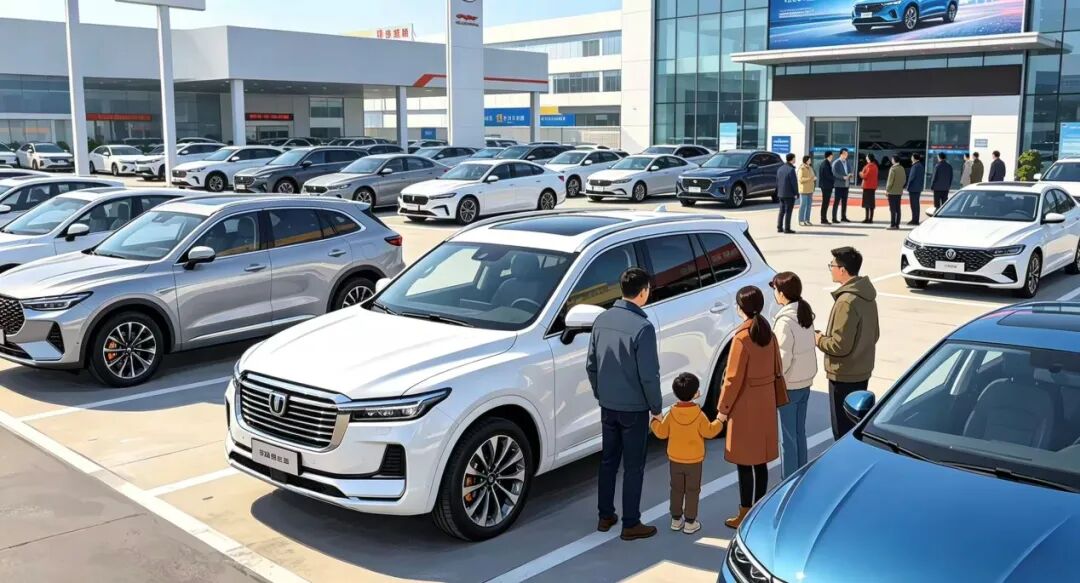
Joint Ventures Under Collective Pressure
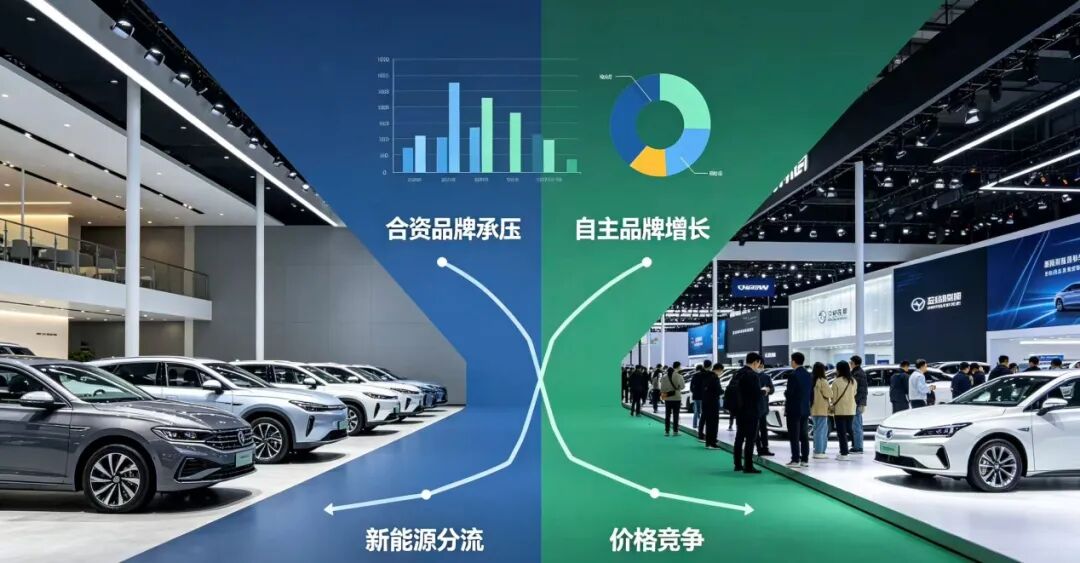
Analyzing the market share of domestic and joint venture brands, retail sales of domestic brands reached 1.08 million units in August, down 19% year-on-year but up 4% month-on-month, accounting for 69.9% of the total retail market share, an increase of 4.1% year-on-year. Although this is slightly lower than July's 71%, it remains within a reasonable fluctuation range. In contrast, joint venture brands faced a tougher situation, with retail sales of 310,000 units in August, up 5% month-on-month but down 35% year-on-year. Breaking it down by vehicle lineups, German brands accounted for 12.5% of retail sales, down 2.1% year-on-year; Japanese brands 10.9%, down 1.4%; and American brands remained relatively stable, with a market share of 5.6%, down slightly by 0.04% year-on-year.
According to forecasts by the Gasgoo Automotive Research Institute, by 2030, the market share of domestic brands in China is projected to climb to 80%, while the combined share of European, Japanese, Korean, and American brands will further shrink from around 30% in 2025 to 20% in 2030.
In the NEV market, the gap between domestic and joint venture brands is even more pronounced. In August, the wholesale penetration rate of NEVs for domestic brands reached a record high of 83.9%, meaning that nearly 84 out of every 100 vehicles sold by domestic brands were NEVs. In contrast, the wholesale penetration rate for joint venture brands was only 15.7%, with the majority of sales still concentrated in the fuel vehicle segment.
It must be acknowledged that starting from the third quarter of 2025, most joint venture brands have launched new counteroffensives in the NEV sector. Whether German, Japanese, or Korean brands, various new strategies have emerged, with new products developed for the Chinese market continuously being launched. In August, retail sales of NEVs by mainstream joint venture brands increased by 35% year-on-year, with the wholesale penetration rate reaching 15.7%, showing initial signs of catching up. However, considering the timing of entry and market size, joint venture NEVs accounted for only 4.3% of the total NEV retail market.
Today's joint venture automakers are reluctant to cede their existing market but must confront the reality of the rapid decline of their fuel vehicle base. More importantly, joint venture brands have only just begun to integrate domestic supply chains to launch NEV products, but their sales have yet to form a truly powerful complementary force.
Take Nissan as an example. Its sales in August were only 25,000 units, a sharp decline of 54.3% year-on-year. From January to August, cumulative sales were approximately 252,000 units, down about 27% year-on-year. The key reason for Nissan's further decline is the simultaneous loss of momentum in its two sales pillars.
Sylphy, the cornerstone of Nissan's fuel vehicle lineup, which used to sell over 30,000 units per month, saw retail sales of only 8,051 units in July 2026, a year-on-year drop of 70%. Although sales rebounded to 12,227 units in August, this was still significantly lower than past levels.
The N series, Nissan's hope in the NEV market, includes three models: N7, N6, and NX8. Although these models have reached the level of mainstream NEV products in China in terms of price and product strength, as of now, none of the N series models have achieved stable blockbuster status. Especially the N7 and N6, which were highly anticipated in the fourth quarter of 2025, experienced a brief surge in sales followed by a rapid decline, failing to break through the market cycle of "short-lived blockbusters."
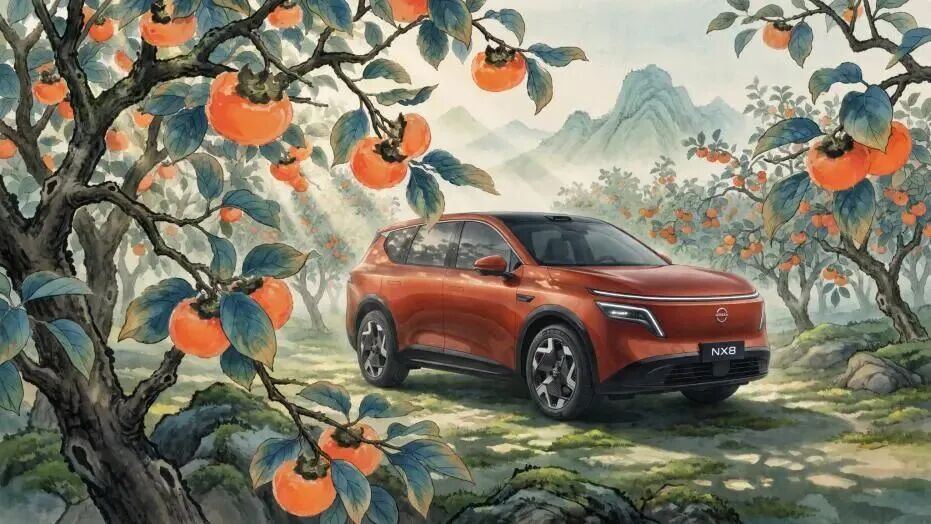
Nissan serves as a microcosm of joint venture automakers in China's NEV market. Brands like Volkswagen, Mazda, and Honda are all experiencing similar situations: continuous launches of NEV products, a shrinking fuel vehicle base, and the failure to establish a new growth engine, resulting in a transition dilemma.
To put it bluntly, Honda's e:N series is hesitating, Toyota's bZ series is weakening, GAC Toyota's Platinum Wisdom series is seeking growth, Nissan's N series is waiting for more progress, Volkswagen's ID. series has started to compete on price, and Mazda is deeply tied to Seres.
The Key to Increasing Joint Venture Sales Lies in Product Refinement
The rapid decline of joint venture brands' fuel vehicle business and the failure of the NEV segment to form a strong complementary force have led to a widening gap between the two. This is an irreversible industry fact. Even though mainstream joint venture brands are actively exploring the rules of the game in China's NEV market, the core to truly increasing sales lies in how to meet user recognition amid consumption upgrading and demand diversification, rather than simply migrating China's tech supply chain to new vehicles without addressing the core issues.
Simply put, when joint venture brands announce the "Joint Venture 3.0" cooperation model, where product definition is handed over to Chinese teams, they should further consider two key points. First, the changes in joint venture NEV products, in the absence of breakthroughs from disruptive technologies, should focus on how to reshape and effectively communicate the manufacturing heritage and quality reputation of joint venture brands.
Among the current joint venture lineup, brands retelling their NEV stories mainly fall into two categories. Electric Smart, Freelander, and AUDI, as brands that have most decisively separated from their original brands, although they have not quickly increased sales, have officially aligned with the Chinese market in terms of decision-making chains and R&D priorities. After shedding old burdens, they are likely to unleash greater potential in the future.
As for NEV sequences derived from original brands, such as Nissan's N series and Buick's Electra, although they can effectively convert existing customers, they still face challenges and risks. Earlier quality control issues with Nissan's N7 and Buick's inability to balance OTA upgrades for fuel vehicles with its "Equal Intelligence for Fuel and Electric" strategy have had a significant impact on the brands.
Whether it's "radical separation" or "light sequencing," now that domestic brands have established distinct labels in the NEV sector, the vague "family-oriented" labels of joint venture brands are no longer attractive to young consumers. This is another brand storytelling challenge that joint venture brands urgently need to address.
Second, in terms of product rhythm, joint venture brands must further optimize their development logic with China's tech supply chain and the global industrial chain. To put it bluntly, the iteration cycle of NEV models by Chinese domestic brands is already calculated in months. Joint venture brands are still constrained by the inertia of "fuel era" thinking in terms of product decision-making, supply chain, and product definition, and are far from the "efficient vehicles" discussed on the internet recently.
Additionally, a 2026 survey by Roland Berger on China's automotive industry pointed out that localized procurement by most joint venture automakers remains at the stage of "Made in China" without achieving deep collaborative R&D. This directly leads to a disconnect between products and actual market demands, with product BOM costs 15%-25% higher than those of domestic brands in the same segment. This series of structural shortcomings has collectively led to a situation where some joint venture automakers are increasingly passive the more they "struggle."
Therefore, as the residual dividends of the fuel era rapidly dissipate, the window of opportunity for joint venture brands is narrowing. Many joint venture automakers have now realized that a "skin-deep" transformation, which simply involves adopting local supply chains and stacking hardware configurations, is not viable. However, whether it's new sub-brands that completely reconstruct their decision-making systems or NEV sequences incubated by parent companies, they cannot avoid the essential tasks of localized R&D, deep supply chain collaboration, and reshaping brand narratives.
Even if we look at individual market signals, we can see the feasibility of value reconstruction for a few brands or single models in the NEV market, such as GAC Toyota's Platinum Wisdom 3X, Buick's Electra E7, Nissan's NX8, Mazda's EZ-60, and Volkswagen's ID.AURA T6. Among them, Nissan, GAC Toyota, and Volkswagen are all experimenting with battery safety guarantee policies to reduce the uncertainty for fuel vehicle users transitioning to NEVs.
Commentary
Joint venture brands are adjusting in different directions. However, it is worth noting that the market will not give way to nostalgia. Only by breaking free from the inertia of the fuel era, delivering product strength that truly matches the Chinese market, and offering products that satisfy consumers' identity recognition needs, can joint ventures fill the huge gap left by the collapse of the fuel vehicle market and hold their ground amidst the wave of transition between old and new.
(This article is original to Heyan Yueche and may not be reproduced without authorization.)
Can Volvo Turn Its Fortunes Around with a New CEO, a Barrage of New Models, and a Deep Alliance with Geely?
Is the AI-Native Home 07 the New Engine for Roewe's Ascent?
Can the Alpha T7 Truly Break Through for Pressured Arcfox?
Huawei and Seres: From Mutual Success to Redefined Roles
Battery Tax Imposed, New Energy Vehicles Weaned Off Subsidies Faster

Heyan Yueche is now available on the following platforms.
-
![]()
Changsha Computing Power Firm Lands Another Order Worth Nearly 900 Million Yuan
-
![]()
Jiemei Technology’s Restructuring Plan Greenlit: Set to Acquire Afos Technology for 915 Million RMB
-
![]()
Revenue of 200 Million, Then Another 200 Million Invested! Transight Optoelectronics Takes a Bold Bet on Ultra-Precision Optics Pilot Production
-
![]()
What is the True Value of Zhipu's $3 Billion ARR Amid the 'Data Leak' Controversy?
-
![]()
Monthly Report | China's Online Notebook Computer Market in August 2026: Sales Volume Drops 21%, Apple and Xiaomi Buck the Trend to Gain Market Share; Average Price Rises 12%, Share of Models Priced O
-
【Focus】Low-drag disc brake assembly reduces energy loss and holds great potential in new energy vehicles
-
![]()
Lying Flat in a Car: Is There a 4.4-Fold Increase in the Risk of Severe Injury During a Collision?
-
![]()
Honor Magic9 Pro Max Review: Imaging Gets More Exciting, Agent System Impresses