Which Competitor's Market Share Does the Yijing X9 Target with Its Full-Huawei-Tech Stack at the 300,000 Yuan Price Point?
 10/08 2026
 402
402
Lead | Introduction
On September 24, the Yijing X9, the inaugural flagship large six-seater SUV co-developed by Dongfeng and Huawei, made its official debut. As this 'fully-loaded Huawei' newcomer enters the 300,000 yuan large six-seater SUV market, it is poised to spark fresh competition in this segment.
This article is produced by Heyan Yueche Studio.
Written by | Cai Yan
Edited by | He Zi
Full text: 2,128 characters
Reading time: 4 minutes
Amid the bustling 'Golden September, Silver October' period for automotive releases, one model has particularly caught the eye. The Yijing X9, recently launched, has garnered over 9,000 orders within just 24 hours.
The new car is offered at a limited-time promotional price ranging from 279,800 to 359,800 yuan, marking a direct reduction of 20,000 yuan from its initially announced pre-sale price. Boasting a length of 5,301mm and a wheelbase of 3,120mm, the Yijing X9 comes standard with Huawei's ADS 5 intelligent driving system and an 896-line dual-light-path image-grade LiDAR across all variants. High-end models boast a quad-LiDAR fusion perception solution and introduce the HarmonySpace 6 cockpit. It offers a CLTC pure electric range of 465km and a combined range exceeding 1,500km. With its full suite of Huawei intelligent technologies, the Yijing X9 is priced in the 300,000 yuan range, which industry experts believe will redefine the configuration and pricing standards for large six-seater SUVs. Which competitors will feel the heat from this new entrant?
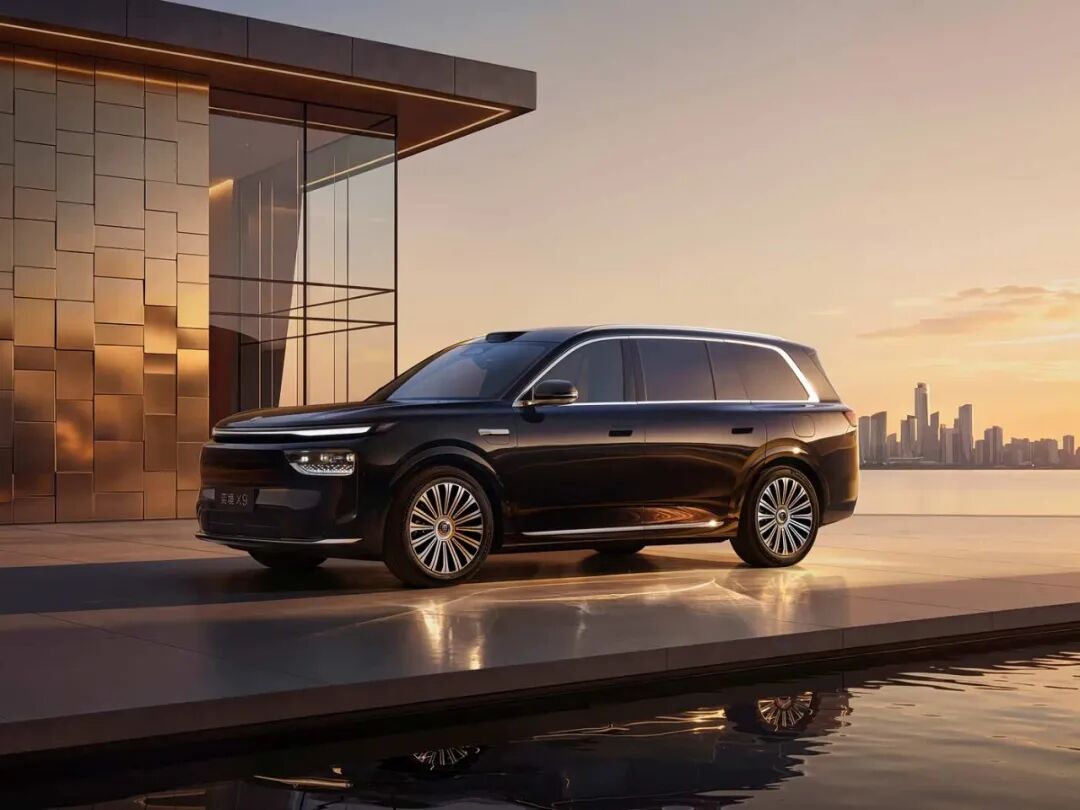
△ Which Competitor's Market Share Does the Yijing X9 Target?
What Advantages Does the Yijing X9 Possess in a Fiercely Competitive Market?
To grasp the impact of the Yijing X9, it's crucial to first delve into the dynamics of the market it's entering. Since 2026, over 20 new mid-to-high-end large six-seater SUV models priced above 250,000 yuan have been launched, setting a new annual record. However, the market is highly concentrated at the top. In August's large SUV sales rankings, the NIO ES8 led with 10,991 units, closely followed by the Aito M9 with 10,098 units. Together, they accounted for over 20,000 units, while the third-ranked BYD Tang logged 7,796 units, and the XPENG GX recorded 7,002 units. The direct competitors of the Yijing X9 exhibit significant performance divergence: the Li Auto L9 sold only 2,236 units in August, a 46.22% month-over-month decline and a 43.52% year-over-year decrease, with cumulative sales of 19,201 units in the first eight months of the year, roughly half of the previous year's total. The Denza N9 sold 1,031 units that month, a 49% year-over-year decline, while the Lynk & Co 900 sold 1,220 units, and the Wey V9X only 1,035 units. Additionally, several 'Series 9' flagship models have dropped out of the 'thousand-unit club'.
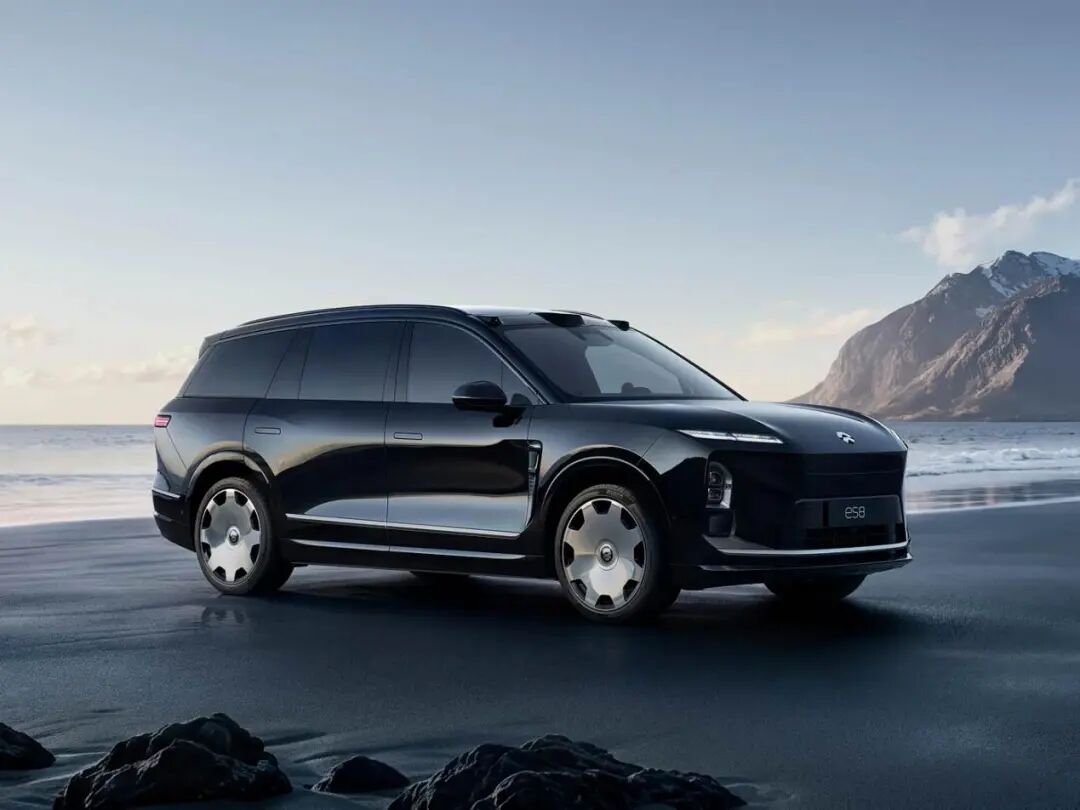
△ Fierce Competition in the Mid-to-High-End Large Six-Seater SUV Market
The 300,000 to 400,000 yuan large six-seater SUV market is undergoing a 'winner-takes-all' elimination phase. The NIO ES8 and Aito M9 have captured the majority of demand, making it challenging for other models to surpass the 3,000-unit monthly sales threshold, regardless of their configurations. The Yijing X9 enters the market at a time when the segment is still expanding, but the competitive landscape leaves little room for error. However, the Yijing X9 boasts unique advantages. It shares Huawei's Qiankun technology ecosystem with the Aito M9—featuring six intelligent solutions, including ADS 5, HarmonyOS Cockpit 6, the Chitu platform, and intelligent in-car lighting—and is the first model to debut these next-generation technologies. Yet, the price gap between the two is substantial: the Aito M9 starts at over 480,000 yuan, while the Yijing X9 is priced at just 279,800 yuan for its limited-time offer.
This indicates a significant demand gap exists for family users who value Huawei's comprehensive intelligent capabilities but are unwilling to pay the premium for the Aito M9. The 9,157 orders confirmed within 24 hours of launch validate the existence of this untapped market. The Yijing X9's pricing strategy is effective in the short term, precisely targeting the unmet demand for a 'fully-loaded Huawei' model in the 300,000 yuan segment, using price differentials to create clear purchasing incentives. However, in the long run, its true competitors may not be the Li Auto L9 or Denza N9 but rather other models within Huawei's ecosystem.
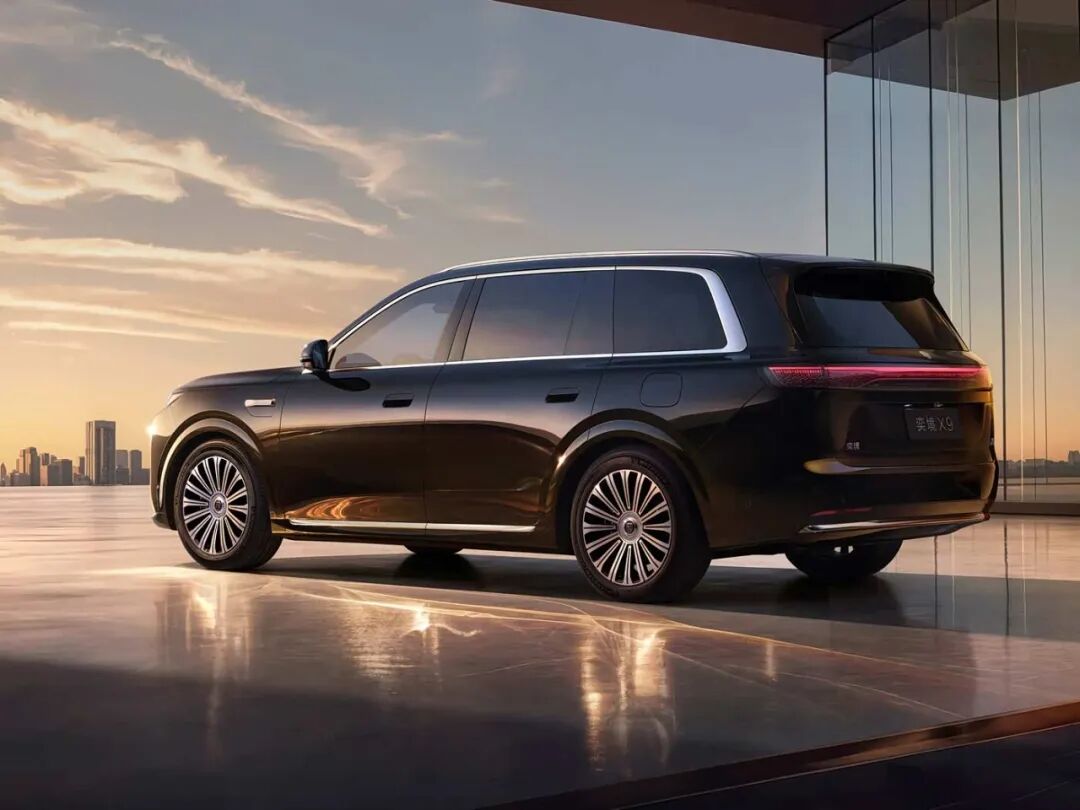
△ Over 9,000 Orders Confirmed for the Yijing X9 Within 24 Hours of Launch
Can the Full-Stack Co-Creation Model Be the Key to Breaking Through?
The Yijing X9 and the Aito brand within Huawei's Harmony Intelligent Mobility ecosystem follow two distinct collaboration paths. Aito was once a showcase for Huawei's deep involvement in branding, channels, and marketing. However, just a week before the Yijing X9's launch, Aito announced a shift in its collaboration model, returning branding, channel, and marketing operational control to Seres, only for a reversal to occur 15 days later. In contrast, the Yijing brand, from its inception, has chosen a different approach—Dongfeng retains full control over branding, channels, delivery, and user operations, while Huawei deeply participates in product development at the foundational level without intervening in sales. Zeng Qinglin, General Manager of the Yijing brand, defines this model as 'full-stack native co-creation.' Essentially, Dongfeng and Huawei jointly define, develop, and operate the brand, with both parties investing over 10 billion yuan and assembling a co-creation team of over 5,000 people to achieve native hardware-software integration in areas such as powertrains, intelligent driving, and chassis systems.
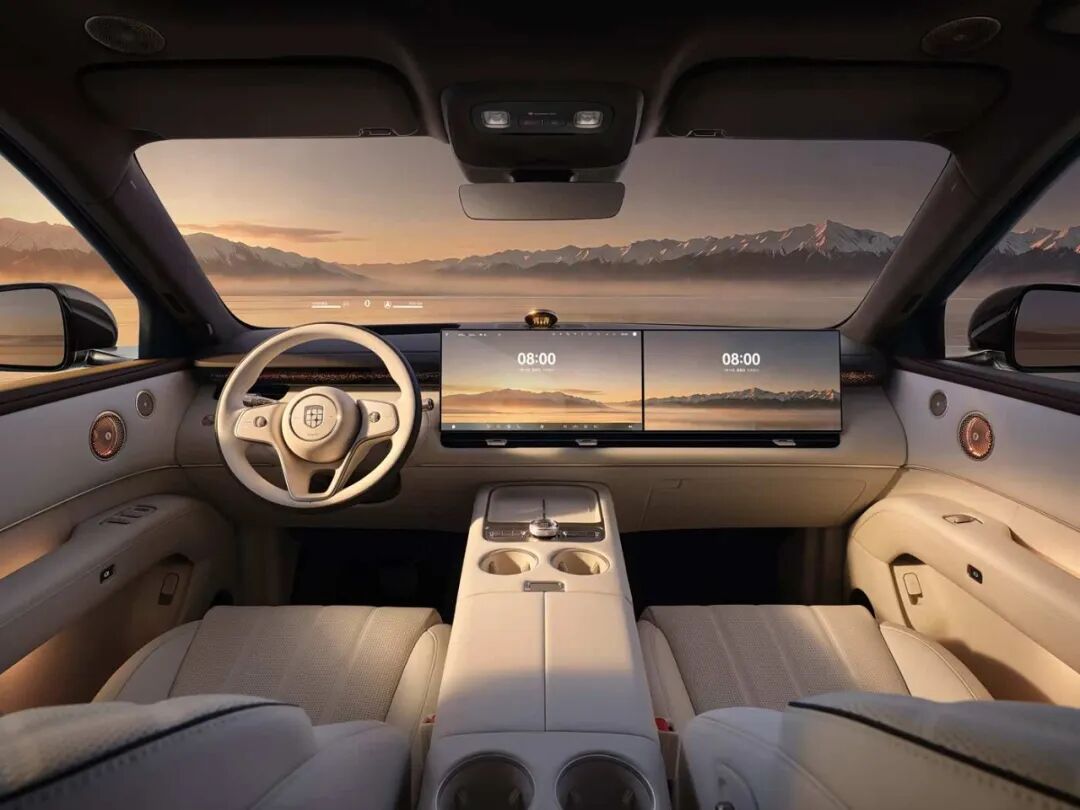
△ The Yijing X9 Adopts a 'Full-Stack Native Co-Creation' Model
This model's strength lies in its clear division of labor: Dongfeng leverages its strengths in vehicle manufacturing, chassis tuning, and supply chain management, while Huawei provides the foundational intelligent technology. Both parties perform their respective roles while deeply integrating their efforts. The Yijing X9 features an all-aluminum chassis, dual-chamber air suspension, and an EDC continuously variable damping system, calibrated over 14 months by Dongfeng's champion tuning team—a capability Huawei cannot replicate. In return, Huawei contributes core technologies such as the 896-line dual-light-path image-grade LiDAR, the WEWA 2.0 intelligent driving architecture, and the CAS 5.0 all-dimensional collision avoidance system. This level of collaboration, where each party contributes its strengths to a unified system, surpasses traditional supplier relationships and differs from Huawei's dominant collaborative approach within the Harmony Intelligent Mobility ecosystem. However, challenges remain. With multiple brands already in the Harmony Intelligent Mobility ecosystem, including Aito, Luxeed, Enjoyment, and Exceed, the Yijing, as a new entrant in Huawei's Qiankun system, must establish a differentiated brand identity while sharing the same technological roots.
The Yijing X9's answer is 'family-first'—focusing on family travel scenarios by deeply enhancing space, safety, and comfort. It offers 3,294mm of effective cabin space, with a third-row lateral width of 1,101mm, a trunk capable of accommodating luggage for six people, and six seat configuration modes covering everyday commuting to camping bed setups. The second-row zero-gravity seats feature a three-in-one bionic massage system. In terms of safety, the vehicle body consists of 92.4% high-strength steel and aluminum, with B-pillars made of 2,400MPa ultra-high-strength steel. The battery bottom adopts a three-layer bulletproof armor structure, passing 16-ton vertical top pressure tests and 105km/h frontal offset collision tests. These configuration choices clearly differentiate the Yijing X9 from the Aito M9's business-oriented luxury positioning.
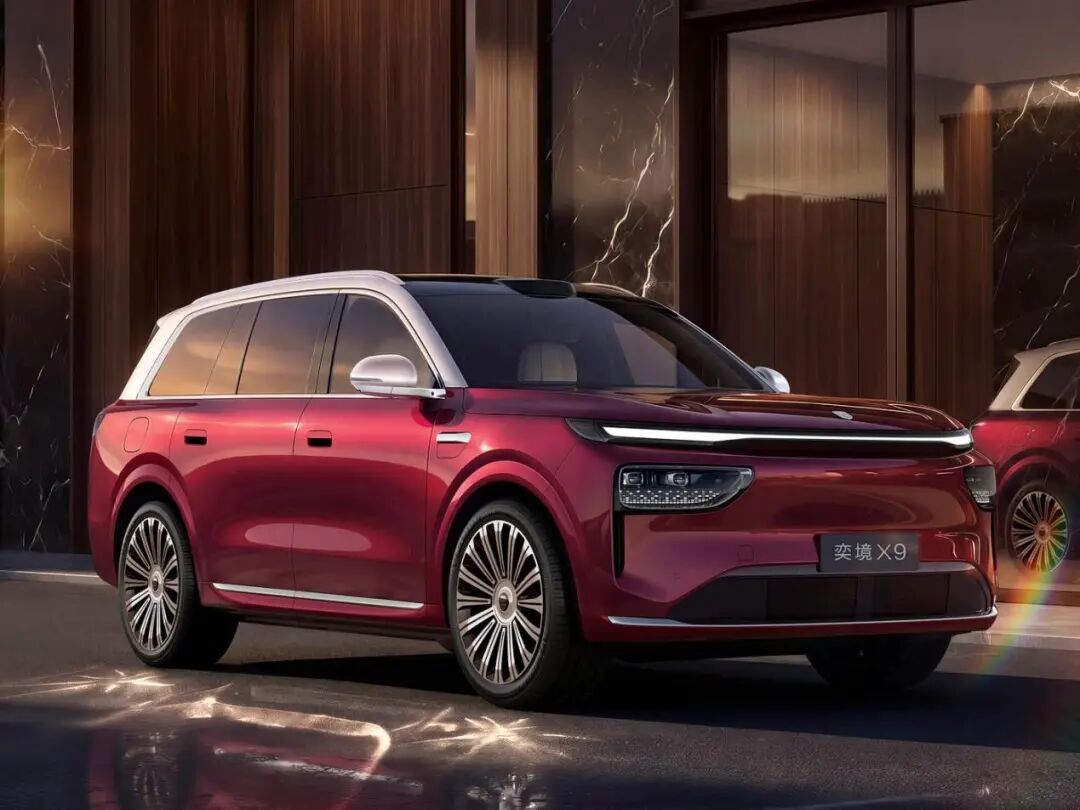
△ The Yijing Urgently Needs to Establish a Differentiated Brand Identity
However, building brand recognition takes time, and the competitive window in the 300,000 yuan market will not wait. With over 20 new mid-to-high-end large six-seater SUVs set to launch in 2026, any new model that fails to establish a stable user reputation and delivery rhythm within 3 to 6 months of launch risks being overshadowed by competitors. The Yijing X9 must accelerate capacity ramp-up, channel expansion, and after-sales service simultaneously to convert initial order momentum into sustained sales performance.
Commentary
The emergence of the Yijing X9 signifies that models equipped with Huawei's intelligent systems are accelerating their penetration from the 400,000 yuan-plus flagship market into the 300,000 yuan mainstream market. The vehicle carrying this penetration is shifting from Huawei's dominant collaborative approach within the Harmony Intelligent Mobility ecosystem to more flexible technology output and joint co-creation models. Whether the Yijing X9 can truly 'secure market share' depends on its ability to find a balance and new strategies between Dongfeng's manufacturing heritage and Huawei's intelligent ecosystem.
(This article is original to Heyan Yueche and may not be reproduced without authorization.)
-
Moonshot AI Launches Pre-IPO Funding Round, Eyes HKEX Listing in Q1 2027
-
Leapmotor's World Model Hasn't Yet Broken Free from Dahua's Shadow
-
![]()
Data Centers Can No Longer Keep Up with AI’s Ambitions
-
Vanishing 340 Billion! MiniMax’s Market Value Plummets by 80%, Signaling End of Capital Splurge in Large Model Sector
-
What Exactly is Holding Back the 'Last Mile' of Enterprise AI Implementation?
-
![]()
When World Models Become the 'Intermediary'
-
![]()
Is Apple Exerting Ecological Dominance? Forcing Developers to Comply with iPhone Duo Standards
-
![]()
Which Competitor's Market Share Does the Yijing X9 Target with Its Full-Huawei-Tech Stack at the 300,000 Yuan Price Point?