Has the Brake Pedal of JAC Motors Really Broken? The Market Will Teach Every Automaker with 'Fatal Flaws' a Lesson
 10/13 2026
 362
362
Original content from New Energy Perspective (ID: xinnengyuanqianzhan)
Full text: 2,954 characters | Reading time: 8 minutes
For a condensed version, watch the video; for detailed content, continue reading.
After experiencing two consecutive daily limits down, JAC Motors' stock price finally bottomed out and turned positive, but the 'brake pedal bracket fracture' incident continues to ferment.
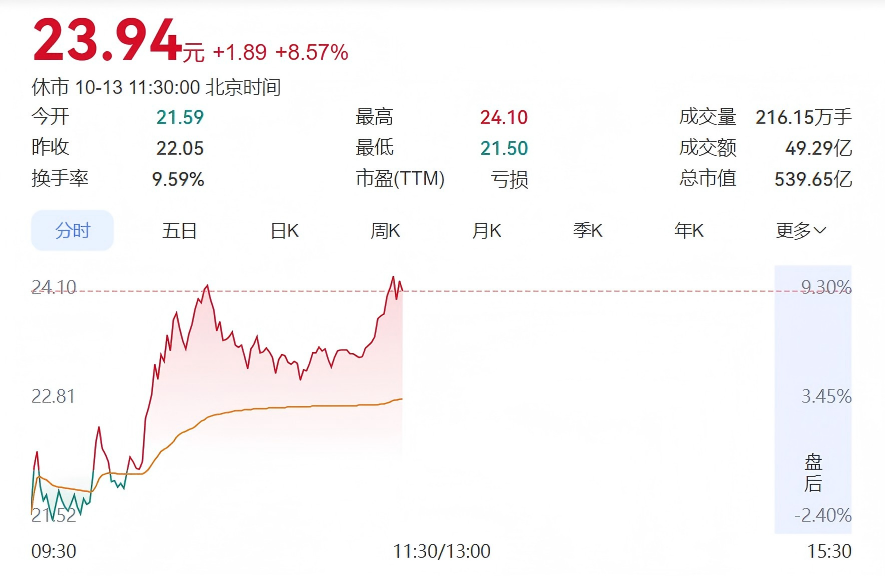
Figure/Stock Market Performance of JAC Motors
Source/JAC Motors Stock Market
On October 8, Dongchedi released a test video showing that during emergency braking tests, all three Zunjie V800 vehicles experienced physical fractures of the brake pedal brackets. The incident quickly sparked heated discussions online. JAC Motors' stock price also hit the daily limit twice on October 8 and 9.
According to previous statements from relevant Zunjie staff, the company is preparing an upgrade plan for the Zunjie V800's brake pedal bracket, expected to be finalized by the end of October and implemented starting in November.
However, on October 13, Zunjie Automobile issued a 'Statement on the Inspection of Zunjie V800 Brake Pedals,' stating that the Zunjie V800 complies with the industry standard QC/T 788-2018 requirements and underwent stricter testing up to a longitudinal force of 3000N, with no cracks or damage observed.
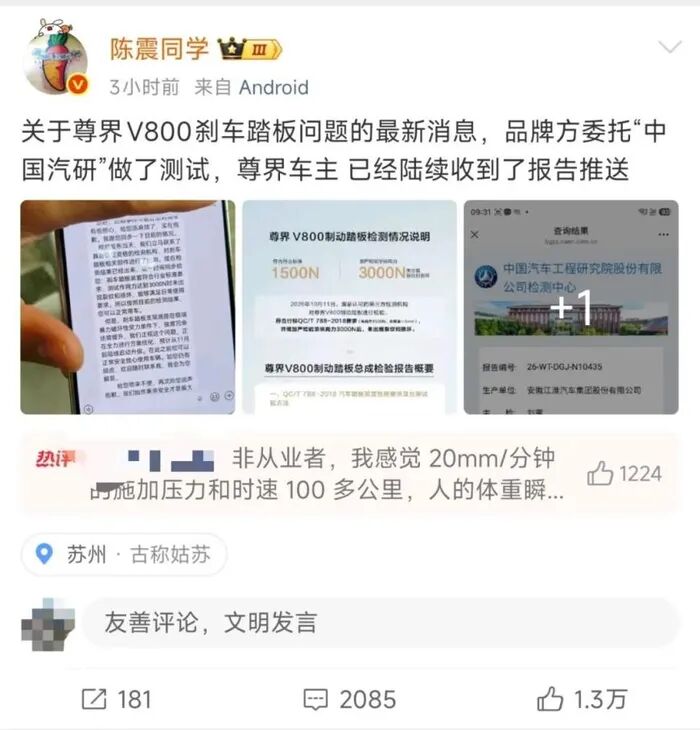
Figure/Personal Weibo of Chen Zhen's classmate
Source/Internet, Screenshot from New Energy Perspective
This is interesting—on one hand, three vehicles experienced fractures, while on the other, not even a crack appeared. It seems we need to wait and see who is right. However, one thing is certain: the brand trust crisis this incident has caused for Zunjie Automobile will take a long time to repair.
Some say Dongchedi's test was a malicious 'stunt,' while others believe the automotive industry needs more 'Dongchedis' to identify issues for automakers in advance and prevent larger accidents in the future.
Regardless of differing opinions, we must agree on one point: as the People's Daily stated, a car's brake pedal should never 'fracture' while driving.
Nowadays, everyone opposes 'rushed vehicles' and advocates for long-termism, but why do models with excessively compressed development cycles and reduced real-vehicle validation processes keep appearing? From 'easy rusting' to 'air spring leaks,' from 'battery batch failures' to 'brake pedal bracket fractures'... Can the limited seats in the final round accommodate them?
1. The Most 'Reliable' Component Broke
The sequence of events is not complicated.
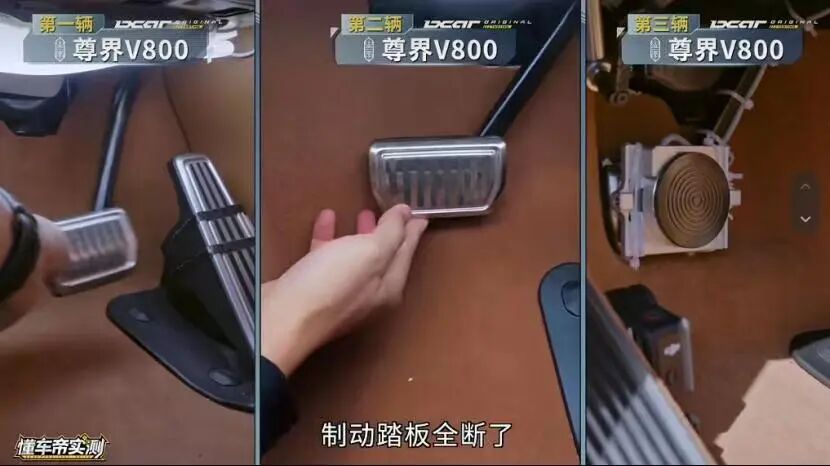
On October 8, Dongchedi released a test video showing three brand-new Zunjie V800 vehicles undergoing emergency braking tests from 100km/h to 0 in a closed venue . After multiple consecutive heavy brakes, all brake pedal brackets experienced physical fractures.
Figure/Dongchedi's Actual Test Video
Source/Internet, Screenshot from New Energy Perspective
The first vehicle's bracket fractured on the third brake, the second on the fourth, and the third vehicle's bracket shattered on the second heavy brake.
Once the pedal bracket fractures, the conventional foot brake function is lost, and the driver can only rely on shifting into P gear for emergency deceleration. Imagine driving at 100 km/h on the highway, pressing the brake, and the pedal disappears from under your foot—wouldn't you panic?
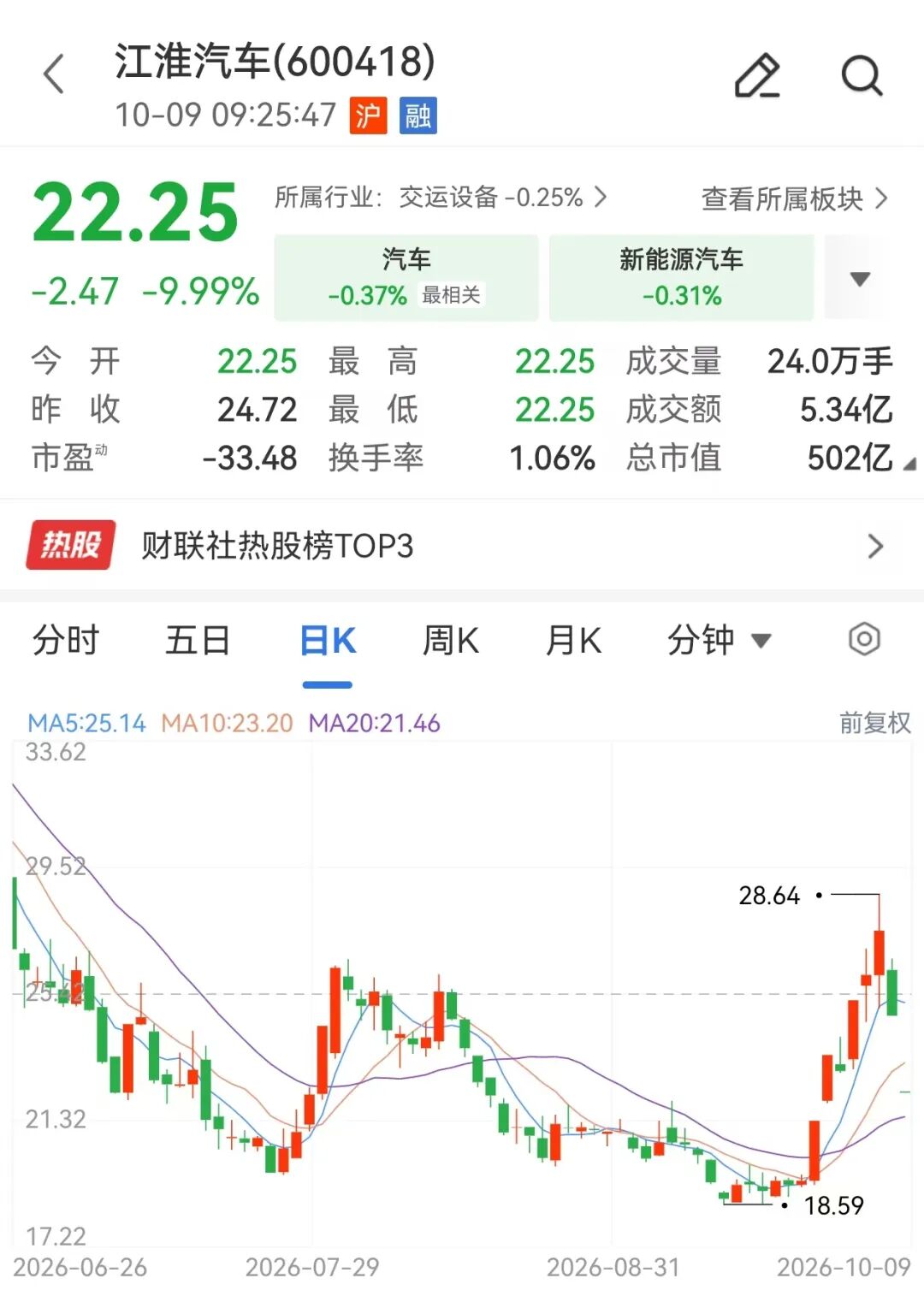
After the video's release, JAC Motors' stock price hit the daily limit, with its market value shrinking by approximately 6.2 billion yuan that day. On October 9, the stock opened with another daily limit down, with a total market value loss exceeding 8 billion yuan over two trading days. Subsequently, over three trading days, JAC Motors' stock price fell by a cumulative 19.73%.
Figure/Stock Market Performance of JAC Motors
Source/JAC Motors Stock Price
After the incident fermented, executives from several automakers joined the discussion, posting images of their own models' brake pedals on social media, with a clear marketing tone.
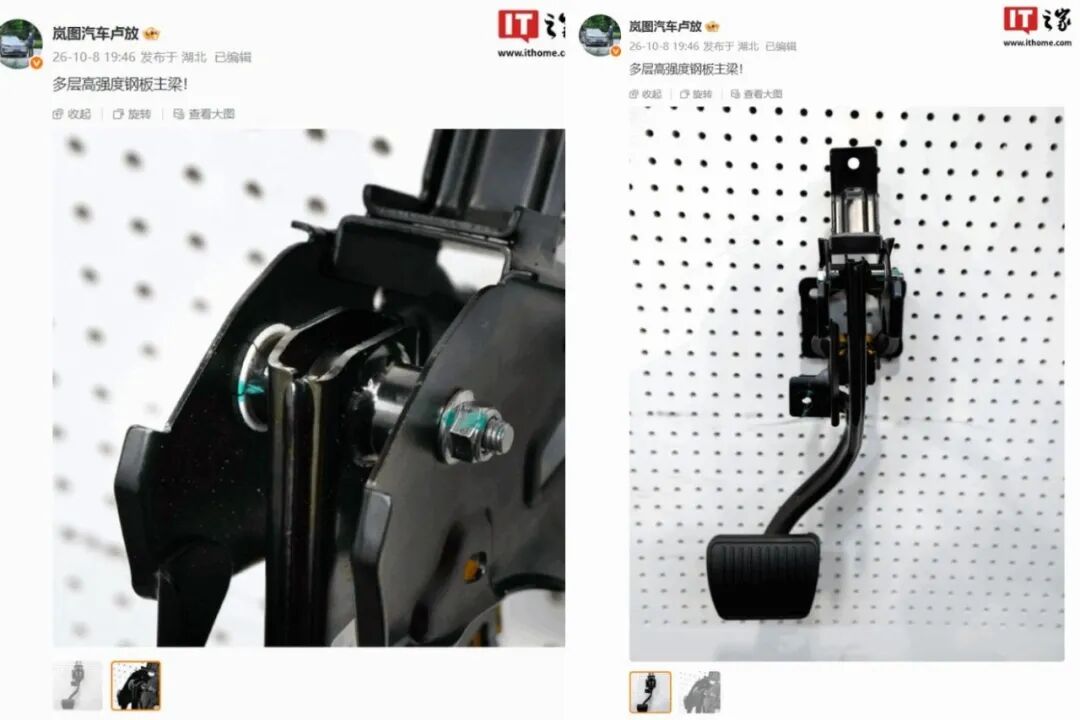
The first to respond was Lu Fang, Chairman of VOYAH Automobile, who posted two photos of brake pedals on his personal Weibo on the evening of October 8, with the caption 'Multi-layer high-strength steel main beam!' The next day, he added that whether steel or plastic is used is not the focus; what truly matters is the safety philosophy and bottom line (bottom line) adhered to in vehicle design.
Figure/Personal Weibo of Lu Fang, Chairman of VOYAH Automobile
Source/Internet, Screenshot from New Energy Perspective
Lin Zhibin, Deputy General Manager of GAC Honda, followed suit, using the Accord as an example to introduce their standards: 'Made of high-rigidity steel, it has undergone rigorous testing and can withstand pressures exceeding 3000N while maintaining structural integrity without fracturing. This is not a theoretical calculation from a PPT but a test value obtained from actual pressure testing.' He specially (deliberately) added, 'The Fit's brake pedal is also made of steel,' implying that even a 100,000-yuan compact car has a harder brake than a million-dollar luxury vehicle.
Until October 13, Zunjie Automobile issued the 'Statement on the Inspection of Zunjie V800 Brake Pedals,' attempting to set the record straight.
A noteworthy detail is that during Dongchedi's test, the peak force on the pedal at the time of fracture was only around 1600N. Zunjie's disclosed data showed that the permanent deformation amounts of the four samples were 2.04mm, 4.07mm, 2.05mm, and 2.28mm, respectively, meeting the standard under a longitudinal force of 1500N.
Even when the force was doubled to 3000N, the pedal brackets did not crack.
Who is right? This question likely requires a more authoritative institution to provide an answer.
2. Are There Too Many Defective Products in the Automotive Market?
The reason the Zunjie V800 brake pedal bracket fracture incident gained widespread attention is closely tied to the increasingly serious issue of 'rushed production' in the current automotive industry. Air spring leaks, body rust, battery batch failures... These problems frequently make the news, prompting even the People's Daily to speak out.
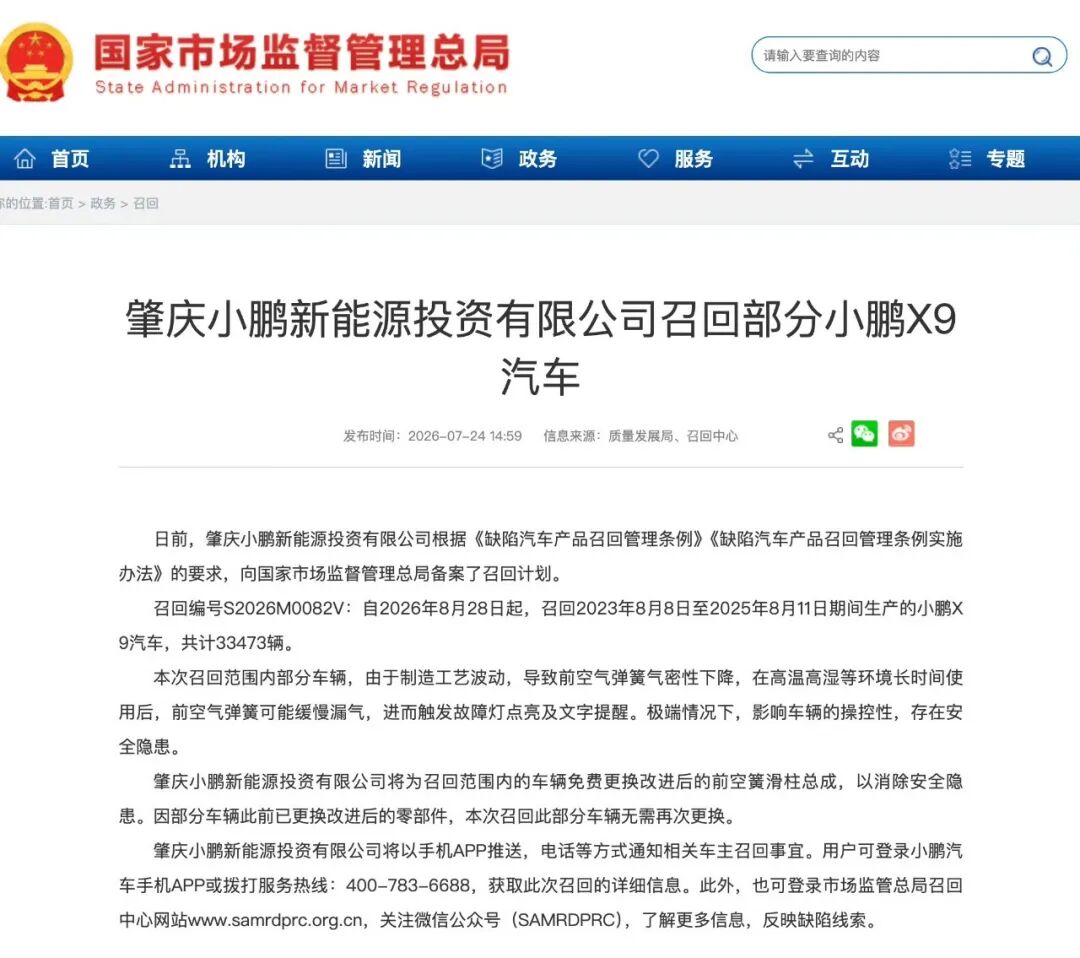
In July this year, 33,473 units of a certain model were recalled due to manufacturing process fluctuations in the front air springs, which could lead to slow air leaks under high-temperature and high-humidity conditions, potentially affecting vehicle handling in extreme cases.
Figure/Recall of a certain model due to front air spring manufacturing process fluctuations
Source/Internet, Screenshot from New Energy Perspective
For example, since 2026, commercial vehicles equipped with a certain 177Ah lithium iron phosphate battery cell from Zhongchuang Hangkong have experienced widespread issues such as cell swelling, electrolyte leakage, and sharp drops in insulation resistance after traveling between 150,000 and 300,000 kilometers, earning them the nickname 'banana batteries' in the industry.
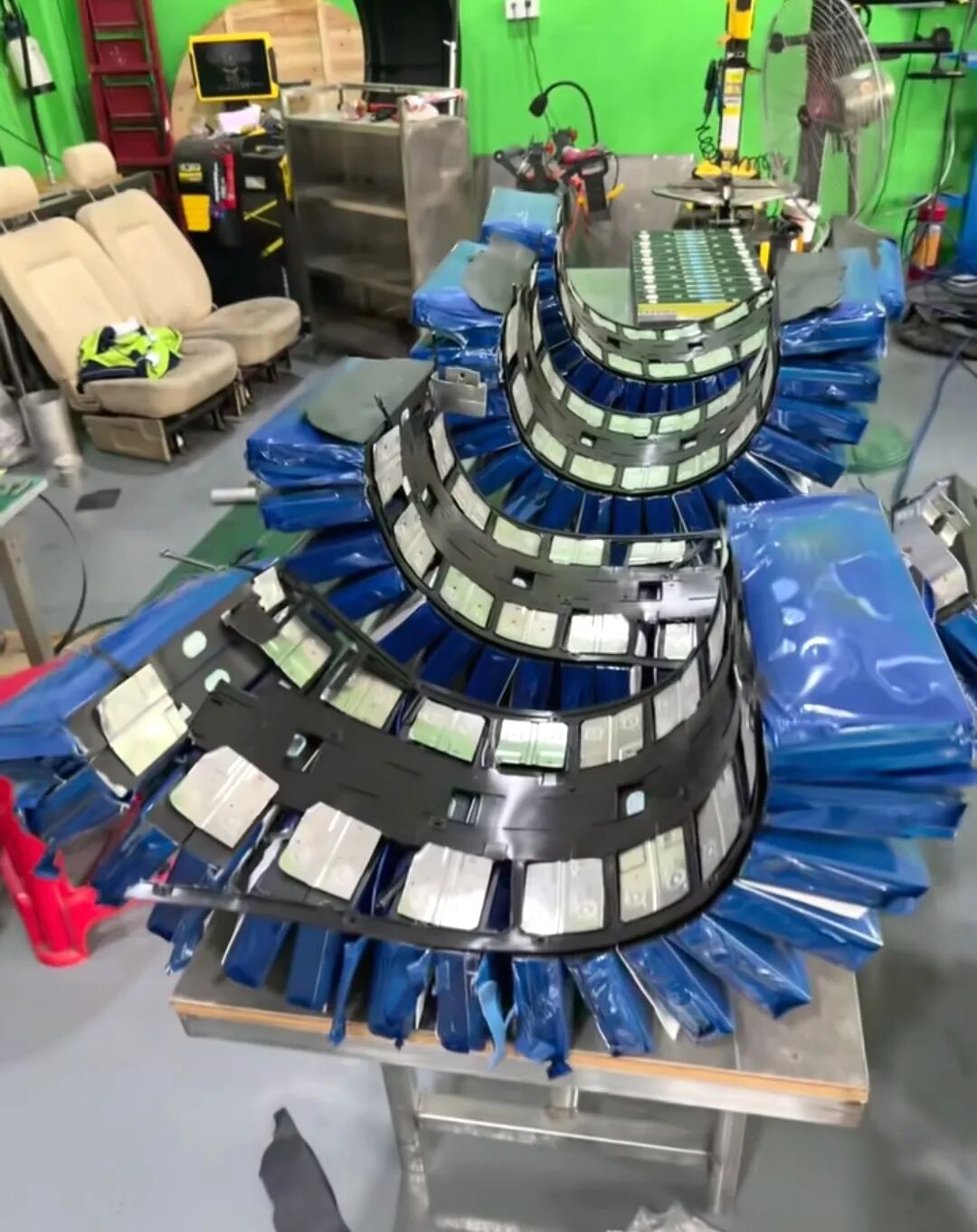
Figure/Banana Batteries
Source/Internet, Screenshot from New Energy Perspective
Why do so many problems arise? Ultimately, it comes down to 'rushed production.'""In the era of fuel vehicles, the development cycle for a new model typically exceeded 36 months, but in the new energy era, some new power brands have shortened their development cycles to as close as 12 to 18 months.
Zhu Xichan, a professor at the School of Automotive Studies at Tongji University, believes that throughout the development cycle of a new model, two winters and two summers of vehicle road testing are required. Even for minor redesigns, one winter and one summer, along with 30,000 kilometers of real-world road testing, are necessary.
However, the reality is that the new energy vehicle market is highly competitive. A three-month delay in launch could mean falling behind by a generation, and many automakers simply cannot wait that long.
As An Qingheng, Director of the China Automobile Industry Consulting Committee, stated, 'Some automakers, in a rush to seize market opportunities, have significantly shortened development cycles, with some projects even compressed to less than a year. This hasty launch approach is irresponsible to consumer safety.'""The power battery industry is no exception. For example, a certain second-tier battery manufacturer, to meet urgent capacity demands from automaker clients, commonly adopts the 'batch release' unspoken rule. Simply put, they ship the products before waiting for complete test results, shifting the risk directly to consumers.
In August this year, the Ministry of Industry and Information Technology and three other departments jointly issued a notice, explicitly requiring newly declared products to complete 'two winters and one summer' testing, with reliability verification mileage of no less than 30,000 kilometers. Automakers are prohibited from directly adopting test reports provided by suppliers.
On October 10, the Ministry of Industry and Information Technology and three other departments publicly released a notice (draft for comments) on further strengthening management of innovative design and R&D testing verification in automotive products, aiming to guide the industry to shift from competing on 'iteration speed' to competing on technical maturity and product reliability, moving the trial-and-error process to the R&D stage to reduce the risk of large-scale recalls after launch.
3. Bad Money Cannot Drive Out Good Money in the Automotive Industry
We all know that competition in the automotive industry has entered a knockout phase. Especially after the first three quarters of this year, many automakers have not even achieved half of their sales targets for the last three months.
Under this pressure, some automakers' 'eating habits' have become quite unsightly.
Cutting corners, using inferior materials, and even knowingly delivering substandard vehicles to consumers, then signing confidentiality agreements with owners after issues arise, stipulating 'not to disclose any specific information about vehicle failures, repair processes, or details of negotiations with the manufacturer through any channel,' to downplay major issues into minor ones.
The essence of this practice is to replace systemic quality improvements with one-time compensation, which is not true long-termism but calculated short-termism.
Ironically, when owners first discover issues, they are often pacified, delayed, and met with barriers and excuses; only when batch issues become impossible to conceal do they resort to signing confidentiality agreements. For example, after the 'banana battery' incident involving Zhongchuang Hangkong and GAC Aion fermented, neither company provided a clear response until overwhelming public pressure forced them to speak up, initiating failure analysis and risk investigations.
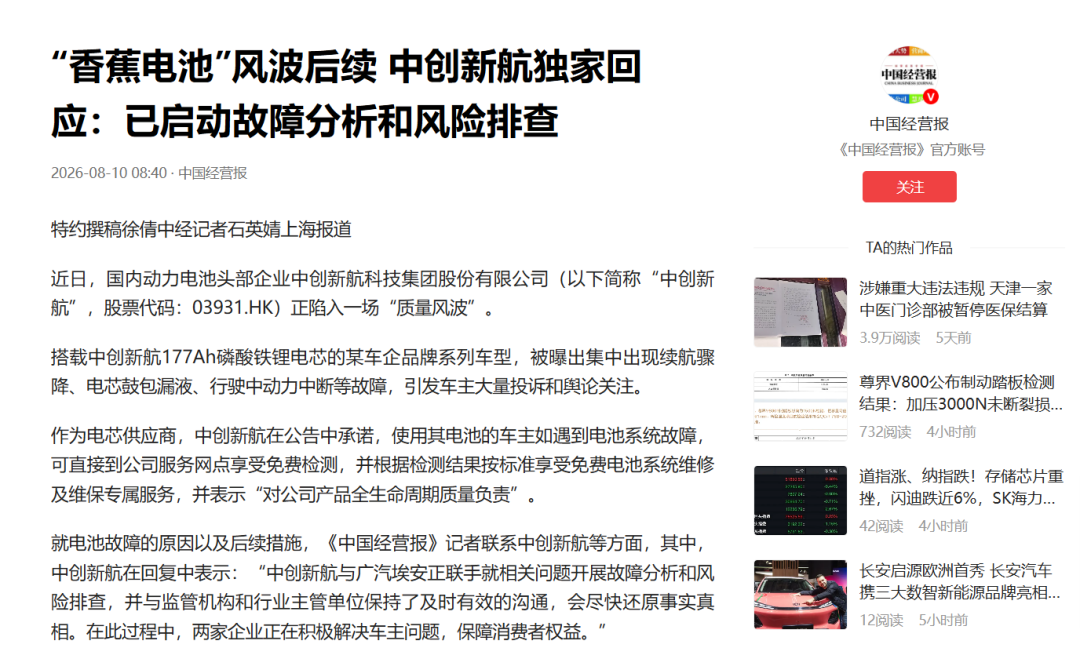
Figure/Aftermath of the 'Banana Battery' Controversy
Source/Internet, Screenshot from New Energy Perspective
Can such belated rectification efforts recover the lost trust?
Some might argue that automakers have it tough, with such fierce competition, and surviving comes first. While this sounds reasonable, survival should never rely on deception. The China Association of Automobile Manufacturers has clearly stated that the industry should resist irrational competition, abandon impetuousness, eliminate (put an end to) 'pseudo-innovation,' and not sacrifice verification processes for faster launch timelines.
A car's brake pedal should never 'fracture' while driving; a car's battery should never swell and leak during normal use; a car's body should never rust and perforate within the warranty period.
These are not high standards; they are the bottom line (bottom line).
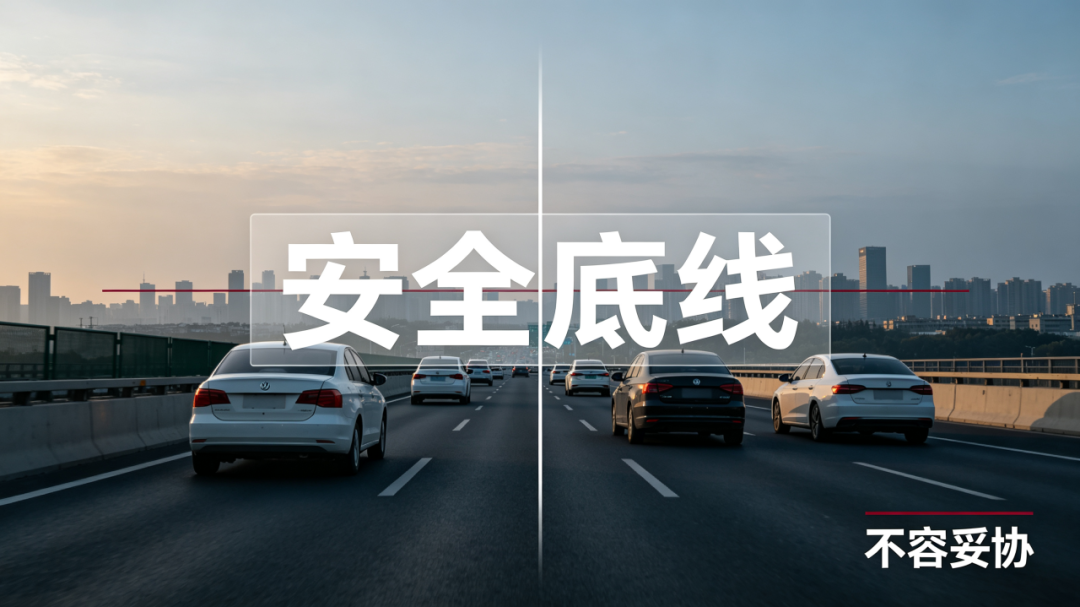
Figure/The Bottom Line
Source/AI-generated
Ultimately, a car is not a smartphone, nor is it a fast-moving consumer good that can be fooled by stacking configurations and comparing parameters. It carries the lives of a family and the safety of every road user. Those automakers that rely on 'rushed production' to seize market share are cutting corners on R&D verification, reducing real-vehicle testing mileage, and sacrificing consumer trust and even lives. When accidents happen, can they simply compensate with a few vehicles and sign a few confidentiality agreements to sweep things under the rug?",
-
![]()
Who is Taking Away the Profits of Car Companies: Battery or Intelligent Driving?
-
![]()
Tencent Successively Discontinues Two AI Agents
-
![]()
Has the Brake Pedal of JAC Motors Really Broken? The Market Will Teach Every Automaker with 'Fatal Flaws' a Lesson
-
![]()
Changsha’s Emerging Powerhouse in Computing: Cancels RMB 3 Billion Contract!
-
![]()
Production Capacity Can’t Keep Up with Orders! This Optical Enterprise Soars 449% on Debut
-
![]()
Q3 Report | Yuanjie Technology's Net Profit Expected to Surge Fivefold, Transitioning from 'Shortage Dividends' to 'Delivery Challenges'
-
![]()
The Computing Power Price War Hits Silicon Valley
-
![]()
The AI Office Sector is Forming a 'Three-Pillar' Landscape