Is Xiaomi to Blame? Porsche, the Dream Car for Chinese Consumers, Lays Off 30% of Staff and Faces Crisis!
 10/19 2026
 450
Recently, Porsche made a significant announcement, revealing plans to cut 9,000 jobs by 2035. This includes a 40% reduction in management positions and a 25% reduction in staff within functional departments.
In fact, as early as 2025, Porsche had already laid off over 1,900 employees. In total, the company intends to lay off more than 10,000 people, representing 30% of its entire workforce.
Why is Porsche resorting to layoffs? The answer lies in its poor performance. With sluggish car sales and an overstaffed workforce, layoffs have become an unavoidable measure.
Just how dire is Porsche's performance? In 2025, Porsche's revenue stood at 36.27 billion euros, marking a year-on-year decrease of 9.5%. However, its operating profit was a mere 413 million euros, a staggering 92.7% drop from the previous year. Focusing solely on the automotive business, profit plummeted from 5.3 billion euros to just 90 million euros, a 98% decline.
Simultaneously, sales also took a nosedive, particularly in the Chinese market, which has been on a downward spiral. Porsche's market share in China dropped from a previous 24.8% to a mere 11.9%.
And that's not all. In the Chinese market in 2025, there were reports of Porsche engaging in a price war, with many models offering discounts of 30% or more—a scenario that was previously unimaginable.
You must understand that Porsche has long held a god-like status in the hearts of Chinese consumers. In the past, it was unthinkable to purchase a Porsche without paying a premium for options or waiting several months for delivery.
So, what has led to Porsche's current poor performance? Many jokingly attribute it to Xiaomi. The Xiaomi SU7 and YU7, priced at just over 200,000 yuan, offer performance, appearance, and configurations that are comparable to those of Porsche. Moreover, their intelligent features far surpass those of Porsche. As a result, Porsche is no longer as coveted as before.
Furthermore, the sales of the SU7 have also surpassed those of Porsche, stealing market share and forcing Porsche to reduce prices without seeing a corresponding increase in sales.
While this may be a joke, there is an element of truth to it. However, from a broader perspective, Chinese new energy vehicles, like those from Xiaomi, are taking market share away from Porsche.
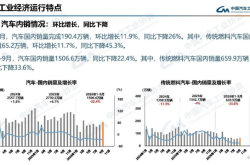
By August, the penetration rate of new energy vehicles in the Chinese automotive market had reached as high as 65%, while gasoline-powered vehicles continued to decline. Almost all of the top 10 domestic passenger car sales rankings were occupied by new energy vehicles, indicating that gasoline-powered vehicles are on the wane.
Porsche's heyday was in the era of gasoline-powered vehicles. Its electric car, the Taycan, really falls short, except for its high price and the Porsche brand. Everything else is lacking.
For Porsche, it now finds itself in a precarious position. Transformation is not feasible because it struggles with electrification, and others do not recognize its efforts in this regard either. If it does not transform, the world is gradually being taken over by electric vehicles.
So, for now, Porsche can only take it one step at a time, figuring out how to reduce costs and survive a bit longer before considering other options. The so-called century-old accumulated assets have now become a heavy burden.
-
Smart #2 Sees 3,000 Yuan Price Increase for Order Transfers: Is It the Electric Vehicle Market's Answer to the iPhone Duo?
-
Is 55% of Domestic Computing Power Really Used for Videos and Short Dramas? Doubao Responds
-
![]()
How to Interpret the Data: 61.6% NEV Penetration in September, 24% Retail Decline in Early October
-
![]()
Q3 Report | Hengtong Optoelectronic’s Performance Soars, Achieving Up to 61% Quarter-over-Quarter Net Profit Growth in a Single Quarter
-
![]()
Manus Restarts Independent Operations, Yet Avoids Starting Anew
-
One Photo Suffices for Celebrity Endorsements: Merchants Offer Custom AI Videos from 150 to 1000 Yuan per Minute
-
![]()
Total Investment Reaches 450 Million Yuan! Luke Optical Launches Its First Pilot Production Line for an Annual Output of 20 Million Pairs of Glasses
-
Chery Leads in Auto Exports, But When Will It Dominate the Domestic Market?