Reviving Classic Designs: European Automakers' Nostalgic Gambit Amidst Chinese Competition
 10/21 2026
 443
Lead
Introduction
One should not rest on their laurels; electrification demands innovation, not mere archaeology.
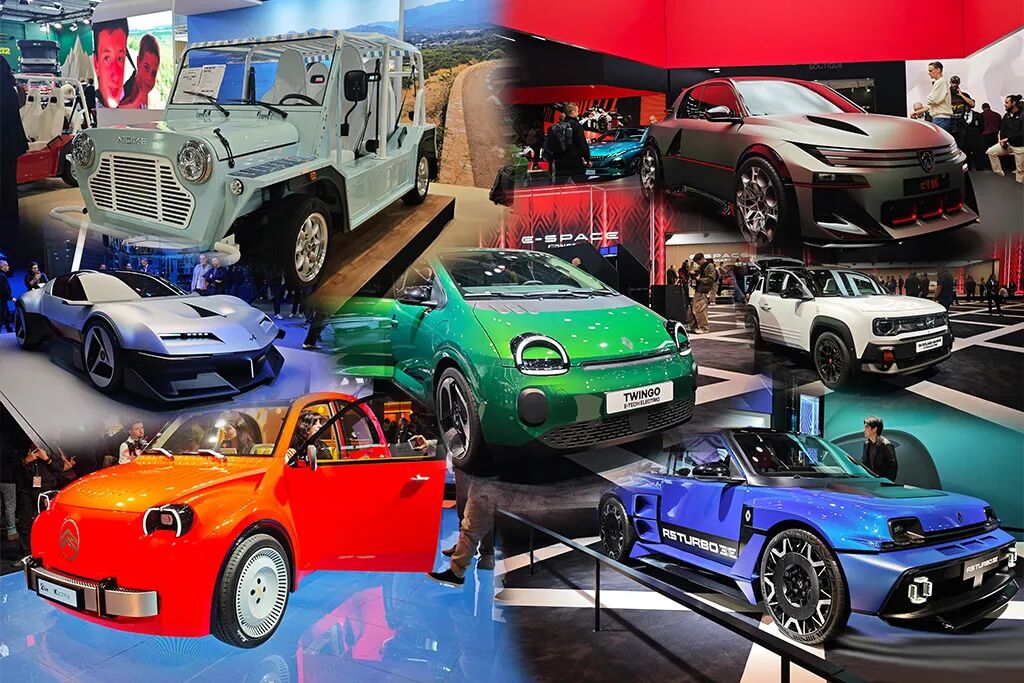
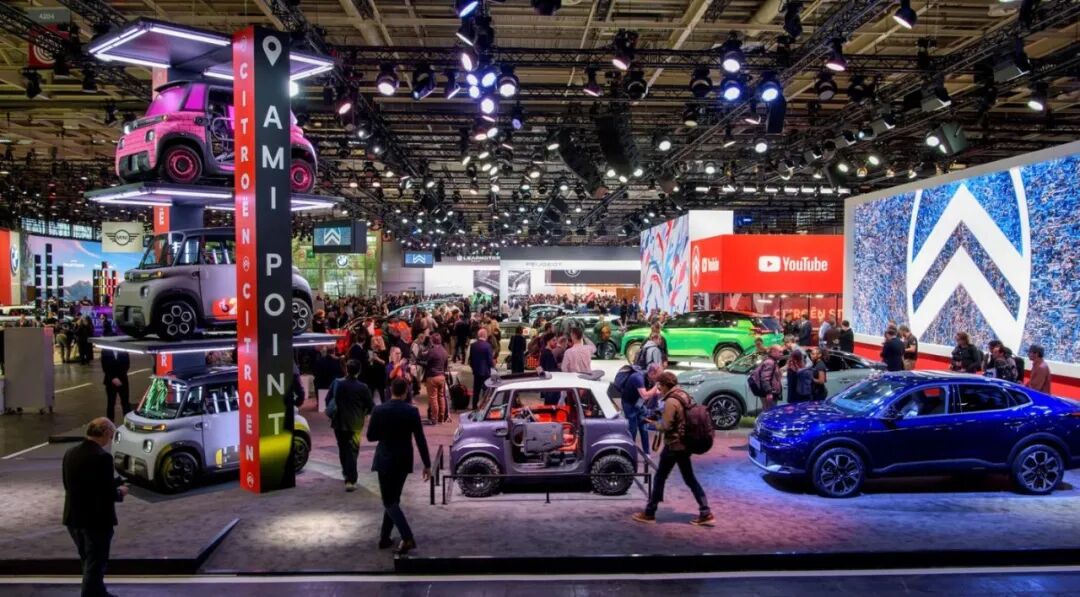
At this year's Paris Motor Show, a clear trend emerged: European and Chinese automakers showcased distinct design philosophies. European brands embraced a retro revival, with Citroën reimagining the 2CV as an electric vehicle, Peugeot paying tribute to the 205T16 with the E-T16 concept, Renault resurrecting the 8 Gordini, and the ID.Polo featuring a retro dashboard mode. In contrast, Chinese automakers continued to prioritize modernity, with BYD unveiling the Atto8, Shark, and Dolphin G, Avita showcasing the global debut of the T09 concept, Chery introducing the Q05, Q06, and A06 for the first time in Paris, Leapmotor displaying the D19 and A05 as European premieres, and Seres exhibiting four models: the Seres 6, 7, 8, and 9.
On one hand, discussions revolved around decades-old model names, wheel arches, and rooflines; on the other, the focus was on batteries, charging efficiency, and performance. Why have European automakers collectively turned to retro designs? According to foreign media, "If the future of electric vehicles mirrors the past, it becomes easier to sell that vision to consumers."
Some argue that European automakers are leveraging an asset their Chinese competitors lack: their rich history. Faced with pressure from cheaper and more technologically advanced Chinese vehicles, traditional European brands are not just competing on aerodynamics and range but are also reintroducing nostalgia as a key selling point.
European manufacturers hope that consumers will first be charmed by an electric vehicle resembling a classic car before accepting it as a new model. However, while nostalgia may draw people into dealerships, the vehicle will ultimately be judged on price, charging, range, and functionality. Thus, the retro trend at the Paris Motor Show can be seen as both an offensive strategy and a defensive move prompted by Chinese competition.
01 Can Nostalgia Win Over Consumers?
At the Paris Motor Show, European brands' shift toward retro designs marked a collective pivot from city cars to SUVs and from concept vehicles to production plans. This is not entirely new; Fiat has long sold the retro-styled 500, BMW Mini has maintained its authentic British design, and Volkswagen's reintroduction of the Beetle in the late 1990s set a precedent.
In recent years, European automakers have struggled with electrification in their home markets, primarily because local consumers remain unenthusiastic about their electric offerings. As a result, European manufacturers are turning to classic designs to sell electric vehicles to skeptical consumers.
What is the underlying intention or essence of European brands' adoption of retro designs? Foreign media generally agree that it is a psychological strategy. They believe that if electric vehicles look identical to their classic counterparts, it becomes easier to sell the idea of an electric future to consumers.
Electric vehicles, built on skateboard-like platforms, often lack a distinct identity and rely entirely on their metal exteriors to convey personality. Retro designs provide these electric chassis with a memorable shell, offering a form of differentiation that European automakers were quick to recognize.
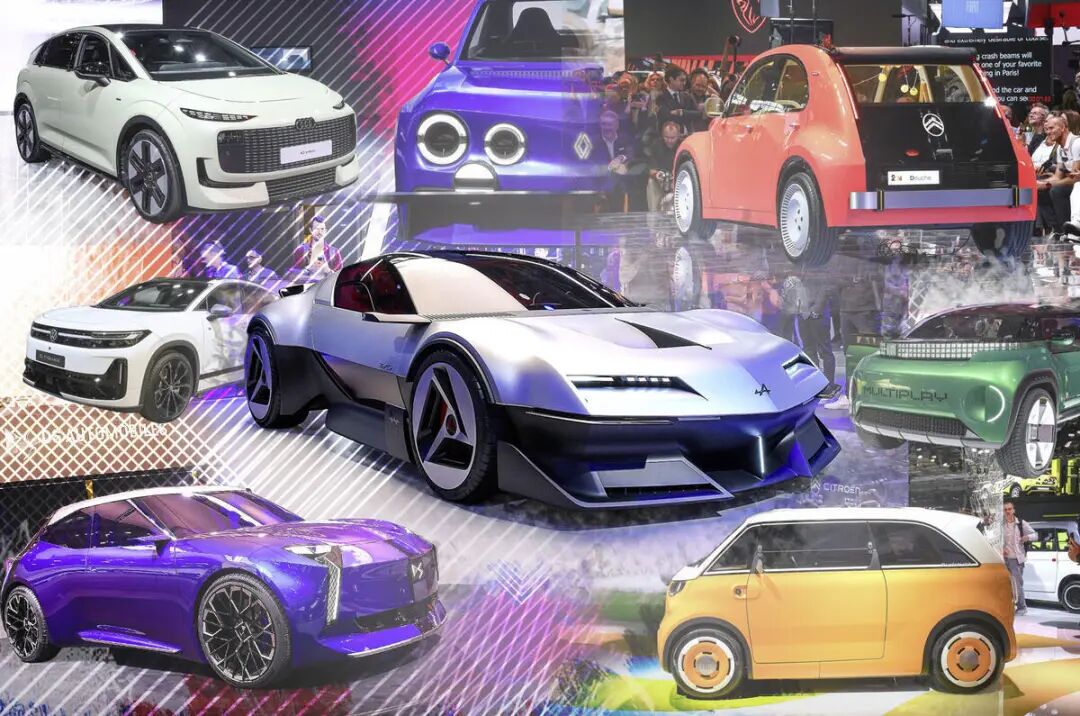
Psychological identification fosters emotional resonance and differentiation. Laurent van den Acker, Renault's design director, stated, "We want to stand out and evoke an emotional response." Rachel Burgess, senior editor at Car Magazine, called this a "brilliantly different" strategy compared to entirely new automotive brands.
Older consumers may recall and feel nostalgic about classic models, while younger buyers might be drawn to retro aesthetics. For some, this approach seems to work.
Chris Ritchfield, a 51-year-old Briton who purchased his first electric vehicle in May, grew up driving the Renault 5 and chose a yellow electric Renault 5 this time. He said, "My desire for the new Renault 5 far outweighs any concerns I have about electric vehicles. I like it primarily because it's a Renault 5."
Volkswagen's Minter noted that the retro dashboard was initially a joke, but "people loved it." Before launching the electric 2CV, Citroën sought input from original collectors, who emphasized affordability, ease of driving, and the iconic soft-top design. This shows that retro isn't just about sketching an old outline but identifying recognizable elements from classic models.
A more pressing reason is the competitive pressure from Chinese cars. Reuters reports that as fuel prices soar, demand for electric vehicles in Europe has surged. However, data from Schmidt Automotive Research shows that Chinese manufacturers like BYD and Geely captured nearly 11% of the European market in the second quarter, often offering cheaper and more technologically advanced models than local brands.
Analysts suggest that the retro trend in small, affordable European electric vehicles is driven by intense price pressure from Chinese brands in these segments. With low profit margins, "any approach that adds value is welcome." Van den Acker also mentioned that retro styles have potential in Europe, where families often remain loyal to specific models and designs across generations.
Some view history as a weapon for more established brands. As high-quality, reliable Chinese electric vehicles flood Europe, Chinese automakers cannot link European designs to their history while adopting the latest powertrain technologies. The Chinese can pioneer new design trends but lack historical depth.
This explains why European automakers are increasingly reviving classic models from past decades this year. From the Renault 5 to the Citroën 2CV, betting on nostalgia could help them stand out amid a growing wave of Chinese competitors.
02 Classics May Only Represent Past Glories
However, many voices doubt the inevitability of retro design success. Van den Acker acknowledged that while retro has potential in Europe due to generational loyalty to specific models and designs, it may not work elsewhere and cannot last indefinitely.
"Classics are not eternal; they each have their moment," he said. Automakers must seize the right timing, as one generation's classic may be replaced by another's.
Indeed, some early attempts have yielded limited results. The Volkswagen ID.Buzz electric microbus initially sparked strong interest among American consumers, but this faded due to pricing and range concerns. The Beetle, a classic 20th-century model that succeeded during the 1960s counterculture movement, never transitioned to the electric era. As consumer preferences shifted toward SUVs, Volkswagen discontinued the Beetle in 2019.
Minter said, "We shouldn't cling to the past but focus on features like fast charging and autonomous driving. We must excel in the technologies needed for the future." This serves as a reminder that retro exteriors cannot replace future technologies and risk disappointing fans.
Thierry Jouanny, head of the French 2CV Collectors' Club and owner of a 1951 2CV, stated, "The new 2CV needs an indescribable quality—something that attracts people and makes you stand out." Citroën's consultation with original collectors also highlights the picky nature of hardcore fans when reviving classics.
GlobalData argues that nostalgia alone won't make the new Citroën 2CV a bestseller. "The redesigned Citroën 2CV should pay homage to its predecessor, particularly in terms of price, design simplicity, and visual elements," but it must also be a modern electric vehicle with satisfactory functionality and features, appealing to a broad audience.
When viewed alongside Chinese automotive strengths, the pressure on retro designs becomes even more apparent. For instance, the new Leapmotor B03 hatchback and D19 SUV offer competitive pricing and configurations. The BYD Atto8, BYD's first model entering the European market early next year, is compatible with the company's ultra-fast 1,500kW flash-charging stations.
These chargers can theoretically recharge the Atto8 from 10% to 70% in just five minutes, providing a range of 635 kilometers, or from 10% to 97% in nine minutes. For European consumers, this offers another kind of appeal—not whether the car resembles a decades-old model, but whether charging feels as quick as waiting for a coffee.
Although the deployment of 3,000 fast-charging stations across Europe is just beginning, indicating that Chinese technological advantages still require infrastructure support, Chinese automakers continue to compete on technology, price, and scale. Meanwhile, traditional European brands rely on decades of history and emotional connections—two advantages that operate on different levels.
So, what will ultimately influence European car buyers' choices? Is it the stylish appearance of the 2CV, RCZ, STX, E-Space, A310, and Cuorerosso, or the technological features and pricing of the Atto8 and its siblings? Alternatively, could further European tariffs or new trade agreements with China have a greater impact?
This question may remain unanswered for now, but nostalgia must align with price and modern functionality to ensure a new model becomes a bestseller. Retro designs can evoke emotions and differentiate European brands from Chinese cars, but in the face of Chinese technological prowess, pricing, and scale, European reliance on retro designs as an emotional appeal may attract visitors to dealerships but not necessarily secure sales.
Editor-in-Chief: Yang Jing Editor: He Zhengrong

THE END
-
New Chips Frequently Emerge, RISC-V Fuels the AI Era
-
Raccoon Carries SenseTime to the Top of the AI Wave
-
Huaqiangbei-Based Company Replicates Huawei’s Popular Wide Straight Slab Phone
-
![]()
Optical Manufacturing Drives Life and Health Forward! Goertek Optics and Nearview Technology Forge Strategic Alliance
-
RMB 37.49 Billion Long-Term Contract: What Is Xiechuang Data Wagering On?
-
![]()
Why, After 34 Years, Has the Former Color TV Leader Reached the Point of Delisting? "Konka, Delisting, Color TV, Price War, China Resources"
-
![]()
Xiaomi Restructures Business, Eyes AI as Next Growth Engine
-
![]()
Amid Business Reorganization, Xiaomi Sets Sights on AI for Future Growth