Breaking News! Li Auto Officially Unveils Full Integration with Huawei
 10/22 2026
 468
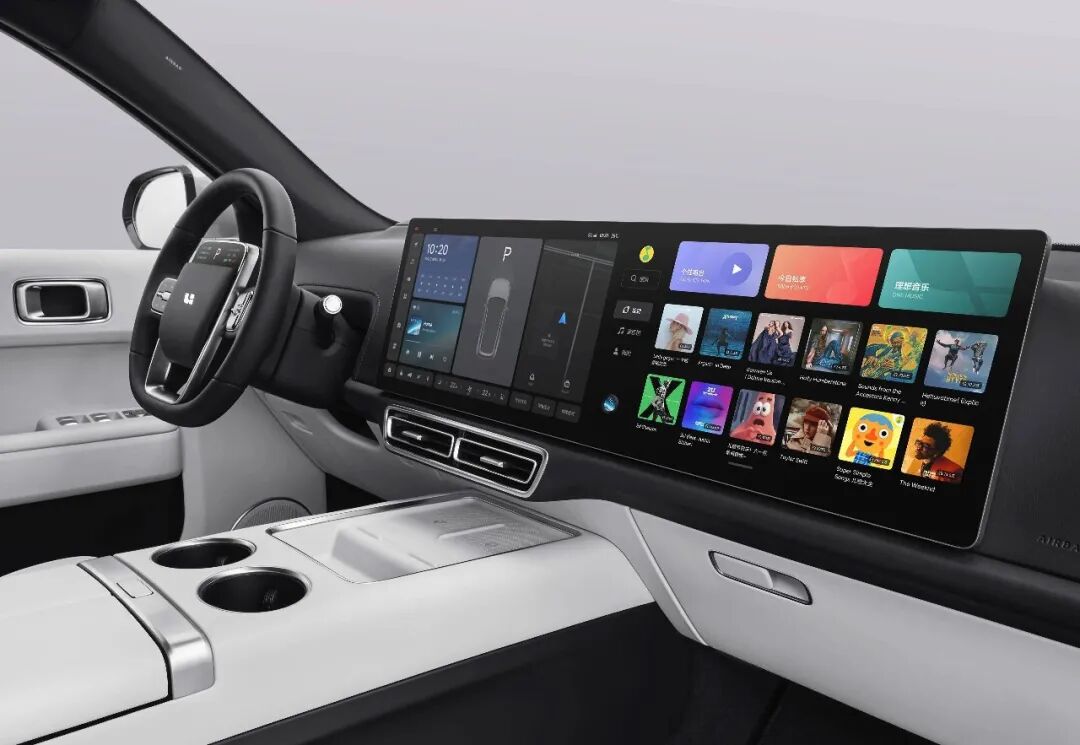 Image Source: Weibo
On the afternoon of October 19, an official announcement in the automotive sector rippled through the car enthusiast community and industry circles with remarkable speed.
Li Auto spearheaded the announcement, revealing that its brand-new Li i9 model now officially supports HUAWEI HiCar for seamless smartphone-vehicle integration. Shortly thereafter, Huawei's official smartphone account shared the announcement.
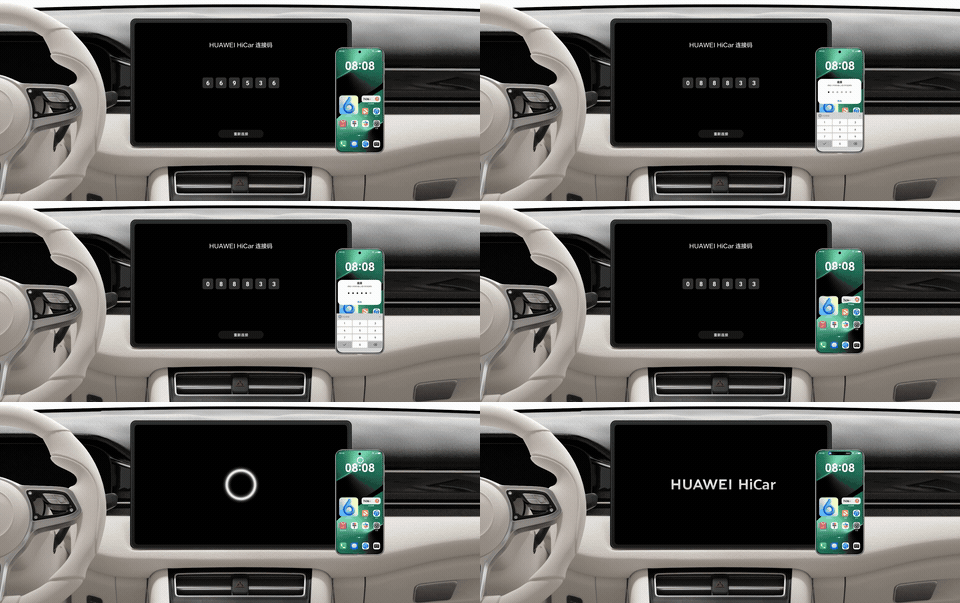
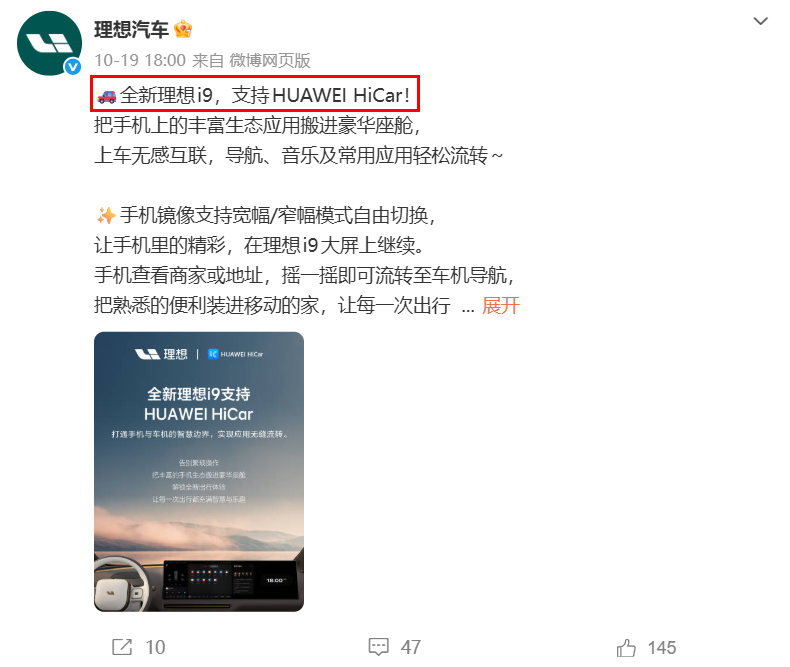
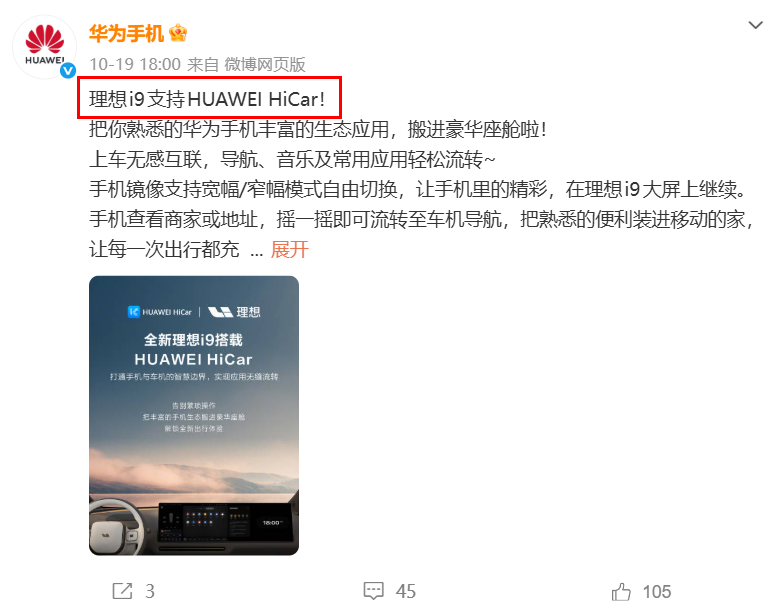
Image Source: Weibo
On the same day, Li Xiang released a video focusing on in-house battery development. The juxtaposition of these two events sends a clear signal within the industry: Li Auto is steadfast in maintaining control over core technologies such as chassis, powertrain, and intelligent driving, while simultaneously embracing mature third-party smartphone connectivity ecosystems.
The news triggered an immediate flurry of reactions in the comment section. Some users bluntly stated, "Li Auto's intelligent driving is still far behind Huawei's!" Others joked, "On the surface, they're friendly with Lei Jun, but in practice, they're cozier with Huawei." Many netizens' initial reaction was: Is Li Auto integrating HarmonyOS Cockpit or Qiankun Intelligent Driving?
It is crucial to clarify here: HiCar is neither equivalent to HarmonyOS Cockpit nor Qiankun Intelligent Driving.
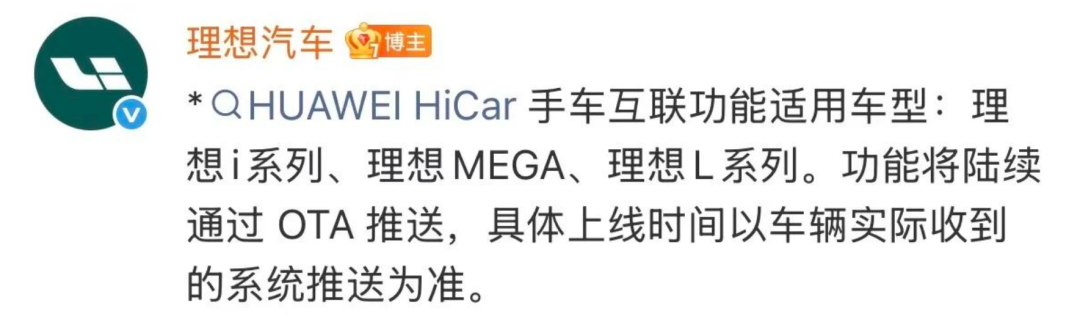
Image Source: Weibo
Its role is similar to Apple's CarPlay—a conduit for connectivity between smartphones and vehicles. Essentially, it transfers navigation, music, calls, and other services from the phone to the vehicle's large display, acting as a "smartphone ecosystem screen projection" without replacing Li Auto's in-house cockpit system or altering its Mach intelligent driving solution. Li Auto's product definition rights and self-developed intelligent driving technology remain intact.
According to official plans, HiCar functionality will initially debut on the Li i9, followed by OTA updates to the i-series, L-series, and MEGA models, ensuring all currently sold Li Auto vehicles gain this capability. This indicates that Li Auto had already pre-installed HiCar support at the hardware level but had not activated it until now. This activation effectively bridges the connectivity gap for Huawei smartphone owners.
The Li i9 itself is Li Auto's flagship model on its second-generation pure electric platform, officially launched on September 16 in a single Home version priced at 369,800 yuan. With a length of 5,225mm and a wheelbase of 3,168mm, it features a six-seater layout and a CLTC range of 705km. Upon launch, it became the first model to support Apple CarPlay; now, just over a month later, Huawei HiCar follows suit, making it compatible with both major smartphone ecosystems.
This choice is highly symbolic: Li Auto refuses to align itself with any specific smartphone camp. Both iPhone and Huawei smartphone users can enjoy seamless connectivity.
What Exactly Is HiCar?
Many unfamiliar with HiCar inquire about its differences from CarPlay.
Once paired, HiCar connects automatically upon entering the vehicle, eliminating the need for repeated manual operations. Navigation, audio, and calls seamlessly transfer to the central display. For Li Auto's extra-large cockpit screen, HiCar supports free switching between wide and narrow phone mirror modes to adapt to different cockpit layouts. Its most popular feature is shake-to-transfer: when viewing a restaurant or attraction address on your phone, a simple shake syncs the destination directly to the vehicle's navigation, eliminating manual input—highly convenient for daily commutes and short trips.
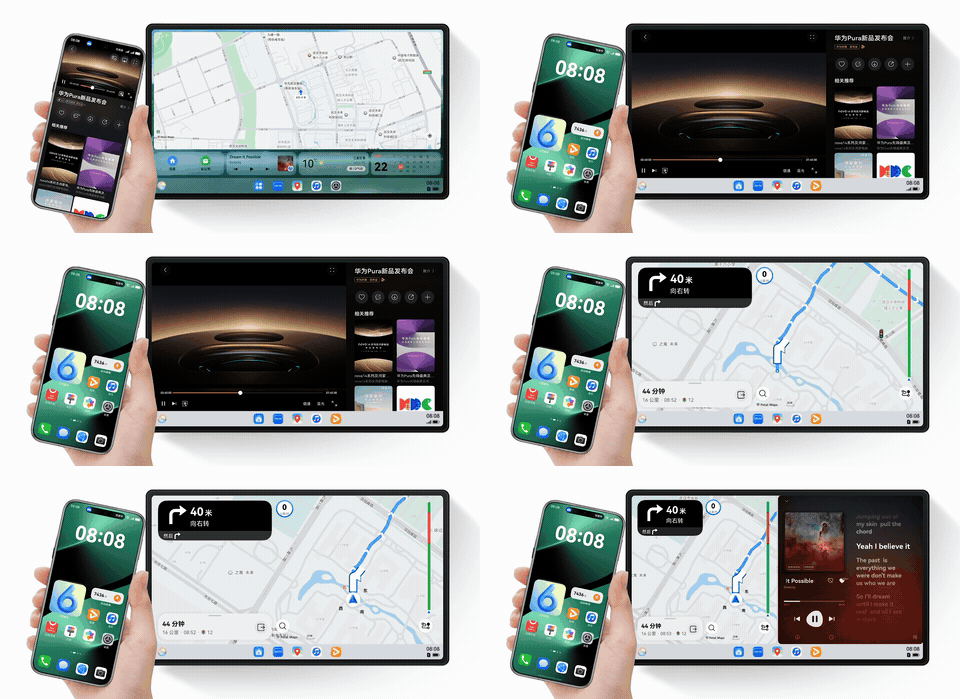
Image Source: Weibo
A few years ago, HiCar lagged in terms of smoothness and stability, leading many owners to prefer CarPlay. After years of iteration, HiCar's experience now matches or even surpasses CarPlay in localized scenarios.
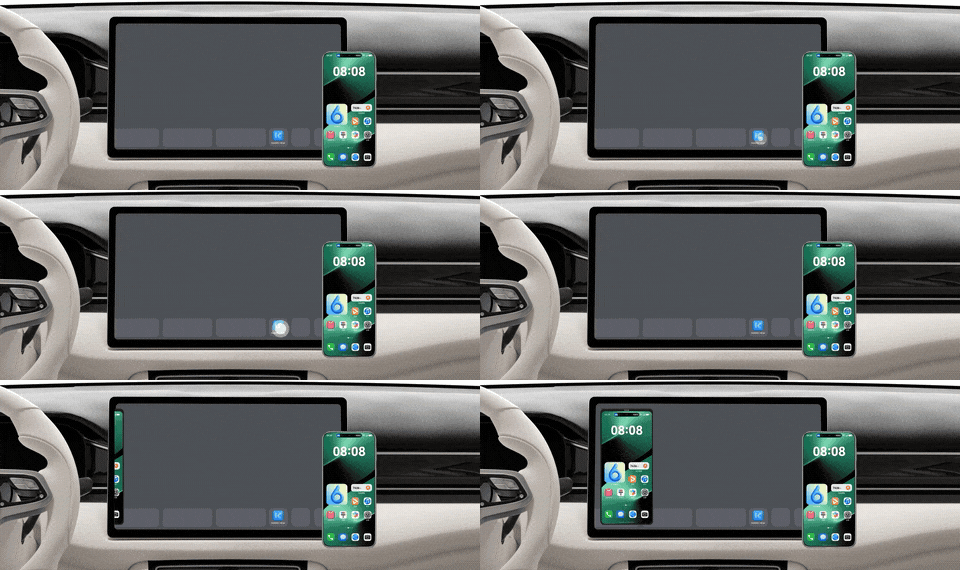
Image Source: Weibo
Data reveals the competitive landscape: Huawei disclosed in May that HiCar partners with over 70 automakers, covering over 600 models, with cumulative installations surpassing 40 million units. Yiche's 2026 smartphone-vehicle connectivity rankings show HiCar with a 63.1% new car adoption rate and 57% market share, topping both metrics. Simply put, six out of every ten new cars sold in China come with HiCar pre-installed.
This partnership list is extensive: BYD, Geely, Great Wall, Changan, and other domestic brands; Volkswagen, Toyota, Honda, and other joint ventures; Audi, BMW, Mercedes-Benz, and other luxury brands; as well as new forces like Xpeng, Leapmotor, IM Motors, and Li Auto. A clarifying detail: Huawei's HarmonyOS Intelligent Driving models (e.g., the HiCar Super Desktop) are excluded because they natively run HarmonyOS Cockpit, Huawei's proprietary system, eliminating the need for screen projection connectivity.
Opinions on cockpit strength are sharply divided. One owner commented: "HarmonyOS Intelligent Driving is impressive, but its cockpit system is mediocre. It's far inferior to Li Auto's Xinghuan OS in aesthetics, usability, extensibility, smoothness, and functionality. Li Auto leads decisively in infotainment and cockpit experience." A long-time Li Auto owner remained calm: "Li Auto's infotainment doesn't need HiCar—its usability and smoothness are already unmatched. This just gives old smartphone users another option, which is great." Of course, Xiaomi users chimed in: "Not as good as Xiaomi's smartphone-vehicle connectivity," with some even vowing, "I might sell my Li Auto for a Xiaomi—this is embarrassing."
Not "Aligning with Huawei," But Mutual Benefit
The underlying logic becomes clear: automakers aren't unilaterally choosing Huawei; instead, massive Huawei smartphone user demand is compelling automakers to open their ecosystems.
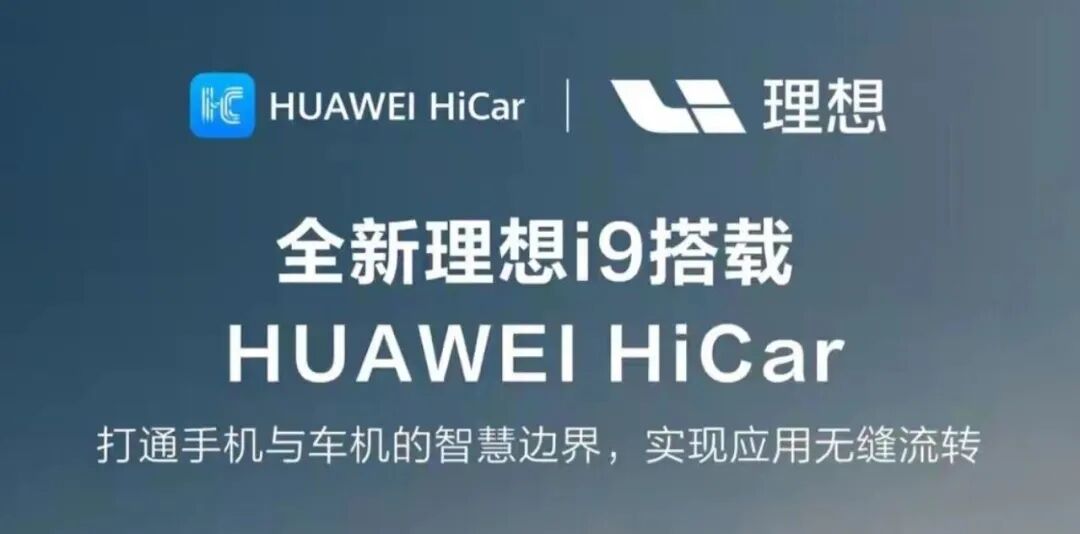
Image Source: Weibo
While self-developed cockpits offer clear benefits—autonomous experience, controllable iteration—no automaker's native ecosystem can cater to all smartphone users. Vehicle owners use diverse phone brands. Rejecting HiCar means voluntarily abandoning a large pool of potential Huawei smartphone customers; integrating HiCar requires only opening a connectivity channel at minimal cost while filling the cockpit ecosystem gap.
This reflects a typical strategy among smart automakers: core technologies remain in-house, while external ecosystems are fully embraced.
Li Auto's Mach Intelligent Driving, self-developed cockpit, and in-house batteries are its core strengths and won't be surrendered. However, smartphone connectivity—a user-facing feature—can fully accommodate both Apple and Huawei systems. This approach safeguards their competitive edge while maximizing user habit satisfaction, ensuring no one is excluded.
Online expectations are mixed. Some envision a hybrid solution: "Replace intelligent driving with Huawei's, keep Li Auto's interface—I'd buy it immediately." Many shared this sentiment: "I thought they'd integrate ADS! If they used Huawei's ADS, Li Auto's sales would skyrocket." Others recognized the partnership's boundaries, praising "Li Auto's smart, rapid adaptation." Spectators joked about sales implications: "Next month's Li Auto sales might merge with HarmonyOS Intelligent Driving," while Xiaomi supporters rallied: "Hang in there, Xiaomi—you're China's tech beacon!" Interestingly, neutral observers noted public opinion trends: "Haters seem powerless to counterattack on this issue."
Within the broader industry context, these expectations and debates are understandable. HiCar serves as a smartphone-to-vehicle bridge, not an operating system taking over the vehicle. Huawei aims to extend its HarmonyOS smartphone ecosystem into more cockpits—the vehicle's maker is irrelevant as long as phone ecosystem habits persist. Li Auto aims to retain Huawei smartphone-using customers while boosting product competitiveness at minimal cost. Both sides achieve their goals in this mutually beneficial ecological partnership, not a technical merger.
A reminder to owners: official announcements don't mean immediate availability across all models. Features roll out via OTA updates in batches, with compatibility depending on smartphone models and infotainment system versions. Whether features activate and how to set them up depends on official notifications from Li Auto and Huawei—don't mistake demo effects for current real-world experiences.
New Trends in Smart Cockpits
For average consumers, vehicle chip performance, range, and intelligent driving specs are hard metrics. However, daily driving satisfaction often hinges on minor connectivity details: no need to re-search addresses upon entering the vehicle, no need to restart podcasts, and seamless call audio switching.
Smart vehicle competition has entered a new phase. Intelligent driving, chassis, and powertrain define a vehicle's upper limits; smartphone ecosystem compatibility sets the baseline for daily usability.
The growing adoption of HiCar among new forces hints at a trend: HiCar penetration in China's new car market will continue rising, with seamless smartphone-vehicle-home connectivity gradually shifting from a bonus feature to a standard smart vehicle requirement.
Interactive Topic: When buying a car, do you prioritize HiCar or CarPlay support? Do you prefer native infotainment systems or smartphone connectivity? Share your thoughts in the comments!
Disclaimer: This article is solely for financial commentary by major companies and does not constitute investment advice. All corporate data and regulatory events mentioned are from public information and for reference only, subject to official announcements. Images sourced from the internet; copyright holders may contact us for removal.
-
![]()
Post-85s AI Meteorology Entrepreneur from Changzhou, Jiangsu: Secures Multi-Million Funding
-
![]()
Why Is Light Able to Pass Through Holes Smaller Than Its Wavelength?—Exploring the Extraordinary Optical Transmission of Metasurface Infrared Filters
-
![]()
Film and Television Hurricane Delivers a Rigorous Review of the iPhone Duo! Withstands 10,000 Folds, Yet Falls Short in Software
-
![]()
Is the XPENG MONA L05’s Pre-sale Price 40,000 Yuan Steeper Than Its Rivals’?
-
![]()
Historic Windfall in Layoffs: BMW's Up to €650,000 Compensation Sparks Employee Exodus, Overwhelms System
-
![]()
Has Geely’s Debut Boxy SUV Shaken Up Off-Road Pricing?
-
![]()
GM China Reports $210 Million Net Profit in Q3: Two Consecutive Years of Profitability, Though CEO Warns of Tougher Market Conditions
-
![]()
BMW Layoffs: Employees Compete to Leave!