Volkswagen Eyes Further Cuts After 100,000 Job Reductions
 10/22 2026
 367
Lead-in
Introduction
From a broader perspective, it becomes evident that traditional automakers are facing a dilemma: transformation is fraught with risks, but failure to transform spells doom.
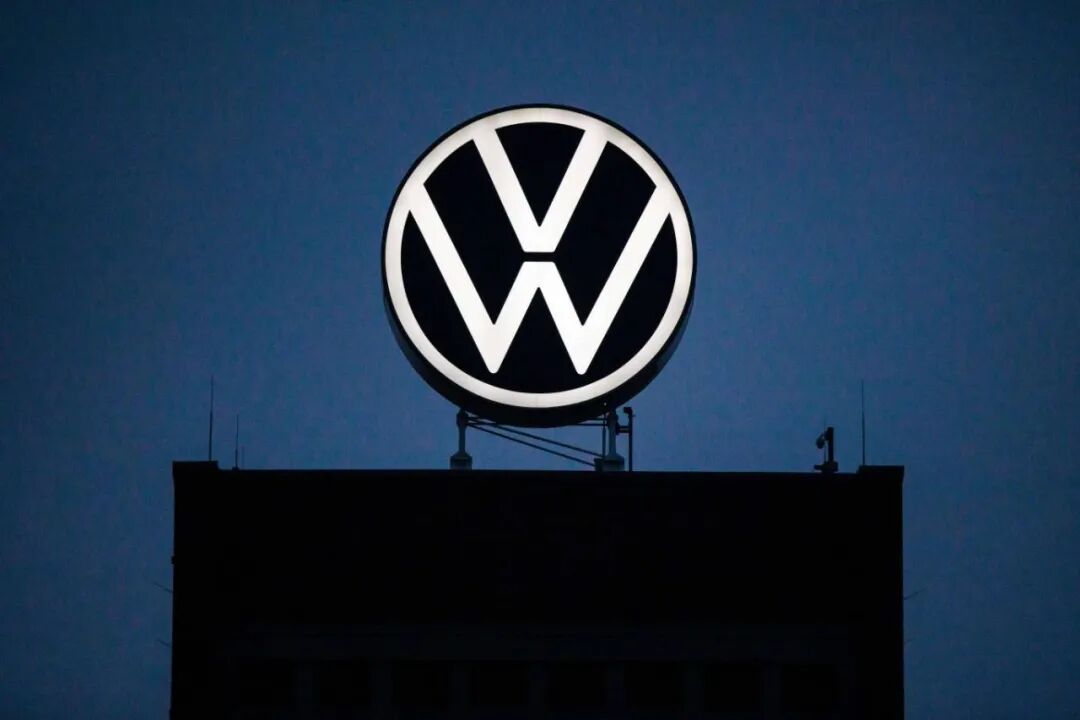
Recently, the German newspaper Süddeutsche Zeitung revealed an internal document from Volkswagen Group, titled "Group Target Vision."
The contents of this document may be a tough pill to swallow for Volkswagen employees: before 2030, the majority of its 600,000 global workforce will see their salary growth frozen, with variable pay, bonuses, and other benefits also being trimmed. The document also mandates that all brands, regions, and factories make "reasonable" contributions to the group's overall cost-reduction objectives.
This isn't the only adjustment Volkswagen has made this year.
A few months ago, citing CEO Oliver Blume's plans, Germany's Manager Magazin reported that Volkswagen aims to slash up to 100,000 jobs globally—double the previously announced target of 50,000. Additionally, four factories in Germany will shut down, and investment budgets will be slashed by approximately 15% over the next five years, bringing them down to just over €130 billion.
Earlier, Volkswagen shifted its approach to intelligence by moving from full-stack self-research to adopting supplier solutions. It formed a joint venture with Horizon Robotics, initiated collaborations with Chinese local chip and large model companies, and made the FAW-Volkswagen ID. AURA T6 the 15 millionth vehicle equipped with Horizon's Journey chips.
From job cuts to plant closures, from investment reductions to partnership adjustments, Volkswagen, a symbol of Europe's industrial might, has explored nearly every avenue for cost reduction within a year. The shock and concern among Volkswagen employees are understandable, and such sweeping changes are remarkable even when viewed against the backdrop of a century of automotive history.
Clearly, as electrification and intelligence redefine the automotive industry, the old order—built on the dividends of fuel-powered vehicles, high wages, and lifelong employment—is being reevaluated. Volkswagen's contraction essentially represents the transformation costs that the entire industry must bear when shifting from the internal combustion engine era to the new energy era, rather than the failure of a single company.
01 Volkswagen's "Group Target Vision" and the Collective Contraction of Automakers
Based on the leaked content, the core of "Group Target Vision" can be summarized as another self-rescue effort by Volkswagen Group, primarily relying on employee "sacrifices."
Firstly, salary growth for most global employees will be frozen by 2030. Given the persistent high inflation in Europe, this freeze effectively amounts to a pay cut.
Secondly, variable pay, bonuses, and other benefits will be reduced. Currently, the average annual salary for Volkswagen employees in Germany exceeds €70,000, coupled with generous social security and lifelong employment, resulting in labor costs accounting for a higher proportion of revenue compared to other automakers. Blume has acknowledged that the group's administrative, back-office, and infrastructure costs are about 20% higher than the industry average.
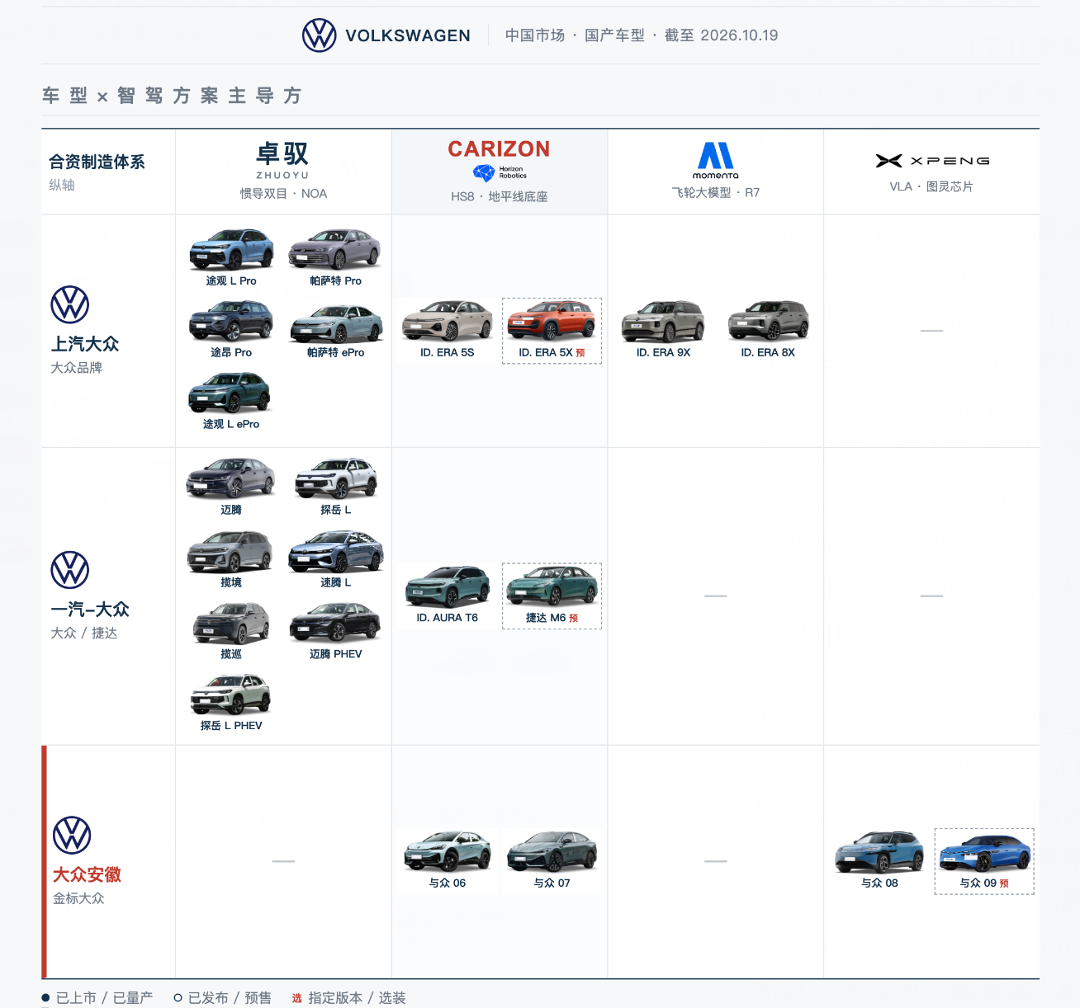
Meanwhile, "Group Target Vision" states that all brands, regions, and factories must make "reasonable" contributions to cost reduction, meaning cuts will not be confined to a single area but will permeate throughout the organizational structure.
These three adjustment strategies, along with Blume's earlier proposal to lay off 100,000 employees, close four German factories, and reduce investments by 15% over five years, collectively indicate a clear strategy: eliminating excess capacity, compressing labor costs through salary freezes, controlling long-term risks through investment cuts, and achieving short-term efficiency through supply chain restructuring.
In other words, Volkswagen is transforming itself from a capital-intensive company into a more externally collaborative and asset-light operation over the next few years. This logic reflects the reality of shrinking profits from traditional fuel vehicles and the lack of significant scale profits from new energy businesses.
Notably, Volkswagen is not alone in this endeavor. Similar contractions are occurring across the European automotive industry, particularly among traditional automakers with high labor costs and heavy historical burdens—the more established the brand, the more aggressive the adjustments.
Mercedes-Benz launched a voluntary redundancy program in April of the previous year, with CEO Ola Källenius setting a target of encouraging about 30,000 employees to leave voluntarily, though the final number fell far short of expectations. In September of this year, its production head, Jörg Burzer, warned that if labor and management failed to agree on cost reductions, some German factories would be forced to close, prompting over 20,000 workers in Stuttgart to protest.
BMW Group announced at its Capital Markets Day in late September that it would offer voluntary redundancy to indirect employees in Germany and reduce management positions by 20% to flatten the organization and lower headquarters costs. According to CNR, BMW plans to cut thousands of indirect jobs in Germany by the end of 2027.
Stellantis took even more aggressive action, announcing in February 2026 a business restructuring provision totaling approximately €22.2 billion (to be reflected in the second half of 2025 financial reports), including €6.5 billion in cash expenditures paid over four years.
When viewed collectively, these cases represent not just layoffs and compensation adjustments but a concentrated effort to clean up the balance sheets of European operations.
At the same time, the industry can discern a deeper signal: the collective contraction of European automakers reflects not individual operational missteps but a broader decline in Europe's automotive competitiveness on the global stage.
These automakers, long accustomed to relying on high wages and generous benefits, are finding these advantages turning into burdens in the face of new energy cost competition. Overcapacity, weak demand, and high sunk costs in electrification investments further limit their flexibility.
This epitomizes the pain of transformation for traditional industry giants.
02 Performance Pressure: Advance or Retreat
Of course, examining the deeper motivations behind Volkswagen's adjustments, performance data is an unavoidable topic.
According to Volkswagen Group's data, global deliveries in the first three quarters of 2026 reached 6.011 million units, down 9% year-on-year. In the third quarter alone, deliveries fell 14.3% to 1.885 million units.
By market, Volkswagen saw growth of 1.7% in Europe and 4.3% in South America but significant declines in China, with deliveries falling 30.2% to 1.379 million units in the first three quarters and plunging 38.5% to 405,800 units in the third quarter alone.
More concerning than the sales decline is the collapse in profits: Volkswagen's equity profits from its Chinese joint ventures dropped from €2.621 billion in 2023 to €184 million in the first half of 2026, a more than 90% decline in two and a half years. The per-vehicle profitability in China has shrunk far more than sales volumes.
Outside China, Volkswagen also faces difficulties.
According to Caixin, Toyota expects to sell 11.18 million vehicles in fiscal 2026, while Volkswagen's global deliveries have long hovered around 9 million units, leaving a consistent gap of over 2 million units between the two, with no signs of narrowing in recent years. Barring surprises, this pattern is likely to persist this year.
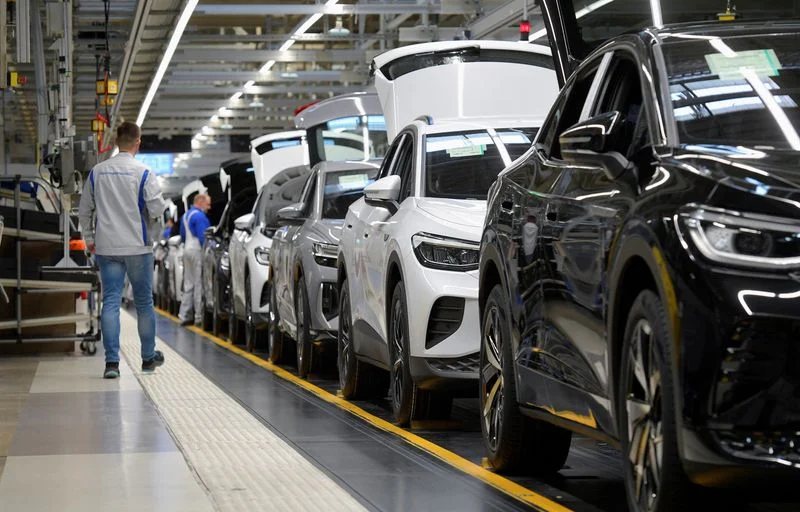
This sustained performance decline has driven Volkswagen to escalate its self-rescue measures. From initial process optimizations and hiring freezes to doubling layoffs from 50,000 to 100,000, then closing factories, cutting investments, and adjusting supply chains, each step represents an intensification of previous efforts to address market shortfalls.
At the Paris Motor Show this year, Volkswagen Passenger Cars head Thomas Schäfer stated that after restructuring development processes with Chinese partners over the past two years, material and engineering costs have dropped significantly. Models "Made in China for China" now have cost competitiveness and will be explored for export to emerging markets like Australia and the Middle East.
Volkswagen's situation reflects a broader reshaping of the global automotive industry.
Mobility Global statistics show that in the first half of 2026, the share of global pure gasoline vehicle sales fell below 50% for the first time since the mass popularization of automobiles in the 1920s. Data from the China Passenger Car Association indicates that in September this year, retail sales of fuel vehicles in China fell below one-third for the first time, with new energy vehicle penetration rising to a record 67%.
While this historic turning point does not mean fuel vehicles will disappear immediately, their influence in the new vehicle market has been systematically weakened, and the market foundation supporting the high-profit, high-welfare models of traditional giants is irreversibly narrowing.
From a broader perspective, it becomes evident that traditional automakers are facing a dilemma: aggressive transformation risks dismantling decades-built systems, channels, and trust, while conservative inaction risks continuous bleeding in the cost competition of new energy and intelligence. This lens also captures the shadows of Volkswagen and Toyota.
Editor-in-Chief: Yang Jing Editor: He Zengrong

THE END
-
![]()
Post-85s AI Meteorology Entrepreneur from Changzhou, Jiangsu: Secures Multi-Million Funding
-
![]()
Why Is Light Able to Pass Through Holes Smaller Than Its Wavelength?—Exploring the Extraordinary Optical Transmission of Metasurface Infrared Filters
-
![]()
Film and Television Hurricane Delivers a Rigorous Review of the iPhone Duo! Withstands 10,000 Folds, Yet Falls Short in Software
-
![]()
Is the XPENG MONA L05’s Pre-sale Price 40,000 Yuan Steeper Than Its Rivals’?
-
![]()
Historic Windfall in Layoffs: BMW's Up to €650,000 Compensation Sparks Employee Exodus, Overwhelms System
-
![]()
Has Geely’s Debut Boxy SUV Shaken Up Off-Road Pricing?
-
![]()
GM China Reports $210 Million Net Profit in Q3: Two Consecutive Years of Profitability, Though CEO Warns of Tougher Market Conditions
-
![]()
BMW Layoffs: Employees Compete to Leave!