Lei Jun Reiterates the Centrality of Safety: In the Auto Industry, Safety Underpins All Else
 10/23 2026
 474
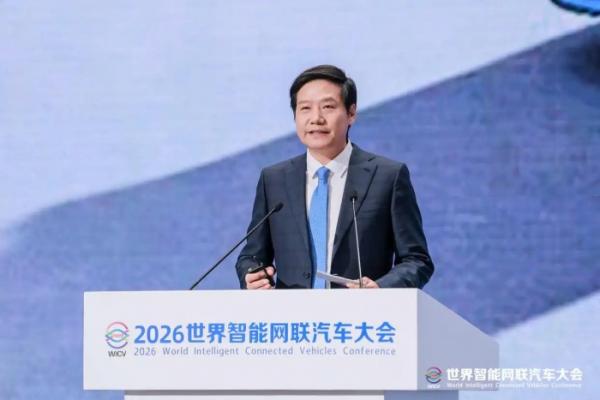
At the 2026 World Intelligent Connected Vehicles Conference in Beijing yesterday, Lei Jun, the head of Xiaomi, underscored that safety has been a paramount concern for Xiaomi since its foray into automotive manufacturing. He candidly remarked that in the automotive sector, safety is the cornerstone; without it, all other features and innovations become inconsequential.
In my opinion, Lei Jun's assertion is impeccable and echoes a broad consensus within the industry, encapsulating two key messages:
The first message: Safety takes precedence as the foundational '1', with all other experiences building upon it as subsequent '0's.
Regardless of a car's acceleration, the sophistication of its intelligent driving capabilities, the comfort of its cabin, its range, or its aesthetic appeal, any failure in the safety system renders these advantages meaningless. Unlike smartphones or household appliances, cars are high-speed, manned vehicles that carry a significant risk of sudden and severe harm. While performance and intelligence enhance value, safety is the fundamental prerequisite.
The second message: It highlights new safety challenges in the era of intelligent electric vehicles, which extend beyond traditional passive vehicle safety measures.
Traditional fuel vehicle safety primarily focuses on structural integrity, airbags, and braking systems. In contrast, electric vehicle safety encompasses a comprehensive system, including battery thermal runaway prevention, high-voltage system protection, intelligent driving algorithm reliability, sensor redundancy, vehicle electronic control, cybersecurity, collision protection, and stability under extreme conditions. Any lapses in these areas can result in catastrophic accidents, a pitfall that new automotive players are particularly susceptible to.
Indeed, this is not Lei Jun's first public emphasis on automotive safety. He has consistently reiterated that "safety is the bedrock, the prerequisite, and the foremost priority." One might wonder why Lei Jun repeatedly stresses this point?
The rationale is straightforward. The current new energy vehicle market is fiercely competitive, with a longstanding industry bias towards marketing and specification stacking. Acceleration, large screens, advanced intelligent driving, long range, and competitive pricing are the most direct selling points to attract consumers. Some brands, seeking to enhance their data and control costs, may compromise on invisible safety structures, battery protection, and redundant designs.
In other words, when these selling points dominate marketing efforts, it's easy to overlook that safety is the non-negotiable底线 (dǐxiàn, meaning 'bottom line'). Simultaneously, safety-related public sentiment is highly sensitive for electric vehicles. Incidents such as battery fires, high-speed intelligent driving misjudgments, and post-collision high-voltage leakage can be catastrophic for a brand's reputation.
For a newcomer like Xiaomi, whose brand trust is still being established, a major safety incident could swiftly erode all the reputation and sales accumulated in the early stages. Therefore, Xiaomi prioritizes safety not only as a commitment to users but also as a strategic imperative for the company's long-term viability.
To this end, Xiaomi has established an independent automotive safety research center for end-to-end investigations, set up a global safety department dedicated to designing the vehicle's safety system, founded an automotive safety advisory committee comprising industry experts, academics, and research institutions, and assembled a safety-related team of over 3,000 individuals.
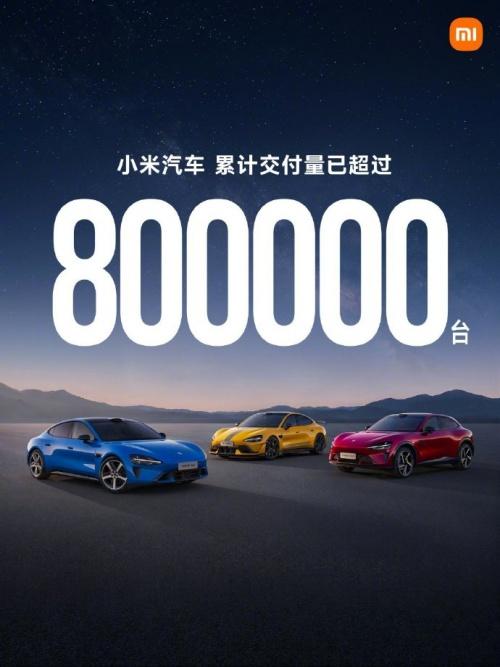
It is evident that Xiaomi is elevating safety from a fragmented function within engineering, quality, and regulatory compliance to an independent system with its own voice. For a cross-industry automaker with over 800,000 vehicles delivered, such organizational commitment is essential.
However, having the right philosophy is one thing; implementing it effectively is another. Materials, craftsmanship, testing standards, real-world crash tests, and long-term reliability necessitate continuous and extensive real-world testing and accident data for validation. Slogans must be translated into action at every component and testing phase.
Lei Jun's statement serves as a wake-up call to the industry and offers guidance for car buyers: when evaluating electric vehicles, do not solely focus on paper specifications; prioritize attention to the vehicle's steel structure, battery pack protection design, high-voltage safety strategy, airbag configuration, intelligent driving redundancy plan, and the automaker's vehicle safety testing system. No matter how impressive the specifications are, if safety is compromised, there may be hidden dangers.
In essence, the notion that "in the automotive industry, safety underpins all else" is a simple yet profound industry consensus. It should serve as the guiding principle for all automakers. However, assessing whether an automaker genuinely values safety cannot rely solely on this well-articulated statement; ultimately, it depends on implementation: cost-benefit analysis standards, third-party crash test results, fault and accident data from large-scale, long-term vehicle usage, and the attitude towards addressing safety issues.
Safety is an ongoing journey, demanding continuous investment and validation, rather than just a slogan for short-term gains. All automakers are perpetually on this path!
-
![]()
Post-National Day Sales of Xiaomi Revealed, Netizens: Pengcheng's Sales Take a Dive!
-
![]()
Understanding NVIDIA GTC Berlin at a Glance: AI in Manufacturing, Physical AI, and Three Key Strategies
-
![]()
Final Verdict: Can Battery Swapping Become the Mainstream Energy Replenishment Approach for Electric Vehicles?
-
With a 350,000-Yuan Budget for a Luxury Off-Road SUV, Is the 2027 Tank 500 a Wise Purchase?
-
![]()
Why Are Interpersonal Relationships Emerging as a Business Superpower in the AI Era?
-
![]()
Hot Topic | Microsoft's 2nm Self-Developed Chip Hits Third Iteration, Shifting Inference Workloads Away from NVIDIA
-
DeepSeek Inches Closer to the Largest IPO Financing in Chinese History
-
![]()
Lei Jun Reiterates the Centrality of Safety: In the Auto Industry, Safety Underpins All Else