Autonomous Driving Has No Clear Winner Yet
 11/12 2026
 491
In the first week of November, the two sides of the Atlantic were in almost two different seasons. On the US side, Waymo expanded its service area by roughly 250 square miles in a single move across Los Angeles, Nashville, Orlando, San Diego, and the San Francisco Bay Area, bringing its operating cities to 15, with more than 500,000 paid trips per week.
That same week, Tesla brought Robotaxi to Miami, Orlando, and Tampa, launched in Fort Worth on November 2, and on November 9 extended unsupervised service to San Antonio—its largest operating city to date. Austin's Cybercab started with more than 300 vehicles in early October and grew roughly eightfold in 30 days.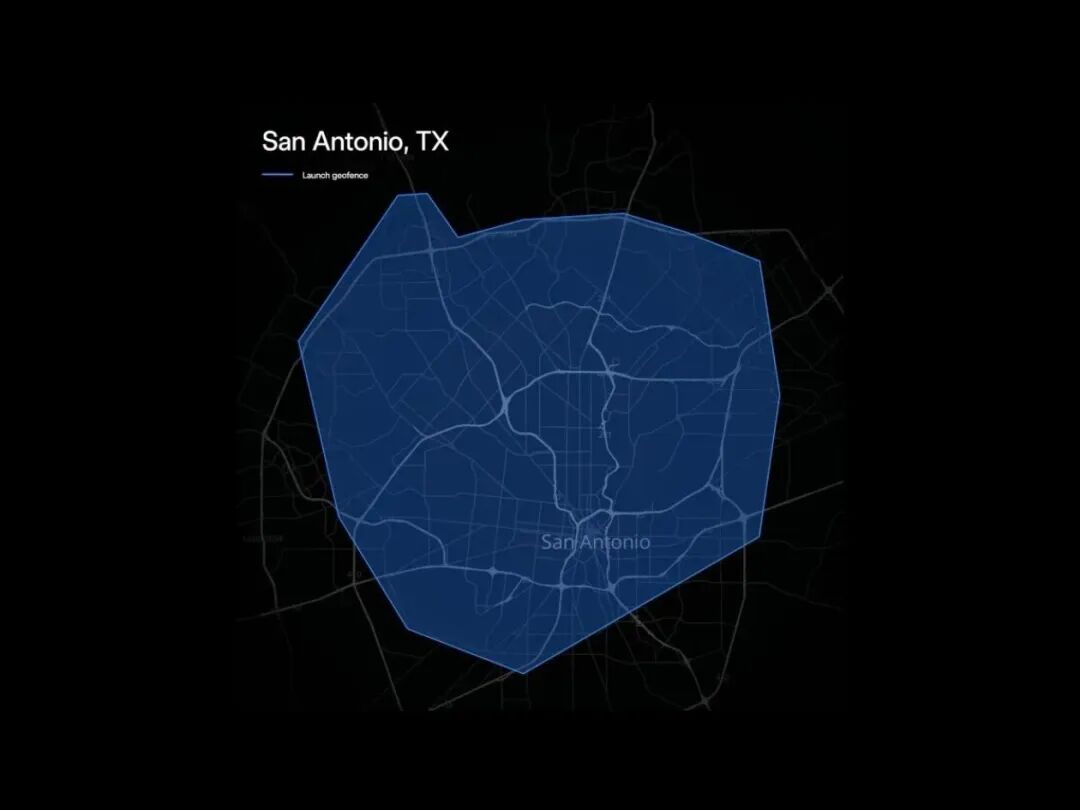
In China, peers are waiting for approvals. After an accident in May this year, new licenses were suspended and only gradually resumed in July, but the pace has clearly changed: approvals are slower and more selective. Pony.ai set its year-end target at 3,500 vehicles and more than 20 cities, while Apollo Go stayed at 28 cities and 3,500 vehicles. Neither lowered its target, but neither accelerated.
Looking at the picture as a whole leads to a counterintuitive conclusion: the industry has run for 17 years, and to this day, no company has achieved a significant lead. This is not the polite phrase "each has its own strengths." It is truly not the case. Waymo has urban density, Tesla has expansion speed and cost structure, and Chinese players have supply chains and scenario complexity, but none of them simultaneously dominates rivals across the four dimensions of technology, scale, cost, and profitability. Everyone leads in one cell and is caught up in another.
1. The US Is Running, China Is Waiting
First, let us be clear about where the gap lies. America's speed is operational speed. Waymo has already moved past the stage of "whether it can drive" and entered the stage of "where to drive more"—500,000 paid trips per week means it has a real user base and dispatch experience, which cannot be bought with money. Tesla takes another path: first use a small-scale fleet to push open the thresholds of regulation and public opinion one grid at a time, then rapidly replicate with manufacturing capability. Austin went from 300 vehicles to an eightfold increase in just one month.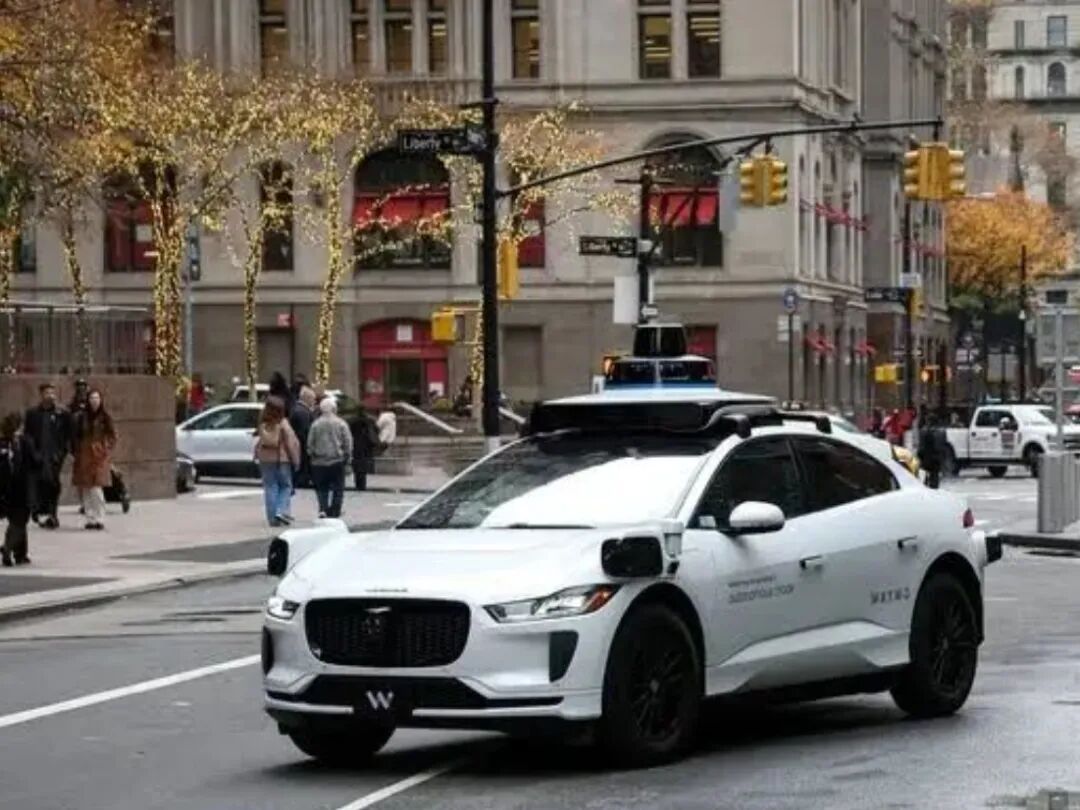
China's slowness is not technological slowness, but process slowness. The entire Robotaxi system still runs within the framework of the "Document No. 97" from 2021—a loose document aimed at "encouraging technology validation," essentially letting companies prove "I can do it." Only after the road pilot in November 2023 did it begin to point toward mass production and scale, but every step still requires going through local applications, test mileage, and safety assessments again.
Thus an awkward situation has emerged: technology can already achieve fully driverless operation, while the system is still asking "whether to allow you to operate without a safety officer." This is not a bad thing. The suspension of licenses in May precisely shows that regulation is effective and will hit the brakes. But for a company's cash flow, a one-year approval delay means a one-year postponement of fleet scale, data accumulation, and unit cost reduction. While American companies are running mileage, Chinese companies are running processes.
2. Waymo and Tesla: Two Non-Interoperable Paths
What is more noteworthy is that these two US companies are not the same species.
Waymo is "the engineer's answer." Multi-sensor redundancy, LiDAR, high-definition maps, and regional operations: first push the safety boundary to the extreme in one city, then replicate to the next. The autonomous driving simulation world model it released in February this year is underpinned by DeepMind's Genie 3—capable of generating high-fidelity scenes with camera and LiDAR information, and even simulating extreme situations that cannot be collected at scale in reality, such as tornadoes and wrong-way vehicles. The value of this system is not in demonstrations, but in its ability to turn "rare" into "trainable."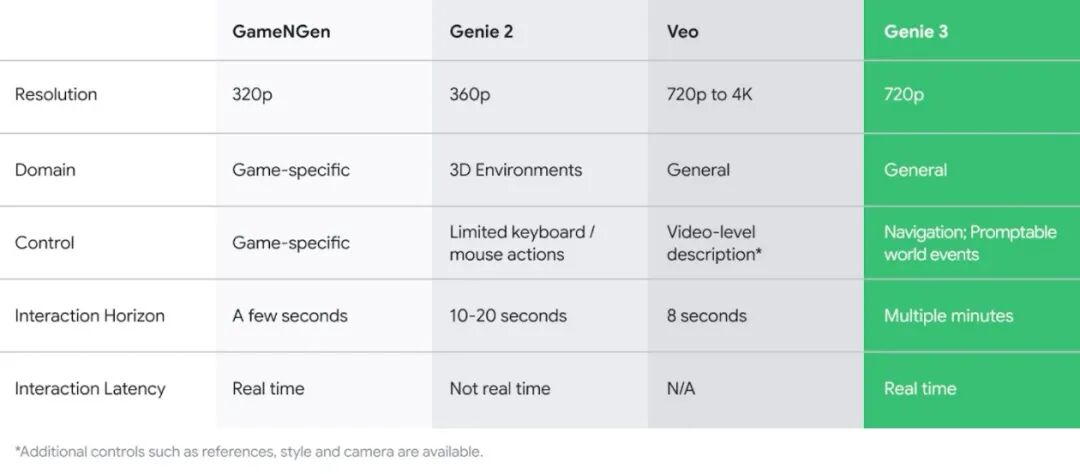
Tesla is "the manufacturer's answer." Pure vision, end-to-end, no maps, no hardware stacking; it bets on data scale and generalization capability, and on turning the car into a self-learning computer. Its advantage is cost—the cost of a vision-only solution is not on the same order of magnitude as a multi-sensor redundancy solution; its disadvantage is also clear: any mistake in a rare scenario will be amplified into doubt about the entire path.
At present, neither path has been falsified by the other. Waymo has proven that the redundancy path can achieve extremely high safety levels, but costs cannot be pushed down; Tesla has proven that the low-cost path can be rolled out quickly, but boundary conditions are still being explored. Most Chinese players stand in the middle. They want end-to-end cost reduction but dare not give up redundancy for safety; they want to expand cities but are constrained by approvals. This "intermediate state" is technically prudent, but competitively it is the most uncomfortable—it has neither Waymo's safety narrative nor Tesla's cost narrative.
3. Commercial Vehicles Have Just Cleared the Electrification Hurdle
If passenger cars are "fast but not far," commercial vehicles are "not yet off the starting line." One number stands out: in 2025, the penetration rate of intelligent assisted driving in the commercial vehicle market may be below 1%, while passenger cars in the same period have already exceeded 30%—the penetration rate of L2 combined assisted driving is 70.5%, and urban NOA has surpassed 34.2%. Both have four wheels, but the progress of intelligence differs by an order of magnitude. The reason is not hard to understand.
Heavy trucks run on trunk lines, thousands of kilometers per trip, with extremely low tolerance for error; model data is scarce, perception requirements are high, vehicle control is difficult, and costs cannot be pushed down. If a vehicle weighing dozens of tons makes a misjudgment on the highway, the consequence is not a "scratch" but an "accident." But the more fundamental reason lies on the demand side: local procurement willingness is weak.
Buyers of commercial vehicles are logistics companies, ports, mining areas, and public transit groups. They calculate a very simple account—how many drivers this system can save, how much fuel it can save, and how many years it takes to pay back. When electrification has not yet broken even, no one is willing to add another layer of intelligentization cost. So you will see a very strange time lag: new energy heavy trucks are racing ahead.
In October, Changzhou's single-month penetration rate was 38.3%, meaning one out of every three heavy trucks sold was new energy; the national target is a penetration rate of 40% and an inventory of 1.6 million vehicles by 2030. The electrification hurdle is being pushed through by policies and subsidies.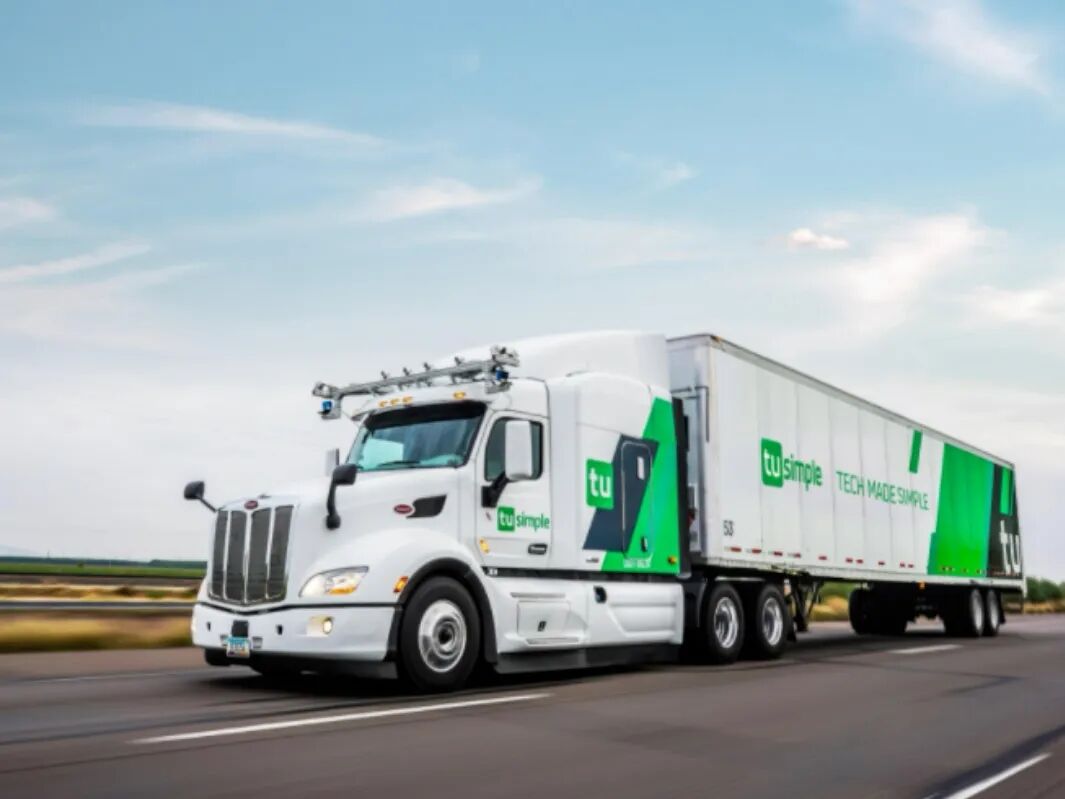
And the intelligentization hurdle has not yet begun. The industry's current move is "first run through, then talk about scale": DeepWay, Mainline, and Zero One are rushing toward IPOs, and driverless heavy trucks are carrying cargo on specific routes on a regular basis.
Unmanned buses have become even more of a false proposition, with some deployments having only one or two vehicles running. These are not scale, but demonstrations. True large-scale deployment of intelligent commercial vehicles still depends on two things—first, the electrification chassis must become thoroughly stable; second, someone must be willing to pay separately for the word "intelligence."
4. Going Overseas: Stuck at Other Countries' Road Administrations
The most confident phrase in Chinese autonomous driving is "cliff-like lead." This holds true for unmanned delivery—Neolix has run more than 30,000 vehicles in nearly 20 countries and more than 300 cities globally, with cumulative 260 million kilometers, roughly five times the combined scale of Waymo and Baidu Robotaxi. But for passenger-carrying Robotaxi, this phrase must be discounted.
Pony.ai is doing "Living Lab" validation with Bolt in Luxembourg and signing an MOU with inDrive in Kazakhstan; both follow this logic: first find a local operator to cooperate, then use its compliant identity to land.
This is not technology export, but compliance export. Because every country has different thresholds. The local ministry of transport governs vehicle access, the road administration governs operating licenses, and data compliance is yet another system—the EU's GDPR, the Middle East's data localization, and Southeast Asia's cross-border transmission; each one can keep a fleet that has already proven its technology parked at the depot. Waymo does not have this problem because it only operates in the US.
Tesla does not have this problem either, because its brand and manufacturing capability can directly knock on any door. The globalization of Chinese companies is essentially not "whether the technology can be used," but "whether others are willing to let you use it." This hurdle is harder than technology.
5. The First Stage Has Actually Already Ended
Looking at the timeline over a longer span, the first stage of autonomous driving has actually ended; many people just have not realized that the stage has changed. Early autonomous driving began with assisted driving behaviors—ACC, LKA, AEB—stacking one function after another, until it was discovered that stacking could not produce L4. Because the logic of assisted driving is "human as the fallback," while the logic of L4 is "system as the fallback"; these two things are completely different species in engineering.
The real turning point was when everyone began to admit that "general L4 is not achievable in the short term" and turned to vertical scenarios. Unmanned delivery, ports, mining areas, airports, campuses—the common features of these scenarios are: relatively fixed routes, controllable speeds, few traffic participants, and clear regulatory boundaries.
Thus companies like Neolix emerged: it does not build vehicles or operate them; it sells aftermarket kits and charges by mileage or time, turning autonomous driving into "affordable infrastructure." In October this year, it raised nearly $400 million in a Series E round; the National Artificial Intelligence Industry Investment Fund invested in the unmanned delivery track for the first time—this fund had previously invested in Moonshot AI, DeepSeek, Galaxy General, and MetaX. This signal is more important than the money. It shows that national-level capital has already determined that the first commercialization answer for autonomous driving is not in passenger cars, but in vertical scenarios.
6. In the Next Stage, the Vehicle Is Just a Terminal
So what is the second stage?
My judgment is: the next important stage of autonomous driving is not "the car drives better," but "whether the car can coordinate with robots and terminal Agents."
This trend already surfaced in November this year. On November 4, Baidu disclosed Apollo World, an embodied world model, for the first time. Three keywords are worth pondering: agent-driven, omnimodal perception, and trip closed loop.
In the virtual city it constructs, vehicles and pedestrians are not passive NPCs, but are modeled as AI agents with decision-making and interaction capabilities—when a driverless car slows down, changes lanes, or yields, it triggers different reactions from other participants. This is no longer "training a driver," but "training a traffic society."
On November 10, Google released Gemini Robotics 2.5, a vision-language-action model with a success rate of 96%. It has already been installed on Apptronik's humanoid robots and entered two assembly lines of Mercedes-Benz in Hungary and Germany. In the same month, Unitree's Wang Xingxing mentioned an internal test: letting GPT-6 directly control a robot to paint without special training; when it saw a paint tray for washing brushes nearby, it went over, washed the brush clean, and then continued painting.
Put these three things together, and they point in the same direction: AI is moving from "understanding the world" to "acting in the physical world." And autonomous driving is the one that has run farthest on this path—it already has vehicles, sensors, real road conditions, and operating networks; it is the most mature deployment carrier for physical AI.
Once robots' manipulation capabilities and Agents' decision-making capabilities mature, the car will no longer be an isolated means of transportation, but a mobile terminal in this system: the car handles transport, robots handle loading and unloading, and Agents handle scheduling and response. At that point, the dimensions of competition will change completely. It will no longer be "whose car drives more smoothly," but "who can connect the entire chain of transport, loading and unloading, and delivery." By that day, the companies that are catching up with each other on single points today will be ranked anew.
7. No Winner Is the Best News
Back to the judgment at the beginning: no company has a significant lead. This sentence is bad news for the industry, but good for judgment. The bad news is that it means no one can lie flat and win on first-mover advantage. Waymo's urban density cannot defend against Tesla's cost curve, Tesla's expansion speed cannot buy Waymo's safety reputation, and Chinese companies' supply chain advantages cannot be converted into road rights overseas. Everyone is burning money, and everyone is waiting for an inflection point that has not yet arrived.
The good news is that it means the table is not yet settled. For seventeen years, this industry has not produced an answer that is "certain to win"—pure vision or redundancy, passenger cars or commercial vehicles, carrying people or carrying goods, in-house development or licensing; every choice still has the possibility of a comeback.
What truly determines the next round may not be whose technology is more dazzling, but three far more mundane factors: who can first turn the data closed loop into a flywheel, who can find the sweet spot between regulation and business where it can breathe sustainably, and who can transform the car from a "product" into a "terminal."
None of these three can be solved by a launch event. That is why autonomous driving today looks a lot like smartphones in 2010—everyone knows the direction is right, but no one has yet found the thing that will suddenly make it widespread.
Waymo and Tesla are trying, Chinese companies are waiting, commercial vehicles are enduring, and robotaxis are warming up on the sidelines. The winner has not yet emerged. But this time, the wait may not be long.
-
![]()
What Is Astigmatism, Really? Why Tangential and Sagittal Foci "Go Their Separate Ways"
-
![]()
Gree Electric's Performance Weighed Down by Soaring Copper Prices: Will Dong Mingzhu Unveil a "Big Move" by Year-End?
-
![]()
AI R&D Doubles in Speed as Anthropic Redacts Most of a 100-Page Report
-
![]()
Crown New Materials to Inject RMB 228 Million into Zhejiang Optical Film Project
-
![]()
Gaize Technology Officially Announces Takeover of Entire Japanese Optical Powerhouse Plant: Can It Translate Into Production Capacity?
-
![]()
Baidu Begins Building Factories
-
Hong Kong Listed Company Huaxia Culture Technology Enters AI Sector with Mid-Term Profit Alert Exceeding HKD 900 Million
-
![]()
NXP Earnings: Net Income Hits $884 Million as Automotive Chip Growth Lags at 13%