The Three German Auto Giants Have All Stalled—What Exactly Happened to Them?
 11/12 2026
 470
In the Chinese auto market, the three German auto giants have long been market favorites. Since the reform and opening up, German cars have been widely popular for their fine craftsmanship. However, recent news suggests that all three German auto giants have stalled—so what exactly happened to these three major automakers?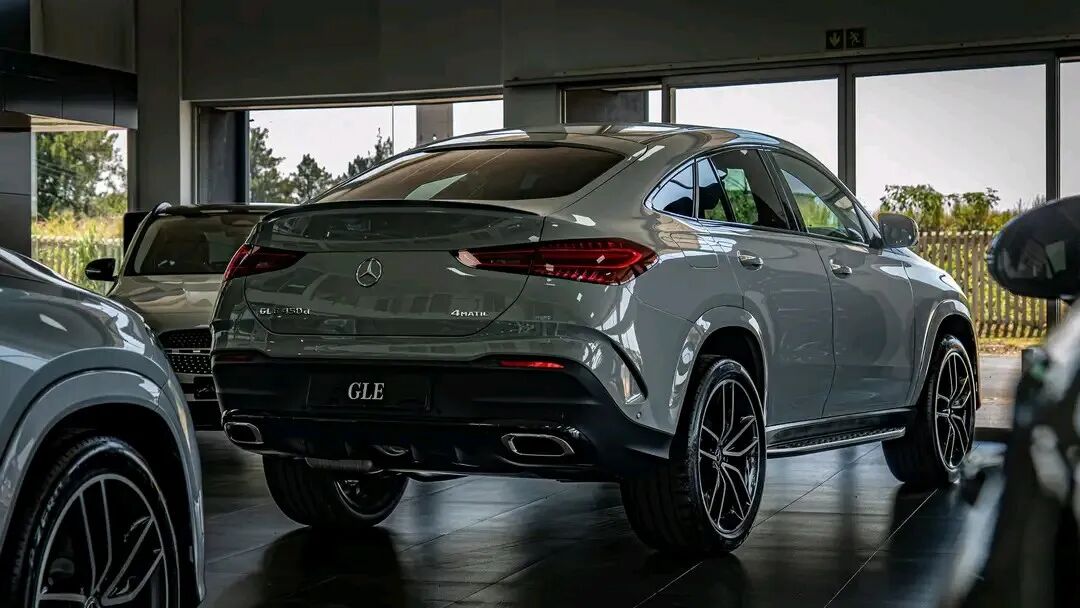
1. Have the Three German Auto Giants Really All Stalled?
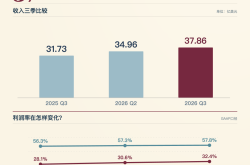
According to a report by Kuai Technology, Volkswagen, Mercedes-Benz, and BMW recently disclosed their Q3 2026 results one after another, and all three German giants delivered grim report cards. Volkswagen Group posted an operating loss of 5.86 billion euros in Q3, with its operating margin falling to -7.8%—its largest single-quarter loss in nearly four years. BMW directly cut its full-year automotive business EBIT margin guidance to -0.5% to 0.5%, with the midpoint touching zero—its second downgrade in less than five months, after starting the year at a range of 4% to 6%. Mercedes-Benz lowered its 2026 adjusted return on sales for its automotive business from 3%–5% to 2%–3%; the automotive division's Q3 EBIT was 901 million euros, down 39.7% year-on-year.
The collapse of the three giants is not global but a single-point explosion in the Chinese market. Volkswagen delivered 1.379 million vehicles in China in the first three quarters, plunging 30.2% year-on-year; in Q3 alone, the decline widened to 38.5%, with only 405,800 vehicles delivered in China—the largest drop among all regions for the group. Over the same period, the European market grew 1.7% against the trend, South America grew 4.3%, and North America dipped only slightly by 4%. BMW's Q3 sales in China fell 31% to 86,800 vehicles; globally, it delivered 1.7078 million vehicles in the first three quarters, a year-on-year decline of 4.9%, far smaller than the drop in the Chinese market. Mercedes-Benz's Q3 sales in China fell 8% year-on-year, and global quarterly sales of Maybach nearly halved, with only 2,590 vehicles sold.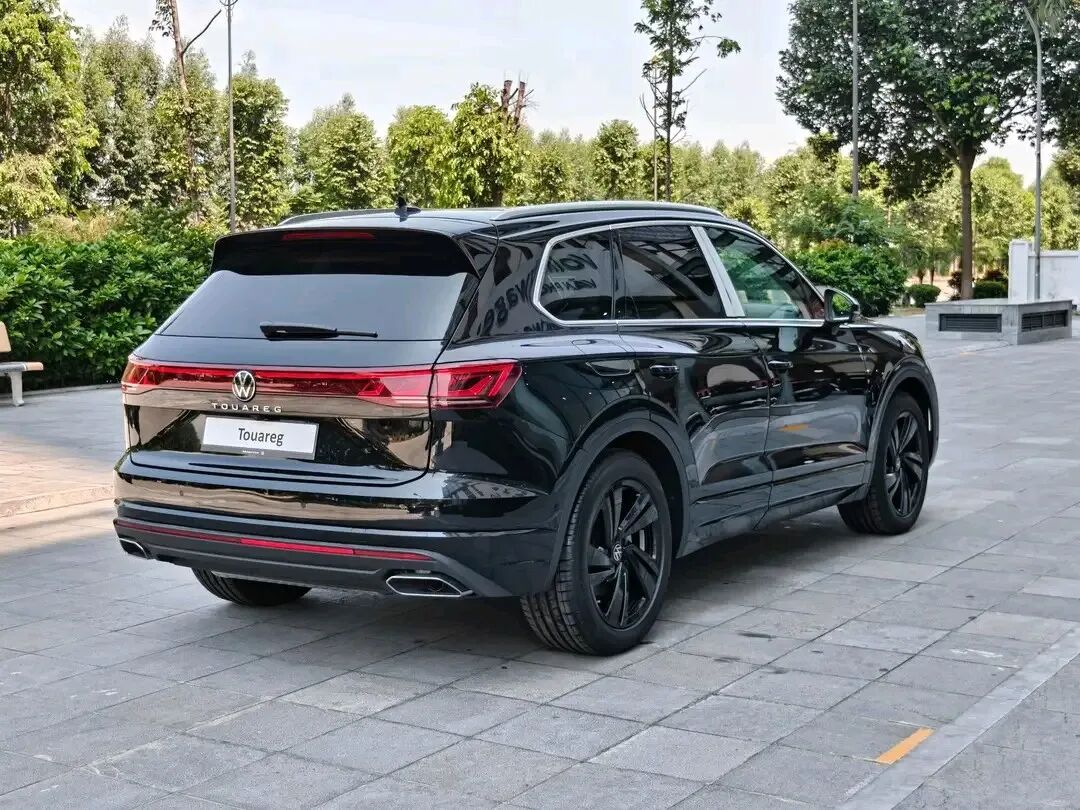
2. What Exactly Happened to the Three Major German Automakers?
Recently, we have seen the Q3 results successively released by the three German automakers, and we feel somewhat conflicted. In earlier years, they always struck me as players with beautiful financial statements who did not even need to work too hard in meetings; for so many years they sat steadily at the table. But what exactly is going on now? First, the Chinese market has turned from a cash cow into a drag.
With China's rapid economic development, China has become an important global consumer market. In earlier years, the profit contributed by the Chinese market could account for roughly half or even more of these companies' global profits. Many overseas markets could not make money selling cars, and the overall profit pool relied entirely on high-premium models in the Chinese market.
At that time, in the domestic terminal market for German cars, not to mention discounts, many popular models even required a premium and a waiting period to get the car. Even many popular models from German automakers required paying extra for options before delivery. Dealers lived comfortably, and the automakers' income statements looked especially good.
But now, not to mention premiums, many models are discounted by more than 100,000 yuan at the terminal, and market performance still does not pick up. The most intuitive feeling is that among the newly running cars on the road, the share bearing the badges of new forces and domestic new energy vehicles is increasing. The habit of choosing BBA first when changing cars is being rapidly rewritten.
This change cannot be reversed by short-term promotions. The direct result is that the three automakers' global performance has shown very severe regional divergence. Some traditional markets have performed fairly steadily, but the sudden contraction of the Chinese market, the largest profit pool, has directly dragged down the entire group's performance growth.
Many overseas executives previously did not realize that the weight of the Chinese market had become so high. By the time they reacted, market share had already fallen substantially, and trying to win it back is now far more difficult than before. Second, the problems of the German giants are changing from quantitative to qualitative. In the early fuel vehicle era, German cars relied on manufacturing capabilities accumulated over a long period—hard skills such as engines, transmissions, and chassis tuning—to secure a leading position in the global market.
At that time, when people talked about German cars, their first impression was good quality and solid technology. This perception supported their market advantage for decades. But in the new energy era, the rules of the game have completely changed, and the core technological advantages of traditional fuel vehicles have suddenly been marginalized.
New energy vehicles rely on three-electric technology, not the traditional three major components of automobiles. Electric vehicles do not need complex multi-speed transmissions, and engine technology accumulation is useless. The housekeeping skills that German automakers spent more than a century polishing have directly become non-core capabilities in the new competitive track. Even more interestingly, German automakers actually began laying out electrification very early, launched hybrid models many years ago, and shouted slogans of comprehensive transformation. The result was an early start but a late arrival.
They always felt that after accumulating for so many years in the auto industry, it would still be completely timely to enter once the market matured. Then they watched Chinese automakers build up the electric supply chain step by step and push intelligent experience far beyond expectations. By the time German automakers truly made up their minds to fully advance new energy, they found they had completely failed to keep up with the market rhythm. Much of their previous technological accumulation not only failed to help but became a burden for transformation. They always thought they could not completely abandon the advantages of the fuel vehicle era, and the new energy vehicles they produced always carried the inertial thinking of fuel vehicles, so naturally it was hard to win recognition from new users.
Third, Germany's long R&D cycles make it difficult to adapt to market needs. For a German automaker, five to six years from project approval to mass production is the norm, backed by a whole set of layered validation development processes: prototype vehicles are made round after round, suppliers are deeply bound, and quality standards are examined in great detail. This is also why people relatively trusted German manufacturing quality in earlier years. This process was an advantage in the fuel vehicle era; it ensured product consistency and reliability and conformed to the industrial development logic of traditional fuel vehicles.
But the current rhythm in the Chinese market is a facelift every one or two years, smart cockpits updated every six months, and user expectations are being raised bit by bit by domestic brands. What often happens with German cars is that their original advantages become disadvantages. When fast and slow are compared on the same track, the result is awkward. German new energy vehicles often have just finalized prices and just launched when they turn around and find that Chinese brands at the same price have already advanced configuration, range, and smart cockpits by a generation. Before the car even starts selling in large volumes, it is already half a beat behind technologically.
This dilemma of being outdated upon launch is not a problem of any single model but of the entire R&D system failing to match the market's tempo. This is not because engineers are not working hard; it is because the clock of the entire system no longer matches the clock of the market. If you cannot speed up, it means you are forever chasing a moving target, and the chase becomes more exhausting.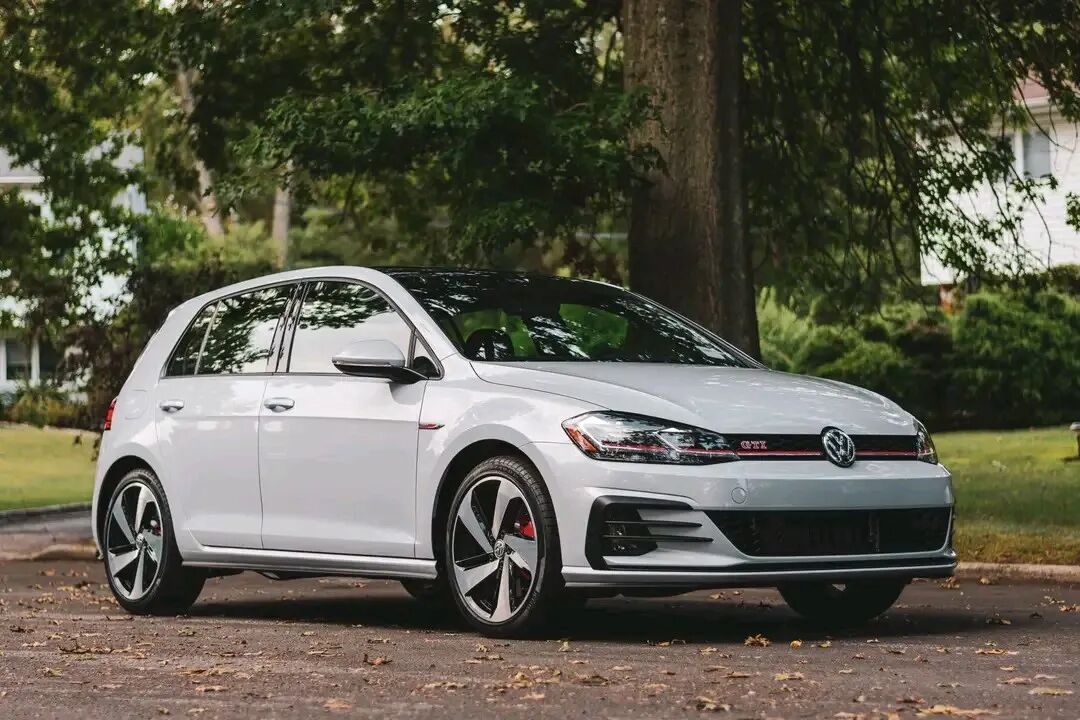
Fourth, Germany's domestic cost structure is also dragging down automakers. Germany has high domestic wage levels, high energy costs, and a thick welfare system. In the past, these were supported by high global gross margins, so there was no problem. Now that the profit transfusion from the Chinese market has diminished, these rigid costs have become glaring. Once capacity utilization at European factories declines, the cost allocated per vehicle rises: the more they sell, the more expensive it gets, and the more expensive it gets, the harder it is to sell. This is a vicious cycle, and the situation is even continuing to worsen.
On the other hand, the decision-making efficiency of joint ventures is also a long-standing problem. Product definition, configuration combinations, pricing strategies—many matters must be reported to German headquarters and evaluated layer by layer. By the time approval comes down, the market wind has already changed. The Chinese team is closest to users and knows best what configuration a model should add and what price it should set, but it has no decision-making power.
This misalignment was not fatal in an era of mild competition, because at that time German manufacturing was a golden signboard. For the then just-emerging Chinese auto market, German cars relying on brand premium were a dimensional strike. But in today's Chinese auto market, it is fatal. Headquarters wants globally unified control, but the Chinese market wants local flexibility. These two things inherently conflict.
So you will see a very awkward state: headquarters knows it needs to change but cannot move, and transmission through layers is simply too slow; the Chinese team is anxious and wants to adapt quickly to market needs, but lacks authority. Organizational inertia is harder to fix than technological shortcomings. Technology can be bought and cooperation can be pursued, but how should systemic problems be solved? Fifth, the Chinese market is transforming from a high-premium profit pool into today's fiercely competitive arena.
Over the past decades, overseas automakers entering the Chinese market could easily obtain high profits relying on technology gaps and brand gaps. That era has completely ended. Players remaining in this market now, no matter how strong their previous brand halo, must face users' real needs and compete head-on with all opponents. Audi recently launched its AUDI lettered series specifically for the Chinese market, which is a very clear signal: they have finally realized that they can no longer sell globally unified models in China and must make special adjustments for Chinese users' needs.
This illustrates a very simple truth: those who can hear the gunfire should make the decisions. Only by truly handing power and resources to the people closest to the market can product definition, cost control, and launch rhythm possibly keep up with changes here. German cars still have their foundation, their brands, and their manufacturing capabilities, but whether they can stand up again depends not on how beautiful a blueprint German headquarters draws, but on whether it is willing to admit that the rules of the game in the Chinese market have changed, and the way of playing must change with them.
-
![]()
What Is Astigmatism, Really? Why Tangential and Sagittal Foci "Go Their Separate Ways"
-
![]()
Gree Electric's Performance Weighed Down by Soaring Copper Prices: Will Dong Mingzhu Unveil a "Big Move" by Year-End?
-
![]()
AI R&D Doubles in Speed as Anthropic Redacts Most of a 100-Page Report
-
![]()
Crown New Materials to Inject RMB 228 Million into Zhejiang Optical Film Project
-
![]()
Gaize Technology Officially Announces Takeover of Entire Japanese Optical Powerhouse Plant: Can It Translate Into Production Capacity?
-
![]()
Baidu Begins Building Factories
-
Hong Kong Listed Company Huaxia Culture Technology Enters AI Sector with Mid-Term Profit Alert Exceeding HKD 900 Million
-
![]()
NXP Earnings: Net Income Hits $884 Million as Automotive Chip Growth Lags at 13%