New M8 Secures Only 11,000 Firm Orders in Three Days—Has AITO's Report Card Lost Its Luster?
 11/18 2026
 428
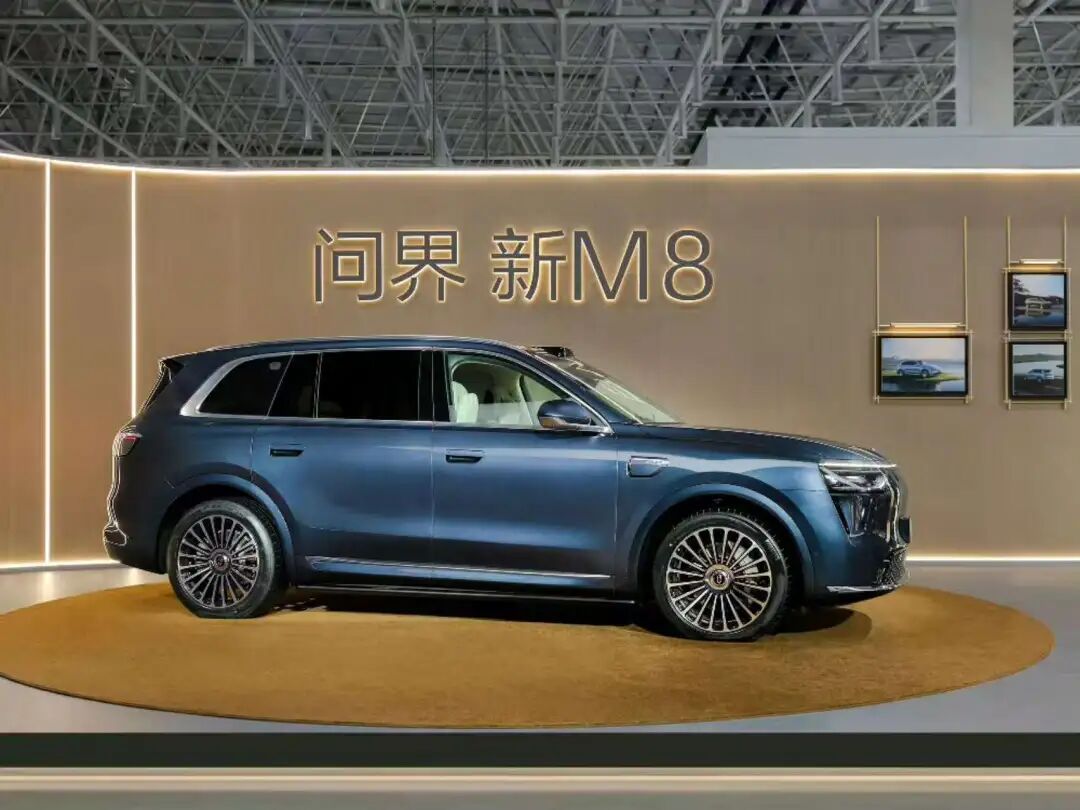
On November 16, AITO released its second order report card following the launch of the all-new M8, but the figures no longer seemed quite so impressive. Data shows that after the new M8 launched on November 13, 2026, it garnered 4,600 firm orders within 2 hours and 11,000 firm orders within 72 hours; as of November 16, official firm order data for a longer window had yet to be disclosed. For any other vehicle, this performance could be considered quite strong. But compared with its own previous generation, the gap is still relatively wide.
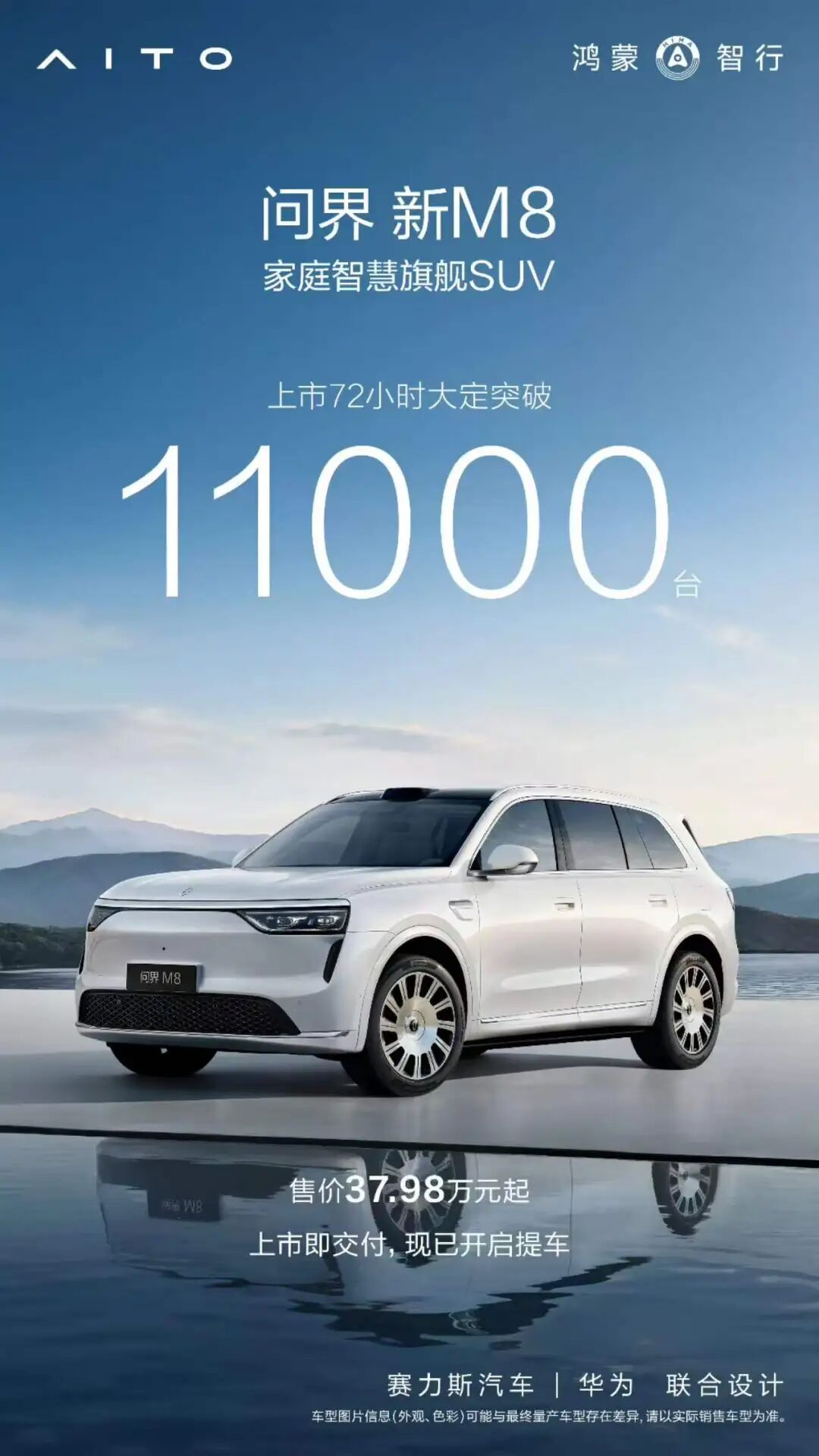
The previous-generation M8, launched in April 2025, surpassed 20,000 firm orders within just 1 hour of launch, 32,000 in 24 hours, 44,000 in 72 hours, exceeded 50,000 in 4 days, and surpassed 70,000 in 22 days. By comparison, the new AITO M8's firm order volume is only one-quarter of the previous generation's, with orders down 75%. Regarding this result, some attribute it to the difficulty of replicating the M8's hit status, while others point to the impact of changes in the Huawei-Seres cooperation model.
The bigger reason, however, may lie in AITO's shift in market strategy.
When the first-generation AITO M8 launched, AITO's core task was to seize the high-end market. Accordingly, product configuration and market strategy were offense-oriented. In terms of sales, the M8's performance in 2025 was genuinely strong, with monthly sales consistently above 20,000 units. After entering January this year, the entire market fluctuated dramatically, and M8 sales declined as well. Particularly after May this year, monthly sales gradually fell below the 5,000-unit mark. This shift was driven both by turbulence in the consumer market and by the impact of increasingly competitive rivals. Naturally, the launch cadence of the new M8 was also a factor affecting sales of the old model at the end of its lifecycle.
As for the firm order data of this new model, the volume has indeed contracted. But considering the combined effect of the new car's starting price being raised by 10,000 yuan and the continued disruption to user expectations from the HIMA rights-and-responsibilities adjustment turmoil, this report card is not simply a narrative of a "hit model cooling down," but rather a market stress test with deliberate trade-offs conducted by the AITO brand after Seres took the lead in operations.
This first shows that AITO no longer pursues explosive order data. In past years, the industry was accustomed to using the instantaneous heat of large order volumes at launch—a poster of "tens of thousands of orders"—to build brand momentum, channel traffic, and herd effects. Such orders relied more heavily on whole-internet traffic heat and could not truly reflect purchase intention, price acceptance, or users' recognition of the brand trust framework. Seres gradually departing from this model reflects its current priorities: no longer prioritizing the traffic carnival of whole-internet screen-swiping, but instead delivering order metrics that rely more on the product itself.
Second, AITO has also been continuously moving upward in its product lineup. The reason prompting this change is that AITO's pillars of profit and sales have actually always been products above 400,000 yuan, mainly the M9. And within the M9 lineup, the high-end configurations are the most popular. This means AITO has sufficient brand power to support upward expansion. This year, AITO launched the M9 Ultimate stretched version, with a price directly starting at 649,800 yuan. But this product sold unexpectedly well. This further strengthened AITO's confidence in breaking upward.
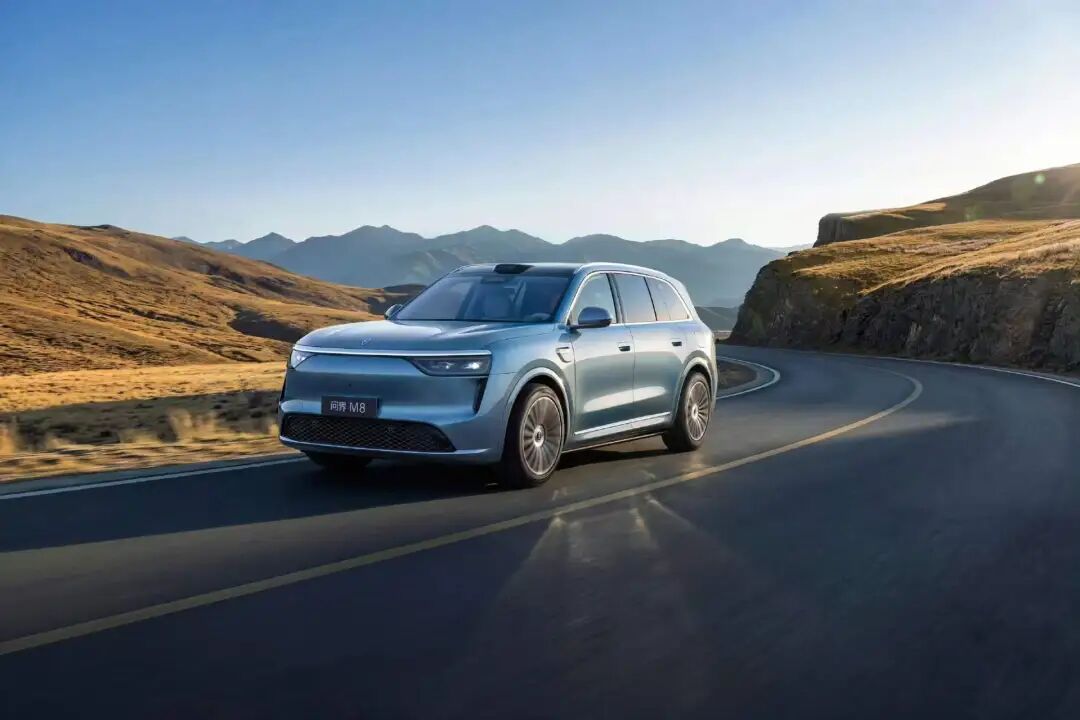
For the M8, this time it also seems to have abandoned the previous path of small profits but quick turnover, instead taking the boutique route. This time, the M8 starts at 379,800 yuan, actually raising the threshold compared with the old model. At the same time, AITO cut the low-priced pure electric entry version, converging product positioning upward and closely aligning with the M9's price band, safeguarding the value ladder of the high-end sequence. In a cycle where the entire industry generally uses price cuts and benefit giveaways to exchange for orders, this is a proactive abandonment of the volume route and a prioritization of protecting the brand's price anchor. Raising prices naturally filters out price-sensitive users. But this also means that AITO is gradually moving away from "involution-style" competition.
Second, this is also a reasonable choice in response to rising costs. Seres Chairman Zhang Xinghai previously publicly disclosed a figure: under chip and battery price increases, AITO's average cost per vehicle increased by 15,000 to 20,000 yuan. This huge cost increase swallowed Seres' profits in the first half of the year. Ultimately, under operating pressure, automakers will gradually adjust prices.
Third, for Seres, although at the M8 launch event this time, HIMA and Seres senior executives appeared on stage again, and AITO returned to the top position within HIMA, AITO's model adjustment has already begun. In essence, the operating entity has shifted from Huawei Terminal to Seres. Huawei retains product definition and core technology supply, but changes in the marketing, channel, and service entities will bring changes in subsequent approaches. A considerable part of the previous M8's purchase premium came from the expectation of "Huawei full-chain backing." Now, AITO is in a stage of rebuilding users' trust chain.
For example, some customers who value the "Huawei direct sales, Huawei service" label will turn away, while most of those who remain and place firm orders are users who deeply recognize the product. The order structure of this car has undergone proactive screening: demand driven by Huawei empowerment has been filtered out, and what remains are rigid family users with high decision-making weight. As HIMA and Qiankun ecosystem brands become more numerous, this kind of trust rebuilding by AITO is very necessary.
From these perspectives, although the 11,000 units of the AITO M8 this time is lower than the same period of the previous generation, it proves that the adjustment of the incremental dividend model relying solely on Huawei's halo has been completed, and that it has the ability to undertake high-end users with its own channels and service system. Especially under the triple negative factors of price increases, trust disturbance, and resource diversion, firmly locking more than 10,000 firm orders in 72 hours shows that AITO's product base has not collapsed. The product value of the M8 has already precipitated a stable customer group independent of marketing hype; these more than 10,000 locked orders are also the most genuine buyers.
Obviously, Seres' management is willing to accept a pullback in the launch firm order peak in exchange for a healthier order structure, a more stable price system, and a more controllable production rhythm. Once, AITO obtained orders through Huawei's traffic; next, it must rely on Seres' own operating system to retain these already locked customers and continue to attract new ones. The pullback of the launch firm order pulse is the price that must be paid for model transformation; and the quality of the locked orders themselves is the first touchstone for whether the transformation can succeed.
-
![]()
1.881 billion! Another central enterprise wins the bid for a big data center project
-
Will the Fangchengbao Titan 9 Go on Sale Tomorrow? Is the Predicted Official Price Range of 300,000–380,000 Yuan Accurate?
-
Top 10 Fastest-Growing and Most Profitable Companies in the Token Export Sector
-
![]()
JieJie Microelectronics Bets Another 1.5 Billion Yuan on High-Voltage Chips: The Ambition Behind the Layout
-
![]()
Phone Prices Are Rising Across the Board—So Why Is Apple the Only One Selling More?
-
Forecasting the Official Launch Price Range of the iCAR V25 from V23 and V27 Sales Trends
-
![]()
In the AI Era, Tokens Are This Small Chinese City's "New Local Specialty"
-
![]()
Global Smartphone Shipments to Decline for Second Consecutive Year, Yet Apple's iPhone Defies the Trend with Year-over-Year Growth: Consumers Increasingly Favor Huawei and Apple