Avatr's Shareholder Shift Ahead of Hong Kong IPO: CATL's Influence Set to Change
 11/18 2026
 572
On November 12, the Shanghai United Assets and Equity Exchange published a notice. Changan Automobile plans to transfer a 10% stake in Avatr at a floor price of 3.1828 billion yuan, with the disclosure period running until December 10. If a single buyer takes the entire stake, Avatr's second-largest shareholder will change hands; CATL, currently in second place, holds 9.1742%.
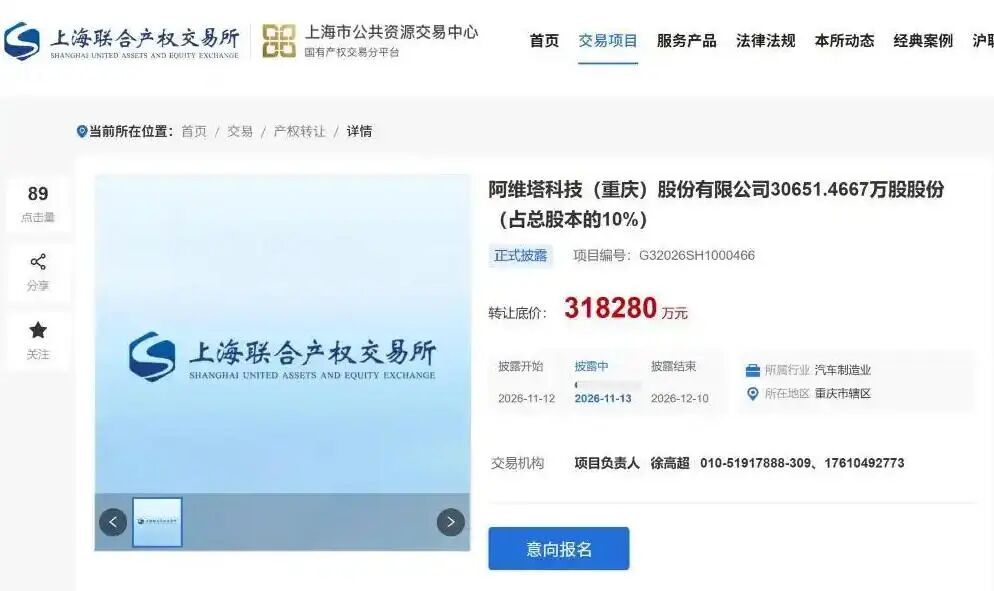
The timing is somewhat delicate. Avatr's Hong Kong IPO prospectus is nearing expiry, the IPO has entered its sprint phase, and the company's operations are in a period of pace adjustment. Who takes over the second-shareholder seat is the most immediate point of interest in this notice. CATL's say in the governance system will also see new arrangements depending on where this 10% stake goes.
Avatr's Governance Landscape Shifts
First, let's look at Avatr's main shareholder structure. The listing information shows Changan Automobile holds 40.994% in first place, CATL holds 9.1742% in second, Anyu Fund, Chengan Fund and Nanfang Asset hold 8.8068%, 7.2717% and 6.3439% respectively, and BOCOM Investment and the National Green Development Fund hold 3.3446% and 2.9046% respectively.
This 10% stake is being packaged as a whole. If only one bidder emerges when the disclosure period ends, it will be transferred by agreement; if two or more emerge, an online auction will be held. If a single entity takes the entire lot, its 10% stake would surpass CATL's and make it the second-largest shareholder, pushing CATL down to third.
The institutional significance of the 10% shareholding threshold is key to understanding the change in CATL's influence. Article 113 of the Company Law, revised in 2023, provides that when shareholders holding 10% or more individually or in aggregate request it, the company shall convene an extraordinary shareholders' meeting within two months; Article 114 specifies that shareholders holding 10% for 90 consecutive days may convene and preside over meetings themselves if neither the board of directors nor the board of supervisors performs its duties. A 9.1742% stake is still some distance from this threshold; a gap of less than 1 percentage point translates, procedurally, into a difference in the right to initiate agenda items.

CATL held about 14.1% before Series C and 9.17% after Series C. Once the new shareholder enters, CATL's ranking will drop to third, with its stake and ranking adjusting in tandem, and its role in consultations on major matters will change accordingly. Article 116 of the Company Law divides resolutions into two tiers: ordinary matters pass with a majority of voting rights represented at the meeting, while major matters such as amending the articles of association, increasing or reducing registered capital, and merger, division or dissolution require a two-thirds majority. Although the new second shareholder's 10% stake is not enough to sway either tier on its own, it can secure a more forward position at the negotiating table than CATL.
It should also be noted that CATL is simultaneously a battery supplier to Avatr; its industrial collaboration role is independent of its shareholder status, and an adjustment in shareholder influence does not equate to a change in the value of industrial collaboration—it is just that the structure of overlapping dual roles is changing.
Changan Automobile's Control Remains Solid
Understanding Changan's arrangement requires a longer time horizon. When Avatr was founded in 2020, Changan held 95.38% and NIO held 4.62%. After the first capital increase in November 2021, Changan's stake fell to 39.02%; it edged up to 40.99% in August 2022; and in the Series C financing of over 11 billion yuan in December 2024, Changan contributed 4.551 billion yuan, keeping its stake at 40.99%.
After this listing is completed, Changan's stake will be 30.994%. From 95.38% to just over 30%, Changan has continued to open up its equity, but the largest shareholder position has always been retained; 30.994% is still more than twice that of the second-largest holder, and board and operational leadership remain stable. Changan has publicly stated that its support will not diminish after the transaction closes, and that full-chain support in technology R&D, vehicle manufacturing and the supply chain will continue.
In terms of funding arrangements, the 3.1828 billion yuan is proceeds from the transfer of existing equity; it does not add share capital or dilute per-share rights. The listing conditions require that the transferee's funds be its own or self-raised, exclude private equity funds, and not affect the listing process; the transferee must also have no competitive relationship with the target or its affiliates. These conditions point to a transferee that is more like a strategic investor with industrial resources.
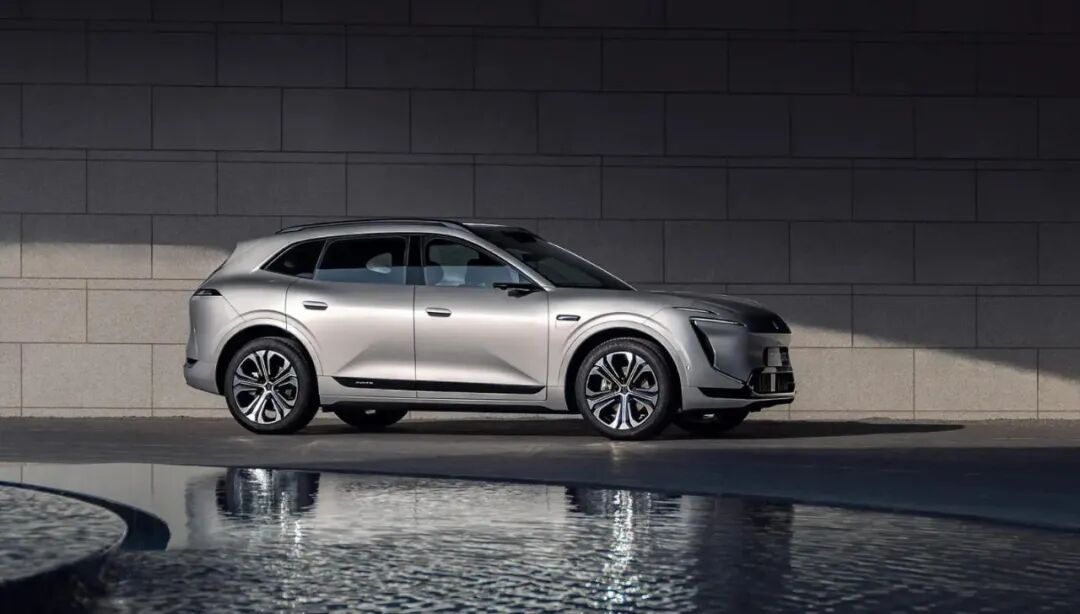
An Avatr executive said in an interview that the transaction focuses on connecting with high-end channels and overseas resources and dovetails with the Hong Kong IPO. At 30.994%, Changan is still about 2.3 percentage points away from the one-third shareholding threshold; on matters requiring a two-thirds vote, Changan will need to coordinate with Nanfang Asset and Chongqing-affiliated funds. This is an objective arrangement in the evolution of the equity structure, and since the relevant shareholders mostly have state-owned backgrounds, the basis for coordination remains. For a high-end brand incubated by a central SOE, Changan's arrangement offers an observable sample.
Where Does the Confidence Behind the 31.8 Billion Yuan Valuation Come From?
To discuss Avatr's 31.8 billion yuan valuation, look first at three sets of data. On sales, Avatr's wholesale volume in the third quarter of 2026 was about 12,000 vehicles, down 57.1% year on year; official deliveries in October were 7,056 vehicles, down 47.8% year on year and 13.8% month on month; under the CPCA's measure, October retail sales were 2,858 vehicles.
On cash, the prospectus shows cash and equivalents fell from 19.323 billion yuan at the end of 2024 to 9.687 billion yuan at the end of 2025, and further to 6.249 billion yuan by the end of April 2026—a cumulative decrease of about 13.074 billion yuan over 16 months, averaging 817 million yuan a month.
At the same time, the valuation basis for Avatr needs to be clarified. The 3.1828 billion yuan corresponds to a 10% stake, implying an overall valuation of 31.828 billion yuan. Some market calculations compare this with the roughly 20.7 billion yuan of Series C and conclude an increase of over 53%. Public information shows that 20.69 billion yuan was the pre-Series C valuation; adding the 11.1 billion yuan raised gives a post-money valuation of about 31.79 billion yuan, basically consistent with 31.828 billion yuan. The floor price is broadly flat with the post-Series C valuation; the 53% increase is the result of comparing the current price with the pre-Series C figure.
Whether this valuation matches the fundamentals can be observed from two angles in public data. Objectively, Avatr's 2025 revenue was 25.869 billion yuan; it is in a period of strategic investment, with a net loss of 3.489 billion yuan and an asset-liability ratio of about 80.26%; deliveries in the first 10 months were 62,413 vehicles, a 28.4% completion rate of the 220,000 annual target. At a stage of sales pace adjustment and continued cash investment, maintaining the post-Series C valuation reflects requirements on the transferee's financial strength and long-term judgment; the pricing of the old-share transfer also reflects room for negotiation, with the related transaction corresponding to a valuation of about 26 billion yuan, an adjustment from the Series C cost.
On the support side, Avatr delivered about 122,700 vehicles in 2025, building a certain user base, and the three-way cooperation among Huawei, CATL and Changan remains stable. After the Hong Kong listing is completed, how much the company is worth will be left to the public market to judge. Industry observers note that for automakers still in the investment phase, valuation mainly hinges on two things: whether sales can continue to grow and drive revenue, and how long the cash on hand will last at the current pace. Thus, by spending 3.1828 billion yuan, the transferee buys a shareholder seat in Avatr before its listing, along with a judgment on subsequent products and the market. But the final transaction price will only be known after the disclosure period ends on December 10.
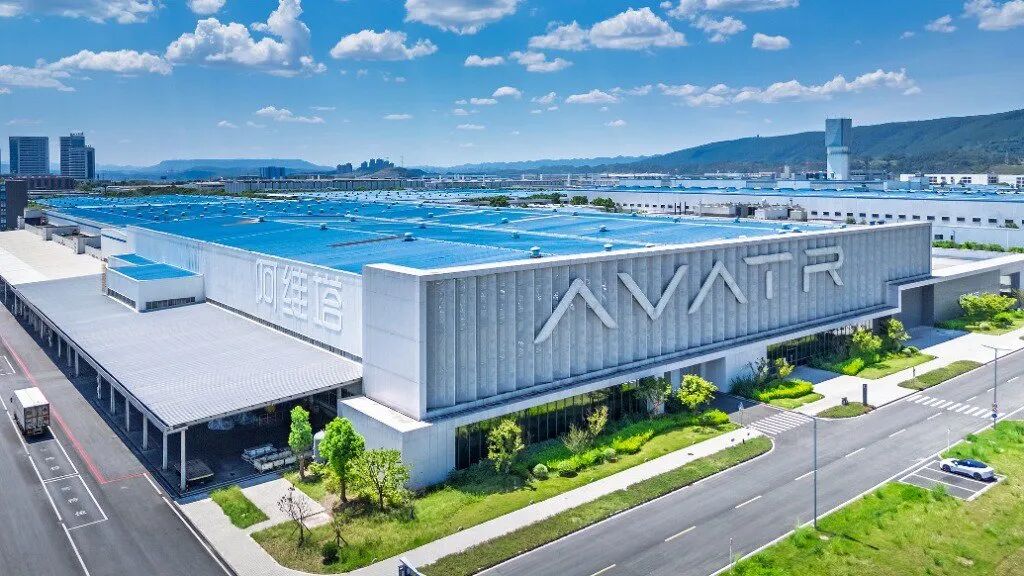
In the future, with the new second shareholder on board, Avatr's overall governance consultation mechanism will become more diverse. CATL will no longer serve as second shareholder after the shareholding adjustment, and its role at the shareholder level will change accordingly, with more influence shifting to its industrial role in battery supply and technological collaboration.
After receiving 3.18 billion yuan in consideration, Changan remains the largest shareholder. An orderly adjustment of the equity ratio with stable leadership is a clear feature of this opening-up path. Whether Avatr's 31.8 billion yuan valuation matches its fundamentals already has a basis for judgment in public data; the answer will be provided by the market after the deal closes.
-
![]()
1.881 billion! Another central enterprise wins the bid for a big data center project
-
Will the Fangchengbao Titan 9 Go on Sale Tomorrow? Is the Predicted Official Price Range of 300,000–380,000 Yuan Accurate?
-
Top 10 Fastest-Growing and Most Profitable Companies in the Token Export Sector
-
![]()
JieJie Microelectronics Bets Another 1.5 Billion Yuan on High-Voltage Chips: The Ambition Behind the Layout
-
![]()
Phone Prices Are Rising Across the Board—So Why Is Apple the Only One Selling More?
-
Forecasting the Official Launch Price Range of the iCAR V25 from V23 and V27 Sales Trends
-
![]()
In the AI Era, Tokens Are This Small Chinese City's "New Local Specialty"
-
![]()
Global Smartphone Shipments to Decline for Second Consecutive Year, Yet Apple's iPhone Defies the Trend with Year-over-Year Growth: Consumers Increasingly Favor Huawei and Apple