"Cost Killer" Battles Rising Parts Prices: Leapmotor Q3 Revenue Hits 31.7 Billion Yuan, Profit at 40 Million Yuan
 11/23 2026
 351
Under cost pressure, Leapmotor — despite rapid growth in sales and revenue — has seen its net profit shrink significantly.
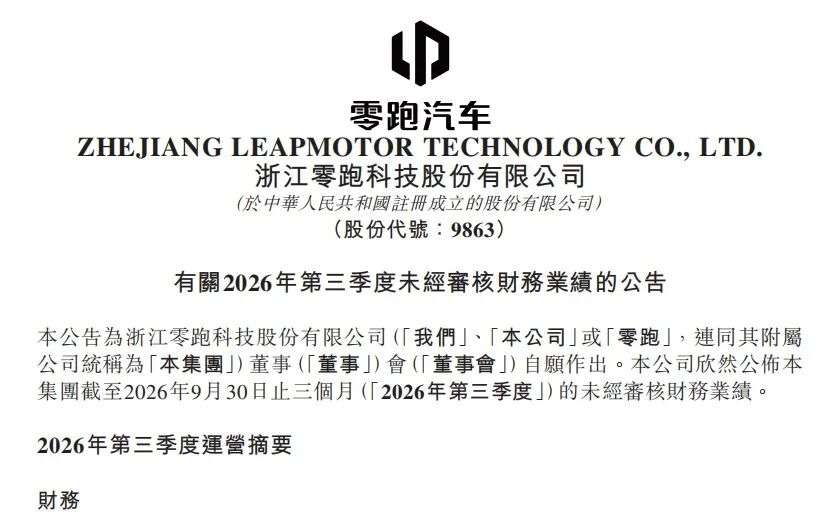
The Q3 financial report shows that Leapmotor's global deliveries reached 310,052 vehicles, up 78.3% year-on-year and 25.9% quarter-on-quarter; revenue reached 31.70 billion yuan, up 63.0% year-on-year and 16.2% quarter-on-quarter. Over the same period, Leapmotor's net profit attributable to shareholders was 40 million yuan, down from 150 million yuan in the same period of 2025 and 600 million yuan in the second quarter of 2026; operating profit swung from a gain of 540 million yuan in the second quarter to a loss of 30 million yuan; gross margin also slid to 10.9%, below 14.5% in the same period last year and 12.6% in the second quarter.
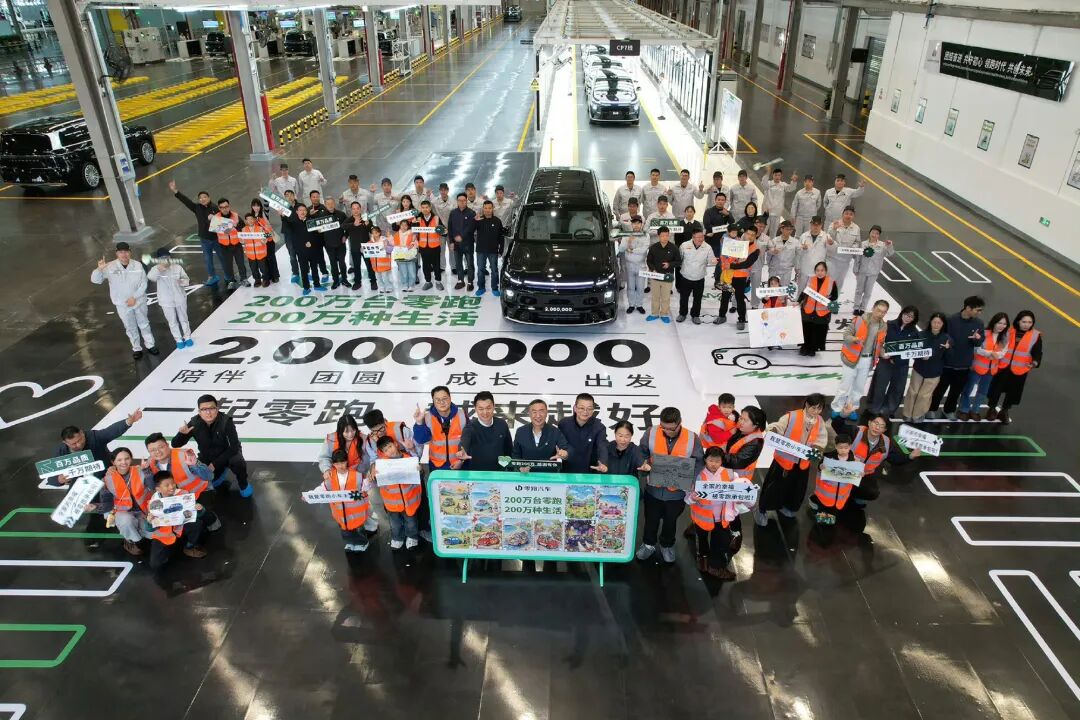
Leapmotor attributed the profit decline mainly to three factors. The first is a shift in product mix. A major driver behind Leapmotor's sales takeoff this year at the product level has been the addition of the A05 and A10 A-series models. According to Li Tengfei, Vice President of Leapmotor, the A series' share of the total sales mix is rising in Q3, while the shares of the D, B, and C series remain relatively small. "The A series has a lower gross margin, so it has a direct impact on our overall gross margin," said Li Tengfei.
The second is the surge in prices of raw materials such as storage chips, battery cells, and precious metals. Li Tengfei revealed that the impact of raw material prices in the third quarter was more pronounced than in the first and second quarters. The reason is that in the first and second quarters, Leapmotor held some raw material inventory that could offset part of the price increases, but starting in the third quarter, as inventory was gradually used up, the surge in raw material prices affected profits more directly.
Li Tengfei said that although lithium carbonate prices declined somewhat in the third quarter and commodities such as precious metals have recently fallen slightly, the prices of battery cells and chips remain at high levels. He expects that the impact of raw materials on fourth-quarter profit will mainly come from batteries. "We are in close communication with battery suppliers. We believe that a decline in battery cost of sales will contribute to our fourth-quarter gross margin," said Li Tengfei.
The third is the rise in overseas market costs. Due to international geopolitical reasons, Leapmotor's long-distance transportation costs, especially costs for shipping to Europe, have increased significantly, directly pushing up overseas market costs. Li Tengfei emphasized that given that Leapmotor is at a critical stage of ramping up production and sales in overseas markets, and not wanting to affect the overall pace, this cost increase must be borne. This year, Chinese automakers are all accelerating their overseas expansion, and rising transportation costs are also a common cost challenge they face. In addition, Leapmotor's overseas business is still in the stage of channel building and production and sales ramp-up, and still requires investment in the short term.
01 Accelerating Overseas Localized Production through Stellantis
Throughout the earnings call, overseas markets were also the most closely watched part, as this segment has become an important second growth curve for Leapmotor. In the third quarter, Leapmotor's export volume was 63,278 vehicles, up 263.7% year-on-year and 14.2% quarter-on-quarter, accounting for 20.4% of total quarterly sales; from January to October this year, Leapmotor's cumulative export volume exceeded 180,000 vehicles, about three times the full-year export volume in 2025.
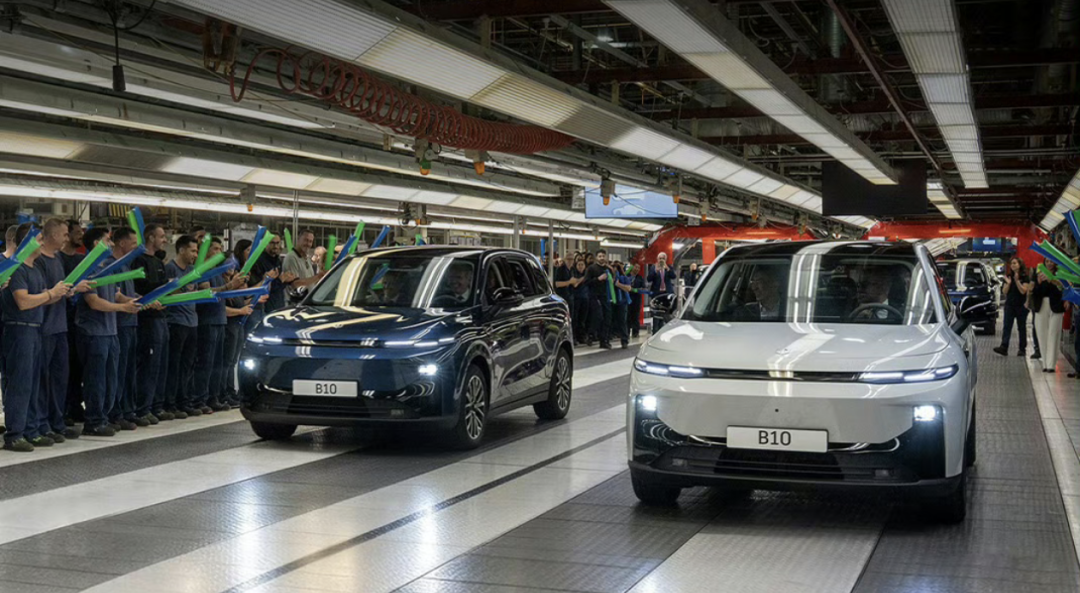
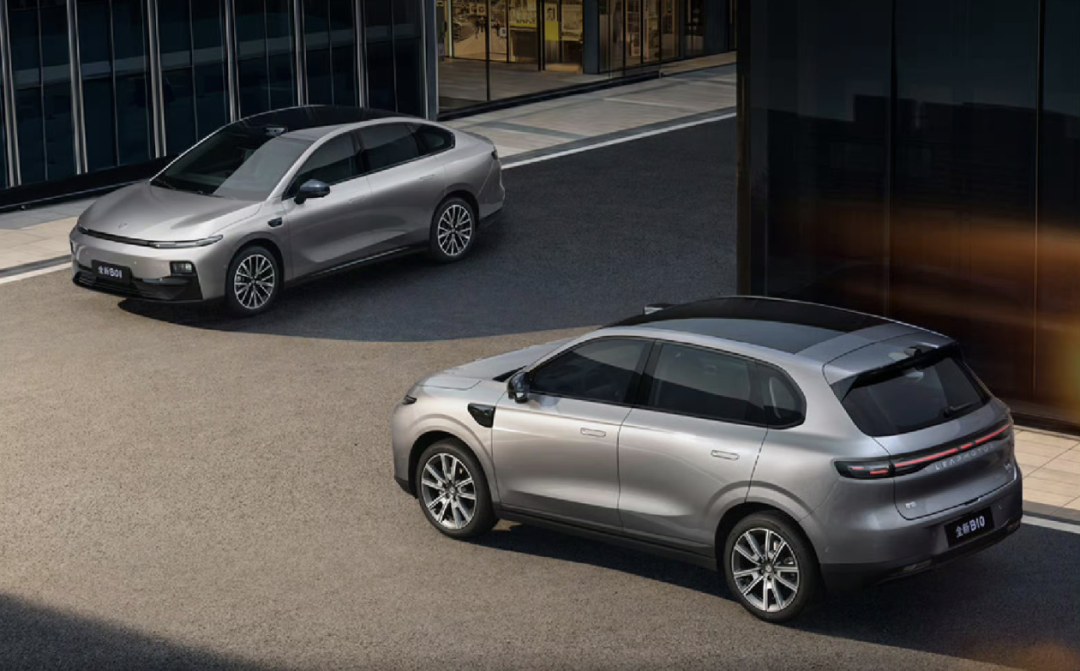
From the perspective of sales structure, last year Leapmotor's overseas models were mainly led by the T03, C10, and B10, with relatively small sales of the C10 and B10; this year, the T03's share has dropped significantly, the B10 has become the main overseas sales model, and the C10 is also growing. Li Tengfei also revealed that orders for the B05 and the A10, which has just been introduced to Europe, are growing very fast.
However, due to the European market's quota issue for PHEVs, the launch pace of PHEV versions of these models is slower than originally planned. The EU will limit imports of Chinese hybrid vehicles (including PHEV plug-in hybrids + HEV hybrids) to 350,000 units per year, with low tariffs allowed within the quota and high additional tariffs imposed beyond the quota, while local EU production of CKD is exempt. The plan will be implemented starting December 1 this year.
Relying on Stellantis' factories, Leapmotor is also accelerating the localization of overseas product production. "We are confident that localization will be our future strategy." Currently, Leapmotor's main overseas production models are the B10 and B05; the C10 also began localized production this year. This year, the A10 and A05 are planned to be localized in South America and Europe. At the same time, Leapmotor will also address the PHEV quota issue in Europe through localized production.
As for the overseas capacity issue, Li Tengfei said that Stellantis has more than 40 existing factory resources globally, which will not become a major constraint on overseas expansion. "Our bottleneck is not capacity, but sales," said Li Tengfei. For next year's overseas sales expectations, Li Tengfei expects significant growth compared with the scale of about 200,000 vehicles in 2026, with locally produced vehicles accounting for about 20% of total overseas sales.
As localized production advances, this is also expected by the outside world to improve the cost structure. However, Li Tengfei remains relatively cautious about the role of localization in profit improvement. "Under the current tariff regime, localized production in Europe can help us slightly improve profits. But the improvement may not be as high as everyone expects," said Li Tengfei. The reason is that the local procurement ratio for CKD will reach 40%; manufacturing costs will also be higher than in the Chinese market.
02 Helping Opel Build Cars to Recover, Ushering in a Major Product Year
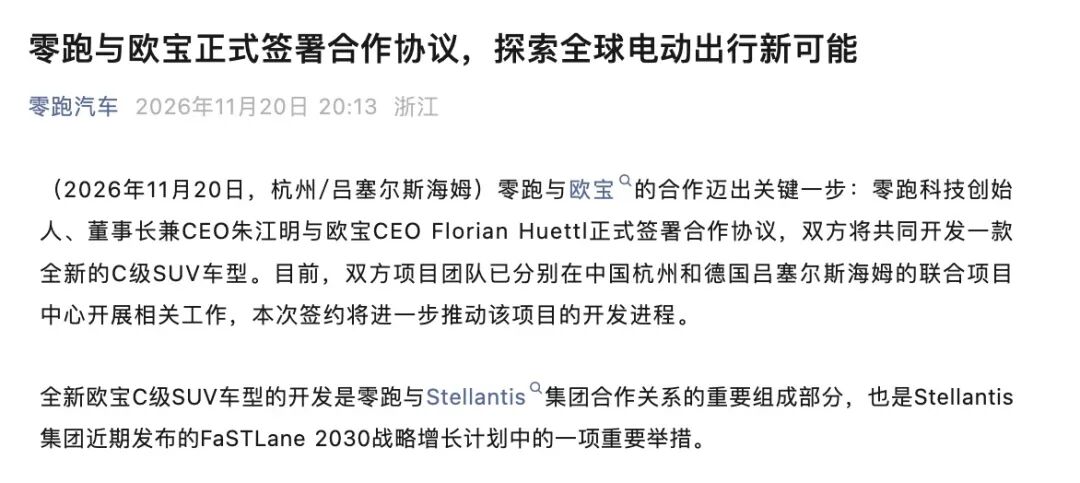
On the day the financial report was released, Leapmotor also announced cooperation with Opel. According to the plan, the two parties will jointly develop a new C-segment SUV model, expected to officially start sales in 2028, and produce it at the Zaragoza plant in Spain. According to previous media reports, it will be built on an electric platform derived from Leapmotor's B10, with Leapmotor completing the vehicle development and Opel responsible for exterior design, targeting annual output of about 50,000 vehicles. According to the announcement, the total consideration of the cooperation agreement between the two parties is 100 million euros.
This cooperation also opens a new revenue model for Leapmotor. Li Tengfei revealed that in addition to the 100 million euros in related transactions, there will also be subsequent parts transactions, with key components such as batteries to be supplied by Leapmotor International. This means that after Opel's new car begins mass production, Leapmotor will also be able to obtain continuous revenue.
Li Tengfei revealed that Leapmotor will have a major product offensive next year, describing next year's product plan as "very exciting." It is reported that the B series and C series will launch important models; existing B and A series models will also launch major facelift models next year. At the same time, Leapmotor's world model will be used across all product lines.
As for the domestic market, Li Tengfei holds a relatively optimistic attitude toward next year's auto market. The reason is that due to trade-ins, purchase taxes, and other factors, a large amount of substantive demand was consumed last year, causing weakness in the domestic market this year. Li Tengfei believes that as the domestic market stabilizes and recovers next year, and with the further introduction of purchase tax and subsidy policies, some demand from 2028 will be brought forward to next year. "But considering China's overall economic environment, returning to the 2025 level will not be easy," said Li Tengfei.
-
Overseas Revenue Tops 60%: What Is Driving TCL's Global Growth?
-
![]()
500 Yuan Cheaper, Triple the Sales? OSTA Xingmang's Debut—What Is Huawei Really Aiming For?
-
Are Wait-and-See Buyers Missing Out Big? Apple to Launch iPhone 18, 18e, and Air 2 Next Spring
-
![]()
"Cost Killer" Battles Rising Parts Prices: Leapmotor Q3 Revenue Hits 31.7 Billion Yuan, Profit at 40 Million Yuan
-
![]()
Guangdong Leads by a Wide Margin, Shanghai Dominates Finance, Beijing Giants Take the Lead
-
Industry | Space Cloud Industrialization Milestones Unveiled in Quick Succession as China's Space Computing Power Ecosystem Extends Across the Entire Value Chain
-
Alibaba.com's Next Stop: More Than Just Selling Goods
-
China's Smart Driving Crosses Germany's Threshold