Mid-to-Large MPV Starting at 319,800 Yuan: How Competitive Is the Xiangjie V8?
 11/23 2026
 378
On November 20, the Xiangjie V8 under HarmonyOS Intelligent Mobility was officially launched, positioned as a mid-to-large new energy MPV. It faces no shortage of competitors—including its own "sibling," the Zhijie V9, as well as established domestic mid-to-high-end MPVs such as the Denza D9, Voyah Dreamer, and Wey Gaoshan. According to official figures, presale orders for the Xiangjie V8 surpassed 8,200 units within 72 hours. On that data alone, the Xiangjie V8's post-launch sales should be well worth watching.
So how competitive is the Xiangjie V8 within its segment? Let's break it down.
The Xiangjie V8 launched with seven models in total, spanning extended-range and pure electric versions, with an official guide price of 319,800–429,800 yuan. As the third MPV under HarmonyOS Intelligent Mobility and the first MPV to carry the Xiangjie name, it undercuts the Zhijie V9's starting price of nearly 390,000 yuan—making the Xiangjie V8's 319,800-yuan entry point look decidedly affordable.
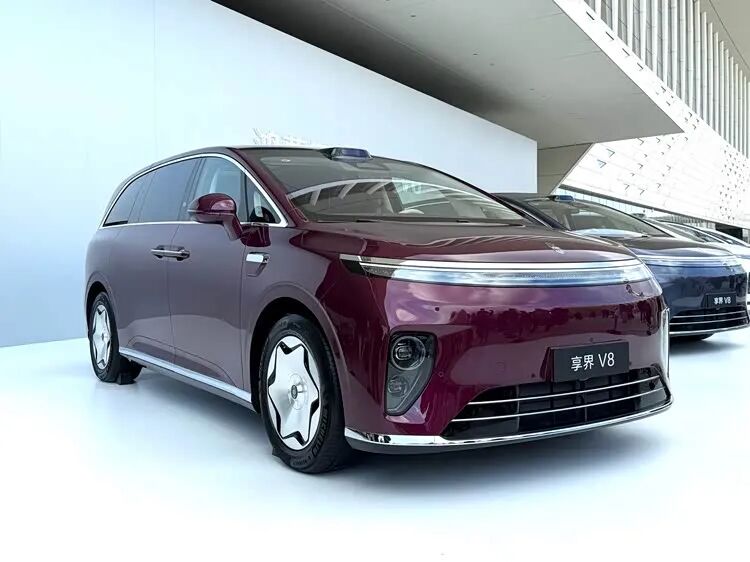
Despite its mid-to-large MPV classification, the Xiangjie V8 doesn't look overly bulky from the outside. The overall impression is clean and restrained, without a heavy business vibe—likely a deliberate reflection of its positioning as a "family smart flagship MPV." In terms of body dimensions, the Xiangjie V8 measures 5,335/2,005/1,825 mm (length/width/height) with a 3,250 mm wheelbase. Both its body length and wheelbase hold a fairly clear advantage among mid-to-large MPVs.
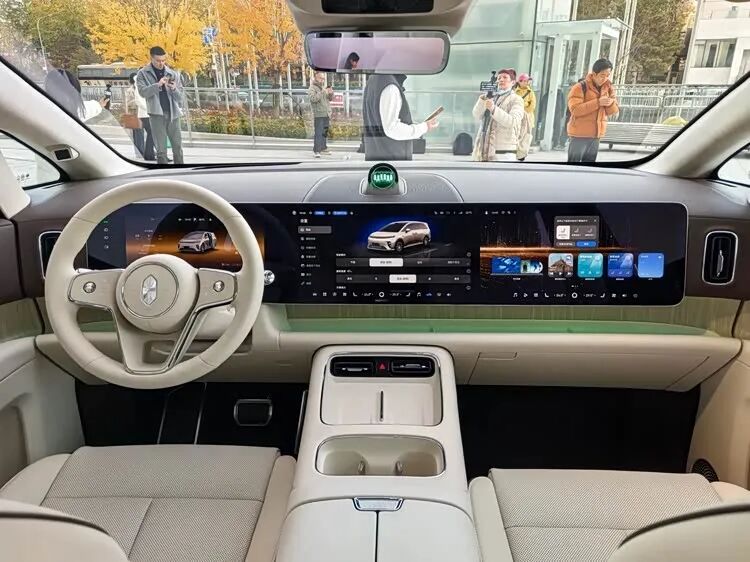
Inside, like the Zhijie V9, all Xiangjie V8 models come standard with dual 17.2-inch central control screens, and the infotainment system runs on the Huawei HarmonyOS cockpit. Whether judged by system smoothness or functional practicality, it sits firmly in the top tier among MPVs in its class. Features including steering wheel memory, first-row zero-gravity seats, ventilation/heating/massage for the first two rows, third-row seat heating, heat pump air conditioning, dual-side electric sliding doors, front and rear acoustic laminated glass, and magic carpet suspension are all standard across the Xiangjie V8 lineup.
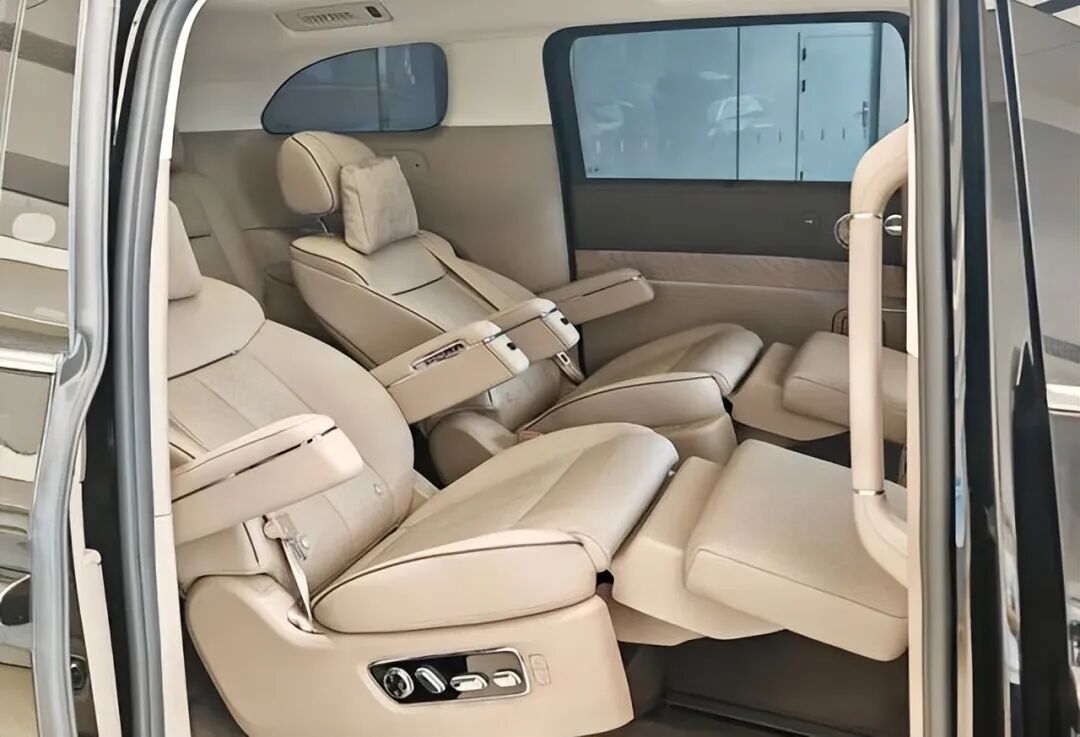
That said, the comfort of the two second-row captain's chairs clearly trails rival models. Only the second-row seats in the three Ultra+ trims come with electric armrests and lumbar, leg rest, and rotation adjustment; the other four configurations lack lumbar and leg rest adjustment entirely. By contrast, the Zhijie V9, Denza D9, and Voyah Dreamer all offer lumbar and leg rest adjustment as standard across the lineup.
In addition, features such as the HUD head-up display, 21.4-inch rear entertainment screen, and dual-chamber air suspension are not standard across the range either, appearing only on mid-to-high-end or top-trim models. The second-row zero-gravity seats and ±12-degree rear-wheel steering are likewise optional rather than standard.
As for intelligent assisted driving, although the Xiangjie V8 also carries the latest Huawei Qiankun ADS 5, once again only Ultra and above models get the 896-line dual-path image-level LiDAR, while Max and Max+ trims make do with a single in-cabin LiDAR. That setup can deliver highway and urban navigation-assisted driving, but it certainly cannot provide L3-level intelligent driving redundancy.
On the powertrain side, the extended-range hybrid models pair a 1.5T range extender with either a rear-mounted single motor or a front-and-rear dual-motor setup. Two-wheel-drive versions deliver 355 km of pure electric range and accelerate from 0 to 100 km/h in 8.4 seconds; four-wheel-drive versions reach up to 430 km of pure electric range and hit 100 km/h in 5.9 seconds. Pure electric models also come in rear-wheel-drive and four-wheel-drive forms: two-wheel-drive versions offer 830 km of pure electric range and a 0–100 km/h time of 8.4 seconds, while four-wheel-drive versions deliver 775 km and sprint from 0 to 100 km/h in 4.93 seconds.
Both extended-range and pure electric models use CATL power batteries, support 800V high-voltage fast charging, and offer a 6 kW external discharge function. So what do you make of the Xiangjie V8's competitiveness? Let us know in the comments.
Copyright statement: This article is original content by Chekuaiping. Please contact us for authorization before reprinting. Unauthorized reproduction is strictly prohibited, as is any form of plagiarism or misappropriation of text and images; otherwise, legal liability will be pursued. Some images in this article are sourced from the internet, and copyright belongs to the original authors. If your work has been used, please contact us to claim remuneration or request removal.
-
![]()
After a Bloodbath, Nvidia Wipes Out 18 Trillion Yuan in Value—Is the AI Feast Coming to an End?
-
![]()
Weekly Stock Review | Profit Margin 1.4%: When 'Golden September and Silver October' Becomes 'Golden September, Silver Losses'
-
![]()
Ultrafast Nonlinear Optical Technology Series, Part 108: Multi-Pass Cells Generate Terawatt-Class Sub-Two-Cycle Pulses
-
![]()
Why Do Voyah and Luxeed Still Need This "Birth Certificate" in 2026?
-
![]()
Mary Barra's Exit Looms as General Motors Hunts for a Successor
-
![]()
First-Tier Joint Ventures Launch Counteroffensive—What About Second-Tier Players?
-
![]()
A New Wave of Overseas Cars with a Full "Chinese Flavor" Is About to Debut at the Guangzhou Auto Show
-
![]()
Low Prices No Longer the Whole Story: Joint Venture EVs Are Finally Catching Up