AI Glasses: Starting to Take the Initiative
 10/13 2026
 381
381
A New Era of Interactive Transformation
By VR Gyro ZJ
A deadline casually mentioned during an ordinary chat becomes impossible to recall a few days later. In the past, this would require sifting through chat logs or confirming with colleagues. Today, simply asking AI glasses can retrieve the information.
Similar scenarios are already emerging in practical applications of current AI glasses. Leveraging long-term memory functions, some AI glasses can record daily conversations after user authorization and organize important information into searchable memories. Even further, AI can attempt to extract relevant information from conversations and proactively remind users later, even without explicit schedule or to-do creation.

To-Do Reminder from Thunderbird iO Image Source: VR Gyro
In the past few years, AI glasses manufacturers have invested heavily in enabling devices to understand user queries, recognize objects in view, and respond via voice or display. Entering 2026, more manufacturers are exploring how to provide assistance before users even ask. Meanwhile, academia is researching how AI can judge the right moment to intervene proactively or even initiate questions to users.
As AI gradually shifts from answering questions to participating in daily life, how far have today's proactive AI glasses advanced?
01
From Proactive Recording to Proactive Reminders: AI Glasses Begin to "Find Things to Do"
At Meta Connect 2026 in September this year, Meta announced the integration of its personal AI Agent Muse into its AI glasses.
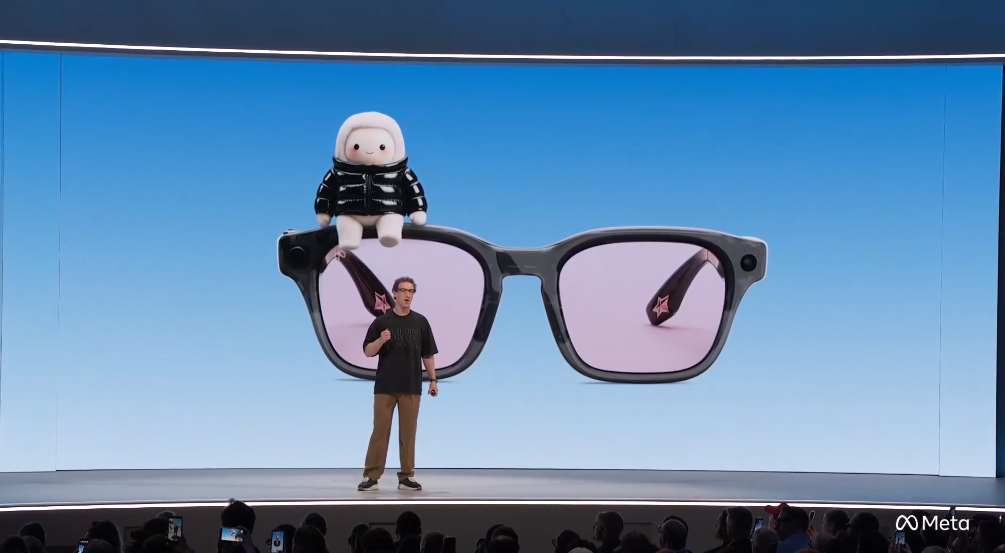
Image Source: Meta
According to Meta's vision, when users see products on shelves, event flyers, or shopping lists, Muse can understand their needs by combining visual information and invoke external applications to handle subsequent tasks. Meanwhile, Muse can continuously track user goals and make plans. However, these features have not yet officially landed on AI glasses. Based on the current performance of the mobile app, Muse's capabilities are already impressive.
Unlike traditional AI chat apps, Muse equips each user's chat window with an independent cloud computing environment, effectively providing AI with an autonomous computer. This means Muse can not only invoke large models to answer questions but also operate web pages, use software, execute multi-step tasks like a real person, and even continue working after users leave the chat interface, significantly expanding AI Agent's practical applications.
Recent data shows that Meta's AI agent app Muse surpassed 5 million downloads just 22 days after launch, far outpacing ChatGPT's 56 days and Grok's 103 days, setting a new record for the fastest growth in the AI sector. In terms of hardware, what Meta envisions is actually the direction for further integration of AI glasses with personal agents. In the domestic market, proactive AI has also begun to enter more specific daily scenarios.
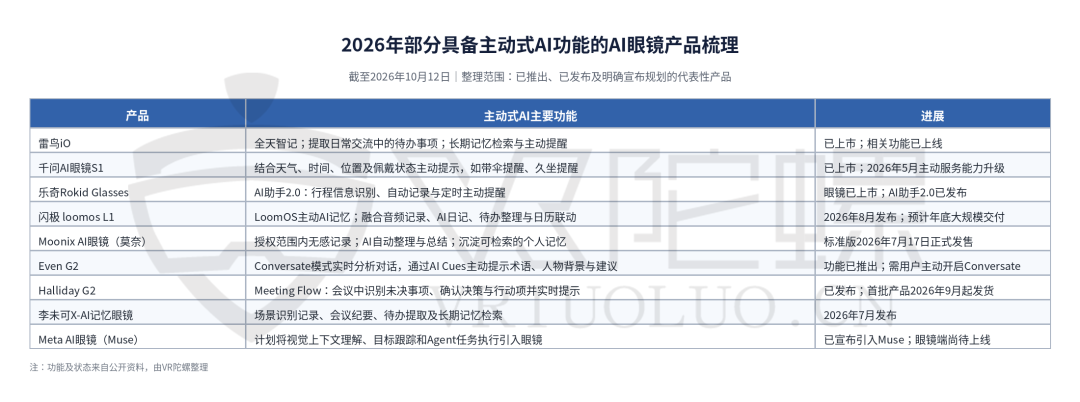
Image Source: VR Gyro
From these products, it is evident that current proactive AI mainly develops in two directions: one is enabling AI to remember users' past conversations and behaviors for later recall; the other is combining real-time environment, time, and user status to proactively provide reminders or suggestions.
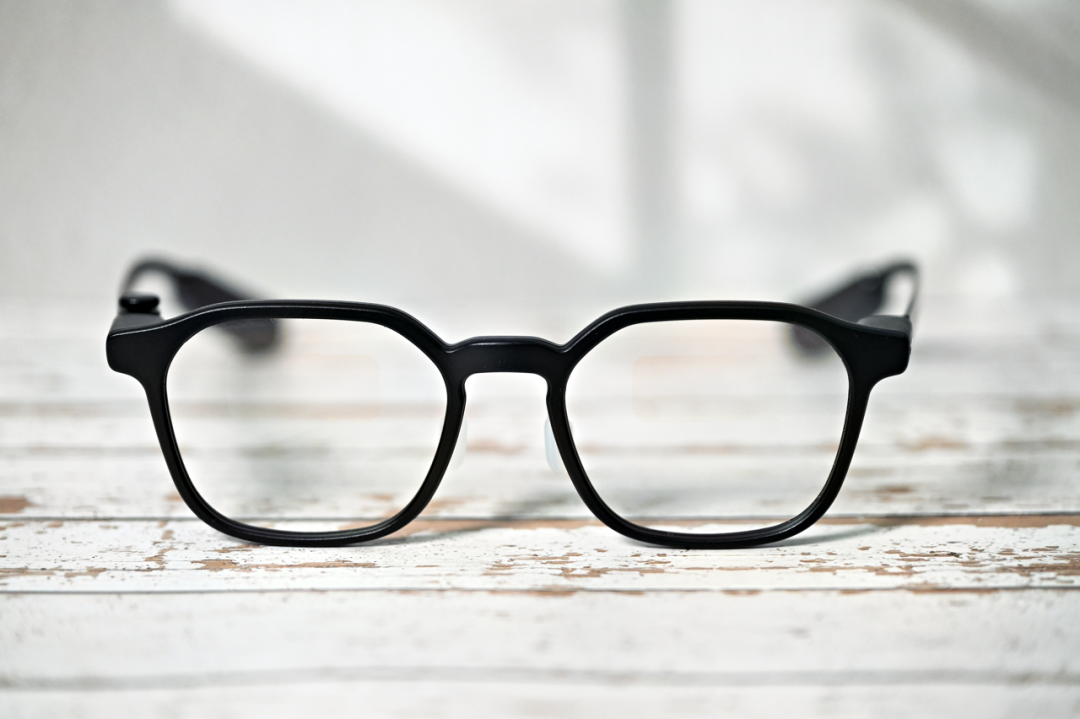
A typical example of the former is Thunderbird iO, released in August this year. Its "All-Day Smart Recording" function continuously records daily conversations after user authorization and organizes information about people, events, and times into long-term memory. In VR Gyro's previous evaluation, a usage scenario was demonstrated: an activity date confirmed in a meeting days earlier might slip users' minds, but by asking the glasses, they could retrieve the answer from previous conversation records.
Thunderbird iO Image Source: VR Gyro
Going further, the system can also extract to-do items from conversations and present them in subsequent summaries or reminders. For users, some unrecorded temporary arrangements now have a chance of being preserved.
The other path focuses more on real-time scene perception. For example, Qianwen AI Glasses S1 can combine information like weather, location, time, and wearing status to remind users to take an umbrella before going out or suggest appropriate activities after prolonged sitting. Rokid's AI Assistant 2.0 also incorporates automatic itinerary recording and timed proactive reminders, enabling glasses to provide relevant prompts based on travel plans.

Image Source: Rokid
Additionally, Even G2 and Halliday G2 introduce proactive prompts in conversation and meeting scenarios, while Li Weike's X-AI Memory Glasses attempt to reduce manual information recording through automatic scene recognition and long-term memory.
These functions are already changing how users interact with AI glasses, but the degree of proactivity still varies. Weather and itinerary reminders mainly rely on known triggers; long-term memory requires extracting useful information from scattered conversations; real-time conversation assistance involves understanding ongoing events and judging what deserves prompting. As for cross-scenario autonomous planning and task execution, exploration is still in its early stages.
As AI glasses take on more proactive services, the importance of continuous perception and long-term memory increases. AI needs to know what users are doing and what has happened in the past to further determine when and how to provide assistance. How to achieve these capabilities will be the next challenge for proactive AI glasses.
02
What Hurdles Remain for Proactive Decision-Making in Proactive AI?
From current products, it is clear that proactive AI can already function in some defined scenarios. However, enabling AI to further understand complex daily activities and independently judge when assistance is needed still requires solving numerous issues.
The first challenge is long-term memory accuracy. For example, if a user confirms a project deadline in a morning meeting, discusses modification requirements with colleagues in the afternoon, and then has the delivery time adjusted by a client the next day, AI needs to correlate events across different times and update previous memories with new information to provide timely reminders.
A 2025 CVPR paper, "EgoLife: Towards Egocentric Life Assistant," addresses this issue. The research team collected approximately 300 hours of daily life data from six participants over a week via AI glasses, covering scenarios like communication, shopping, and cooking. They proposed the EgoButler system to tackle understanding and retrieving long-term first-person perspective information.
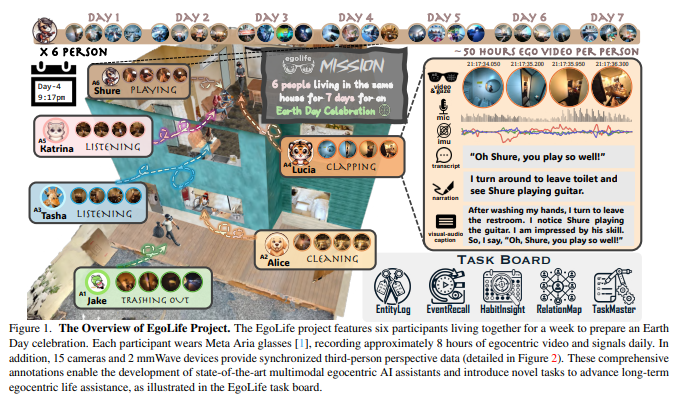
Image Source: Paper "EgoLife"
The study demonstrated the feasibility of using multimodal models combined with retrieval mechanisms to process long-term life information but also exposed current models' limitations in person recognition and cross-time information correlation. This means even if AI glasses can record vast amounts of daily information, accurately identifying connections and ensuring long-term memory remains updated is still challenging.
More complex than remembering information is judging when to intervene proactively. Currently, many proactive AI functions still rely on preset conditions or specific operating modes. For example, weather changes can trigger reminders, and AI can continuously analyze conversations during meetings. However, in more open daily environments, user needs are not always so explicit.
In July this year, researchers from Dalian University of Technology, the University of Tokyo, and Alaya Lab published the paper "Vinci2: Providing Proactive Assistance in Continuous Egocentric Videos." The paper focuses on proactive decision-making in continuous perception, where AI needs to independently judge whether to provide assistance based on users' current activities, past experiences, and long-term habits.
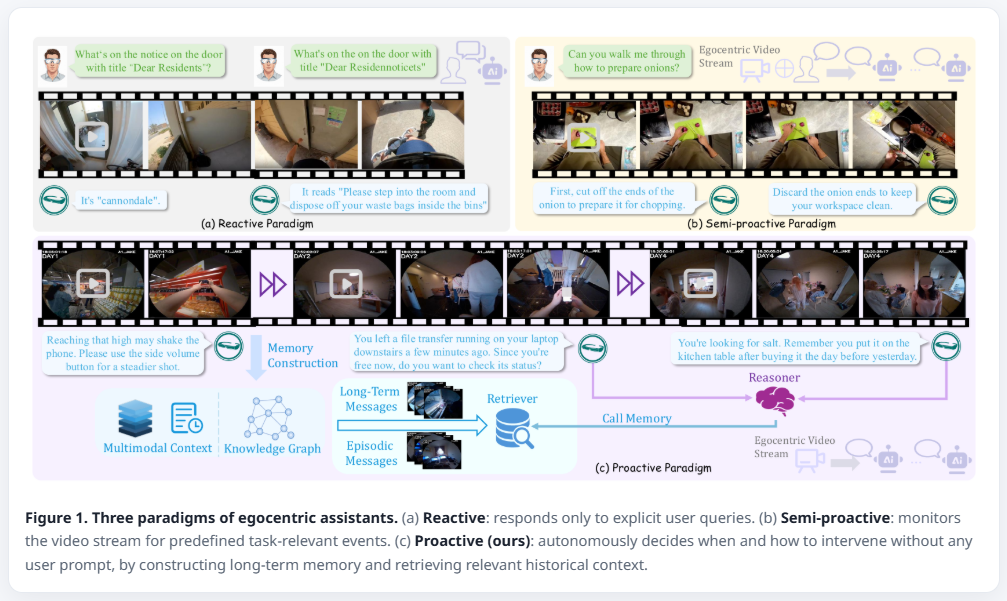
Image Source: Paper "Vinci2"
The research team established the EgoServe evaluation benchmark, containing over 3,000 proactive service instances across 10 scenarios, including immediate safety reminders, task guidance, memory retrieval, and long-term habit suggestions.
They also proposed the EgoMemo system, which continuously organizes information from first-person videos through multi-scale time summarization, semantic knowledge graphs, and visual information retrieval, then judges whether intervention is needed. For example, the system can issue a safety reminder when observing a user wiping a knife with bare hands or suggest optimizations based on long-term records if the user repeatedly performs a certain operation at different times.
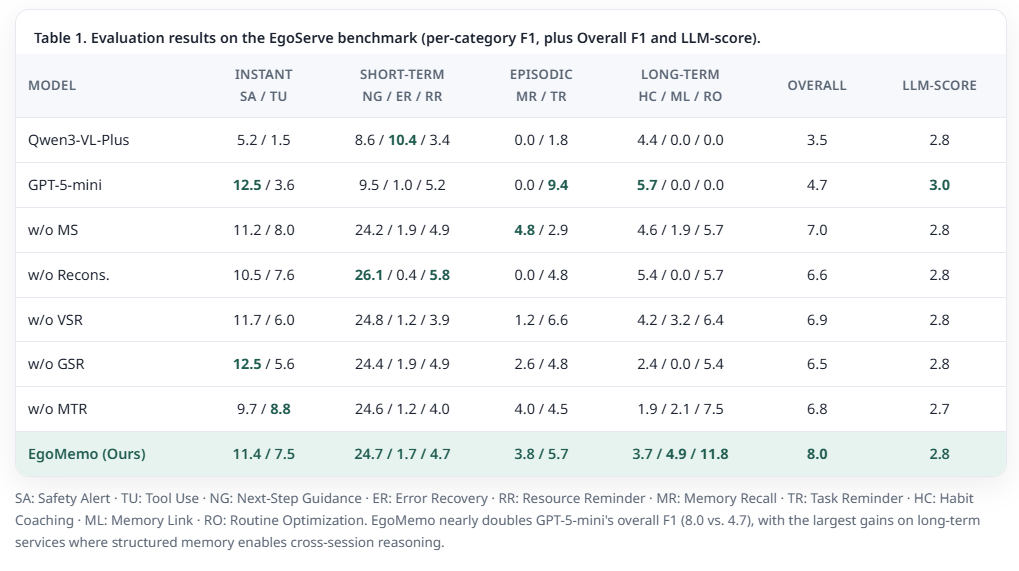
Image Source: Paper "Vinci2"
Experimental results showed that EgoMemo achieved a comprehensive F1 score of 8.0 on the EgoServe benchmark, outperforming GPT-5-mini's 4.7 and Qwen3-VL-Plus's 3.5. However, even the best-performing EgoMemo still scored relatively low overall. This result reflects that while combining long-term memory can improve proactive service performance, accurately judging when to intervene in complex, continuous real-world scenarios remains highly challenging.
Besides memory and timing judgment, proactive AI faces another issue: how to acquire more personalized user knowledge?
A paper published in September this year, "EgoAsk: Egocentric Teaching of Personalized Object Knowledge for Household Robots," proposes enabling AI to proactively identify its knowledge gaps and choose appropriate moments to ask users questions.
This research primarily targets household robots. Since robots struggle to pre-understand each household's habits, the research team attempted to share users' first-person perspectives via AI glasses, identify objects users are interacting with and activities they are performing, and then have robots proactively inquire about object purposes or ownership. In experiments involving 18 participants, this approach reduced users' burden of continuously judging what robots needed to learn and minimized the need for Memories afterwards (post-event recall).
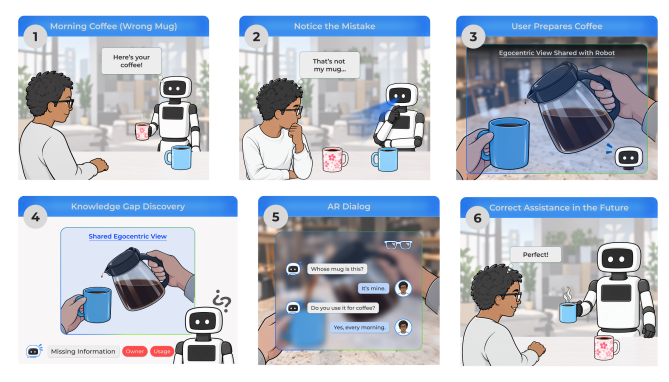
Image Source: Paper "EgoAsk"
Although EgoAsk has not been applied to consumer-grade AI glasses, it offers another research approach: when AI is uncertain about something, it can proactively confirm with users during daily interactions and gradually supplement personalized knowledge.
From these studies, it is clear that technical challenges like long-term memory, proactive decision-making, and personalized learning already have various solution approaches. However, current results are mainly validated in specific tasks and experimental environments, with a gap remaining before stable application in complex daily environments.
For AI glasses manufacturers, the next challenge is integrating these capabilities into a unified system while maintaining accuracy and stability in daily use. Moreover, when these technologies enter consumer products, manufacturers must also confront practical limitations in hardware resources, user experience, and privacy protection.
03
What Other Challenges Remain for Proactive AI to Truly Integrate into Daily Life?
For AI glasses designed for prolonged wear, continuous perception first introduces power consumption and computational pressure.
Proactive AI needs to constantly acquire and process information about the user's surroundings, especially when involving first-person visual understanding, where cameras, sensors, and related computing modules must operate continuously. However, AI glasses have strict limitations in battery capacity, heat dissipation space, and weight. Even if some computational tasks are offloaded to smartphones or the cloud, data transmission, network latency, and energy consumption remain unavoidable.
This explains why many manufacturers currently choose to start with voice, meeting, time, and location scenarios. Compared to continuously processing complete video feeds, acquiring and processing these types of information is more cost-effective and easier to limit the scope of proactive services.
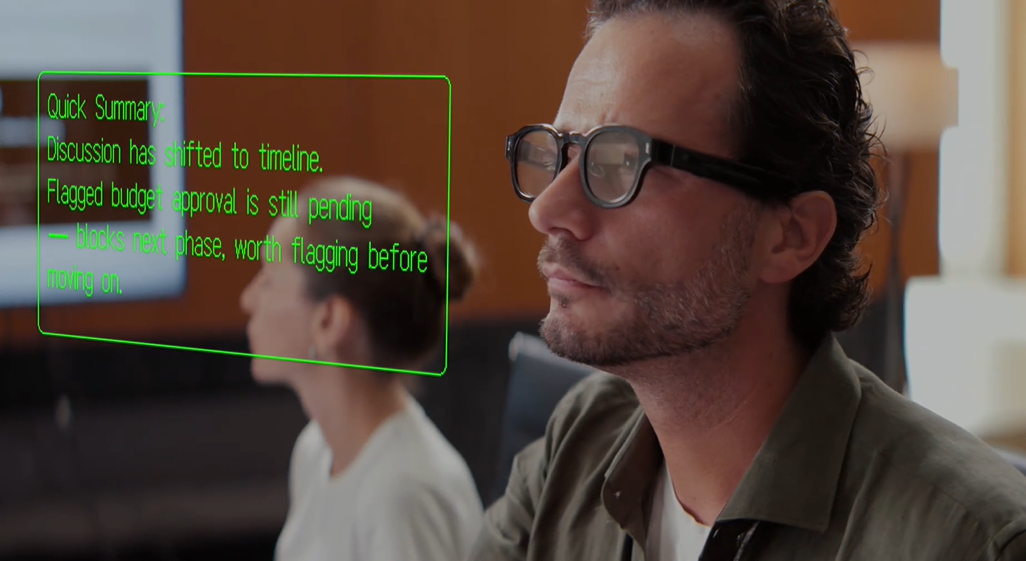
Image source: Halliday
In addition to hardware limitations, proactive AI also needs to strike a balance between accuracy and frequency of intervention. For example, when a user mentions in a chat, 'I might schedule a meeting next week,' versus explicitly agreeing, 'Let's have a meeting at 10 a.m. next Monday,' the corresponding handling methods should differ. If the AI treats an unconfirmed plan as a formal arrangement and continuously reminds the user about it later, it may instead add a new burden.
Similarly, even if the reminder content is accurate, it does not necessarily mean the timing is appropriate. Sudden prompts that appear when the user is communicating with clients, handling urgent matters, or engaged in private conversations could potentially cause disturbances.
Moreover, long-term memory also involves privacy and data security. The content recorded by AI glasses may include conversations and behaviors of colleagues, friends, and other individuals in public places. When the device starts continuously collecting and organizing this information, questions about when recording starts, where the data is saved, who can access it, and whether users can delete memories at any time will all affect the actual use of the product.
In the future, as AI glasses further integrate with personal agents and begin to assist users in sending messages, modifying schedules, and even shopping and making payments, operational permissions and confirmation mechanisms will also need to be more clearly defined. These issues determine the speed at which proactive AI can be implemented and also influence whether users are willing to use related functions over the long term.
04
Epilogue
From the example at the beginning of the article, it can be seen that nowadays, AI glasses can already help users retrieve information from conversations that took place days ago, extract to-dos from scattered dialogues, and actively provide reminders in some explicit scenarios. As long-term memory, environmental perception, and agent capabilities continue to develop, future AI glasses have the opportunity to handle more continuous daily life affairs.
However, for a pair of glasses that needs to be worn daily, whether proactive services can become a genuine usage habit for users still requires validation in more real-world scenarios. After all, when AI begins to actively participate in daily life, it also needs to learn to judge which things are worth remembering, when to provide reminders, and when to remain silent.
Of course, from a technological development perspective, AI glasses that are now marketed with proactive services as a selling point have already taken a significant step forward compared to products from two years ago that mainly relied on user commands to complete single-round Q&A sessions. They are also beginning to truly evolve towards an all-weather, ideal companion-style personal AI assistant.
-
![]()
Who is Taking Away the Profits of Car Companies: Battery or Intelligent Driving?
-
![]()
Tencent Successively Discontinues Two AI Agents
-
![]()
Has the Brake Pedal of JAC Motors Really Broken? The Market Will Teach Every Automaker with 'Fatal Flaws' a Lesson
-
![]()
Changsha’s Emerging Powerhouse in Computing: Cancels RMB 3 Billion Contract!
-
![]()
Production Capacity Can’t Keep Up with Orders! This Optical Enterprise Soars 449% on Debut
-
![]()
Q3 Report | Yuanjie Technology's Net Profit Expected to Surge Fivefold, Transitioning from 'Shortage Dividends' to 'Delivery Challenges'
-
![]()
The Computing Power Price War Hits Silicon Valley
-
![]()
The AI Office Sector is Forming a 'Three-Pillar' Landscape