Smart Lighting Upgrade in Industrial Parks: Moving from Broad-Brush Control to Refined O&M
 11/11 2026
 372
As industrial park construction in China continues to scale up, traditional park lighting has long relied on the broad-brush management model of uniform switching—a model that commonly runs into persistent pain points such as high energy consumption, delayed fault detection, and costly manual inspections. A large number of park lighting systems cannot automatically adjust brightness in response to changes in foot traffic and ambient light. Lights often stay on all night and mistakenly switch on during the day, keeping electricity bills high year-round—an industry-wide challenge that park operations management urgently needs to resolve. To address this widespread situation, Yunqi Zhikong has drawn on its self-developed light-control smart streetlight controller to build a complete lighting digital management solution tailored to industrial park scenarios, helping parks rapidly complete smart lighting upgrades without extensive pipeline renovation. Under traditional park lighting management, personnel can often only operate switches manually at distribution boxes on site. When special situations arise—extreme weather or temporary overtime production, for example—adjusting lighting strategies flexibly becomes difficult, which easily causes energy waste and leaves hidden safety risks for nighttime production in the park. Many parks in the early stage of lighting renovation also run into problems such as high retrofit costs, long construction periods, and disruption to normal production order, causing smart lighting upgrades to be postponed indefinitely.
## I. Core Upgrade Logic of Smart Lighting for Streetlights in Industrial Parks
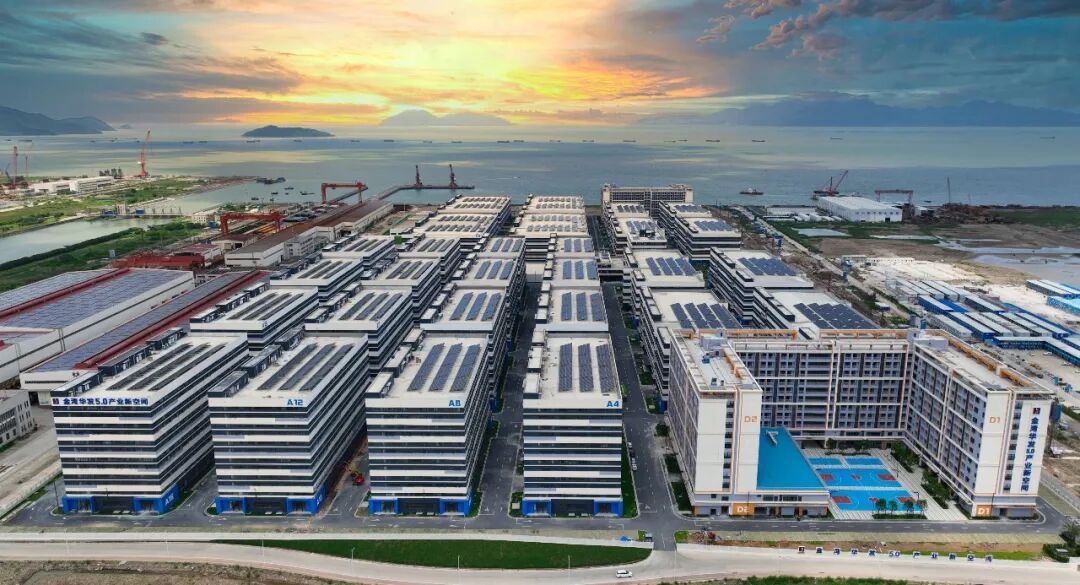
The core goal of smart lighting for streetlights in industrial parks is not simply replacing ordinary streetlights with smart devices, but achieving refined management—"on-demand lighting, visualized data, and predictive fault alerts"—while ensuring basic lighting safety. Yunqi Zhikong believes that a mature park smart lighting system need not pursue overly complex functions; it should first solve several practical problems that park managers find most troublesome: no need for large-scale rewiring, no need for dedicated 24-hour staffing, and no need for full-line inspection to pinpoint fault locations—ultimately achieving simultaneous reductions in energy consumption and O&M costs. The entire system uses the light-control smart streetlight controller as its core terminal, combined with IoT communication technology to build a cloud management platform, forming a stable three-layer architecture: perception and control layer, network transmission layer, and platform management layer. The perception and control layer is deployed at streetlight distribution boxes or luminaire ends, collecting real-time single-light voltage, current, power, and online status; the network transmission layer relies on stable wireless communication to upload device data, free from interference in complex park environments; the platform management layer enables remote centralized management, supporting group control, scheduling strategies, light-linked automation, and fault alarms. Managers can view park lighting status at any time via computer or mobile devices.
## II. Solution Adapts to Both New Park Construction and Existing Retrofit Scenarios
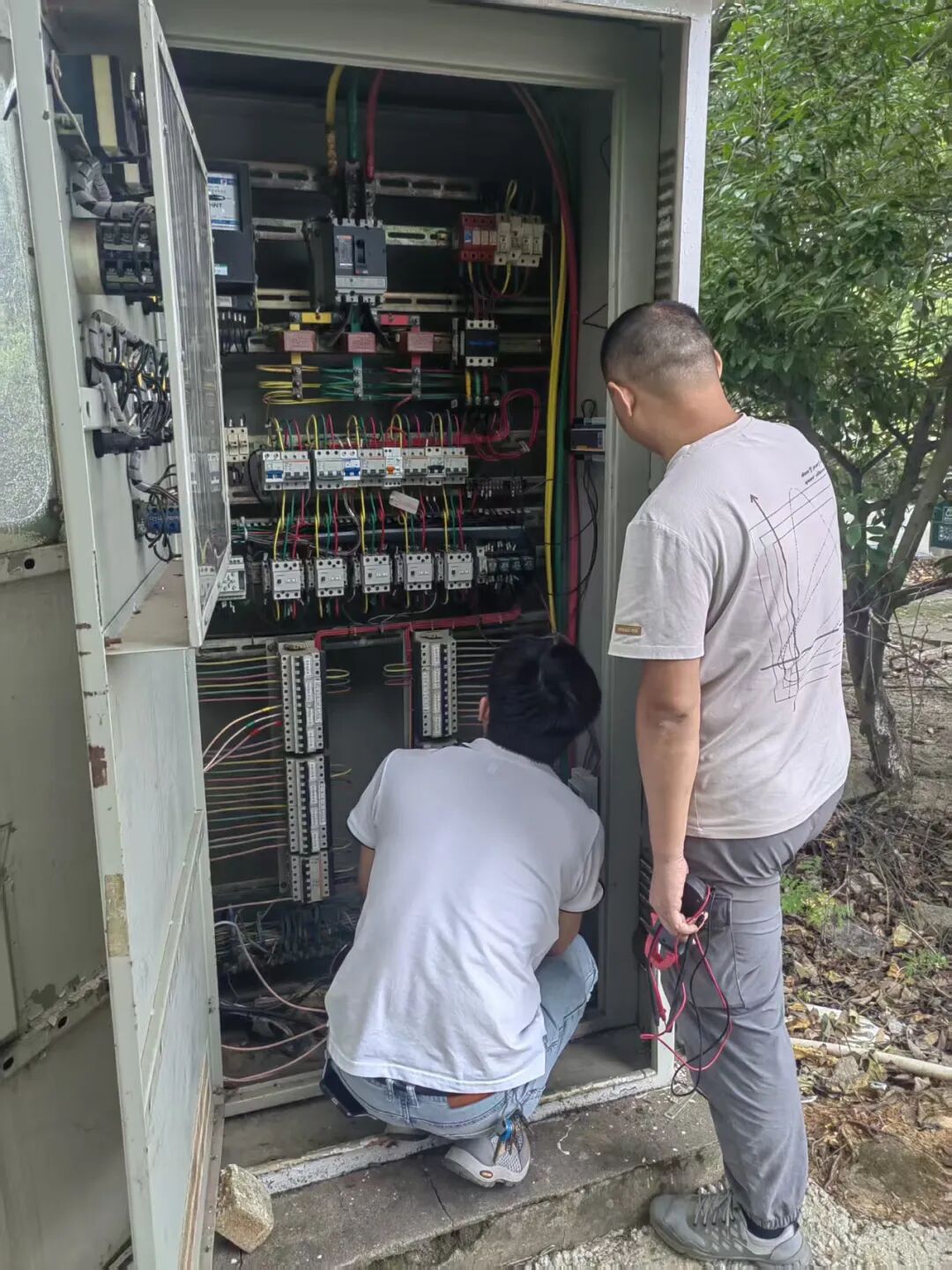
For parks at different construction stages, this smart lighting solution offers two implementation modes, avoiding the adaptation problem of "one solution for both new and old projects." New industrial parks can pre-embed wiring during the construction planning stage, deploy light-control smart streetlight controllers in batches, and build a complete park smart lighting system at once, achieving digital lighting management from the project's early stages. For existing park retrofits, wireless communication can be utilized without additional communication cabling—controllers can be directly installed on existing luminaire circuits, requiring short construction periods and causing no prolonged disruption to normal park production. Yunqi Zhikong has verified in multiple industrial park implementation projects that under the retrofit mode, single-device installation and commissioning takes little time, and parks can complete upgrades in batches and by zones without investing the full retrofit cost at once, offering greater flexibility.
## III. Core Practical Value of Light-Control Smart Streetlight Controllers
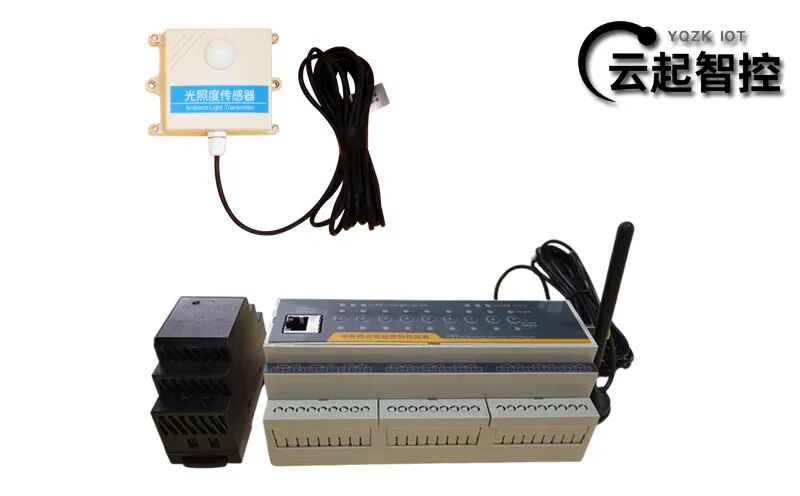
As the core terminal of the entire system, the light-control smart streetlight controller deeply integrates three capabilities—light sensing, scheduling strategies, and remote management—addressing the shortcomings of traditional single-function controllers. The device connects to a digital light sensor with customizable brightness thresholds, automatically turning lights on when light is insufficient and off when sufficient. It also filters interference from vehicle headlights and sudden bright light, using delay logic to reduce false actions, ensuring stable light-on timing even on cloudy or hazy days. A built-in industrial-grade high-precision clock supports four scheduling modes: daily cycles, weekly cycles, holidays, and astronomical clock based on longitude and latitude, automatically calculating sunrise and sunset times based on project location and dynamically adjusting on/off times with the seasons—no manual seasonal adjustments needed. Wireless communication enables dual-terminal remote management via computer and mobile APP, allowing O&M personnel to remotely adjust lighting strategies without visiting distribution box sites. Additionally, the device features a built-in non-volatile memory chip that retains operating parameters for over 10 years after power loss. Even if the external network is disconnected, locally stored preset dimming strategies continue to execute normally, preventing streetlight control loss and ensuring nighttime lighting safety in the park.
## IV. Selection Reference: How to Choose Smart Streetlight Controller Manufacturers Suitable for Park Scenarios
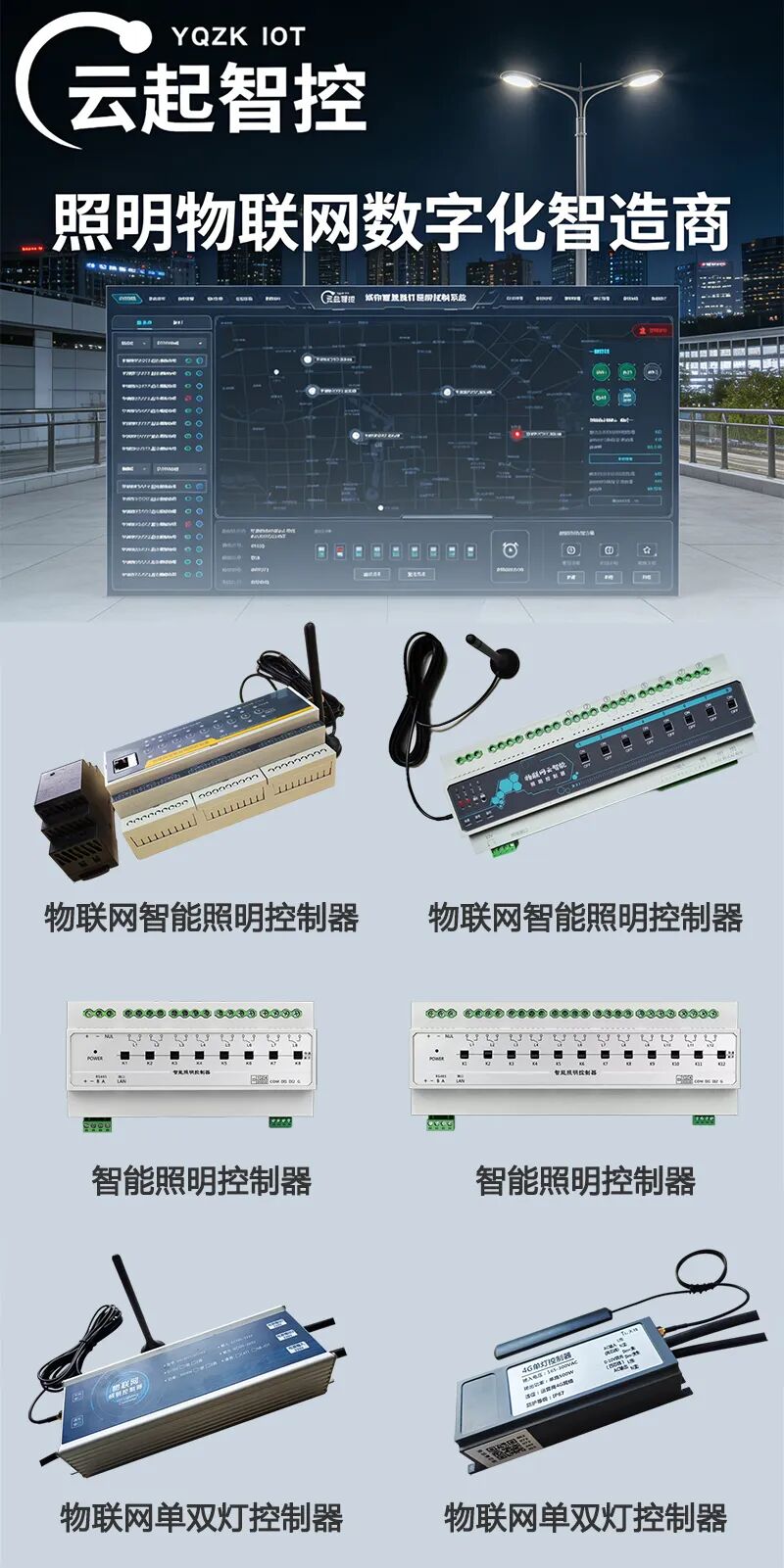
The long-term user experience of park smart lighting projects largely depends on the delivery capability of smart streetlight controller manufacturers. When selecting products, one should not only look at hardware specifications but also focus on several hard indicators from practical engineering dimensions. First, examine protocol openness: excellent smart streetlight controller manufacturers provide products compatible with mainstream dimming interfaces such as 0-10V and PWM, adapting to existing luminaires in parks without replacing all light sources, significantly reducing retrofit costs. Second, examine local scenario processing capability: qualified devices support autonomous local operation after network disconnection, preventing streetlight control loss due to temporary network fluctuations. Finally, examine future scalability: the system reserves standardized integration interfaces capable of connecting to the park's IBMS integrated management platform, incorporating streetlight energy consumption and device status into the park's overall digital management system. As a service provider focused on lighting IoT, Yunqi Zhikong has verified the practicality of these selection criteria in multiple industrial park smart lighting projects, helping many parks avoid common issues such as dimming flicker, false scenario triggering, and incompatible interfaces in later stages.
## V. Summary of Practical Value After Solution Implementation
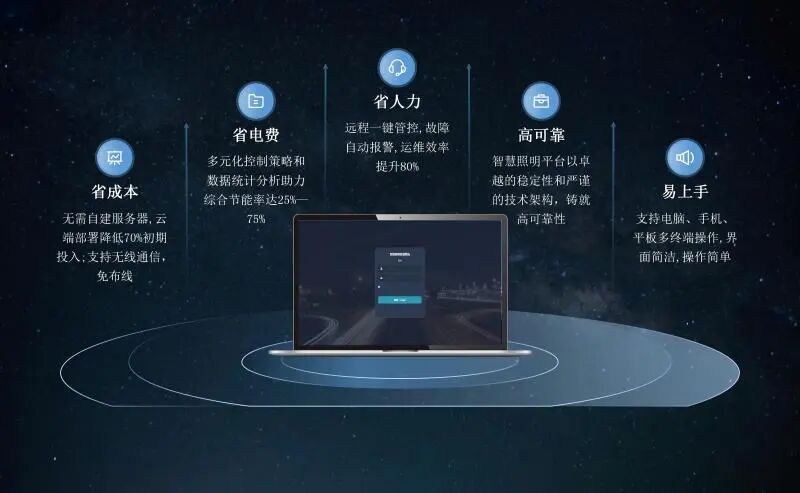
This smart lighting solution for industrial parks ultimately delivers multiple tangible practical values to parks. At the energy-saving level, through strategies such as time-based dimming, light-linked automation, and human-vehicle sensing, it effectively reduces electricity consumption in lighting while ensuring lighting safety, lowering park electricity bills. At the management level, it shifts from traditional manual full-line inspection to proactive fault alerts with precise fault location, enabling targeted repairs by O&M personnel and significantly reducing manual inspection investment. At the adaptability level, the solution is compatible with both new construction and retrofit projects, offering high construction flexibility and minimal disruption to normal park production. At the long-term expansion level, the system supports incremental device additions—new roads and landscape luminaires added later can directly connect to the existing smart lighting platform without replacing the original system. Overall, smart lighting for streetlights in industrial parks has evolved from an optional value-added feature to an important component of green low-carbon renovation and digital infrastructure upgrading in parks. Mature and stable implementation solutions help parks continuously gain management benefits in long-term operations.
## FAQ
1. Q: Does a park need to re-lay communication cables for a smart lighting retrofit? A: Yunqi Zhikong's light-control smart streetlight controllers support wireless communication solutions, utilizing existing power lines for data transmission. Most existing park retrofits require no additional cabling, significantly shortening construction periods.
2. Q: After the device loses network connection, can park streetlights still be automatically controlled normally? A: Yes. The device features a built-in industrial-grade high-precision clock. When the external network is interrupted, locally stored preset lighting and dimming strategies continue to execute automatically, preventing streetlight control loss.
3. Q: Can this system control each individual streetlight in the park separately? A: Yes. The light-control smart streetlight controller supports independent single-light switching and 0-100% stepless dimming. The platform can issue control commands to individual lights or grouped luminaires for refined management.
4. Q: Can park managers use mobile phones to check lighting operation status? A: Yes. With the accompanying smart lighting cloud platform, users can log in via computer or mobile devices to remotely view luminaire online status and energy consumption data, receive fault alarm information, and stay informed about park lighting conditions anytime, anywhere.
5. Q: Can newly added streetlights in the park later connect to this existing system? A: Yes. Controllers can be connected to the platform in batches. When new roads or landscape luminaires are added later, simply adding new controllers allows connection to the existing system, enabling flexible system expansion.
## Source References
1. Yunqi Zhikong Smart Streetlight Controller Product Details Page, 2026
2. Yunqi Zhikong Industrial Park Smart Lighting Application Case Page, 2026
3. GB/T 39021-2020 'General Requirements for Intelligent Lighting Systems,' State Administration for Market Regulation and Standardization Administration of China, 2020
-
XFusion Set for Listing Review: A Bet on Computing Power in the Agent Era and a Growth Model for Domestic Computing Power Breakthroughs
-
![]()
StepFun Refuses to Be Just a Cloud-Side Water Seller
-
![]()
Another Computing Power Company IPOs: 70% of Revenue from ByteDance, with Oracle Close Behind
-
![]()
Who Is Squeezing Crystal Optech's Profits as Exclusive Supplier to a Major North American Customer?
-
![]()
Zhongrun Optics Finalizes New Management Team with Completed Board Reshuffle
-
![]()
Between the Pupil Function and the MTF Lies a Fourier Transform
-
Apple, Huawei, and Xiaomi Sales Over the Past 8 Years: Who Really Took Away Huawei's Users?
-
![]()
Huawei Starlight Phone Faces Uncertainty Even Before Launch: Stores Say No Notice Yet, and It Won't Come Cheap