China’s Autonomous Delivery Vehicles Set Foot in Europe
 09/17 2026
 383
383
The establishment of Neolix’s European headquarters represents more than just market expansion—it signifies the export of an entire industrial ecosystem.
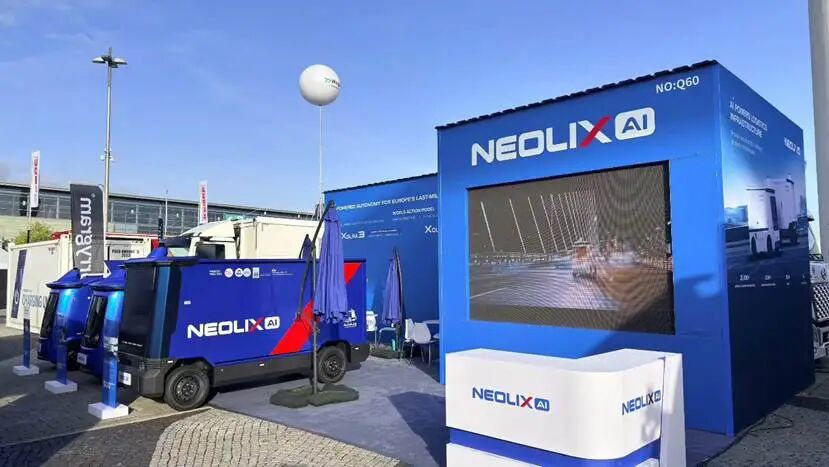
On September 14, 2026, at the Hannover International Transportation Expo, Neolix made a highly anticipated announcement in China’s autonomous driving sector: its European headquarters would be based in Luxembourg. Simultaneously, the Brussels AutoLog pilot project was launched, with L4 RoboVans set to deploy on the streets of this European “capital” in the fourth quarter of 2026, testing last-mile delivery and waste collection scenarios.
This is no ordinary overseas market entry.
For those tracking the global expansion of Chinese companies, it’s clear that many have prioritized the Middle East or Southeast Asia in recent years. While successful implementations have emerged in these regions—as well as in Japan—only a handful of enterprises have chosen Europe as their primary destination.
Neolix’s approach stands out. By basing its European headquarters in Luxembourg, the company is relocating its compliance, operations, partner networks, and commercialization teams directly to Europe. As He Yong, Neolix’s European head, explained, this initiative goes beyond merely deploying vehicles; it’s about understanding “what it takes to safely and efficiently operate autonomous logistics in European cities.”
Translation: This isn’t just about selling hardware—it’s about building a replicable operational system.
Why Now?
Two key factors are driving this strategic move.
The first is Europe’s own pressing needs. Elke Van den Brandt, Brussels’ Minister of Mobility, stated bluntly: “Brussels has pedestrianized its city center and reduced motor vehicle traffic by a quarter, yet we still face last-mile challenges in deliveries, waste collection, and urban freight.” This isn’t unique to Brussels. In European cities, last-mile delivery costs account for 60–70% of total parcel delivery expenses, while tightening emissions, road access, and traffic regulations demand quieter, cleaner, and more space-efficient solutions.

The second factor is the easing of technical regulations. On June 24, 2026, UNECE WP.29 adopted the world’s first international regulatory framework for fully autonomous driving systems (ADS), which took effect in late July. This marked the first unified standard bridging the gap between “testing” and “commercial deployment.” France followed in August with a decree certifying autonomous delivery vehicles, while Germany’s KBA approved Einride’s L4 cab-less trucks for public road operations in September. Europe is transitioning from “cautious observation” to “regulated openness.”
Neolix’s timing in announcing its European headquarters could not be more precise.
Low Cost, But Not the Only Advantage
When discussing the global expansion of Chinese autonomous delivery vehicles, cost is often the first consideration. Neolix has reduced its per-vehicle cost to below $10,000, a drop of over 50% from two years ago. According to Equbo Intelligence, the RoboVan’s total bill of materials (BOM) cost is under $30,000, with operational costs as low as $0.50 per kilometer. Given Europe’s high labor costs, this represents a significant competitive edge.
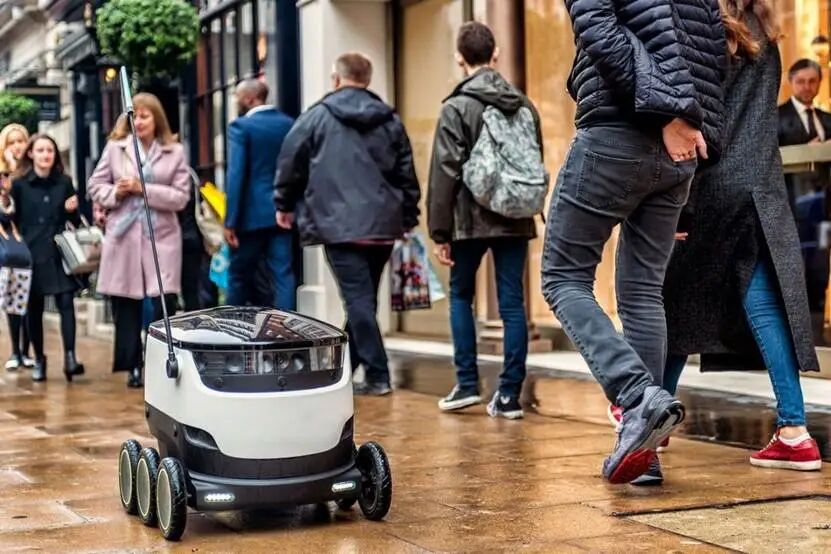
However, cost advantages alone are merely an entry ticket, not a guarantee of success. Europe has local players. Estonia’s Starship Technologies, for example, has completed over 10 million deliveries across the UK, Germany, Switzerland, Sweden, and Finland. By 2026, it had partnered with Uber Eats to deploy sidewalk delivery robots in multiple European countries. While Starship focuses on small sidewalk robots—differing from Neolix’s RoboVans in vehicle standards, payload, and scenarios—its accumulated regulatory experience, community relations, and operational data provide a real first-mover advantage.
Yet Neolix is not starting from scratch. The two companies aren’t directly competing: Starship validates “light sidewalk delivery,” while Neolix addresses “how vehicle-grade autonomous vehicles integrate into urban freight systems.” Neolix’s true edge lies not just in cost but in adapting its proven vehicle capabilities, cost structures, and operational experience from large-scale Chinese operations to Europe. Yu Enyuan, Neolix’s founder, once stated in an interview that Neolix’s global model follows an “ecosystem collaboration approach.” “We’re not exporting a single product but an entire ecosystem,” he said. “We bring China’s mature smart logistics infrastructure chain overseas, offering a full solution for autonomous vehicle deployment. This includes telecom providers, cloud services, positioning services, and even charging stations—many overseas locations lack these. We’re going global as an ecosystem.”
The real question isn’t “how much cheaper Chinese vehicles are” but whether Chinese teams can implement a proven operational system within Europe’s regulatory and cultural framework.
The Real Challenge in Brussels
The AutoLog pilot route is strategically designed: connecting a warehouse near the South Station to shops on Brussels’ southern city edge. The key term here is “complementary”—Neolix’s RoboVans aren’t replacing cargo bikes but are designed to work alongside existing urban delivery solutions, aiming to reduce unnecessary trips, ease congestion, and lower emissions and noise.
This positioning is both clever and pragmatic. European cities are naturally wary of “technology replacing humans” but far more receptive to “technology optimizing system efficiency.” As Nour Eddine Layachi from STALEM bluntly put it: “The solution isn’t simply replacing one vehicle type with another but organizing freight flows differently.”
In other words, Neolix isn’t selling vehicles in Brussels—it’s selling a freight reorganization plan.
This means the pilot’s success depends not on vehicle performance but on convincing urban planners, merchants, and residents to accept a new logistics model. This is an operational, communicational, and even urban political challenge—not an algorithmic one.
The Real Signal
Neolix has deployed approximately 27,000 RoboVans globally, accumulating over 230 million kilometers across 320 cities in nearly 20 countries. This scale makes it a global leader. However, the European headquarters represent a strategic leap forward.
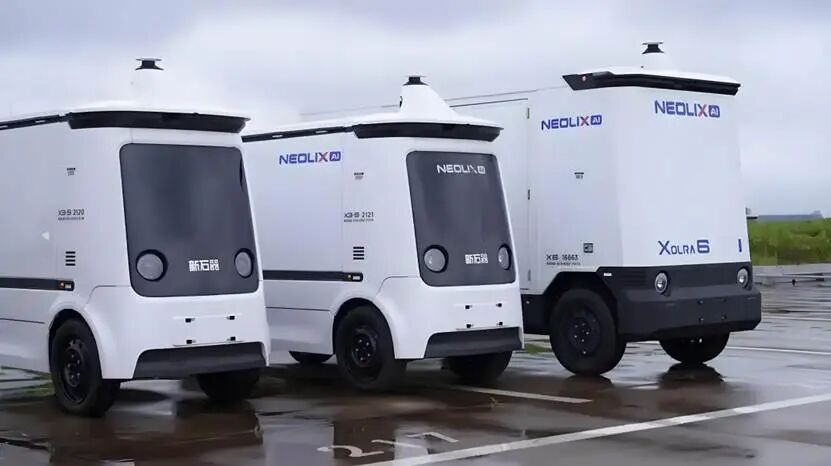
Competition in China’s autonomous delivery vehicle market has shifted from “selling vehicles” to “selling services” via Robotics-as-a-Service (RaaS) models. The duopoly of Jiushi Intelligence and New Stone has pushed per-vehicle costs to their limits, making price wars almost inevitable. Going global, particularly to Europe, is a strategic choice to escape domestic price wars and tap into higher-value markets.
But Europe isn’t the Middle East. While the Middle East allows rapid scaling through government relations and capital, Europe demands patience, compliance, and locally built trust. Neolix aims to deliver over 50,000 units overseas by 2027—a figure that, if achieved, would mark the first large-scale commercial operation of Chinese autonomous delivery vehicles in a developed market.
However, the Brussels pilot won’t launch until Q4 2026, with federal testing authorization still under review. The true test will come after the 12-month pilot ends: whether it secures approval for commercial operations and whether the Brussels model can replicate in Germany, France, and the Netherlands.
Neolix’s European move is about building a “system,” not just a “product.” And Europe’s last-mile logistics are waiting for an answer.
-
Huawei Relinquishes AITO, Seres Assumes Control
-
Entering a New Phase of Auto Exports: BYD and Chery Pursue 'Vehicle Parity Growth'
-
Seres’ Ascendancy in AITO: A Journey Built Over Time
-
![]()
An Apple Product Seven Years Late Enters a Market Where It Can't Set Prices
-
![]()
2026 China Automotive Net Promoter Score (NPS) Index Research: Product Experience Fuels Word-of-Mouth, Brand Marketing Holds the Key to Breakthroughs
-
![]()
Beauty Joins In, ByteDance Ramps Up Investment Game
-
![]()
Jensen Huang Hits Back at Ray Dalio: Is AI the Next Big Financial Bubble?
-
![]()
Battle for the Gateway to the World Model: ByteDance Leans Left, JD.com Leans Right