Why build another training ground in Hong Kong when over 100 have already been established on the mainland?
 10/19 2026
 504
This is the 150th original article from Thinking AI Society
Approximately 1,386 characters in full text, estimated reading time: 5 minutes
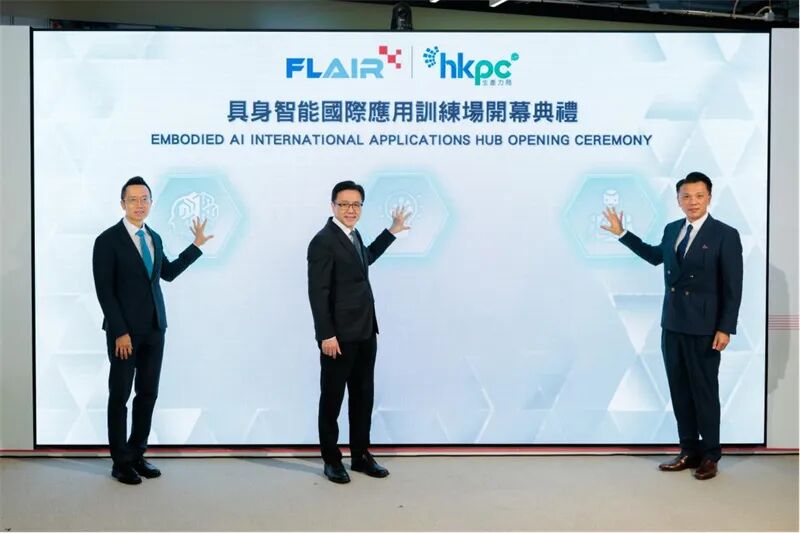
On October 15, Hong Kong's first 'Embodied AI International Application Training Ground' opened at the HKPC Building.
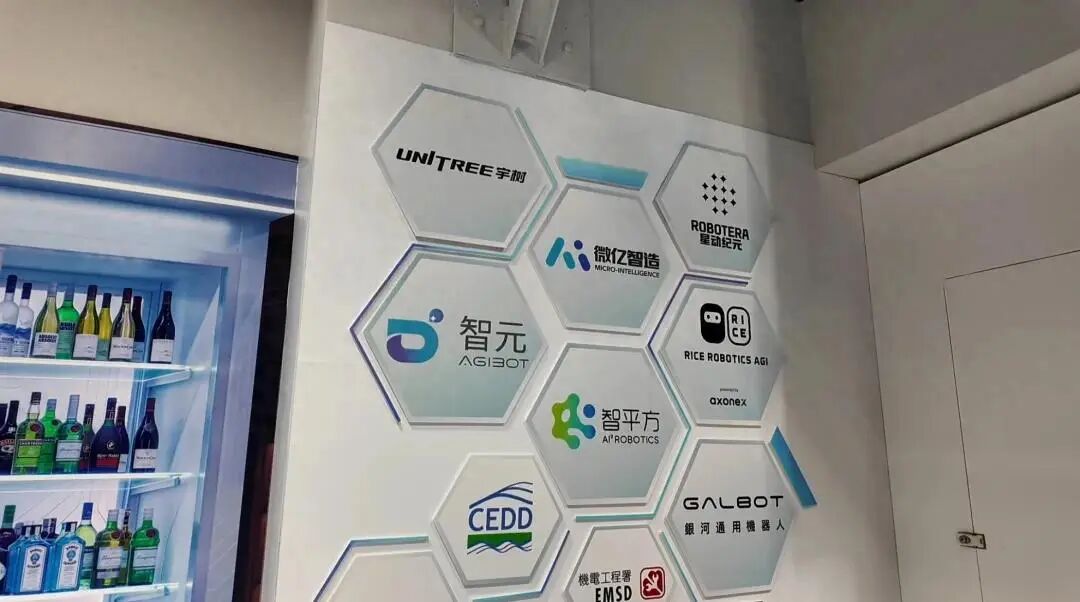
The partner list left me stunned: Unitree, ZhiYuan, AI Squared, Star Era, GalaxyCore General Robotics... Seven tech partners, virtually covering every major humanoid robotics star from the mainland.
This got interesting. I recently wrote 'Do We Really Need So Many Training Grounds?'—over 70 already built on the mainland, with 46 more under construction or planned. Why is Hong Kong joining the fray now?
After reviewing official press releases and corporate statements, my conclusion is: Hong Kong's training ground is fundamentally different from those 100+ on the mainland.
What Hong Kong's Training Ground Offers
Established by FLAIR (Hong Kong Centre for Industrial AI and Robotics) under the Hong Kong Productivity Council, the facility serves as an integrated base for technology R&D, model training, system validation, and scenario testing across five domains: industrial manufacturing, smart logistics, retail services, inspection & maintenance, and public services.
The setup has two layers: Seven tech partners provide robots, while eight international scenario partners contribute real-world environments—including multiple Hong Kong government departments and enterprises specifically offering 'authentic, challenging' application settings.
Funding is also on the table. Secretary for Innovation, Technology and Industry Sun Dong announced on-site: An additional HK$1 billion injection into the AI funding program, plus a HK$10 billion innovation and technology industry guidance fund launching this year, explicitly targeting AI and robotics sectors.
The Real Difference Lies in 'What's Being Tested'
Mainland training grounds solve 'where data comes from'—like driving schools where robots repeatedly practice movements to accumulate data. Hong Kong's version tests 'crossing customs.'
It simulates actual work scenarios from different countries and regions, providing enterprises with a cross-regional testing environment. FLAIR will design industry-specific testing frameworks, scoring across six dimensions: operational precision, execution efficiency, system stability, autonomous completion rate, safety performance, and environmental adaptability—establishing an objective benchmark for technological maturity.
In short: The mainland trains robots to 'perform tasks,' while Hong Kong verifies if they can 'work abroad.'
Corporate Strategies Are Highly Specific
For example: Star Era values Hong Kong's status as a global air cargo hub, having already demonstrated logistics parcel sorting at 1,000+ items per hour. Their leader admitted unfamiliarity with international logistics standards, aiming to learn global requirements through the training ground and even participate in hardware certification.
Unitree seeks to expand into large-scale facility inspections and high-risk operations via Hong Kong. AI Squared is more direct—its Aibo robot has been bartending at Lan Kwai Fong bars since August, marking Hong Kong's first normalized commercial embodied AI scenario. Now they aim to tackle multilingual support, licensing, and payment systems through the training ground.
GalaxyCore General Robotics has already opened four robotic retail stores in Hong Kong since September, where staff robots operate without remote control—handling orders, retrieving goods, and delivering them while switching between Mandarin, Cantonese, and English.
Star Era gave Hong Kong three titles: Validation Ground, Demonstration Window, Global Bridge. I think 'Global Bridge' hits the mark.
An International Bridge for Embodied AI
That said, let's not rush to applaud.
Hong Kong's high land and labor costs mean the training ground's capacity and costs can't compete with the mainland. All seven initial partners are top-tier stars—whether mid-tier and startup companies can join remains uncertain.
Moreover, whether 'Hong Kong experience' can truly crystallize into replicable global expansion models—no one dares guarantee yet. While Lan Kwai Fong bartending makes for great marketing, it's still far from large-scale commercial delivery.
As one of Asia's 'Four Little Dragons,' Hong Kong already serves as a bridge for mainland enterprises going global. However, with the industry still in early development—each country having different application scenarios, standards, and regulations—both challenges and the necessity for Hong Kong's training ground become evident.
My earlier article questioned 'homogenization': Over 100 training grounds all teaching robots to fold clothes and tidy desks.
Hong Kong's case offers an alternative answer: What's needed may not be more training grounds, but more distinctive ones. The mainland hones basic skills; Hong Kong tests international readiness. That's true division of labor.
What warrants attention next is how many overseas orders the first batch of 'Hong Kong-graduated' robots can secure.

All content sourced from publicly available information
Represents personal views only
-
Smart #2 Sees 3,000 Yuan Price Increase for Order Transfers: Is It the Electric Vehicle Market's Answer to the iPhone Duo?
-
Is 55% of Domestic Computing Power Really Used for Videos and Short Dramas? Doubao Responds
-
![]()
How to Interpret the Data: 61.6% NEV Penetration in September, 24% Retail Decline in Early October
-
![]()
Q3 Report | Hengtong Optoelectronic’s Performance Soars, Achieving Up to 61% Quarter-over-Quarter Net Profit Growth in a Single Quarter
-
![]()
Manus Restarts Independent Operations, Yet Avoids Starting Anew
-
One Photo Suffices for Celebrity Endorsements: Merchants Offer Custom AI Videos from 150 to 1000 Yuan per Minute
-
![]()
Total Investment Reaches 450 Million Yuan! Luke Optical Launches Its First Pilot Production Line for an Annual Output of 20 Million Pairs of Glasses
-
Chery Leads in Auto Exports, But When Will It Dominate the Domestic Market?