The Industrial Landscape of Humanoid Robots in Beijing, Shanghai, Shenzhen, and Hangzhou: Who Will Take the Lead?
 12/16 2025
 548
548
Produced by Zhineng Technology
If 2025 is to be known as the 'Year of Humanoid Robots,' the truly captivating question isn't merely 'who will emerge first?' but rather, why do nearly all discussions inevitably focus on Beijing, Shanghai, Shenzhen, and Hangzhou?
What precisely are these cities vying for in the robotics arena? Are they competing over the number of enterprises, technological routes, or the ease with which robots can be transformed into practical, marketable products?
The humanoid robot industry may well represent a long-term endeavor with immense potential, a prolonged game that heavily relies on a city's endowments in intelligence, computational power, and manufacturing capabilities.
● Beijing: Leading with 'Intelligent Brains' and Rule-Making Authority
Beijing's edge in humanoid robots stems from its dominance at the 'brain' level, boasting the highest concentration of large-scale model R&D teams, algorithm experts, and scientific research resources in China. Whether it's universities, research institutions, or general-purpose large model companies, Beijing stands as the core supplier for the 'cognitive layer' of embodied intelligence.
This positions Beijing more as an 'algorithm source' for the humanoid robot industry. Beijing's robot enterprises typically showcase two prominent traits: a focus on general intelligence and generalization capabilities rather than single-scenario deployment, and a deeper involvement in standard-setting, platform, and infrastructure construction.
As the industry progresses into the 'platformization' and 'standardization' phases, Beijing's influence is set to continue growing.
● Shanghai: The Robot City Closest to 'Productization'
While Beijing leans more towards 'research-driven,' Shanghai emerges as the city closest to 'treating robots as a fully-fledged industry.'
Shanghai's strengths lie in its complete industrial ecosystem, the mature coexistence of foreign and domestic enterprises, and its long-standing expertise in complex systems engineering. Here, humanoid robots are dissected into components such as supply chain management, reliability, certification, testing, and mass production.
The characteristics of Shanghai's robot industry include a lesser emphasis on being 'the first' but a strong focus on 'mass production capability and delivery'; a prioritization of system integration, stability, and industrial-grade standards.
This positions Shanghai as the key player in the crucial transition from prototype to commercial product in the robot race. If a humanoid robot is the first to enter commercial scenarios, Shanghai's manufacturing and system integration capabilities are often the driving force behind the scenes.
● Shenzhen: The City Closest to 'Monetization'
Shenzhen stands out as the most 'buzzing' city in current humanoid robot discussions and is often labeled as 'the leader.' However, its true competitiveness lies in its supply chain density and commercial efficiency.
In Shenzhen, robots are viewed as hardware products that can be swiftly dissected, recombined, and iterated. The industrial chain here enables collaboration within an extremely short radius, allowing Shenzhen's humanoid robot enterprises to iterate rapidly with minimal trial-and-error costs.
Shenzhen is likely to be the first to produce 'scalably replicable' humanoid robot products, which, while not necessarily the most advanced in intelligence, will be the most aggressive in terms of commercialization.
● Hangzhou: The City Most Resembling 'Software-Defined Robots'
Hangzhou's uniqueness stems from its distinct advantages in AI capabilities and application deployment. Here, large models, cloud computing, and algorithm engineering capabilities enable Hangzhou's humanoid robots to emphasize 'software evolvability.'
Rather than merely building robots, the focus is on creating 'sustainably upgradable intelligent agents.' Robots serve as software carriers for continuous learning and evolution.
Viewing Beijing, Shanghai, Shenzhen, and Hangzhou on the same industrial map:
◎ Beijing leads in upstream intelligent capabilities,
◎ Shanghai stabilizes midstream productization,
◎ Shenzhen charges ahead in mass production and commercial efficiency,
◎ Hangzhou explores software and scenario-driven approaches.
The humanoid robot industry is poised to become as fiercely competitive as the automotive sector! But does 'the leading robot city' title truly matter?
The title of 'the leading city' is more of a phased label; what truly counts is who can continuously nurture innovative enterprises that survive and scale up in the next 3-5 years. This is what we should truly anticipate.
Major Humanoid Robot Companies in Beijing:
◎ NOETIX ROBOTICS
◎ BOOSTER ROBOTICS ◎ GALAXEA ◎ CASABOT Lingbao ◎ CORENRETIC Source Network Technology ◎ ROBOTERA Era of Stars ◎ GALBOT Galaxy Universal Robots ◎ X-HUMANOID Beijing Humanoid Robot Innovation Center ◎ PHYBOT Dynamic Technology ◎ DarLink Intelligence 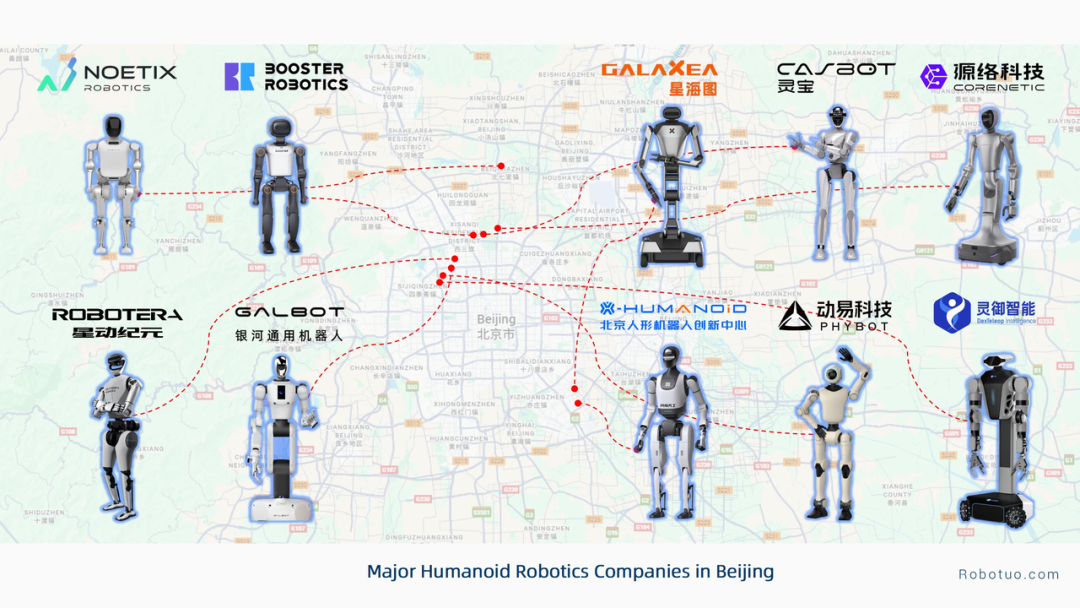
Major Humanoid Robot Companies in Shanghai:
◎ MATRIX ◎ WHALLLSBOT ◎ KEPLER ROBOTICS ◎ DroidUp Zhuoyide ◎ Robbyant Ant Lingbo Technology ◎ Ti5 ROBOT ◎ iSAGEBOT ◎ FOURIER ◎ AGIBOT ◎ Humanoid Robot 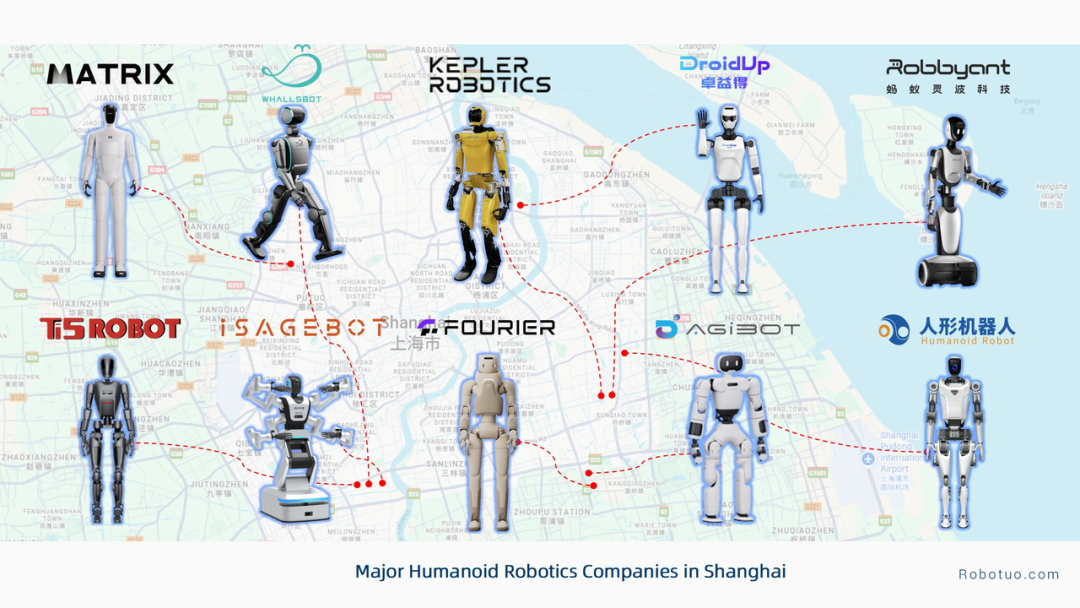
Major Humanoid Robot Companies in Shenzhen:
◎ ENGINEAI ◎ Joy Robot ◎ Zhipingfang ◎ DOBOT (Yuejiang Technology) ◎ UBTECH ◎ Astribot ◎ Cyborgs ◎ LIMX DYNAMICS ◎ DEXFORCE ◎ X SOUND ROBOT 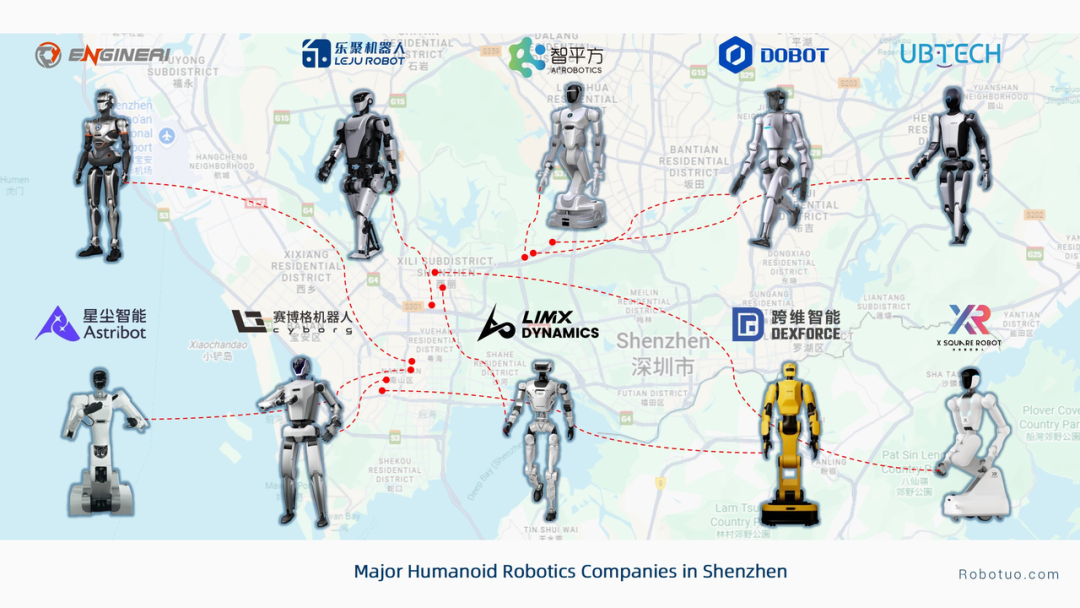
Major Humanoid Robot Companies in Hangzhou:
◎ Zhicheng AI ◎ LANXIN ROBOTICS ◎ DEEP Robotics ◎ Spirit AI Qianxun Intelligence ◎ UNITREE (Unitree Robotics) 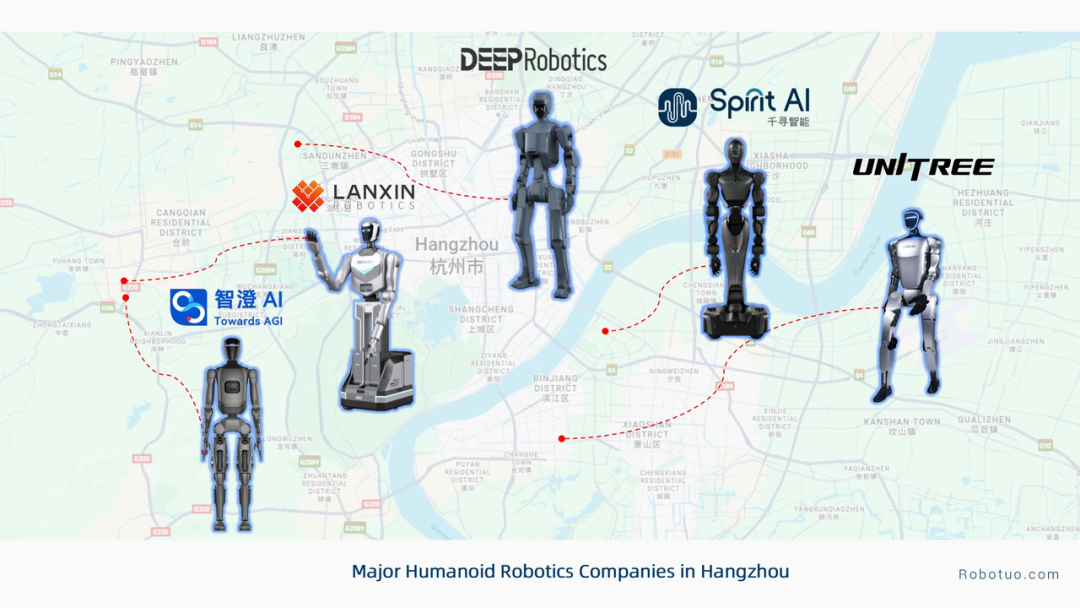
-
![]()
Why Hasn’t AI-Driven Payment Flourished Despite Tech Giants’ Push?
-
![]()
Intensify Efforts in the High-End Optoelectronic Semiconductor Sector! Aipu Dingchun and Jiangsu Meidong Forge a New Joint Venture
-
![]()
From Endoscopes to Optical Interconnects for AI Computing Power: A Veteran Optical Company's Strategic Shift
-
![]()
Behind the Scenes of Token Factories' Rise as a Capital Market Sensation
-
![]()
What Does MaaS Ultimately Bring to Chinese Cloud Providers? | In-Depth Industry Analysis
-
![]()
China’s Auto Resale Value Report Unveiled: AITO M9 Electric and Hybrid Variants Dominate Rankings
-
![]()
Dialogue with Huang Yangming: On the Eve of the Physical AI Boom, the Value of Data Infrastructure Begins to Materialize
-
![]()
The Experience is a Bit Unusual! Logitech G Cloud Review: Great Feel, but Not Ideal for Cloud Gaming