AI Glasses Achieve Breakthrough with Lightweight Design: Materials and Balance Emerge as Key Competitive Factors
 05/12 2026
 670
670
2026: The Dawn of Lightweight AI Glasses
Text by VR Tuoluo Lichun
Judging from the new products released in the industry this year, it's evident that, alongside fierce competition in camera displays and large-scale model computing power, AI glasses are garnering increasing attention from manufacturers for their lightweight design. Currently, numerous smart glasses on the market weigh under 50 grams. Lightweight design is not only a critical indicator influencing product return rates but also a prerequisite for AI glasses to be worn comfortably throughout the day and become an everyday essential.
01
Weight Reduction Across Three Key Segments: Lightweight Design Emerges as a Core Selling Proposition
Presently, the mainstream smart glasses market is divided into three primary categories: AI audio glasses, AI photography glasses, and AI+AR smart glasses. These three types of glasses have each taken unique approaches to lightweight design based on their target users and product characteristics, collectively propelling the industry forward.
AI Audio Glasses
Audio glasses, having shed camera and display functionalities, are generally lighter. From a manufacturing standpoint, the audio format does not rely on complex display modules, resulting in a lighter weight, manageable costs, and suitability for extended wear. From a user's perspective, the lenses do not obstruct vision, and the weight is comparable to that of regular glasses, making them nearly imperceptible when worn.
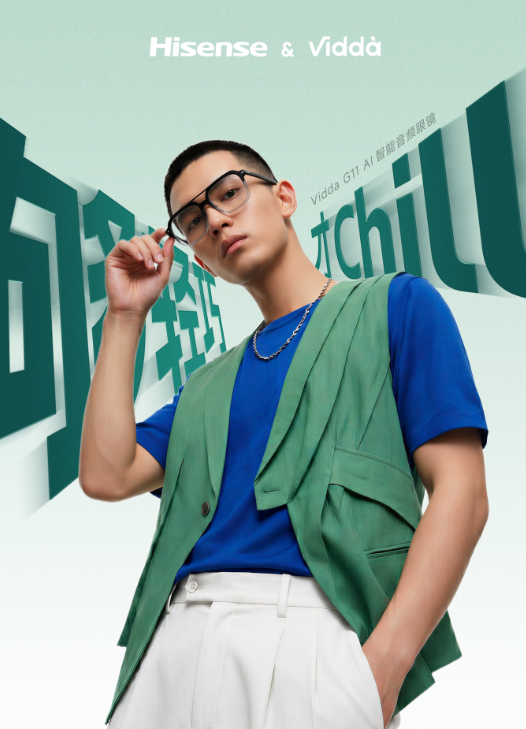
At CES 2026, Aituobang Technology unveiled the AI audio glasses T09, with "weightless wear" and "ultimate audio quality" as its core selling points. According to reports, the entire device weighs less than 28 grams. The product is equipped with customized directional sound units and noise reduction capabilities, allowing for undisturbed use during commutes. Vidda also launched an AI audio glasses model, the G11, weighing 26.5 grams, with the thinnest part of the temples measuring approximately 5.3 millimeters, closely resembling the dimensions of regular glasses.
AI Photography Glasses
Photography glasses, in contrast to audio glasses, incorporate a lens module, with the primary advantage of first-person perspective shooting. Unlike AR display glasses, AI glasses focused on photography typically lack complex display modules, resulting in a lighter weight and suitability for all-day wear. Most manufacturers' pursuit of lightweight design has enabled photography glasses to weigh less than 40 grams.
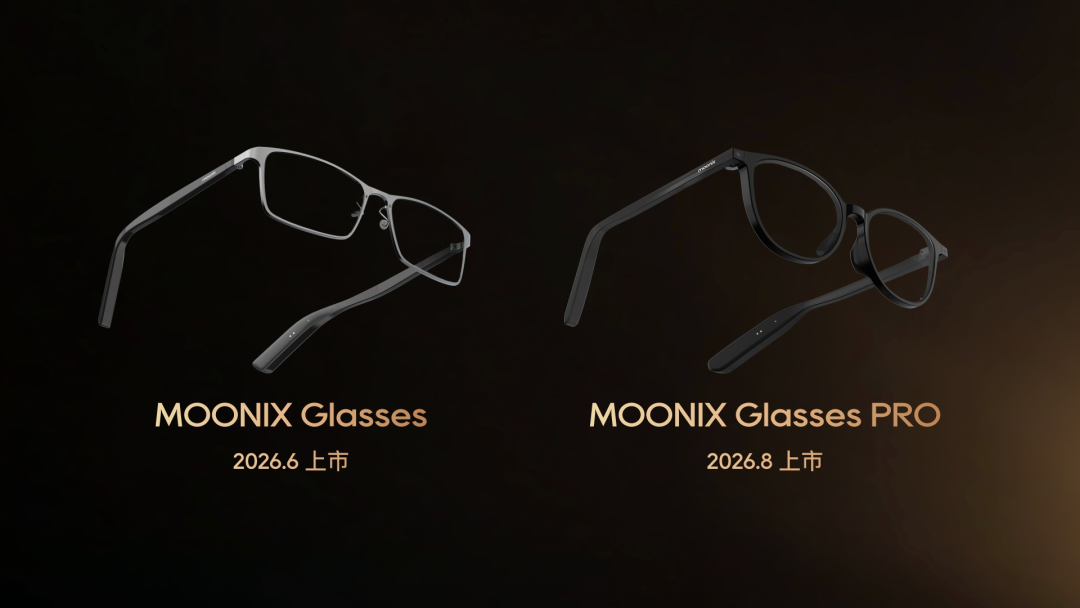
Recently, Huawei released photography glasses weighing only 35.5 grams (excluding lenses), lighter than most AI photography glasses. As a leader in consumer electronics brands, Huawei's strategy for AI glasses products reflects market development trends. Additionally, the Dapeng AI photography glasses adopt a lightweight and ergonomic frame design, enhancing stability and comfort during prolonged wear. The Moonix Professional Edition weighs only 19.9 grams, with a temple height of 4 millimeters, achieving an extreme lightweight design.
AR+AI Smart Glasses
AR glasses can overlay text, images, navigation guidance, and other virtual information onto the real-world field of view, seamlessly integrating virtual information with the real environment. Richer functionalities make these glasses heavier than ordinary AI glasses, but compared to bulky VR headsets, AI+AR glasses are lightweight and portable. Under market competition, manufacturers can achieve weights of twenty to thirty grams or even lighter for AR glasses.
For example, NIMO, without cameras and speakers, weighs only 29 grams. The approach of sacrificing certain performance metrics for wearability has allowed this emerging brand to stand out. Another model, the Even G2, also without cameras and speakers, reduces temple thickness to several millimeters, bringing the overall weight down to 36 grams.
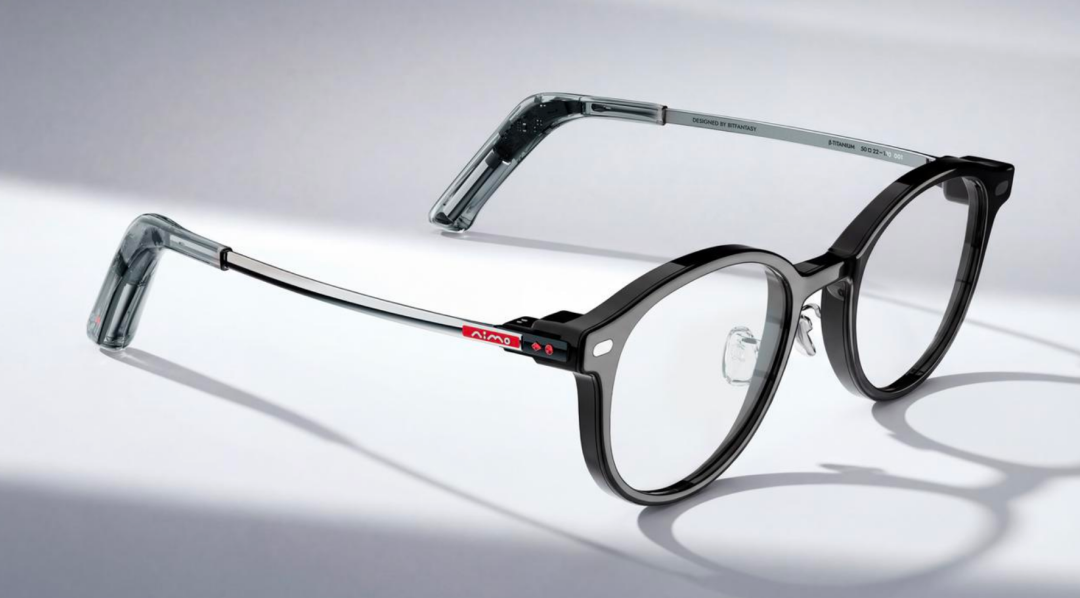
Image Source: NIMO
02
Material Innovation: A Key Driver for Weight Reduction
A pair of glasses consists of a frame and lenses. Lightweight design involves more than just component shrinkage; every gram of weight reduction may stem from material innovation. Common frame materials include carbon fiber composites, magnesium-lithium alloys, thin-walled titanium alloys, and cellulose acetate.
Carbon fiber is currently the preferred material for ultra-light frames, known for its durability and high-temperature resistance. NIMO utilizes this material. Additionally, Goertek's lightweight AR glasses reference design, "Mulan 2," also adopts an ultra-thin carbon fiber frame, reducing the overall weight to 36 grams. The Xiaomi Wireless AR Glasses Explorer Edition also employs carbon fiber materials to achieve an ultra-thin and sturdy frame.
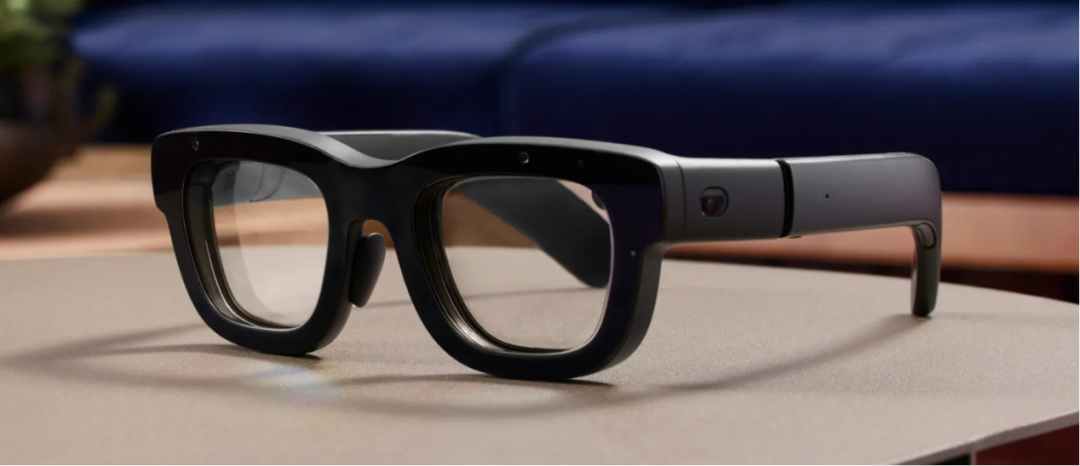
Innovation in lens materials is also crucial for achieving lightweight design. Generally, AR glasses lenses are heavier than those of AI glasses without displays. Meta's AR glasses team turned its attention to silicon carbide, a new material, in 2019. Silicon carbide boasts a high refractive index of 2.65-3.2 and ultra-low optical loss of less than 0.1 dB/cm, effectively improving imaging quality. It also performs well in thermal conductivity and lightweight design.
In terms of weight, a single silicon carbide lens weighs approximately 2.7 to 3.8 grams, with a thickness of 0.55 to 0.75 millimeters. Currently, silicon carbide glasses on the market can approach the weight of ordinary optical glasses. The silicon carbide AR glasses concept product displayed by Mude Weina features lenses only 0.55 millimeters thick, with a single lens weighing just 2.7 grams.
Meta Orion AR Glasses (Image Source: Meta)
However, due to factors such as high manufacturing costs, silicon carbide has not yet been widely applied in consumer-grade AR glasses. Resin waveguides and specialty optical glass remain common materials in the market, with resin materials having a transmittance of approximately 80% to 90% and glass materials exceeding 90%. In the direction of lightweight design, manufacturers typically adopt design methods such as reducing lens area to reduce the overall weight of the glasses.
Previously, Mojie Technology stated, "In daily wear AR glasses, if a product weighs 50 grams, approximately 50-60% of that weight comes from the lenses. Floating diffraction waveguides made from traditional glass may weigh 2-3 times more than resin waveguides, making it difficult to achieve lightweight AR glasses. Therefore, the selection of optical materials is crucial."
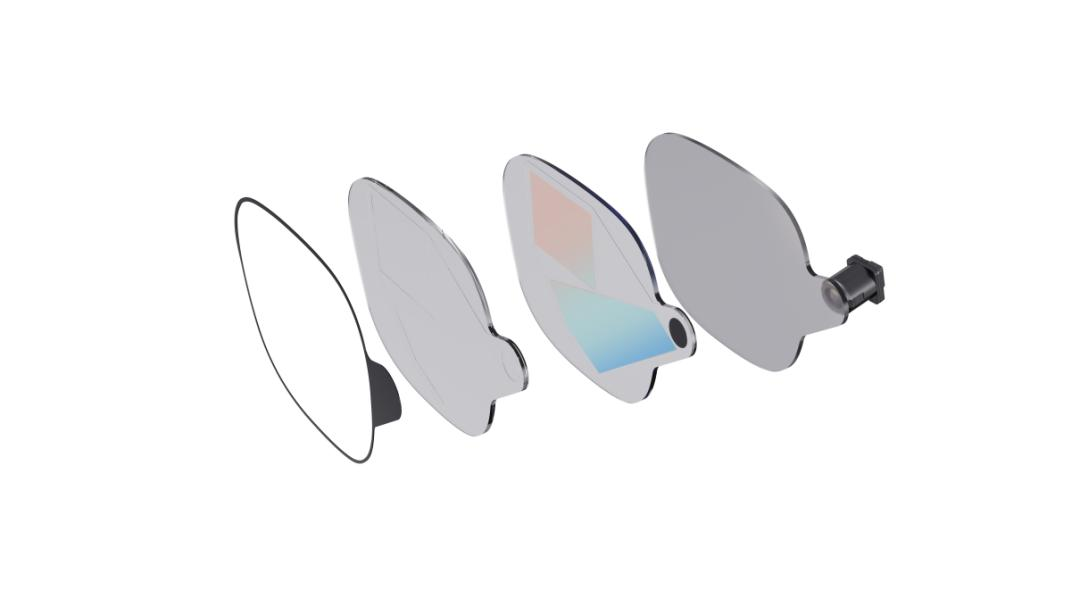
Image Source: Mojie Technology
03
Balancing Lightweight Design and Functional Experience
For consumer-grade wearable devices, long-term wearability is a prerequisite for all functions. If an AI glasses model is overweight and presses on the nose bridge or temples after half an hour of wear, users will simply store it away, regardless of its comprehensive functions or strong computing power, rendering the functions useless. However, having too few functions is insufficient to gain a foothold in the market. Balancing weight and functionality is no easy task.
The positioning of a glasses model determines its consumer base. Identifying target users and prioritizing needs is the premise for achieving balance at this stage. For example, the core needs of commuting professionals are all-day wearability, long battery life, translation, and teleprompter functions, while non-core needs include a large field of view (FOV), 3D audio-visual content, and spatial games. Glasses functions can focus on core needs and make trade-offs on non-core needs. Segmenting user scenarios is also a common method in the market, as seen with products like the Robam Appliance cooking glasses and the Dreame AI smart swimming goggles.
However, achieving lightweight design by sacrificing some functions may only be a transitional solution for industry development. The optimal solution lies in continuous technological and material innovation. Additionally, the sensation of heaviness when wearing glasses does not solely stem from the overall weight but may also result from an unreasonable structural design. This can be alleviated by adjusting the weight balance between the front and back of the glasses, designing more comfortable nose pads, or making the glasses' shape more ergonomic.
Modularization offers another approach to lightweight AI glasses. The advantage of modularization is that it achieves lightweight design while accommodating full functionality. In addition to detachable temples, separating the AR display from the glasses body is another method to reduce weight. For example, the Xuanjing M6 adopts a combination of "AI photography glasses + mini AR screen," allowing users to choose whether to purchase the AR display module based on their needs. This not only reduces weight but also provides consumers who do not require AR display functionality with an additional option. This modularization also extends the product's lifecycle and reduces electronic waste.
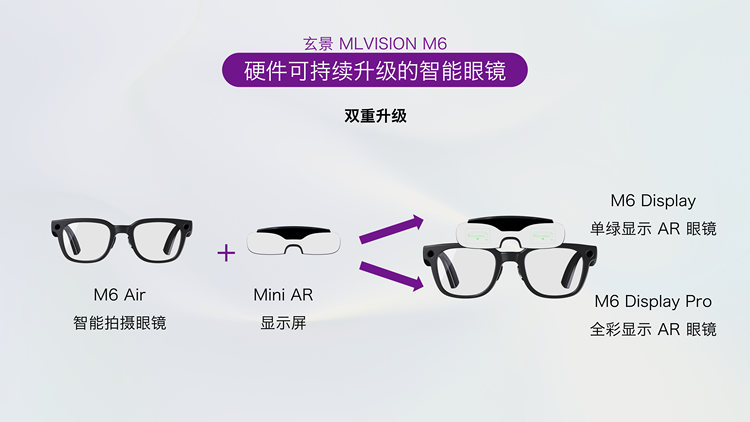
Image Source: Internet
Overall, the balance between lightweight design and full functionality is still in the exploratory stage. In the future, with continuous breakthroughs in materials science, optical technology, and chip integration, AI glasses may become as light as ordinary glasses and as functional as smartphones. Until then, identifying users' core needs and finding their own balance between lightweight design and functionality is a compulsory course for every AI glasses manufacturer.
-
![]()
Hynix’s Taobao Store Shuts Down Abruptly: What Should Customers Do About Warranty Services for Memory Modules?
-
![]()
A Computing Power Titan Unveils a Revolutionary Product: Performance-to-Power Ratio Skyrockets by 450 Times!
-
![]()
Doubao Work Unveiled! Domestic AI Leaders Fully Commit to the 'Work' Sector
-
![]()
Who’s Sounding the Alarm on ‘Rushed Vehicles’?
-
![]()
Over 5.3 Billion Yuan in Losses Over Three and a Half Years! Can Yonyou Reverse Its Fortunes Through Streamlining and AI Transformation?
-
![]()
Baidu AI Adopts Free Model: A Strategic Maneuver in Traffic and Monetization
-
![]()
Silicon-Based OLED Pioneer Unveils Financial Results: H1 Shipments Outpace Entire 2025 Volume
-
![]()
AI's First "Lost Summer"