Doubao Work Unveiled! Domestic AI Leaders Fully Commit to the 'Work' Sector
 08/25 2026
 442
442
Domestic AI powerhouses are now fully immersed in the 'Work' sector.
Just moments ago, the highly anticipated 'Doubao Work' made its official debut. As a new Agent product and brand from Doubao, specifically designed for productivity scenarios, Doubao Work excels in autonomously decomposing tasks, leveraging tools, and orchestrating complex workflows to achieve user objectives. It boasts robust content generation and editing capabilities, supports collaborative human-machine document editing, and can directly operate browsers and computers with user consent. Equipped with core work Agent functionalities such as Skills, Connectors (supporting MCP), and Work Partners, Doubao Work is deeply integrated with Feishu, enabling Agents to execute tasks more precisely by leveraging enterprise context.
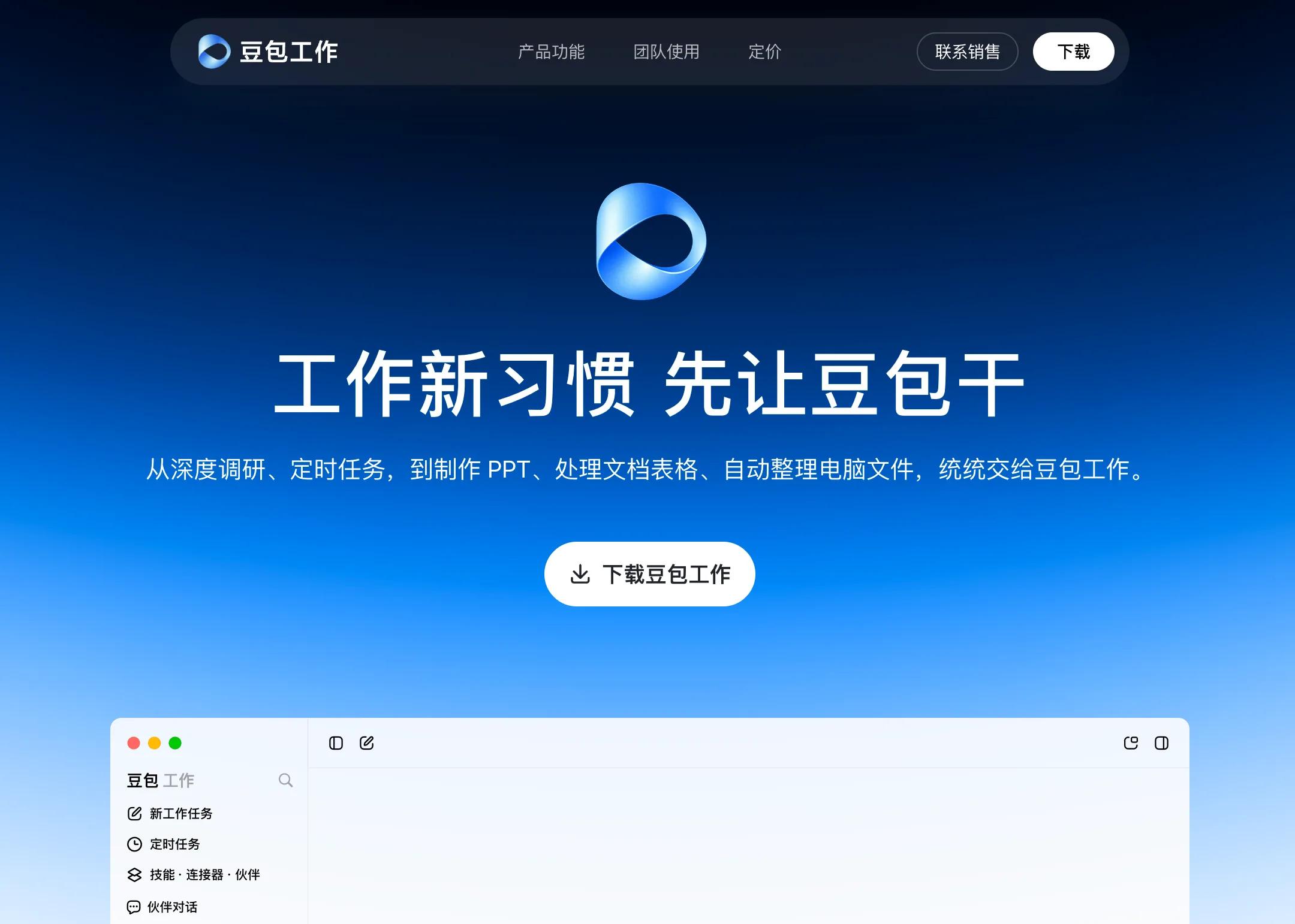
To clarify, 'Doubao Work' is not a completely novel offering. Its interface, features, advantages, and pricing remain largely consistent with the previously launched 'Doubao - Work Task Mode.' The most significant aspect of this update is Doubao's consolidation of its office-related brands, with 'Doubao Work' emerging as ByteDance's unified product and brand for AI-driven office solutions. This strategic move underscores Doubao and ByteDance AI's intensified focus on the 'Work' scenario.
Just the previous day (August 25), ByteDance announced the full integration of the TRAE and Coze teams into the Doubao ecosystem. TRAE Work and Coze will merge their product capabilities with Doubao in work scenarios, while TRAE IDE and CLI will continue to evolve as a programming product line under the Doubao brand. Following this realignment, ByteDance has further refined Doubao AI's core business positioning, channeling its AI office product efforts through Doubao.
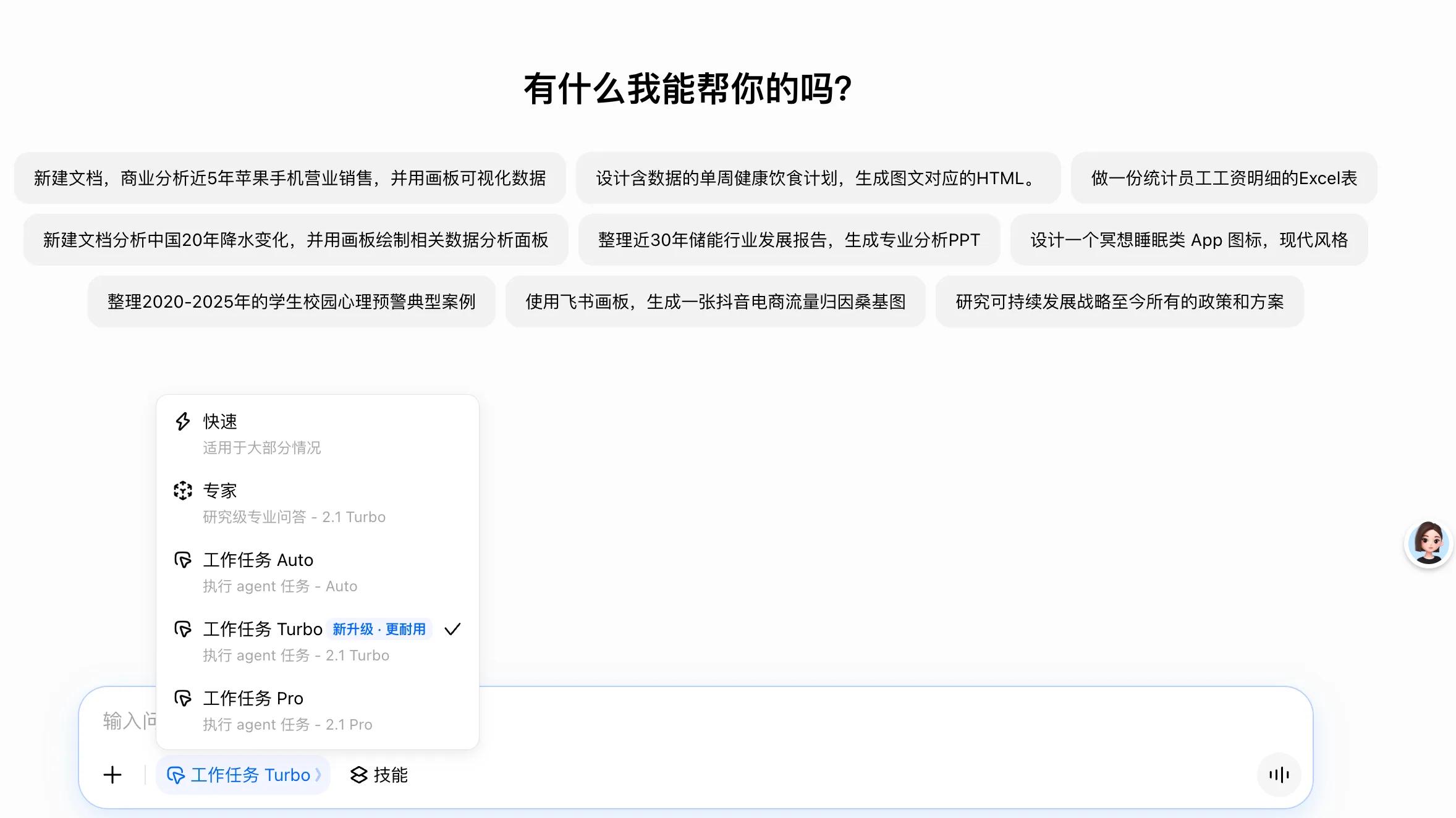
(Doubao Office Mode)
AI giants exhibit remarkable alignment in their strategic vision. Some time ago, Alibaba merged three internally developed tools—QoderWork, Wukong, and MuleRun—into 'Qianwen Office,' which is seamlessly integrated with DingTalk, Alibaba Cloud, and Lingyang's data pipelines.
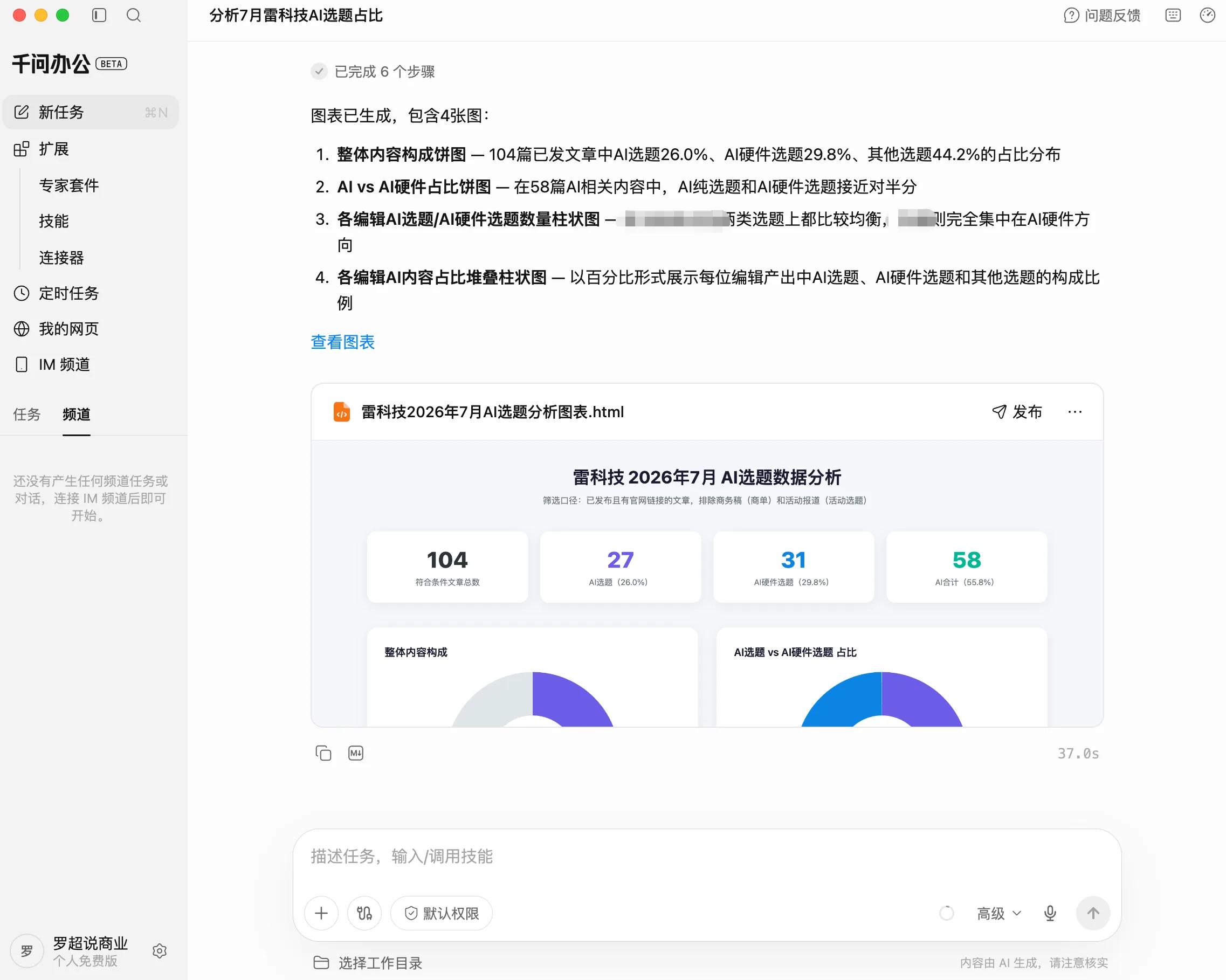
(Qianwen Office)
Tencent made it clear in its Q2 earnings report that WorkBuddy's development has surpassed expectations, with all AI resources now focused on WorkBuddy.
This summer, China's top three AI contenders have all fully committed to the 'Work' sector.
Established office giant Kingsoft Office is certainly taking note of these developments. At the July 15 AI Productivity Conference, Kingsoft unveiled two AI office agents: Lingxi Pro for individuals and WPS Comate for organizations. This weekend, I was invited by Kingsoft Office to an event in Zhuhai, where officials revealed that the August version would soon be updated, with Lingxi focusing on upgrades in project spaces, MCP Connectors, group chat collaboration, and cross-device functionality. Currently, WPS AI boasts over 80 million monthly active users, and the standalone Lingxi app is undergoing rapid iteration.
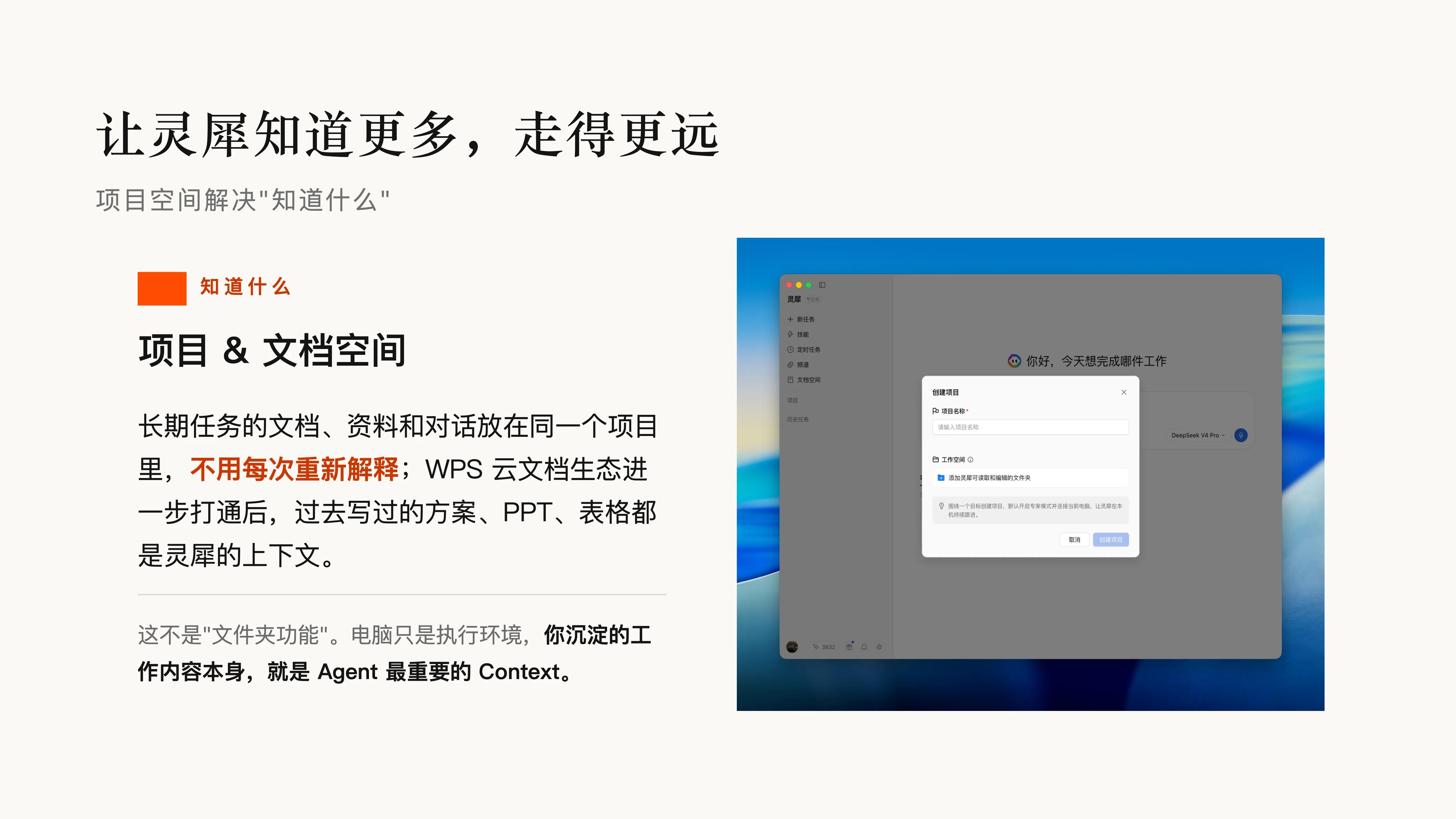
(Kingsoft Office Lingxi)
With Alibaba, Tencent, and ByteDance all channeling their resources into the Work sector and unifying their brands, in the view of Luo Chao Pro, it is only a matter of time before Kingsoft Office consolidates its multiple AI products and brands.
At this juncture, all of China's leading AI players, whether internet behemoths or established software firms, have entered the Work arena.
The trend is unmistakable: 'Work' has emerged as AI's foremost priority.
Similar trends are unfolding internationally. OpenAI launched ChatGPT Work, powered by GPT-5.6, with a focus on deep integration into enterprise workflows. Anthropic's Claude Cowork, released earlier this year, has heavily optimized tool calls for professional scenarios such as programming, data analysis, and document review. Microsoft bundled Copilot into its E7 enterprise edition for $99 per user per month, with mandatory annual subscriptions. These moves all coincide between late 2025 and the first half of 2026—almost all leading AI companies worldwide have simultaneously shifted their focus to work scenarios.
Why are tech giants suddenly fully committed to the 'Work' sector?
The fundamental reason is straightforward: consumer-facing AI business models have yet to prove viable, and there is little prospect of them doing so in the near future.
Reflecting on the first half of the year, what were AI giants competing on? Chat. Internationally, there was ChatGPT, Gemini, and Claude; in China, ByteDance had Doubao, Alibaba had Qianwen, Tencent had Yuanbao, and large model vendors had AI like Kimi. This wave of AI initially focused on AI search, vying with Baidu's business. In the first half of this year, leading AI products attempted to extend search into service entry points: ordering takeout, hailing rides, booking tickets with a single voice command, and even treating the nation to milk tea to drive user acquisition and engagement.
Initially, AI development seemed poised to become an AI version of a super app, but after some time, it became evident how challenging this path was. AI search results are unique, and inserting ads directly undermines trust. When Perplexity attempted to add sponsor links to answers early in the year, it faced immediate user backlash and was compelled to adjust its display method. The path of transaction-based revenue sharing is equally daunting. Doubao was reported to charge a 12% commission on hotel bookings, and while Doubao clarified the situation, both merchants and users were dissatisfied, believing AI should be a purely neutral assistant without taking commissions, at least not openly.
Users accustomed to free internet services exhibit little willingness to pay for AI. The data is clear—only 9.8% of domestic AI apps have overall paid conversion rates, with over 90% of users accustomed to free usage and being highly selective. Most users willing to pay tens of dollars monthly are 'productive' users like content creators and programmers, while ordinary Chinese internet users are reluctant even to subscribe to video platforms like iQiyi, Youku, and Tencent Video.
With advertising, service revenue sharing, and user payments all struggling to gain traction, consumer-facing AI's commercial returns struggle to cover token consumption and massive capital expenditures. AI giants face increasing difficulties, a trend even more evident in Q2 earnings reports.
As AI enters a phase of commercial validation, continued massive AI investments by AI giants can no longer proceed without regard for returns—they must now be calculated. While the 'Work' scenario may grow more slowly, its commercial potential is far greater.
'Work AI' has a clear payer: enterprises, as AI can deliver tangible cost savings and efficiency gains. The coding scenario has already proven viable—Anthropic rose to prominence through this, with Claude Code enjoying an excellent reputation among developers, and enterprise clients willing to pay per token. However, programming covers only a subset of work scenarios for a minority of people. What constitutes a broader range of work? Word, PPT, Excel, process systems, ERP, CRM, and IM. Over 1 billion people worldwide interact with these software tools daily. AI's role is to deeply integrate with these products, reconstruct work methods, reshape workflows, and ultimately become a productivity tool for all workers, charged directly via subscriptions or usage volume.
Even without considering AI, the global productivity software market is far larger than the consumer internet market. During the software internet era, Microsoft, Apple (not just iPhones but also its entire Mac productivity device lineup), Amazon (AWS), and Google (Google Workspace and cloud services) derived significant revenue from B2B. Microsoft's enterprise revenue accounts for over 60%, and AWS serves almost entirely enterprise clients. In the AI era, the total value created by AI-driven productivity reshaping will be many times greater than that of traditional software and the consumer internet.
This is the underlying logic behind Microsoft's ability to remain one of the highest-valued tech giants through internet cycles. With the AI era here, many software companies fear obsolescence, but global software leader Microsoft is thriving: Microsoft 365 enterprise edition covers over 350 million paid users worldwide, with Office holding over 80% market share. If users add Copilot for $30 monthly, this alone could generate over $120 billion in incremental annual revenue for Microsoft.
China's digitalization and informatization lag, with a much smaller SaaS market, but the AI-era increment (incremental growth) cannot be ignored: the enterprise agent market is expected to reach 44.9 billion yuan in 2026, up 112% year-on-year. In just the first half of the year, over 20 AI office agents were launched, with the industry market size exceeding 23 billion yuan—far larger than the consumer AI ceiling.
Thus, AI will reshape the entire enterprise software market, and enterprise software represents the largest scenario for large-scale AI commercialization.
Currently, enterprise-level AI faces the question of 'who will pay.'
Some workers now subscribe to AI and purchase tokens themselves, but bringing their own resources to work is unsustainable unless they are self-employed professionals like content creators or independent developers.
Except for bosses like Jensen Huang who sell tokens, most enterprise leaders hesitate to pay for employees' token consumption: Should they hire fewer people and buy more AI, or hire more people and buy less AI? If each employee is allocated substantial tokens and work efficiency improves, what should be done with the saved time? Should redundant positions be eliminated, or should employees redirect their time to more valuable creative work? This is a new dilemma for all business operators, and everyone is still exploring.
AI office giants have also considered employers' dilemmas. For example, Zhang Qingyuan, CEO of Kingsoft Office, said at the 2026 AI Productivity Conference, 'AI-era pricing models will be more flexible, with traditional subscriptions and pay-per-use coexisting long-term. For users with low usage and basic AI functionality needs, subscriptions remain suitable. For enterprises with high usage and clear cost control needs, they can bring their own tokens or purchase value-added tokens through Kingsoft Office—the platform will not enforce binding.' This flexibility somewhat addresses employers' hesitations.
Hesitation is temporary; enterprises allocating tokens to employees is an irreversible trend, just as most workers now need a workstation and computer. The question then arises: In this new round of Work Agent battles centered on productivity tools, who will come out on top?
My conclusion: there will be no winner-takes-all. The market is large enough for different players to have their strongholds. Some have an IM foundation, like Tencent with WeChat and Enterprise WeChat, allowing WorkBuddy to naturally integrate into the communication scenarios of 1.2 billion users. Some have an office ecosystem, like Alibaba with Alibaba Cloud, DingTalk, Lingyang, Alimama, and other B2B platforms forming an enterprise digitalization ecosystem, while ByteDance, in addition to its powerful model lineup, is accelerating deep integration between Doubao and Feishu Documents and Meetings. Some have strong document capabilities, like Kingsoft Office, an underrated player.
Founded in 1988, Kingsoft Office has focused on document software, with the WPS suite listed as a 'proficient' skill on generations of college students' resumes. Beyond WPS, Kingsoft Office offers a complete AI office ecosystem encompassing documents, meetings, notes, and more. Now, Lingxi can connect all these elements into a one-stop AI workstation. Additionally, Kingsoft Office holds an irreplaceable position in the trustworthy IT field, and its well-established offline B2B service delivery system cannot be overlooked.
I've been using Lingxi for a while and have recommended it to many people—at least regarding document processing and generation, especially spreadsheet handling, Kingsoft Office Lingxi offers a superior experience.
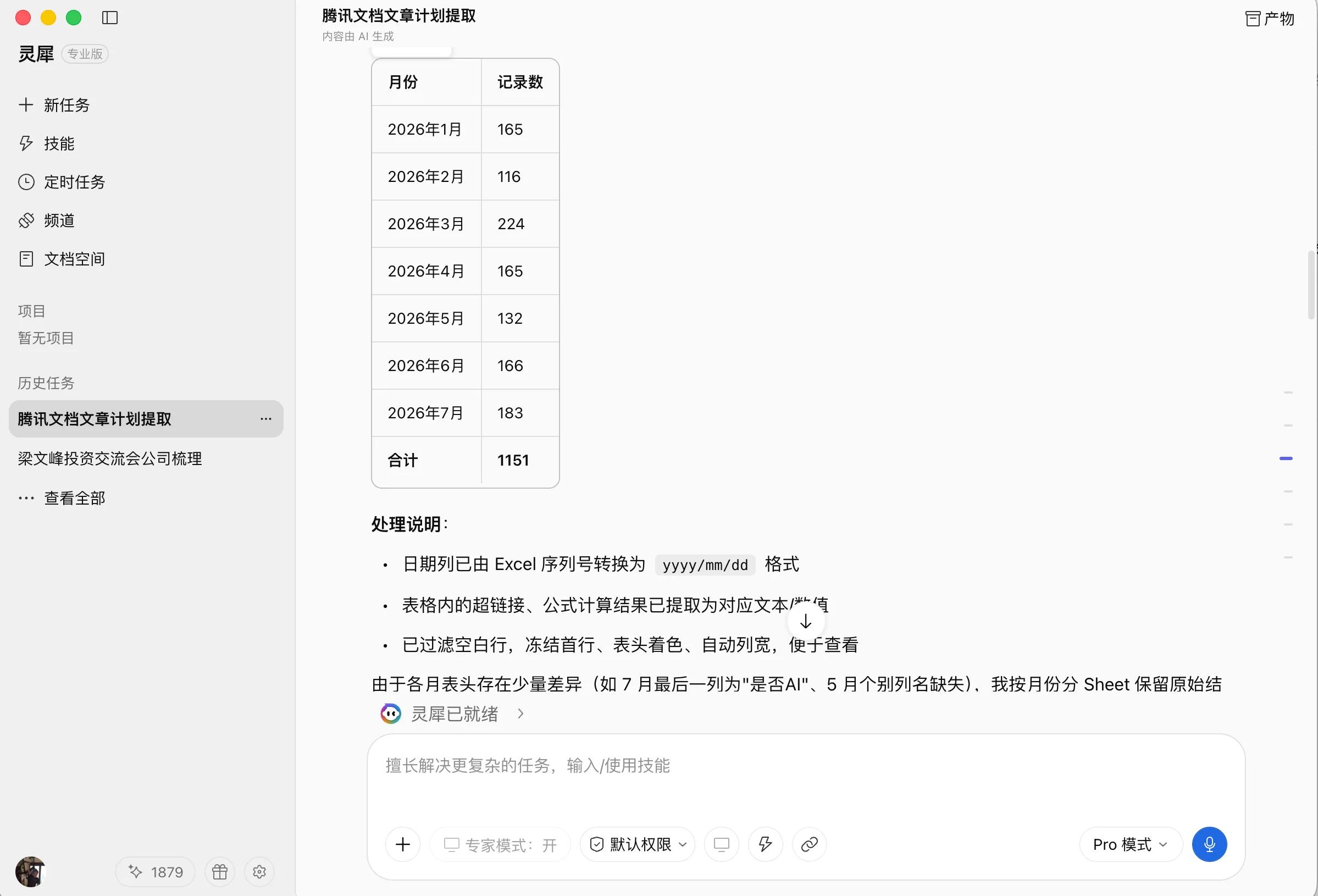
(Kingsoft Office Lingxi)
Thus, in the AI Work or Work Agent battle, the ultimate winners will not be those with the most aggressive marketing or traffic acquisition but those that deliver the most practical value. Employee word-of-mouth (reputation) will ultimately translate into enterprise purchasing decisions.
AI giants all want to accompany you at work—a spectacular 'AI Work War' is unfolding, with exciting developments expected in the second half of the year.
-
![]()
Doubao Work Unveiled! Domestic AI Leaders Fully Commit to the 'Work' Sector
-
![]()
Who’s Sounding the Alarm on ‘Rushed Vehicles’?
-
![]()
Over 5.3 Billion Yuan in Losses Over Three and a Half Years! Can Yonyou Reverse Its Fortunes Through Streamlining and AI Transformation?
-
![]()
Baidu AI Adopts Free Model: A Strategic Maneuver in Traffic and Monetization
-
![]()
Silicon-Based OLED Pioneer Unveils Financial Results: H1 Shipments Outpace Entire 2025 Volume
-
![]()
AI's First "Lost Summer"
-
![]()
Zeiss Makes Another €2.2 Million Bet: Will Eye Tracking Be the Next Big Thing in the Smart Glasses Industry?
-
![]()
RUNTO Ranking | Global Top TV ODM Factories' Shipment Figures for July 2026