Zeiss Makes Another €2.2 Million Bet: Will Eye Tracking Be the Next Big Thing in the Smart Glasses Industry?
 08/25 2026
 493
493
A recent investment by optical giant Zeiss has put a deep-tech startup from a small Finnish town in the spotlight.
In August, SeeTrue Technologies announced the completion of a €2.2 million financing round, led by Zeiss Venture Capital.
Why would an optical leader with annual revenues nearing €12 billion invest in this startup at this time? The amount isn't huge—just €2.2 million—but Zeiss's involvement is still worth exploring.

For SeeTrue Technologies, this funding will help accelerate the commercialization of its ultra-low-power eye-sensing architecture while also supporting team expansion and international market development. However, to understand why Zeiss invested in this company, we need to delve into the specifics.
Solving the 'Impossible Triangle' of Eye Tracking with Neurosurgical Techniques
SeeTrue was co-founded in 2018 by Roman Bednarik and Piotr Bartczak. The company specializes in system-level co-designed eye-tracking sensing architectures, using proprietary miniature sensing hardware and highly optimized embedded processing algorithms to minimize device size, power consumption, and computational overhead while maintaining performance.
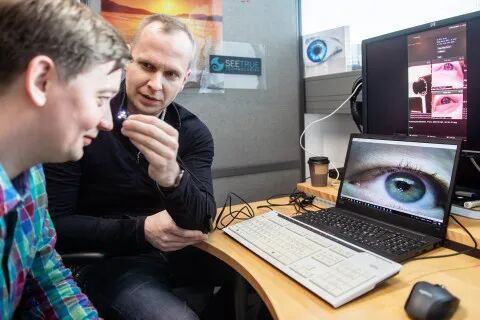
The eye-tracking sector has seen no shortage of players in recent years, but few have managed to achieve power consumption levels acceptable for wearable devices while maintaining accuracy and speed. SeeTrue's ability to secure funding from Zeiss is largely due to its unique technological approach.
This brings us to a long-standing issue in the smart glasses and related sectors—the 'impossible triangle' of eye tracking: high frame rate, high accuracy, and low power consumption. Generally, these three metrics are difficult to achieve simultaneously.
Traditional camera-based solutions require processing large amounts of pixel data, leading to high computational loads and power consumption. Electrooculography-based solutions, while power-efficient, lack the accuracy needed for many applications. Coupled with the small batteries and lightweight design requirements of smart glasses, supporting high-load tasks like eye tracking, voice recognition, and AI inference under such constraints is challenging.
As a result, many products' interactive features are only usable in demonstrations and have yet to achieve true market adoption.
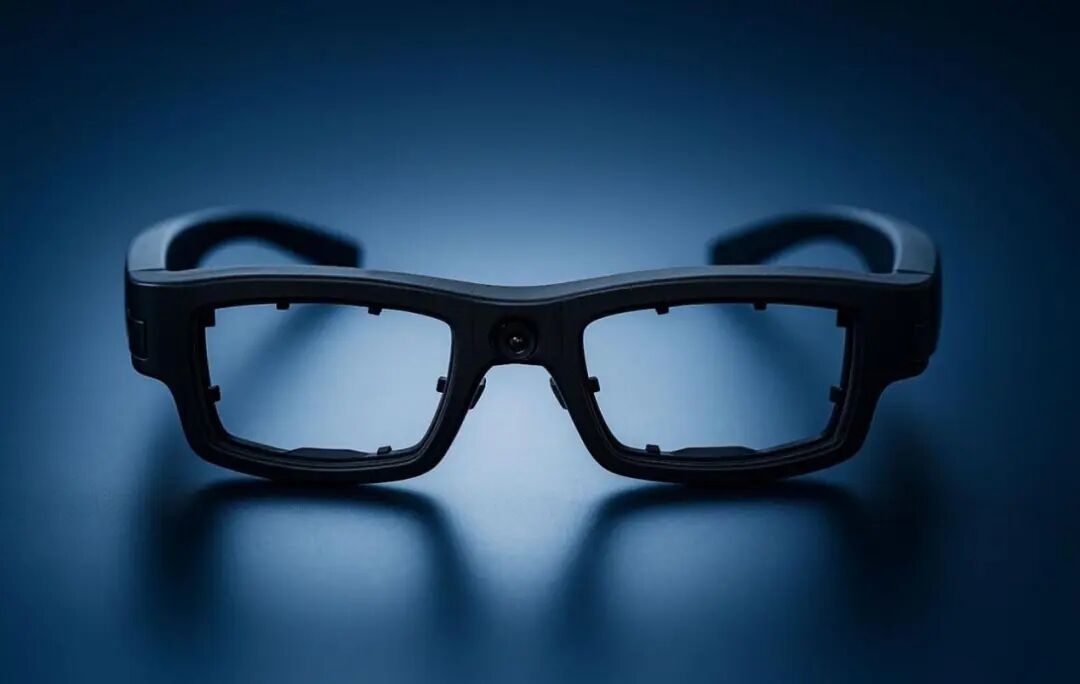
SeeTrue's technology is specifically designed to address these challenges.
The company's technology originated in neurosurgical medical scenarios and has undergone rigorous stability validation. Co-founder and CEO Roman Bednarik, a professor of interactive technology at the University of Eastern Finland, led his team in developing the world's first eye tracker for surgical microscopes. In the high-stakes environment of neurosurgical operating rooms, where eye trackers must operate flawlessly, SeeTrue's technological advantages were forged.

Returning to the technology, SeeTrue's approach involves co-designing miniature sensing hardware with highly optimized embedded processing algorithms rather than simply assembling off-the-shelf components.
In practice, SeeTrue uses anatomical structures for dynamic sensing, combined with custom optics, on-device computation, and hardware-level synchronization to achieve eye tracking. This approach allows eye-tracking data to be processed locally on the device without needing cloud transmission, reducing latency and ensuring privacy.
SeeTrue has filed five patents focusing on core technologies such as detecting human gaze points and designing near-eye devices like smart glasses.
Its product lineup includes the ST AIR embedded eye-tracking module for AR/VR and smart glasses, the ST ART eyepiece module for microscopes and telescopes, the ST ONE Light wearable eye tracker, and the ST RING multi-device synchronization system.

Among these, the ST AIR module features real-time high-frame-rate gaze tracking at ultra-low power consumption, with data processed locally on the board without transmitting raw video streams. The ST RING system enables synchronization of hundreds or thousands of eye trackers with microsecond-level precision.
Eye Tracking: A Crowded but Rapidly Growing Sector
While SeeTrue is still a relatively small player in the global eye-tracking sector, its technological approach is distinctive.
The overall eye-tracking market has been expanding, with cumulative global patent filings exceeding 28,000 by the end of 2025. The global VR/AR/XR eye-tracking market reached $2.73 billion in 2025, up 48.6% year-on-year. That same year, smart glasses with eye-tracking capabilities shipped 6.8 million units. By the first quarter of 2026, 34% of consumer headsets integrated eye-tracking functionality.
SeeTrue faces competition from well-known players like Tobii, Varjo, and Pupil Labs. Its key differentiator is its focus on 'ultra-low power consumption' and 'miniaturization.' For example, Tobii's technology is widely used in scientific research, consumer experience studies, and automotive applications, while SeeTrue concentrates on wearable devices and embedded optical systems.
While €2.2 million in seed funding is modest by hardware sector standards, one thing is clear: the demand for eye tracking in smart glasses is becoming urgent, and this is the opportunity SeeTrue aims to seize.
The growing importance of eye-tracking technology for smart glasses is also tied to the industry's current interaction bottlenecks.
Smart glasses have become increasingly lightweight in recent years, which is positive, but their interaction methods have lagged. Voice recognition struggles in noisy environments, gesture recognition requires specific lighting conditions, and touchpad operations feel unnatural. Many in the industry believe eye tracking could be a key technology for next-generation natural interactions.
However, implementing eye tracking in smart glasses is challenging, and most current products have yet to achieve it. Eye tracking requires sensors to operate continuously, consuming power. Meanwhile, glasses must also power displays, Bluetooth, microphones, cameras, and other components, putting significant strain on batteries. Additionally, on-device computation, while fast and privacy-preserving, is also power-intensive.
SeeTrue's CEO and co-founder Roman Bednarik has stated that they are not just improving eye tracking but shrinking it to fit the future of wearable devices. For XR and AI glasses to achieve mass adoption, eye tracking must be 'invisible' to users but more powerful for devices.
This explains Zeiss's interest in such a small company.
The head of Zeiss Venture Capital believes SeeTrue has developed a differentiated eye-tracking approach and that its team can address key challenges in vision-based applications. Their technology also has the potential to make human-computer interaction more intuitive, efficient, and seamless in medical and other professional workflows.
Zeiss has made numerous investments in the wearable sector in recent years: In 2018, it co-founded tooz technologies with Deutsche Telekom to focus on AR optical solutions and prescription adaptations. In October 2025, it established a new strategic business unit called 'Zeiss Extended Reality.'
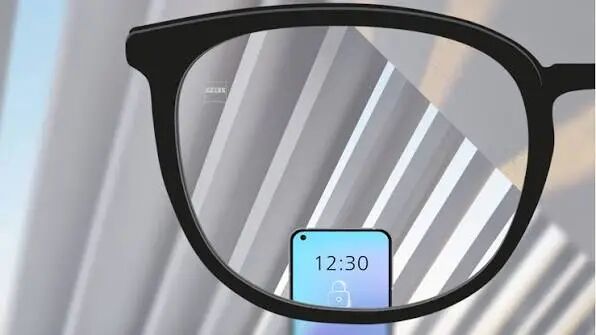
Looking further back, Zeiss acquired Swiss company Vivior AG, which develops frame-mounted sensors to track wearers' real visual behavior. It also invested in Belgian autofocus glasses company Morrow Eyewear.
From Zeiss's recent strategic layout (layout), it has gradually covered the entire technology chain, including optical lenses, display solutions, and eye-tracking interactions. SeeTrue fits perfectly into the 'interaction layer' and its ultra-low-power technological approach fills a missing piece in Zeiss's current portfolio.
Conclusion
For SeeTrue, Zeiss's involvement brings far more than just €2.2 million.
Founder Roman Bednarik notes that Zeiss's expertise in optical system design and vision technology is invaluable for their ongoing development and commercialization of eye-sensing platforms. Additionally, investor Luminate—the world's largest startup accelerator for optics, photonics, and imaging—provides resources that may be even more valuable than the funding itself for a deep-tech startup in a small Finnish town.
The smart glasses market in 2026 stands at a critical juncture. In the second quarter of 2025, AI accounted for just 19% of wearable glasses shipments, but by the second quarter of 2026, this share had surged to over 85%. Global AR glasses shipments exceeded 28 million units in 2025 and are expected to reach over 42 million units this year.
The industry widely expects Apple to release smart glasses with integrated eye tracking between 2026 and 2027. During this window, eye-tracking technology is moving from laboratories to consumer markets.
The real challenge is whether eye tracking will become a standard feature in smart glasses or remain limited to a few high-end devices. SeeTrue is betting on the former. If eye-tracking modules can be made small, power-efficient, and affordable enough, they could follow the path of fingerprint recognition in smartphones and become a standard feature in smart glasses.
Of course, SeeTrue faces many challenges. Established players like Tobii have earlier market entry and deeper customer relationships. Tech giants like Apple, Meta, and Google are also developing their own eye-tracking technologies. For SeeTrue to establish a competitive position against these in-house solutions, time will tell.
Written by / Jacaranda
(All images not specifically credited are sourced from the internet)
-
![]()
Who’s Sounding the Alarm on ‘Rushed Vehicles’?
-
![]()
Over 5.3 Billion Yuan in Losses Over Three and a Half Years! Can Yonyou Reverse Its Fortunes Through Streamlining and AI Transformation?
-
![]()
Baidu AI Adopts Free Model: A Strategic Maneuver in Traffic and Monetization
-
![]()
Silicon-Based OLED Pioneer Unveils Financial Results: H1 Shipments Outpace Entire 2025 Volume
-
![]()
AI's First "Lost Summer"
-
![]()
Zeiss Makes Another €2.2 Million Bet: Will Eye Tracking Be the Next Big Thing in the Smart Glasses Industry?
-
![]()
RUNTO Ranking | Global Top TV ODM Factories' Shipment Figures for July 2026
-
![]()
Dealer Service Operational Prowess | How After-Sales Managers Can Harness Efficiency and Expertise to Secure Trust in the New Energy Era