Dealer Service Operational Prowess | How After-Sales Managers Can Harness Efficiency and Expertise to Secure Trust in the New Energy Era
 08/25 2026
 518
518
China's automotive landscape is experiencing a seismic transition from the 'Fuel Age' to the 'Intelligent Electric Age.' Amidst this transformative wave, dealer networks are grappling with unprecedented challenges—reshuffled brand hierarchies, fluctuating pricing mechanisms, and escalating user expectations are systematically dismantling the once-formidable profit壁垒 (barrier) centered on 'maintenance and repairs.' This erosion is being accelerated by direct sales models, transparent service offerings, and over-the-air (OTA) updates, which are stripping away layer after layer of traditional profit margins.
Some traditional dealers are gracefully bowing out, while others are frantically attempting to adapt to new trajectories. The very nature of automotive products is shifting from mechanical assemblies to 'software-defined vehicles.' The customer base is evolving from family-oriented commuters to tech-savvy 'digital natives.' Marketing strategies are advancing from 'scripted sales pitches' to 'scenario-based empathy.' Even the fundamental logic of maintenance is undergoing a recalibration, moving from 'oil change intervals' to 'system diagnostics.'
Many dealers in the midst of this transition are grappling with 'acclimatization issues': their hardware keeps pace with the times, but their software mindsets lag behind. Processes are being replicated without consideration for the new context, resulting in a severe lack of service granularity. As after-sales managers, if you find yourself frequently receiving the following two types of customer complaints, it's a clear signal to pause and conduct a comprehensive system review.
▍Customer Feedback: Two 'Jarring' Yet Authentic Pain Points
Case 1: 'I scheduled a one-hour maintenance appointment, only to waste 30 minutes waiting for a car wash. Is my time of no value?'
The customer booked in advance, anticipating a seamless service experience, only to endure significant idle time during the car wash. The underlying message isn't that 'the car wash is too slow,' but rather that 'the appointment promise is meaningless; my time isn't respected.' In the intelligent era, appointments represent a bilateral time contract, not a unilateral admission ticket. When dealerships treat maintenance and car washes as isolated steps, while customers perceive them as a 'holistic service experience,' efficiency gaps directly undermine trust.
Case 2: 'Dashboard blackout, data reset, loss of vehicle control—no resolution after days of repairs. When will this nightmare end?'
During normal driving, the central console and dashboard froze and went black, data was lost, and the near-'blind driving' emergency left the user terrified. Worse still, over a month after the fault first occurred and days into repairs, the service team failed to provide a clear timeline for resolution. The customer isn't merely inquiring about the repair progress; they're demanding accountability for safety standards and certainty in technical capabilities. In the smart vehicle era, a vast service chasm exists between the unpredictability of software faults and customer expectations for 'immediate responses.'
These complaints, while superficially about subpar maintenance services and process bottlenecks, actually reveal two core capability gaps within after-sales departments:
Misaligned Communication Efficiency: Service advisors fail to stabilize customer emotions through professional diagnosis upfront or alleviate anxiety by providing frequent, transparent progress updates. When information voids emerge, customers' imaginations tend to run wild, exacerbating the situation.
Detached Technical Competence: Faced with atypical software or system faults, repair teams still rely on traditional 'part-replacement thinking' and paper manuals, lacking cross-domain diagnostic capabilities and rapid linkage mechanisms with brand technical backends. Repairs devolve into a 'trial-and-error' process, making it impossible to honor time commitments.
▍Breakthrough Path: Two Pillars for Transitioning from 'Process Execution' to 'Trust Cultivation'
Pillar 1: Service Advisors Replace 'Polite Scripts' with 'Professional Diagnosis'
Today's users are pragmatic and highly informed. Reception must transcend superficial enthusiasm, such as merely 'offering tea,' and instead:
Contextualize Diagnosis: Proactively inquire about details like battery levels, road conditions, weather, and charging habits during vehicle use to map out a comprehensive fault trigger profile. This makes customers feel served by 'vehicle-savvy' experts who truly understand their needs.
Node-Based Synchronization: Establish mandatory progress follow-up mechanisms. Examples include 'preliminary diagnosis within 15 minutes of vehicle intake,' 'progress updates every 2 hours during repairs,' and 'early warnings for estimated delivery time fluctuations.' When synchronizing progress, avoid evading issues but never induce anxiety—replace vague promises with certainty-driven language.
Pillar 2: Technical Teams Replace 'Solo Efforts' with 'Collaborative Diagnosis'
Facing rapidly evolving domain controllers, OTA logic, and perception algorithms, dealers must redefine the value of technical experts:
Experience-Based Judgment + Resource Orchestration: Senior technicians' value no longer lies solely in repairing parts but in swiftly locating potential software versions or power management modules based on fault symptoms. They should immediately activate backend resources like brand technical expert groups and remote diagnostic platforms, upgrading 'isolated repairs' to 'systemic consultations.'
Establish Knowledge Base Curation: Structurally archive diagnostic paths, data logs, and solutions for every complex fault, creating the dealership's own 'smart vehicle case library.' This will significantly shorten average resolution times for similar issues in the future.
When products are user-friendly, technology is attentive, and after-sales service is hassle-free, customer trust in the brand evolves from a one-time transaction into a long-term partnership. After-sales managers serve as the critical 'trust gatekeepers' in this loop. When workshops eliminate 'wasted appointment times' and work orders clarify 'unexplained wait reasons,' repurchases and referrals naturally follow as a matter of course.
Layout | Zheng Li
Image Source | Qianku Network
-
![]()
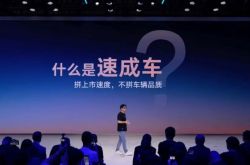
Who’s Sounding the Alarm on ‘Rushed Vehicles’?
-
![]()
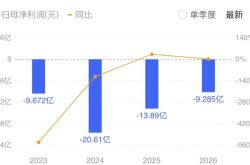
Over 5.3 Billion Yuan in Losses Over Three and a Half Years! Can Yonyou Reverse Its Fortunes Through Streamlining and AI Transformation?
-
![]()
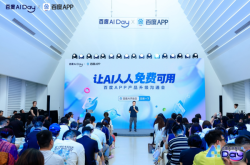
Baidu AI Adopts Free Model: A Strategic Maneuver in Traffic and Monetization
-
![]()
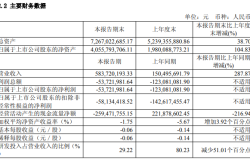
Silicon-Based OLED Pioneer Unveils Financial Results: H1 Shipments Outpace Entire 2025 Volume
-
![]()
AI's First "Lost Summer"
-
![]()
Zeiss Makes Another €2.2 Million Bet: Will Eye Tracking Be the Next Big Thing in the Smart Glasses Industry?
-
![]()
RUNTO Ranking | Global Top TV ODM Factories' Shipment Figures for July 2026
-
![]()
Dealer Service Operational Prowess | How After-Sales Managers Can Harness Efficiency and Expertise to Secure Trust in the New Energy Era