Robotaxi: Time to Clear Up the Financial Fog
 05/22 2026
 526
526
Editor|Li Jiaqi
Image Source|Internet
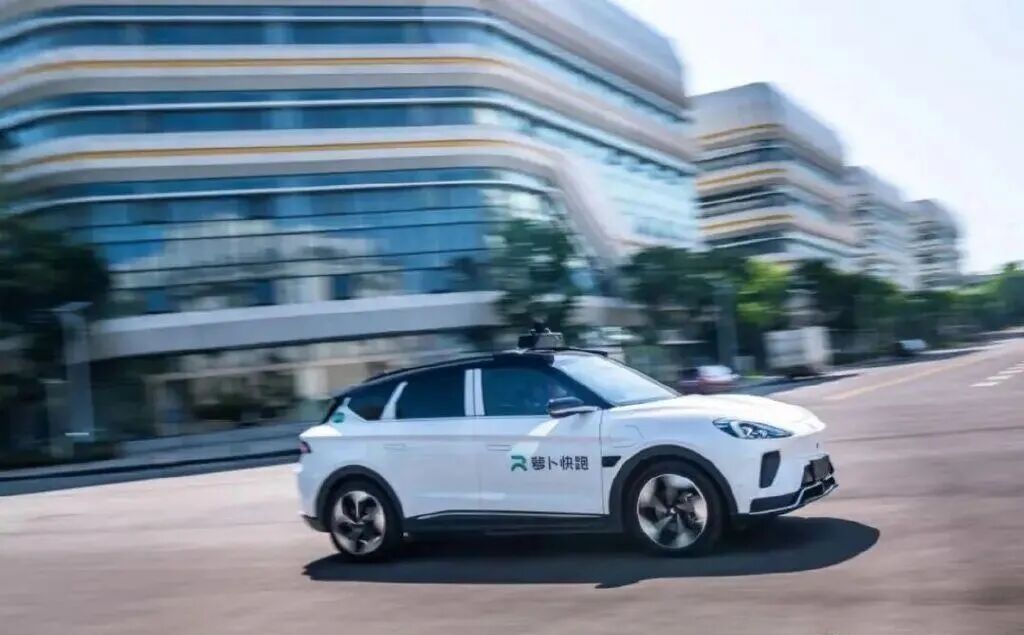
On May 18, Baidu released its Q1 financial report, revealing the latest performance of Luobo Kuaipao. In the first quarter, the fully driverless ride-hailing service completed 3.2 million orders, marking a year-on-year increase of over 120%.
Judging solely by these figures, Robotaxi remains Baidu's most significant growth engine. Amid narratives where AI revenue surpasses advertising revenue for the first time, Luobo Kuaipao logically should be the highlight of the story. However, when we delve into these 3.2 million orders, it becomes evident that this is not the only narrative thread for Luobo Kuaipao.
Just before the earnings release, Luobo Kuaipao quietly raised prices in Wuhan. According to real-world tests, the actual fare per kilometer ranges from a low of 1.6 yuan to nearly 2 yuan, roughly in line with local taxi rates. However, when subsidies are removed and original prices are considered, the cost per kilometer soars to 4.6–6.7 yuan. The era of 'pennies-per-kilometer' fares has ended.
As subsidies diminish and prices rise, several signals indicate that Luobo Kuaipao is exposing the 'extensive' approach of the entire Robotaxi industry, which has previously focused on data and scale. It's time to reassess this strategy.
1. 'Peak-to-Average Ratio' Inversion: Luobo Kuaipao Reassesses Its Metrics!
Beyond total order numbers, Luobo Kuaipao also disclosed peak data: weekly order peaks exceeded 350,000 in March, with daily averages reaching up to 50,000—equivalent to 34 orders per minute. Over a 90-day quarter, the 3.2 million orders translate to an average of approximately 35,600 daily orders. A straightforward calculation reveals a nearly 14,000-order gap between peak and average, resulting in a peak-to-average ratio of about 1.4 times.
The 'peak-to-average ratio' is a crucial metric for evaluating the operational health of cyclical businesses. Although rarely discussed in the Robotaxi industry, a comparable ratio in the ride-hailing sector typically fluctuates between 1.5–3, reflecting a company's ability to meet societal travel demands and its market penetration depth. While Luobo Kuaipao's deviation from normal fluctuations is only 0.1, it still raises concerns.
Especially during the first quarter's peak travel season, data shows that ride-hailing orders in third-tier and lower cities surged by 95% during the Spring Festival. Leading platforms like Didi saw order volumes quadruple during peak periods. As an industry leader, Luobo Kuaipao's relatively flat demand curve suggests it has not yet cultivated corresponding market habits around user travel needs.
Horizontally, peer data further illustrates the issue. Take WeRide as an example: according to recent figures, its domestic Robotaxi vehicles now average over 17 daily orders, peaking at 28, with a peak-to-average ratio of about 1.65—placing it within the industry's normal range.
More intriguingly, among multiple autonomous driving firms, Luobo Kuaipao offers the highest subsidies. Based on 2026 pricing in Wuhan, a 10-kilometer trip costs approximately 15 yuan with Luobo Kuaipao, 57% cheaper than Didi's express service. In contrast, Pony.ai charges around 20 yuan for the same distance in Shenzhen, while WeRide's 0.5 USD/km rate would amount to 36 yuan.
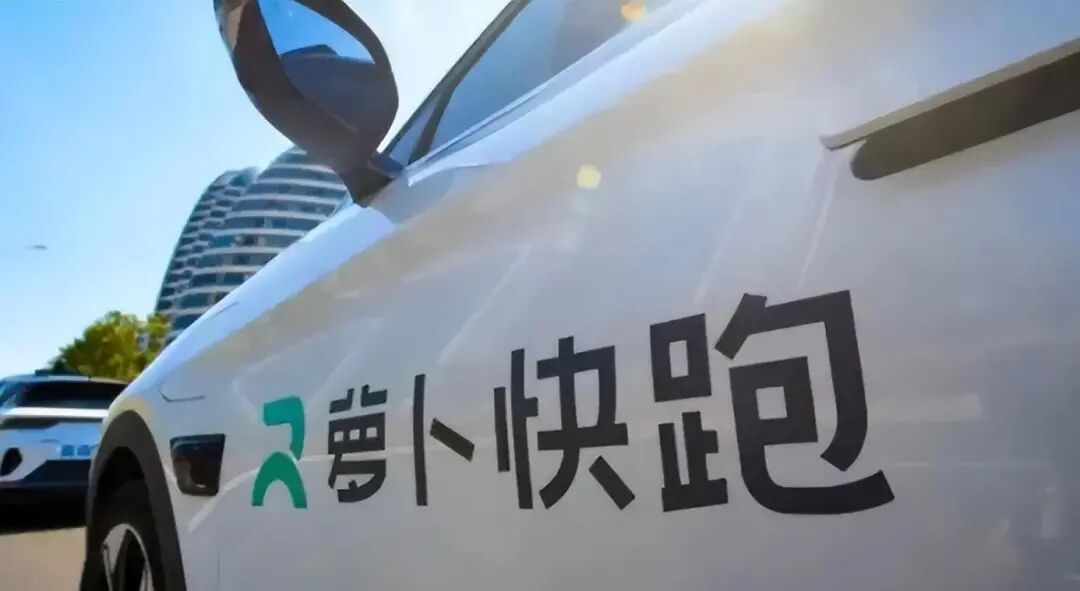
The core issue lies in 'subsidy effectiveness.' Under various discounts, Luobo Kuaipao passengers currently pay only 30–50% of the original fares. For instance, a 9.6-kilometer, 25.63-yuan trip costs users just 14.41 yuan. Moreover, compared to other platforms, Luobo Kuaipao's marketing tactics are more direct, offering cash incentives like '15 yuan cashback after three rides' and various '10% off' new user promotions.
This suggests that high-value, high-frequency subsidies have failed to create corresponding market incentives or educate users to shift from novelty experiences to 'daily travel necessities' with Luobo Kuaipao's Robotaxi service. Instead, they've fostered inertia—demand exists when subsidies are available but declines when they're reduced or removed.
This may explain why, despite maximal subsidies and peak travel seasons, Luobo Kuaipao's demand side has never truly 'exploded.' Looking back, how much of the 3.2 million services reflect genuine market demand, and how much is subsidy-driven inflation? For Luobo Kuaipao, commercialization was once a narrative; now, it's a real test.
2. Who Is Truly Commercial, and Who Relies Solely on Subsidies?
In the early stages of industrial development, using subsidies to lower usage barriers and expand market demand is a standard practice. Didi used subsidies to capture the market, and Meituan used them to cultivate food delivery habits—both classic business strategies. The key question is whether subsidies have solidified user habits, forming a closed loop of 'spending to retain users to profit.'
Around this loop, several autonomous driving firms have taken distinct paths in recent years.
Pony.ai prioritizes profitability. As early as 2024, when most autonomous driving services were free or symbolically priced, Pony.ai introduced paid services in first-tier cities like Beijing, Guangzhou, and Shanghai. In August of the following year, it became one of the first firms to obtain a driverless charging license in Shanghai, establishing clear pricing: a 14 yuan base fare, plus 2.7 yuan/km thereafter, and 3.6 yuan/km beyond 15 km. This marked the formal commercialization of the first driverless taxi service and positioned Pony.ai as an early advocate for subsidy reduction.
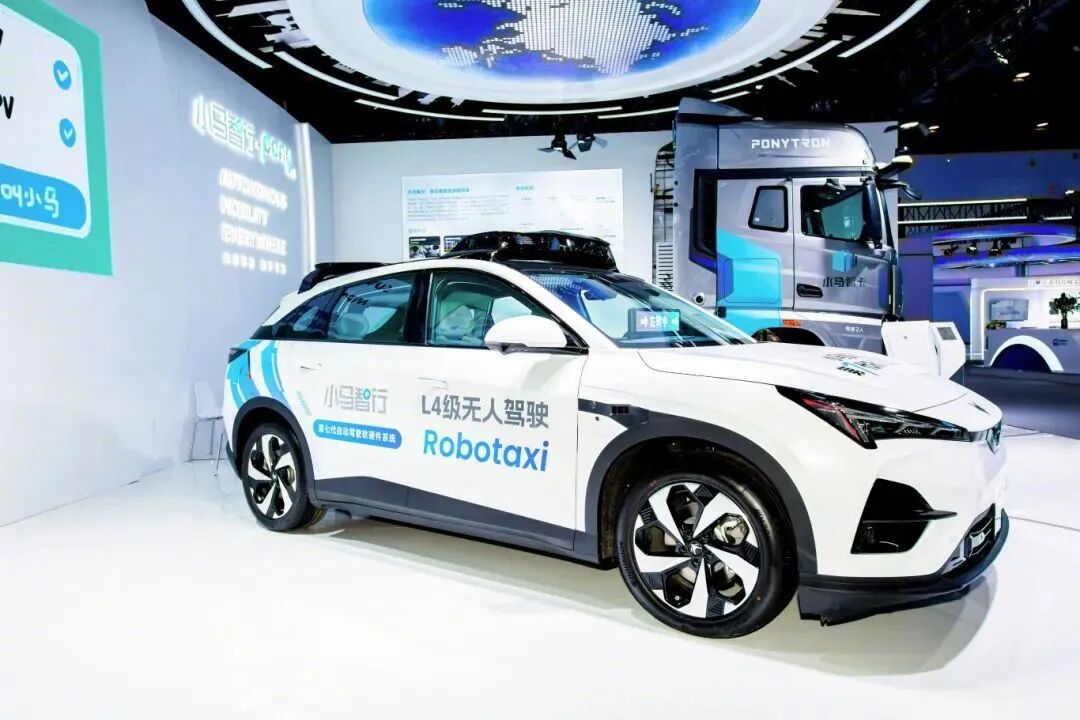
Today, its average daily net revenue per vehicle in Shenzhen is 394 yuan, with 25 orders per vehicle—close to the daily earnings of local ride-hailing drivers. Pony.ai founder and CEO James Peng has repeatedly emphasized profitability as the top priority. Over the past year, its Robotaxi revenue reached $16.6 million, with passenger fare revenue surging nearly 400% year-on-year, and over 500% in Q4 alone. This indicates a shift from novelty experiences to 'daily travel necessities.'
WeRide, meanwhile, has taken a more circuitous route: prioritizing business models and using high-margin overseas markets to subsidize domestic operations. Q1 earnings show WeRide's revenue at 114 million yuan, up 58% year-on-year, with a gross margin of 35%. It now operates in over 40 cities across 12 countries, partnering with Uber in Dubai and Grab in Singapore—both mature, high-pricing, high-margin markets—achieving healthy operational efficiency.
The commonality between these two firms? Subsidies are a means, not an end. Their scale and timing serve clear, quantifiable business milestones.
Luobo Kuaipao, conversely, prioritizes data and scale. From Wuhan's 'pennies-per-kilometer' pricing to rapid expansion across 27 global cities, it follows a typical internet traffic mindset: use high subsidies to secure market share and data, prove the model with impressive growth curves, and then rely on capital markets to sustain operations.
In the early autonomous driving track, this logic held. Subsidies accelerated technological road testing, scenario data accumulation, and user acceptance. However, as peers reduce subsidy dependence and focus on unit economics, Luobo Kuaipao remains trapped in old data-driven logic.
The result? Pony.ai, the earliest to reduce subsidies, achieved positive per-vehicle profitability in multiple core cities. WeRide, the most expensive, achieved a 35% global gross margin. Meanwhile, Luobo Kuaipao, despite aggressive subsidies and impressive data, struggles to articulate stories around operational quality and market potential. Its real paid demand thickness lags far behind the market average.
3. Robotaxi: Time to Clear Up the Financial Fog!
Regardless of the path taken, during the market exploration phase, all firms are essentially gambling—on policy shifts, on the critical point of scaling cost reductions. What exactly is the Robotaxi industry betting on?
Over the past few years, the variables determining Robotaxi's transition from scale to profitability hinge on four factors: regulations, costs, technological generalization capabilities, and a company's operational density. Regarding operational density, Pony.ai CEO James Peng straightforwardly states, 'The biggest variable is density.' With similar per-vehicle cost structures across cities, fleet density becomes the core profitability driver. Higher vehicle density shortens passenger wait times, reduces idle rates, increases order volumes, and directly boosts revenue.

In recent years, Luobo Kuaipao has aggressively promoted autonomous driving adoption. If the 'critical point' for autonomous driving arrives, Luobo Kuaipao, with the industry's largest fleet and massive road test data, could emerge as the biggest winner. However, uncertainty remains: will this inflection point arrive, and when? Can cash flow and business logic hold until then?
At least based on current results, Luobo Kuaipao is showing signs of caution. Wuhan's quiet price hike is essentially damage control. The 1.6 yuan/km minimum fare appears to align with taxi rates, but when compared to the original 4.6–6.7 yuan/km without subsidies, it reveals that Luobo Kuaipao's former pricing advantage relied entirely on subsidies.
This exposes Luobo Kuaipao's core risk: when high subsidies anchor user expectations at 'pennies-per-kilometer,' any subsidy reduction risks a cliff-like drop in orders. Price-sensitive early adopters won't pay normal or premium fares for the same service. Before achieving true scale and network effects, this aggressive low-price strategy overdrafts brand positioning and user expectations.
Pony.ai has proven Robotaxi commercialization can withstand scrutiny through pay conversion rates and per-vehicle net revenue. WeRide has demonstrated that high-margin overseas markets will pay for reliable services. Luobo Kuaipao possesses the industry's largest fleet and vast road test data—valuable hard assets—but their worth depends on a clear commercial closed loop.
For Luobo Kuaipao, a period of 'growing pains' is inevitable. For the entire Robotaxi industry, now that the market is testing commercial fundamentals, it must address past oversights and clarify its financial accounts.
End
-
![]()
Doubao Work Unveiled! Domestic AI Leaders Fully Commit to the 'Work' Sector
-
![]()
Who’s Sounding the Alarm on ‘Rushed Vehicles’?
-
![]()
Over 5.3 Billion Yuan in Losses Over Three and a Half Years! Can Yonyou Reverse Its Fortunes Through Streamlining and AI Transformation?
-
![]()
Baidu AI Adopts Free Model: A Strategic Maneuver in Traffic and Monetization
-
![]()
Silicon-Based OLED Pioneer Unveils Financial Results: H1 Shipments Outpace Entire 2025 Volume
-
![]()
AI's First "Lost Summer"
-
![]()
Zeiss Makes Another €2.2 Million Bet: Will Eye Tracking Be the Next Big Thing in the Smart Glasses Industry?
-
![]()
RUNTO Ranking | Global Top TV ODM Factories' Shipment Figures for July 2026