Lenovo's 589.9 Billion Yuan Revenue: Interest Paid Three Decades Late
 05/26 2026
 574
574
Produced by | Smart Machine Island
In 1995, a pivotal strategic dispute erupted within Lenovo in Beijing's Zhongguancun, an event destined to be etched in the annals of Chinese corporate history.
Chief Engineer Ni Guangnan advocated for investing resources in self-developed chips, aiming to rival Intel and follow a technology-driven route. President Liu Chuanzhi, however, believed Lenovo should leverage China's manufacturing cost advantages, arguing that it was better to buy chips and operating systems rather than make them, focusing first on expanding market share and then accumulating technology.
Ultimately, Ni Guangnan was removed from his positions as Chief Engineer and Board Director, and Lenovo's ASIC chip and other projects were terminated.
This was a far-reaching decision. The essence of the trade-industry-technology route was to exchange market share for time and scale for space.
For a company emerging from a research institute with limited original capital accumulation, this approach was not unreasonable. However, the real question is whether, after achieving significant scale, this strategy would transform from an active choice into a rigid organizational trait.
Three decades later, Lenovo partially answered this question with its best-ever financial report.
On May 22, 2026, Lenovo Group released its annual report for the fiscal year 2025/26: full-year revenue reached 589.9 billion yuan, surpassing the 500 billion mark for the first time, up 20.3% year-on-year; adjusted net profit hit 2 billion USD, up 42.1% year-on-year, both setting new historical highs.
The fourth fiscal quarter was particularly outstanding, with revenue nearing 150 billion yuan, up 27.1% year-on-year, marking the highest growth rate in nearly 20 quarters. Stock prices surged nearly 20% on the same day, with market capitalization approaching 200 billion HKD.
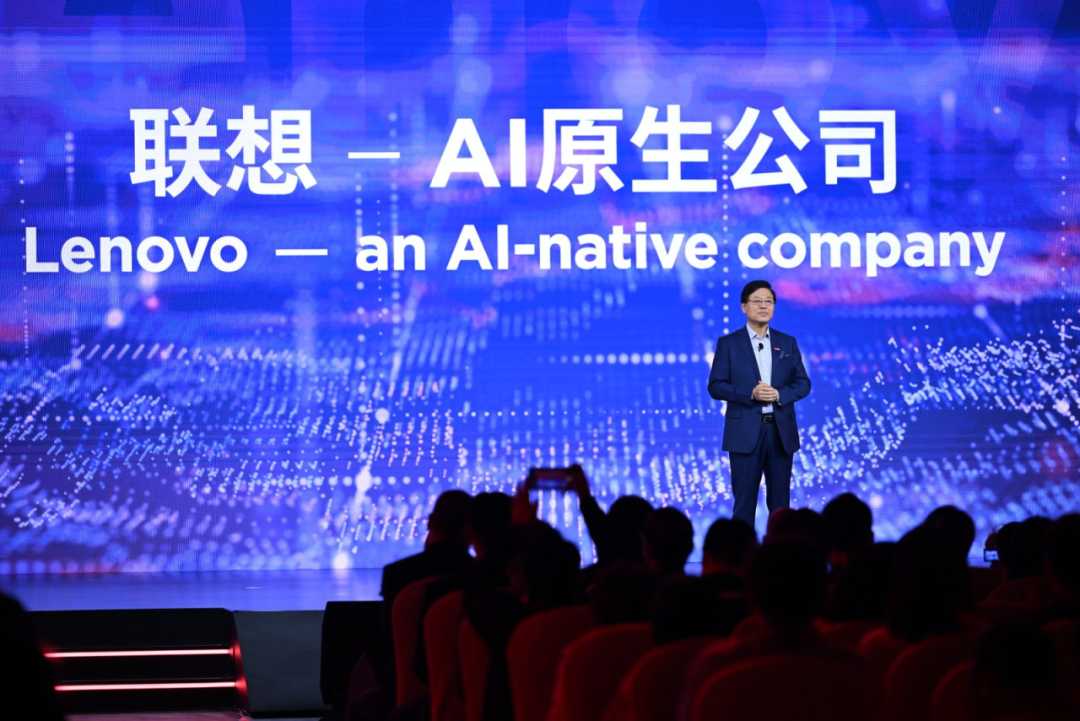
Yang Yuanqing confidently declared that Lenovo would become a trillion-dollar enterprise within two years, fully transforming into an AI-native company.
Yet, the phrase 'best year ever' implicitly raises a question: what did Lenovo experience in the years leading up to this?
In a business world where true corporate character is revealed over decades, the euphoria over financial numbers often obscures deeper structural issues. Are the dividends Lenovo enjoys today the result of a genetic mutation or merely delayed interest from a pivotal decision made thirty years ago?
I. Two Lenovos in the Financial Report
Opening Lenovo's annual report for the fiscal year 2025/26, what jumps out is not numbers but rhythm—a company existing simultaneously in two temporal dimensions.
The first Lenovo is a hardware empire rooted in the present.
All three business groups achieved double-digit revenue growth and full-line profitability, a rare comprehensive performance for Lenovo in recent years.
IDG's Intelligent Devices business generated 418.5 billion yuan in annual revenue, up 16.6% year-on-year, pushing Lenovo's global PC market share to a historic peak of 24.4%, with high-end PC shipments accounting for 50%. Motorola smartphones remained at the forefront in North American and Latin American markets, with high-end product shipments reaching a record 19%.
ISG's Infrastructure Solutions Group reported annual revenue of approximately 19.2 billion USD (136.2 billion yuan), soaring 32% year-on-year, achieving full-year profitability for the first time after years of losses. Operating profit in the fourth quarter reached 202 million USD, a record high.
SSG's Solutions and Services Group surpassed 10 billion USD in revenue for the first time, maintaining an operating profit margin above 22%. AI-related revenue doubled year-on-year, accounting for nearly 38% in the fourth quarter. AI servers equipped with NVIDIA's GB300 NVL72 platform began full-scale shipments, with AI server order backlog swelling to 21 billion USD.
These figures portray a formidable Lenovo. Against a backdrop of slowing global PC market growth at 2.5%, Lenovo not only stabilized its core business through diversified global manufacturing and long-term supply chain advantages but also precisely captured a second growth curve amid the surge in AI computing demand.
Yet, the second Lenovo hides deep within the financial statements.
Gross profit margin declined from 16.1% to 15.4% annually. ISG's full-year operating profit was a mere 73.37 million USD, with razor-thin profit margins, only breaking through 200 million USD in the fourth quarter driven by AI server deliveries. While high-end smartphone shipments increased, specific profit contributions remain undisclosed.
More subtle signals lie in the structure of R&D spending.
Annual R&D investment reached 2.49 billion USD, up 9% year-on-year, but R&D expenditure ratio stood at just 3%. Viewed over a longer timeline: a decade ago, Lenovo's R&D ratio was about 2.6%; five years ago, around 2.9%; it only barely surpassed 3% in the 2025/26 fiscal year.
This is an extremely gradual upward curve, barely perceptible as the pivot of an AI-native company.
Capital market pricing honestly reflects this dichotomy. Lenovo's market cap hovers around 20 billion USD, less than one-eighth of Dell's, despite Dell's revenue being only about 1.4 times Lenovo's.
The gap lies not in scale but in profit margins and autonomy over core technologies. Dell's ISG operating profit margin reached 14.8%, with AI server shipments exceeding 25 billion USD. While Lenovo's ISG achieved quarterly profit breakthroughs, its overall operating profit margin remains well below 10%.
Investors believe Dell can extract higher value from AI server orders, whereas Lenovo is still seen as a super-integrator winning by scale.
The full picture of the 'best financial report ever' becomes clear: it is a story about interest.
The path chosen three decades ago continues to pay substantial returns on schedule. Lenovo's exceptional operational capabilities, strong supply chain, and solid customer relationships remain its core assets for navigating cycles.
However, the principal—self-developed operating systems, core chips, foundational models—the capabilities that truly define a technology company—was never truly invested in.
II. Old Problems in New Guises
AI-native or AI-packaged?
To understand Lenovo's current AI strategy, one must revisit its painful lessons in the smartphone business.
Lenovo's smartphone business twice found itself in advantageous positions. Before China's smartphone market erupted, Lenovo was among the few vendors with brand, channel, and manufacturing capabilities.
However, over-reliance on carriers led to a chaotic product lineup focused on low-margin budget models. When carrier subsidies dried up and competition from Huawei and Xiaomi intensified, Lenovo was left floundering.
A bigger issue was Lenovo's strategic vacillation.
The smartphone business saw multiple leadership changes in quick succession, each bringing different visions but leaving unfinished agendas.
The most glaring strategic misstep occurred after acquiring Motorola. In 2014, Lenovo spent 2.9 billion USD to acquire this money-losing venture from Google, aiming to surpass Xiaomi and become the world's third-largest player. Two years later, Lenovo's global smartphone market share had completely fallen out of the top five.
Post-acquisition integration was far from smooth: in 2015, the mobile division reported a pre-tax loss of 292 million USD, with Motorola shipments plummeting 31% year-on-year.
The smartphone collapse was not an isolated incident. For an extended period, nearly all of Lenovo's diversification attempts outside PCs followed a similar pattern: ambitious beginnings, wavering execution, and ultimately fruitless ends.
This recurring pattern left Lenovo perceived in capital markets as a company that couldn't be imagined beyond PCs.
Against this historical backdrop, Lenovo now faces the AI wave. The question is whether its current AI dividends represent a true genetic mutation or merely another successful extension of its trade-industry-technology path in a new technological cycle.
Some analysts argue that Lenovo's 'over 30% AI content' resembles a carefully packaged numerical illusion. AI PCs rely on Windows upgrade cycles and price premiums for showmanship, while AI servers depend on cloud vendor orders and chip stacking, with so-called superintelligent agents offering minimal user perception.
By Canalys' definition, any computer with AI-related modules qualifies as an AI PC, regardless of actual AI capabilities. In reality, AI PCs fall far short of ideal performance, with current upgrade cycles driven more by replacement than AI experience.
In the AI computing market, Lenovo remains a systems integrator: procuring GPUs from NVIDIA, adding its liquid cooling technology, and assembling server clusters for cloud vendors and enterprise clients.
This is a profitable and rapidly growing business, but a technological chasm separates it from AI-native companies receiving high market valuations.
Lenovo's AI-native narrative is closer to AI-readiness—enabling its hardware to better carry AI workloads rather than being the original creator of AI capabilities.
If AI truly represents an epic opportunity for Lenovo, what is the cost of profitability?
The tension between AI investment and profit returns is the most critical detail in this financial report.
AI-related revenue in the fourth quarter surged 84% year-on-year, accounting for 38% of total group revenue; full-year AI-related revenue doubled. ISG's annual revenue grew 32% year-on-year, achieving full-year profitability for the first time.
An awkward truth emerges: gross profit margins are declining.
The direct cause of the overall margin decline is ISG's low profitability. In other words, while Lenovo uses scale to advance its AI infrastructure business, the marginal profits of this sector remain unimpressive, dragging down the overall level.
Yang Yuanqing succinctly explained the contradiction: the direction is correct; profits are a matter of time. He predicts that AI infrastructure will shift from training-dominated to inference-dominated. Currently, about 70-80% of GPU servers are used for training, with only 20-30% for inference. This ratio will reverse, amplifying inference demand.
SSG's Solutions and Services Group offers another vision. Annual revenue surpassed 10 billion USD for the first time, up 19% year-on-year, with operating profit margins remaining above 22%.
This segment represents AI's enterprise-side scenario-based implementation, offering stronger profit elasticity than pure hardware sales.
The AI terminal business also warrants attention. AI PCs accounted for 42.1% of PC sales in China by value, meaning they sold not only at higher prices but also in greater volumes.
Thus, the AI direction is indeed correct. The profit gap exposes deeper tensions: ISG proves 'I can sell it,' while SSG and AI PCs prove 'I can make money.' How high Lenovo can fly now depends on how these two forces interact.
III. Leap and Hidden Locks
Just one week before Lenovo released this financial report, a scene at a Beijing Great Hall of the People banquet was repeatedly captured by media: Yang Yuanqing seated alongside Elon Musk, evoking memories of a dialogue twelve years earlier.
In a 2014 CCTV 'Dialogue' program, Musk and Yang Yuanqing shared the stage. When asked about Tesla's marketing capabilities, Yang retorted, 'First ask how many customers he has.' Musk honestly replied, 'Over 30,000.'
Yang smiled and delivered his now-famous line: 'Lenovo sells five devices per second, with annual sales exceeding 115 million units.'
Many interpret this today as Yang's arrogance, but the original context suggests otherwise.
At that time, Lenovo had just claimed the global PC crown, with its IBM PC business acquisition fully profitable. Yang's status as Liu Chuanzhi's successor was solidified. Meanwhile, Tesla was mired in production hell, with Model S volume still on the horizon.
In a sales-driven consumer electronics world, few would champion a startup selling tens of thousands of cars annually.
What Yang truly failed to anticipate at that moment was the profound paradigm shift reshaping the hardware industry—and that Lenovo, at that juncture, remained essentially a hardware seller.
Two decades later, Tesla has become one of the world's most valuable tech companies. The true difference lies not in sales volume but in Musk's bet on a new species powered by intelligence—a data-driven, continuously evolving intelligent system.
However, while this comparison makes for dramatic narrative, it overlooks a crucial fact: in the same year as that dialogue, Yang orchestrated the 2.9 billion USD acquisitions of Motorola Mobility and IBM's x86 server business—the latter forming the foundation of Lenovo's current AI infrastructure business.
While Yang didn't foresee AI-as-a-Service, he spent over a decade widening the company's technological foundation from PCs to full-stack AI infrastructure, achieving a different kind of silent leap.
Today, Yang's new target for Lenovo—exceeding 100 billion USD in revenue within two years—derives confidence from two silent leaps accumulated over time.
The first trump card is Lenovo's deep integration with NVIDIA.
Lenovo is NVIDIA's only Chinese 'full-capability player' in its ecosystem, with over 30 years of collaboration, now entering a new phase as an 'AI Infrastructure Community.'
The second trump card is Lenovo's global supply chain resilience.
With a worldwide manufacturing network and 'global-local' operational model, Lenovo weathered storage chip price hikes and tariff shocks relatively smoothly through advanced inventory strategies.
Three years ago, when AI large models first ignited the computing frenzy, Lenovo seemed an outsider—neither an upstream computing power player like NVIDIA nor a storyteller like OpenAI. Capital markets could only discount it as a 'legacy PC vendor.'
Three years later, Lenovo has demonstrated with a 58% annual stock price gain, a market cap nearing 200 billion HKD, and 38% AI revenue share that in the AI grand chessboard, the values of hardware, computing power, and terminals have finally been recognized.
IV. Conclusion
After achieving its best-ever results, the true test has just begun.
As AI shifts from training to inference, with more enterprises calculating token costs, whether Lenovo can transform ISG from hardware revenue growth into a high-margin engine will determine whether it remains an AI concept company or truly becomes an AI-native enterprise that has transcended cycles.
Three decades ago, two men debated Lenovo's future in a Zhongguancun office.
The man who wanted to build chips left. Over the next thirty years, as an academician of the Chinese Academy of Engineering, he repeatedly expressed the same regret on various occasions: What would Lenovo look like today if it had chosen a different path?
History cannot be rewritten. When we examine Lenovo's record-breaking financial report, we must acknowledge the tremendous success of the trade-industry-technology route. It kept Lenovo alive, large enough to secure a seat at every technological wave's table.
Yet, repeated smartphone defeats, Motorola's indigestion, and the tragic pattern of 'early starters but late finishers' reveal a recurring outcome from the same genetic blueprint.
The trade-industry-technology choice was a pragmatic survival tactic in 1995. Three decades later, it has transformed from an external strategic path into an inescapable organizational instinct.
This instinct has haunted Lenovo like a specter in every major gamble and setback since.
AI may indeed represent a fate-altering opportunity for Lenovo. But does Yang Yuanqing have the courage to take Lenovo back to that Zhongguancun office in 1995 and re-examine the abandoned option?
Two years ago, when Academician Ni Guangnan was asked about past events in a public setting, the octogenarian elder paused for a moment before making a profound remark: 'History does not offer ifs, but it echoes.'
The answer to this question will not be found in the next financial report; it will resonate repeatedly in the business history of the next decade.
 All rights reserved by Zhixie Island. Reproduction without authorization is prohibited.
-
![]()
Doubao Work Unveiled! Domestic AI Leaders Fully Commit to the 'Work' Sector
-
![]()
Who’s Sounding the Alarm on ‘Rushed Vehicles’?
-
![]()
Over 5.3 Billion Yuan in Losses Over Three and a Half Years! Can Yonyou Reverse Its Fortunes Through Streamlining and AI Transformation?
-
![]()
Baidu AI Adopts Free Model: A Strategic Maneuver in Traffic and Monetization
-
![]()
Silicon-Based OLED Pioneer Unveils Financial Results: H1 Shipments Outpace Entire 2025 Volume
-
![]()
AI's First "Lost Summer"
-
![]()
Zeiss Makes Another €2.2 Million Bet: Will Eye Tracking Be the Next Big Thing in the Smart Glasses Industry?
-
![]()
RUNTO Ranking | Global Top TV ODM Factories' Shipment Figures for July 2026