Junao Panshi Secures New Financing Round: Investing in Brain-Inspired Intelligence for Cognitive World Models, Propelling Embodied Intelligence into the Next Era
 05/26 2026
 714
714
Junao Panshi has successfully closed a new round of financing, raising hundreds of millions of yuan. This round was spearheaded by top-tier industrial capital with profound expertise in brain-inspired and embodied intelligence, and received continued support from existing shareholders and multiple leading funds. DuoWei Capital acted as the exclusive financial advisor for this transaction.
Simultaneously, another financing round is nearing completion.
The newly acquired funds will be strategically allocated to core technology R&D, team expansion, and global market development. This will expedite the R&D, engineering implementation, and real-world validation of the Cognitive World Model.
As a pioneering next-generation embodied intelligence brain company, Junao Panshi has embraced brain-inspired intelligence as its foundational approach since its inception, constructing a Cognitive World Model (CWM) tailored for the real physical world.
Founded and led by CEO Zhu Senhua, the former chief architect of Huawei's Embodied Brain Initiative, the company leverages his extensive cross-disciplinary research in AI and brain cognition. Zhu previously served as Director of Huawei Cloud's AI Algorithm Innovation Lab, where he led AI architecture design and system-level project deployments for brain-inspired and embodied intelligence within Huawei's ecosystem.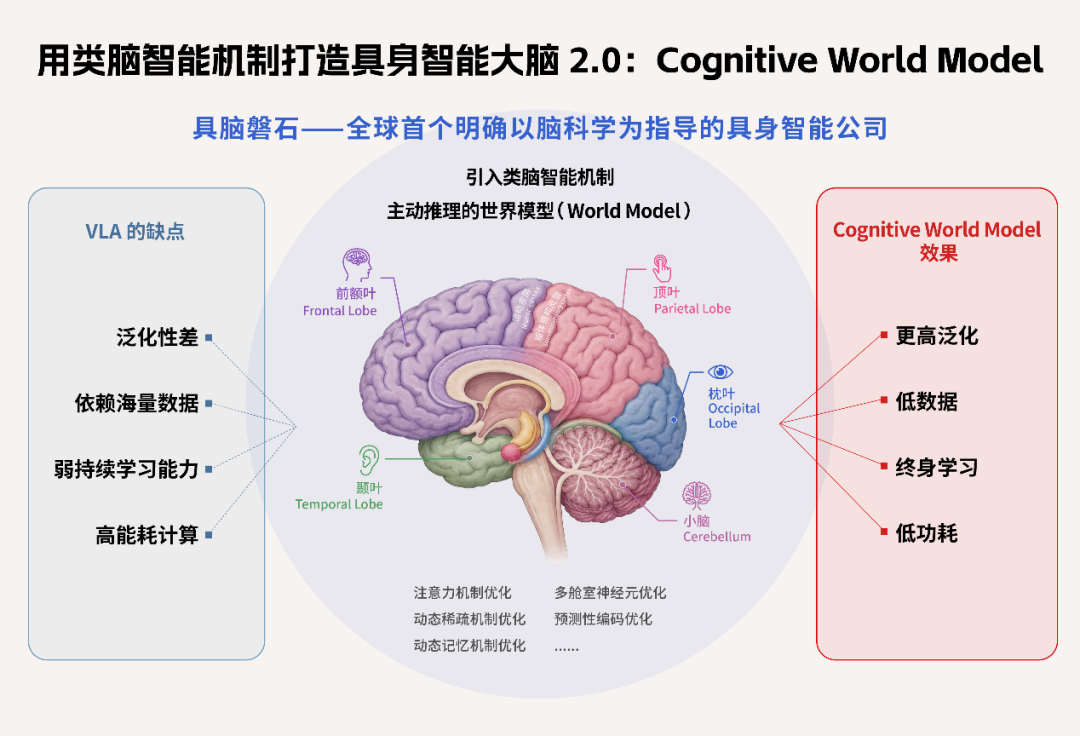
From Junao Panshi's perspective, embodied intelligence is transitioning from "motor intelligence" to "cognitive intelligence."
The next phase will focus not only on enabling robots to comprehend tasks and execute actions but also on endowing them with human-like capabilities for few-shot abstract concept learning, multi-dimensional environmental perception, long-term memory, and active reasoning. This will enable stable cross-scenario operations in the real world.
Cognitive World Model: A JEPA-Inspired Approach for Embodied Deployment
Aligning with Yann LeCun's vision, Junao Panshi is advancing the implementation of JEPA (Joint Embedding Predictive Architecture) through brain-inspired intelligence.
Currently, the deployment of embodied intelligence faces fundamental bottlenecks:
The scalable acquisition of high-quality real-world data remains challenging, models lack cross-scenario generalization (often necessitating retraining in new environments), and robots lack long-term memory and continuous learning capabilities. However, data collection and computational resources are finite.
The human brain exemplifies advanced intelligence: it does not rely on massive labeled datasets or high-energy, high-computational-power calculations, yet it continuously learns, perceives, remembers, predicts, plans, and acts in complex and dynamic environments.
This is why Junao Panshi has chosen brain-inspired intelligence as its foundational path:
Rather than merely mimicking brain structure, it extracts core brain intelligence capabilities, translates them into computational languages, and ultimately constructs the next-generation embodied intelligence brain.
Technologically, Junao Panshi's proposed Cognitive World Model (CWM) aligns with Yann LeCun's JEPA approach.
JEPA's value lies in enabling AI to transcend generating "visually plausible" results by learning state evolution in abstract representation spaces to infer future trends, more closely resembling the underlying principles of human brain cognition in the real world.
This direction is garnering global research attention. Li Feifei's World Labs is advancing spatial intelligence, while Yann LeCun's AMI Labs focuses on reasoning, planning, and real-world modeling.
Under this framework, language serves more as an external interface for intelligent systems; the true determinant of next-generation AI capabilities lies in abstraction, memory, active reasoning, and continuous learning about the physical world.
However, for robots, "representation-prediction" alone is insufficient.
Robots must ultimately operate in real environments to complete tasks. They need not only to predict world changes but also to possess long-term memory, continuous learning, active reasoning, decision-making, execution, and feedback correction capabilities.
Thus, Junao Panshi aims not to stop at academic-level World Models but to evolve toward a full embodied closed-loop capability—from goal planning to decision generation, action execution, and environmental feedback—building on JEPA's world representation capabilities.
In other words, Junao Panshi's Cognitive World Model (CWM) is a more embodied-oriented JEPA:
It not only predicts world changes but also enables robots to set goals and complete tasks through autonomous environmental cognition while continuously learning from real-world feedback.
In implementation, the company translates brain science insights—such as attention, memory, sparse computation, and active reasoning mechanisms derived from brain research—into engineering-ready algorithm models and system architectures. This ultimately targets four core technological goals:
Low-data dependency, high generalization, lifelong learning, and low power consumption—directly addressing the real-world constraints of data costs, cross-scenario adaptation, continuous operation, and computational limitations in embodied deployment.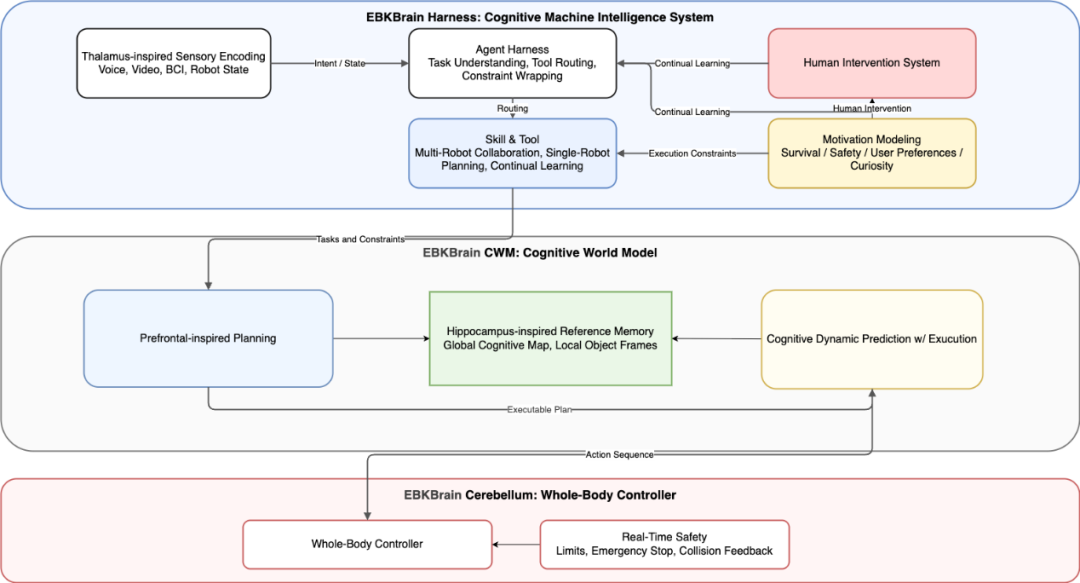

Founder and Team: Merging Brain-Inspired Academic Research with Industrial Engineering Prowess
Huawei's former lead embodied brain architect launches startup, assembling a star team with big-tech DNA.
Junao Panshi's founder and CEO, Zhu Senhua, has long focused on cross-disciplinary research in AI and brain cognition.
He conducted computer science and AI research at Sun Yat-sen University, pursued cognitive neuroscience during his PhD at the University of Pennsylvania, and completed postdoctoral research at the Chinese Academy of Sciences' State Key Laboratory of Brain and Cognitive Science. He consistently explores how human brain mechanisms for perception, memory, reasoning, and action can inform next-generation AI paradigms.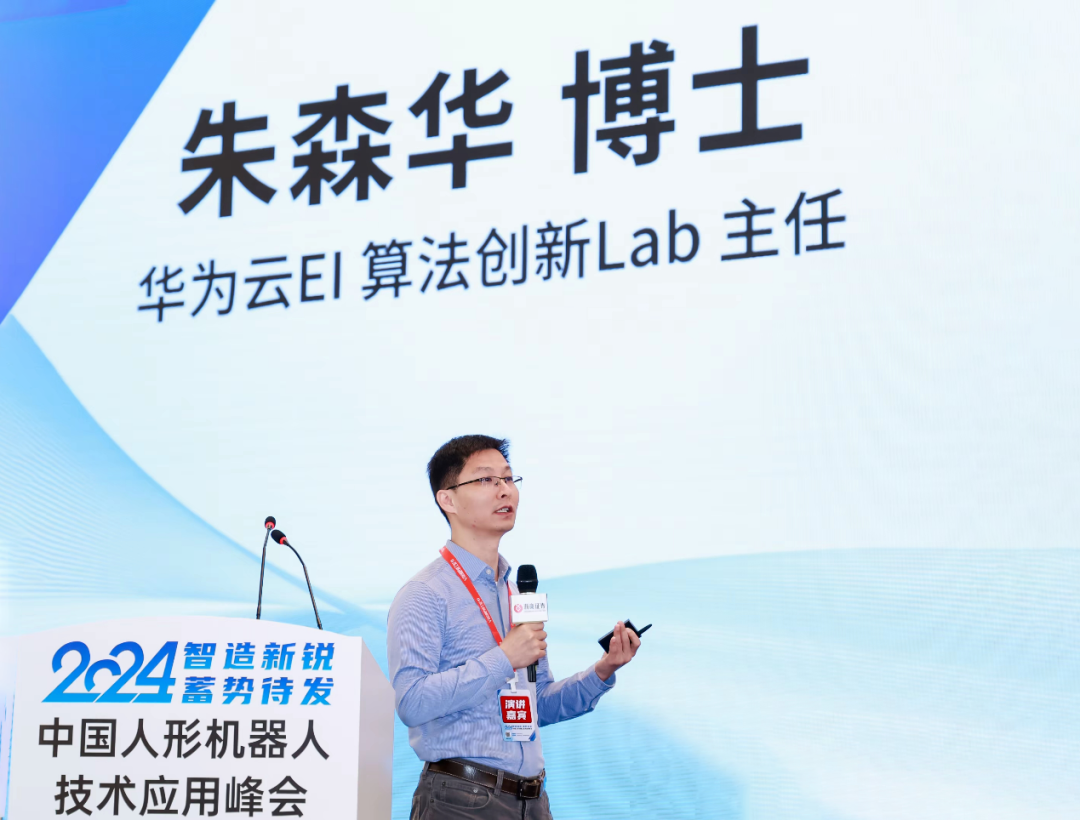
At Huawei, Zhu served as Director of Huawei Cloud's AI Algorithm Innovation Lab, leading company-wide projects such as the AI Brain Science Cloud Platform, Pangu Embodied Large Model, and the Global Embodied Intelligence Industry Innovation Center. He drove systematic validation of integrating world models with brain-inspired intelligence, establishing himself as Huawei's pioneer in embodied intelligence brain development. Additionally, he participated in Huawei's top AI talent recruitment as an interviewer for "Genius Youth" candidates.
Zhu's uniqueness lies in his dual expertise: he is neither purely an academic founder nor solely an engineering-driven one but a hybrid technical entrepreneur with systematic research in brain cognition, innovation and validation of brain-inspired AI routes, and experience in embodied intelligence from architectural design to industrial deployment.
For a comprehensive technical route spanning brain-inspired intelligence, cognitive world models, and robotic systems, this hybrid capability is Junao Panshi's core advantage in leveraging late-mover advantages.
At the team level, Junao Panshi has assembled a core configuration covering cutting-edge research, model development, system engineering, and commercialization.
Key members hail from research institutions such as Tsinghua University, Peking University, Fudan University, and the Chinese Academy of Sciences, with prior experience at industry leaders like Huawei, Lenovo, Megvii, and Geek+. They have participated in R&D and deployment related to AI algorithms, whole-robot systems, robotic supply chains, industrial-scale applications, and global commercialization.
Among them, co-founder Liu Jinyu has deep expertise in technologically productizing and commercializing AI and robotics, having led multiple product divisions from inception to global commercialization. He brings extensive experience in product incubation, market expansion, and scalable delivery across industrial and commercial scenarios.
This ensures Junao Panshi's capabilities extend beyond cutting-edge R&D to cover the full chain from technical routes and system engineering to customer scenarios and industrial delivery.
Toward Real-World Scenarios: Cognitive World Model Accelerates Closed-Loop Robot Tasks
Junao Panshi has completed multiple system-level technical validations in embodied perception-interaction, planning, mobile navigation, manipulation, and swarm embodied intelligence, advancing the Cognitive World Model from algorithmic frameworks to real robotic systems.
This year, the company has initiated scenario-based deployment collaborations with multiple leading companies across China's automotive industry supply chain and completed its first industrial-scenario Proof of Concept (PoC) validation in Japan with local partners.
Looking ahead, Junao Panshi's commercialization goal is to open up general-purpose embodied brain models and scenario-specific productivity tools to industry ecosystem partners by consolidating capabilities and engineering abstractions from existing scenario deployments.
Against a broader industry backdrop, embodied intelligence has been consecutively included in government work reports, while "brain-inspired and intelligent computing" appears in the Humanoid Robots and Embodied Intelligence Standard System (2026 Edition). The integration of brain-inspired and embodied intelligence is transitioning from frontier exploration to industrial deployment.
Post-financing, Junao Panshi will advance a core objective:
To move the Cognitive World Model (CWM) from algorithmic frameworks to real robotic systems, validating its environmental understanding, task generalization, and sustained action capabilities in customer environments rather than remaining confined to laboratory results.
If JEPA represents AI's initial steps toward understanding the world, Junao Panshi aims to bring this journey to the actual work sites of robots.
This encapsulates Junao Panshi's vision for Embodied Intelligence 2.0:
Not merely enabling robots to perform more actions in demonstrations but endowing them with cognitive abilities approaching those of the human brain—learning abstract patterns from minimal experience, continuously perceiving and remembering in complex environments, and achieving active reasoning, stable decision-making, and sustained action across tasks and scenarios.
-
![]()
Doubao Work Unveiled! Domestic AI Leaders Fully Commit to the 'Work' Sector
-
![]()
Who’s Sounding the Alarm on ‘Rushed Vehicles’?
-
![]()
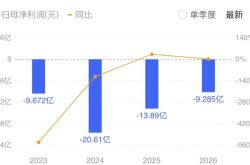
Over 5.3 Billion Yuan in Losses Over Three and a Half Years! Can Yonyou Reverse Its Fortunes Through Streamlining and AI Transformation?
-
![]()
Baidu AI Adopts Free Model: A Strategic Maneuver in Traffic and Monetization
-
![]()
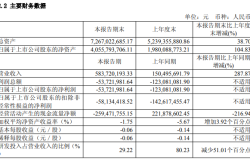
Silicon-Based OLED Pioneer Unveils Financial Results: H1 Shipments Outpace Entire 2025 Volume
-
![]()
AI's First "Lost Summer"
-
![]()
Zeiss Makes Another €2.2 Million Bet: Will Eye Tracking Be the Next Big Thing in the Smart Glasses Industry?
-
![]()
RUNTO Ranking | Global Top TV ODM Factories' Shipment Figures for July 2026