The Hidden Battle of 618 Efficiency: Kunshan Asia No.1, AI, and JD.com's Logistics Performance This Year
 05/28 2026
 670
670
The ancients said, 'Before the troops move, provisions must be secured.'
This quote, from Records of the Grand Historian: Biography of Xiao He, describes how Xiao He ensured that supplies and logistics were in place before Liu Bang went to battle, allowing the front lines to operate without worry. Over two thousand years later, this saying remains incredibly relevant in the e-commerce industry.
Every 618, consumers see discounts, full-reduction offers, and 'buy it' promotions in livestreams. However, what truly determines whether you receive your order within hours of placing it is not the front-end sales frenzy but the invisible logistics network in the background. This is the 'provisions' of e-commerce battles and the hidden frontline of the 618 efficiency war.
This year, AI is significantly reshaping this hidden frontline.
01 From Fixed Roles to Dynamic Scheduling: The Frontline of 618 Preparations
At JD Logistics' Asia No.1 Kunshan Intelligent Industrial Park, the world's largest integrated warehousing and sorting intelligent logistics park, intelligent logistics equipment is being fully utilized.
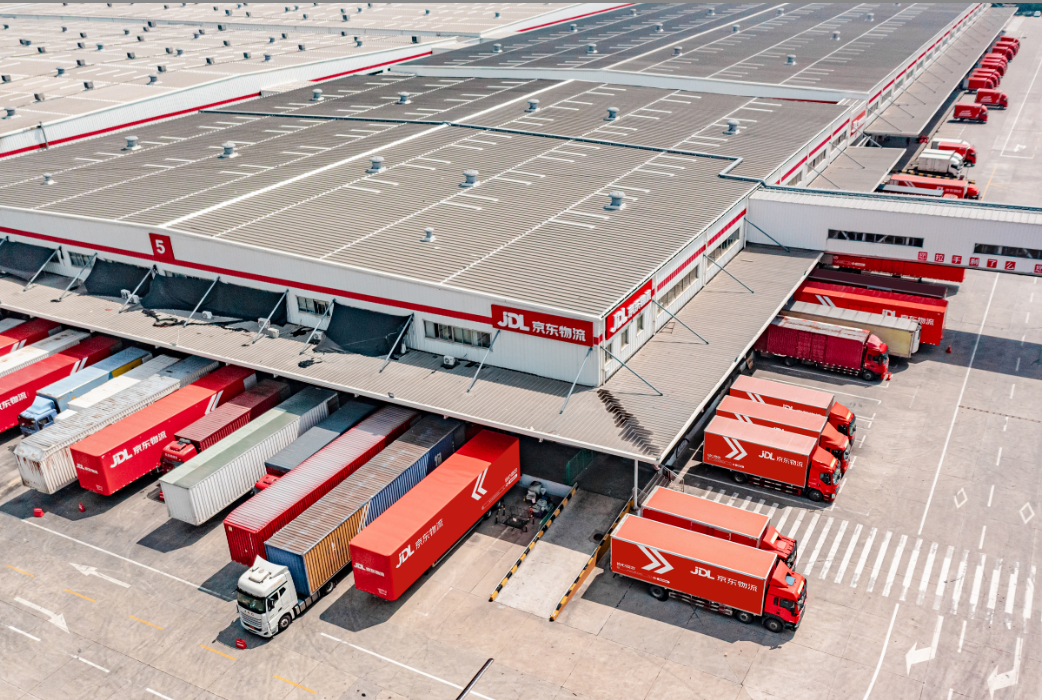
Currently, the sorting automation rate at Kunshan Asia No.1 has reached 90%.
Four new sets of Zhilang Goods-to-Person robot systems were launched before this year's 618. The Zhilang Goods-to-Person system consists of Zhilang Elevator Robots, Transport Robots, and Vertical Shelving. Compared to the traditional person-to-goods model, the picking efficiency is over three times higher, and storage efficiency is four times greater. The Zhilang system has quietly become a norm in JD's global logistics system: over 60 Zhilang warehouses, an automated daily production peak of nearly 4 million orders, and cumulative shipments exceeding 100 million since last 618.
During on-site interviews at Asia No.1, the Kunshan Asia No.1 person in charge (person in charge) repeatedly emphasized a judgment: 'This year, the biggest uncertainty is no longer how high the order peak will be.' In the past, major promotions relied on increasing temporary manpower. This year, with heavy reliance on automated equipment, the most critical variable has become 'whether these automated systems can maintain stability during nearly two months of continuous high-intensity operation and whether humans and machines can collaborate efficiently.'
Kunshan Asia No.1 is addressing this challenge. In the park, robots handle high-frequency repetitive tasks such as shelving, transporting, and goods-to-person picking. Humans manage tasks requiring flexibility and judgment, such as goods receipt, bin picking, and packing verification. During this 618 promotion, the system dynamically decides which area is led by humans or machines based on real-time order volume, equipment load, and manpower status on a minute-by-minute basis. This new approach, summarized internally at JD as 'moving from fixed roles to dynamic scheduling,' is expected to further enhance overall efficiency compared to last year.
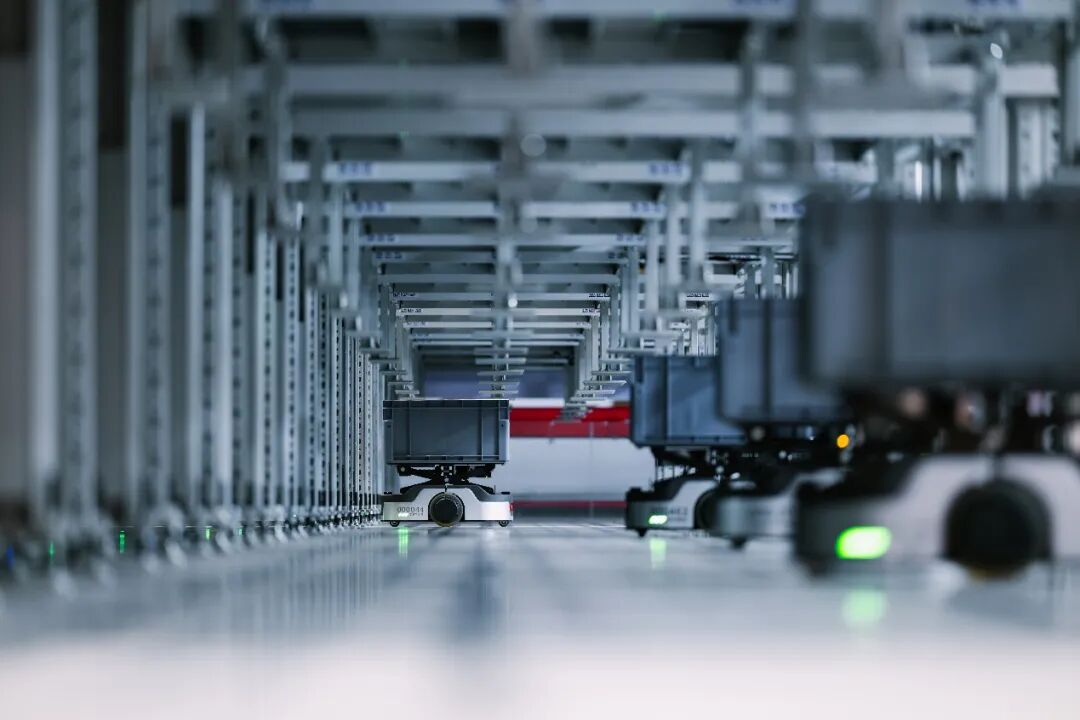
Behind this workforce transformation lies a complete methodology: JD does not aim to replace humans entirely with machines but to let machines handle repetitive tasks while humans engage in work requiring judgment and flexibility. Through internal training programs, employees transition from physical roles to technical positions.
02 Chaobrain Large Model 2.0: AI Decision-Making Surpasses Seasoned Operators
Zooming out from a single production line, we see the comprehensive capability map of Kunshan Asia No.1 as a hub.
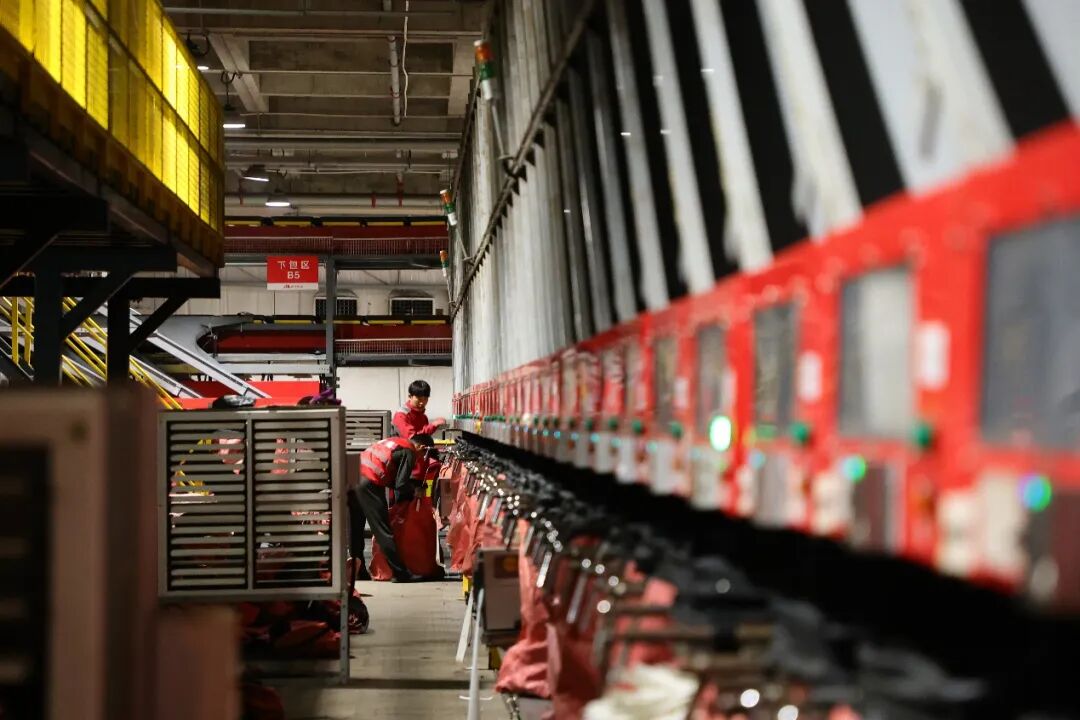
The physical foundation is robust. Kunshan Asia No.1 is equipped with 41 high-speed pulley mainlines,
Fives sorting machines, and three sets of high-speed double-layer cross-belt sorters, positioning it at the forefront of the industry in terms of intelligent sorting and dispatching capabilities throughout the entire link (chain). The entire automatic sorting center boasts over 80 automatic sorting lines, achieves a 99.5% on-time dispatch rate, and sorts over 3.8 million items daily.
The key at the algorithmic level lies in Chaobrain Large Model 2.0, launched by JD Logistics in September last year and fully deployed in this year's 618. This large model has achieved deep AI applications in over 1,000 core scenarios at JD Logistics, compressing the solving time for models with tens of millions of variables to under two hours. It optimally schedules manpower, vehicles, goods, and facilities, resulting in a nearly 20% increase in frontline operational efficiency, over 20% improvement in human-machine collaboration efficiency, and a 15% rise in employee operation standardization.
Among these, the most industry-representative feature is dynamic routing, which treats each package's transportation path as a real-time navigation problem, planning routes in seconds based on dynamic variables such as cargo volume fluctuations, traffic congestion, and abnormal weather. During 618, it is expected to handle tens of millions of orders, significantly reducing vehicle empty miles and transfer costs. A more direct result is a double-digit reduction in mainline transportation costs.
From the perspective of the Kunshan Asia No.1 person in charge (person in charge), Chaobrain 2.0 has brought two specific operational breakthroughs. The first is the dynamic optimization of in-warehouse storage layout. The system reads the warehouse heatmap and automatically places fast-moving items closest to the packing stations, a task previously handled by warehouse supervisors based on experience. Now, the system calculates and executes in real-time, significantly shortening picking paths.
The second is real-time intelligent order allocation in the picking process. Traditionally, orders were manually divided into pools and processed in batches. Now, the system instantly judges item locations and the smoothest paths upon order generation, dynamically assigning the optimal picking plan for each order. His conclusion is straightforward: In high-frequency, high-concurrency scenarios like 618's instant order surges, AI's decision-making speed and global optimization capabilities have consistently surpassed those of seasoned operators.
While discussing Chaobrain Large Model, I recalled a viewpoint from industry experts: 'Physical AI will first be implemented in worlds describable by rules; the last to be conquered will be those understandable only through common sense.' This is particularly fitting in logistics scenarios. When AI was limited to text-to-image models or single scenarios with clear rules, implementation was relatively straightforward. However, when scenarios expand to factories, warehousing, and instant retail, task complexity surges. Take warehousing as an example: the ultimate robots must not only know where to go but also how to pick. This requires AI to understand space and superposition (overlay) recognition and precise manipulation of countless objects.
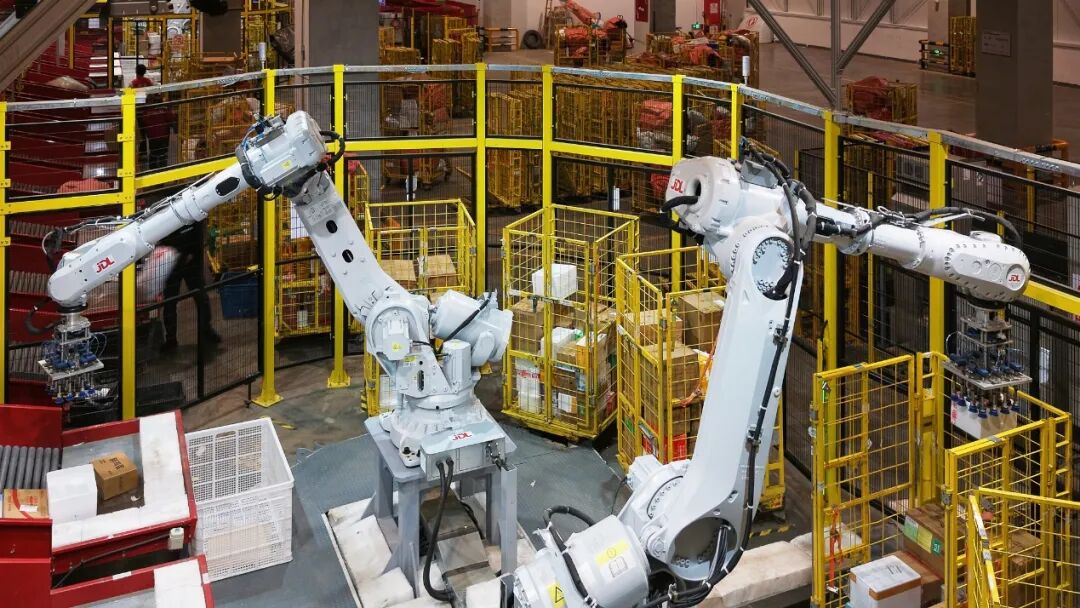
Currently, in warehousing and sorting scenarios globally, only JD Logistics' Yilang Embodied Robotic Arm can perceive, reason, decide, and execute tasks relying on 'common sense' like humans and apply embodied intelligence at scale. Its self-developed industrial-grade dexterous hand, with nearly a hundred grip configurations, can handle items of various shapes (bulging, dented, soft like cardboard boxes, mineral water bottles, rice, flour, oil, etc.) and operate 24/7 in multiple parks during 618. The reason is precisely JD's possession of the richest supply chain scenarios and ecosystem, giving it the confidence and capability to build the world's largest physical world operations center.
03 Introducing Another 'Game-Changer': Smart Full-Trust Inventory Management and the New 'AI Map Inventory Diagnostic Assistant' for 618
JD Logistics' intelligent system, driven by 'software + algorithms,' provides merchants with the core service of 'Smart Full-Trust Inventory Management' through efficient nationwide warehouse network collaboration.
Hub warehouses like Kunshan Asia No.1 linkage (link) in real-time with thousands of warehouses across the country, precisely allocating inventory and swiftly responding to consumer demand in various regions. In the past, brands maintained separate inventory pools for JD, Tmall, Douyin, and offline stores. Multiple disconnected inventory pools led to structural contradictions, such as stockouts in channel A and overstocking in channel B, with overall inventory turnover days reaching fifty to sixty. Under the One-Inventory system, merchants only need to send goods for all channels to the nearest preparation warehouse. Subsequent allocation and inter-warehouse transfers are fully managed by the 'Smart Full-Trust' system. During promotions, it provides real-time monitoring throughout the process and stockout alerts. After promotions, it automatically generates review reports covering inventory health, fulfillment timeliness, cost analysis, and sales structure. The Kunshan Asia No.1 person in charge (person in charge) provided practical data showing that merchants who enter the warehouse in advance can achieve next-day delivery fulfillment rates of up to over 90%.
The truly revolutionary aspect of One-Inventory is that once goods enter the warehouse, they achieve full-channel inventory sharing, breaking down cross-platform inventory barriers. The system intelligently allocates based on real-time sales across the network, enabling simultaneous sales on multiple platforms without waiting for physical warehouse separation.
As a new software capability introduced during 618 for this fully-trusted service, the AI Map Inventory Diagnostic Assistant further empowers merchants nationwide. This tool precisely matches merchants with peers operating similar product categories and scales, outputting competitor strategies and industry benchmarks. Its self-developed large model can determine the optimal warehouse network layout for thousands of warehouses and millions of orders within half an hour, implementing differentiated intelligent replenishment for millions of SKUs, improving overall inventory turnover efficiency by 30% to 40%.
However, what intrigues me more is the spillover effect of JD Logistics' AI capabilities. Currently, AI capabilities are open and empowering over 10,000 external clients, meaning AI capabilities validated in supply chain hubs like Kunshan Asia No.1 are becoming a public infrastructure that can be exported.
The value of hubs is being redefined here, as they simultaneously serve three roles: pressure resistance points during peak moments, cost optimization solutions in daily operations, and infrastructure for small and medium-sized brands to grow.
The example mentioned by the Kunshan Asia No.1 person in charge (person in charge) comes from the Yangtze River Delta, where a rising domestic beauty brand processed only a few hundred daily orders before integrating with JD Logistics' warehousing and distribution network. After integration, with intelligent replenishment and allocation under Smart Full-Trust, its daily processing volume surged to tens of thousands during promotions.
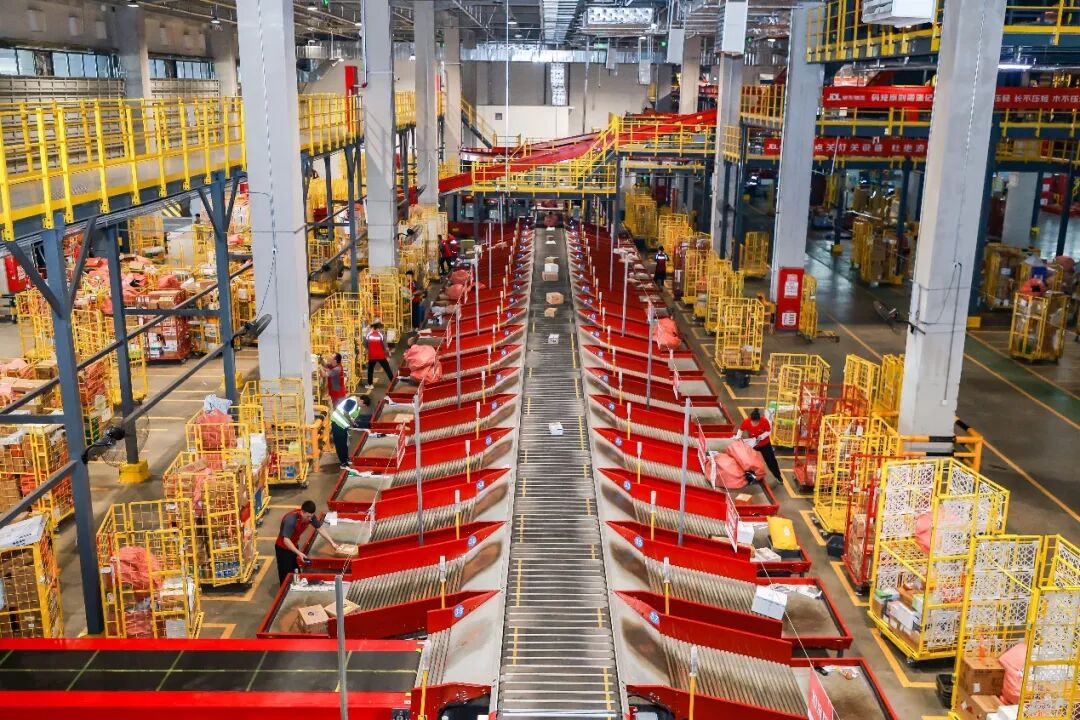
The deeper significance of this example lies in proving that AI-driven supply chain capabilities are becoming an invisible battleground for brand competition. While major brands still compete on traffic and price, emerging brands can already achieve a dimensionality reduction strike in supply chain efficiency by sharing JD's logistics AI capabilities.
04 The Supply Chain Confidence Behind the New Product Trillion-Yuan Plan
On April 23, JD held the 2026 New Product Gala in Beijing, officially launching the New Product Omnichannel Trillion-Yuan Plan, aiming to create at least 1,000 new products with annual sales exceeding 100 million yuan within the year. The plan integrates search and recommendation traffic, marketing IPs, omnichannel resources, AI tools, and advertising products. The New Product Operations Center alone has upgraded 25 free AI operation tools, expected to enhance brand efficiency by 50%. Anyone familiar with e-commerce hit product patterns knows that the true bottleneck of the New Product Trillion-Yuan Plan lies not in front-end traffic but in back-end stability. Once the front end ignites and the back end cannot keep up, new product launches turn into inventory disasters.
This is precisely where hubs like JD Logistics' Kunshan Asia No.1 hold significance. The latest data disclosed by JD Logistics in May this year shows that a backbone network of over 40 Asia No.1 large intelligent logistics parks and more than 3,600 warehouses nationwide has taken shape, covering nearly all regions, towns, and populations in China. It has not only established trust between Chinese e-commerce and consumers but also redefined logistics service standards through timeliness products like 211 Limited-Time Delivery and doorstep services, consistently leading the industry in customer experience.
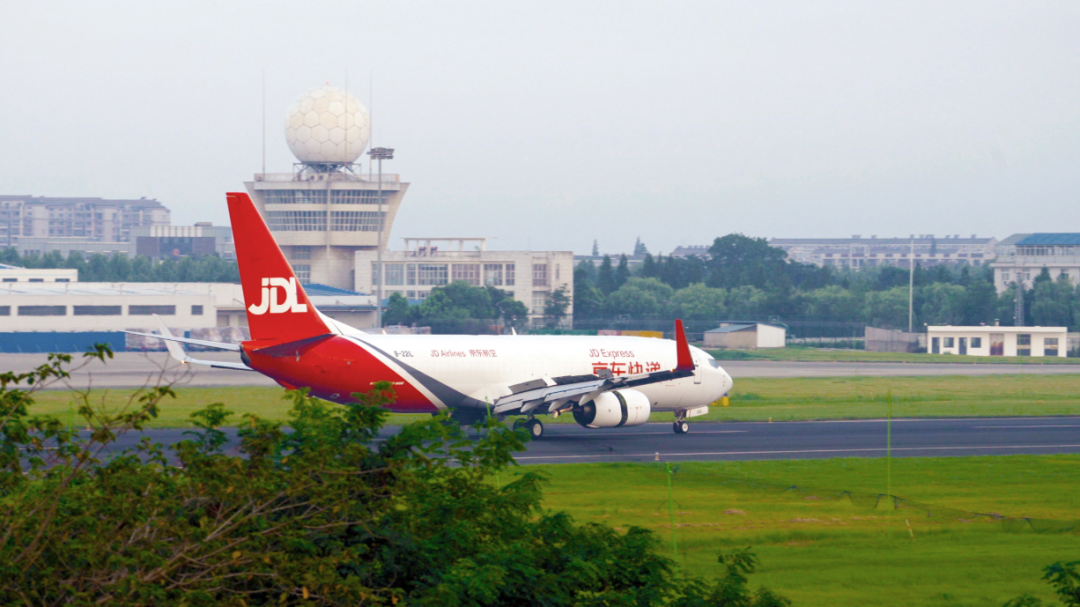
From the Kunshan Asia No.1 person in charge 's (person in charge's) judgment on future warehouse network forms, we can discern a deeper methodology. Long-tail, low-frequency, deep inventory items continue to be centrally stored in Regional Distribution Centers (RDC), leveraging their coverage advantages to reduce total inventory costs. Fast-moving, high-frequency, time-sensitive items evolve towards a grid-like network of C-warehouses, deploying goods to consumer regions in advance through a nationwide C-warehouse network, achieving 'goods before orders.' Both models coexist to balance cost efficiency and end-point timeliness.
05 Talent Nurturing: The Industry-Education Integration Experiment for Intelligent Warehouse Operators
The industrial spillover effects of this infrastructure are already evident. JD Logistics has invested over 10 billion yuan in sorting automation in the past three years, reaching a daily processing peak of 118 million items. In 2025, the Ministry of Human Resources and Social Security included Intelligent Warehouse Operators in the national occupational classification, identifying it as one of the fastest-growing Career Direction (career paths) in the next five years.
On May 9 this year, JD signed 'Automated Talent Order Class' cooperation agreements with 15 universities nationwide at its Beijing headquarters, aiming to train 1,000 Intelligent Warehouse Operators in the first batch, starting this fall. The AI capabilities JD has built up in warehousing and distribution over a decade are now redefining the talent structure of China's logistics industry.
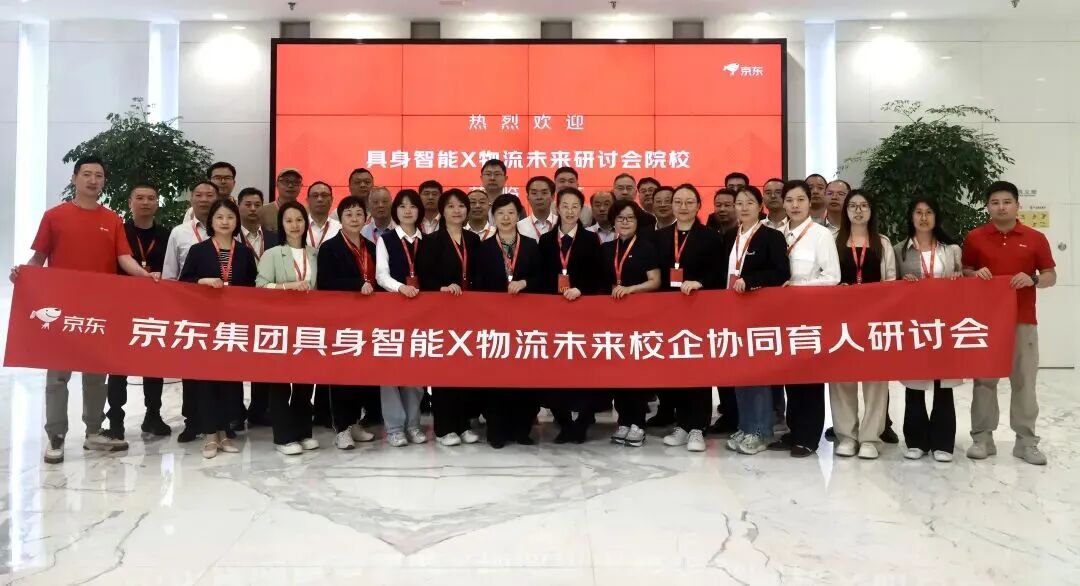
The innovation in this talent cultivation model lies in dual-instructor teaching: JD provides real business scenarios and equipment to establish training bases, with frontline technical experts from the company directly teaching in classrooms. Students can operate the latest automated sorting lines and intelligent warehousing robots while still in school. This industry-education integration model of 'enrollment as employment, graduation as onboarding' may become a new path for Chinese vocational education.
06 Conclusion:
Returning to the sorting line we first noticed: as 618 approaches, palletizing occurs every 15 seconds, bins continuously move up vertical shelving, and the heatmap on the central control screen subtly changes colors with each new order. Zooming out, this year's JD 618 story can be summarized as follows: whether low prices can be sustained depends on whether the supply chain can be sustained; and whether the supply chain can be sustained depends on whether AI has truly entered workshops, hubs, and networks.
After AI enters workshops, hubs, and networks, the real challenge is not the technology itself but how to get frontline employees to accept, utilize, and even love it. JD's approach is not to replace humans with AI but to enable humans to master AI. This may seem slower in the short term but establishes a 'human-AI symbiosis' culture in the long run, which may be JD's true core competitiveness.
During this research, the author has been pondering a question: Why JD.com? The answer may lie in the old saying, 'Before the troops move, provisions must come first.' Except that today's 'provisions' are no longer just food and supplies, but data, algorithms, and the supply chain scenarios accumulated over more than a decade. As we've said, this is a systemic test. The implementation of physical AI does not require a breakthrough in a single algorithm, but rather a deep understanding and operational capability of the entire physical world. Unless it's a super supply chain like JD.com that has been meticulously cultivated for decades, it would be difficult to meet such a test. And when AI truly enters warehouses, hubs, and networks, it will change not just the efficiency of a single major promotion, but the efficiency foundation of the entire retail industry.
-
![]()
Who’s Sounding the Alarm on ‘Rushed Vehicles’?
-
![]()
Over 5.3 Billion Yuan in Losses Over Three and a Half Years! Can Yonyou Reverse Its Fortunes Through Streamlining and AI Transformation?
-
![]()
Baidu AI Adopts Free Model: A Strategic Maneuver in Traffic and Monetization
-
![]()
Silicon-Based OLED Pioneer Unveils Financial Results: H1 Shipments Outpace Entire 2025 Volume
-
![]()
AI's First "Lost Summer"
-
![]()
Zeiss Makes Another €2.2 Million Bet: Will Eye Tracking Be the Next Big Thing in the Smart Glasses Industry?
-
![]()
RUNTO Ranking | Global Top TV ODM Factories' Shipment Figures for July 2026
-
![]()
Dealer Service Operational Prowess | How After-Sales Managers Can Harness Efficiency and Expertise to Secure Trust in the New Energy Era