73-Day Rapid Listing: Where Does Unitree's Wang Xingxing's 'Sense of Urgency' Come From?
 06/08 2026
 644
644
A week ago, Jensen Huang announced on stage that NVIDIA has partnered with Unitree Technology to launch the new-generation humanoid robot reference design 'H2+'. Unitree later added that the new product, developed based on NVIDIA's computing platform, will surpass previous models in computing power and is set to debut in the second half of the year.
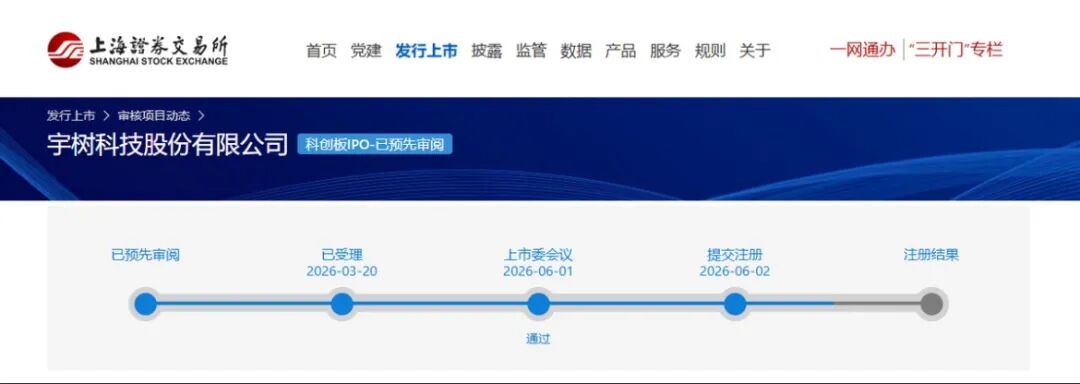
The day after this announcement, Unitree Technology completed the final procedure on the STAR Market, coming one step closer to becoming the 'first humanoid robot stock.'
On June 1st, it smoothly passed the listing committee's deliberation meeting and submitted its registration on June 2nd, taking only 73 days from acceptance to approval. This is not only significantly faster than the average review cycle on the STAR Market but also marks the second benchmark case after Changxin Technology under the STAR Market's pre-review mechanism.
In the first half of the year, Unitree and Deep Robotics successively submitted their prospectuses to the Shanghai Stock Exchange. Unitree boasts a global leadership position with 5,500 humanoid robots, projected revenue of 1.7 billion yuan in 2025, and a 60% gross margin. Deep Robotics also presented its figures: revenue slightly over 300 million yuan, with over 95% coming from quadruped robots, achieving its first profit.
However, Deep Robotics, with revenue only one-fifth of Unitree's, has a 60% higher price-to-sales ratio.
Joseph Schumpeter once proposed the concept of 'creative destruction.' He argued that the core mechanism of capital is not innovation itself, but how innovation continuously destroys old economic structures and rebuilds new ones from the ruins. In every historical technological wave, the first profits rarely go to the inventors of core technologies. Transistors made Sony and Motorola wealthy, not Bell Labs; the internet made Amazon and Google print money, not Tim Berners-Lee. Invention is one thing; turning it into a mass-producible business is another.
Unitree's main customers are universities and research institutions, whose purchasing motives are centered on studying robots themselves. Once the research funding is exhausted, there are no follow-up orders. In contrast, Deep Robotics holds a five-year, 1 billion yuan framework agreement signed with State Grid in 2023, locking in inspection demands for over 1,000 substations. Each deployed scenario generates ongoing operation, maintenance, and iteration revenue. One company's revenue is narrative-driven; the other's is contract-driven. The capital market favors the latter.
In this wave labeled 'embodied intelligence' by outsiders, the companies earning money first have little to do with embodied intelligence itself. They sell manufacturing capabilities, supply chains, and the efficiency of mass-producing hardware. This relationship is gradually being exposed under continuous regulatory scrutiny. During Unitree Technology's IPO sprint ( sprint means ' sprint towards' or 'push for') on the STAR Market, the Shanghai Stock Exchange pressed with two rounds of inquiries, questioning everything from 'whether the self-research and self-production model retains cost-effectiveness after supply chain maturation' to 'why Unitree still outsources LiDAR, cameras, and dexterous hands despite its self-research capabilities.'
Unitree gradually disclosed in its responses: some LiDAR, cameras, and dexterous hands are indeed outsourced. The highly anticipated embodied large model is still in the research and testing phase and has not been scaled into sold products. The much-talked-about 'embodied intelligence' thus reveals its underlying nature of manufacturing and supply chains.
Incoming competitors will turn this business into a price war, using smartphone manufacturing methods.
During the 2026 Boao Forum, Shao Hao, Chief Scientist of vivo Robotics Lab, attended the sub-forum 'Advancement and Leap of Humanoid Robots,' sharing the team's latest research progress in robot perception and decision-making systems. On April 19th, Honor's self-developed 'Lightning' won the Beijing Yizhuang Half Marathon in 50 minutes and 26 seconds, becoming the first mobile phone terminal manufacturer to win the event.
These two manufacturing-focused companies bring a cost-compression logic that has already completed its validation cycle in the consumer electronics industry. As they direct their decade-plus of precision manufacturing expertise and supply chain systems from consumer electronics towards this sector, the high gross margins Unitree and Deep Robotics currently enjoy face an expected expiration date.
60% Gross Margin Has Little to Do with AI
36 krypton recently reported that the CSI Robot Index has surged by 36.85% over the past year, with related thematic funds generally achieving significant returns. Continuous capital inflows have driven notable expansions in the scale of multiple ETFs. Several public fund institutions stated that as mass production rhythms gradually clarify, supply chain capabilities continue to mature, and AI large models accelerate iteration, the humanoid robot industry is steadily transitioning from theme-driven to industry-driven, with the competitive focus shifting from hardware itself to intelligence capabilities.
This assessment is directionally correct, though the timing is subtle. Industry-driven dynamics have not fully arrived, but theme-driven forces are already claiming credit that does not belong to them.
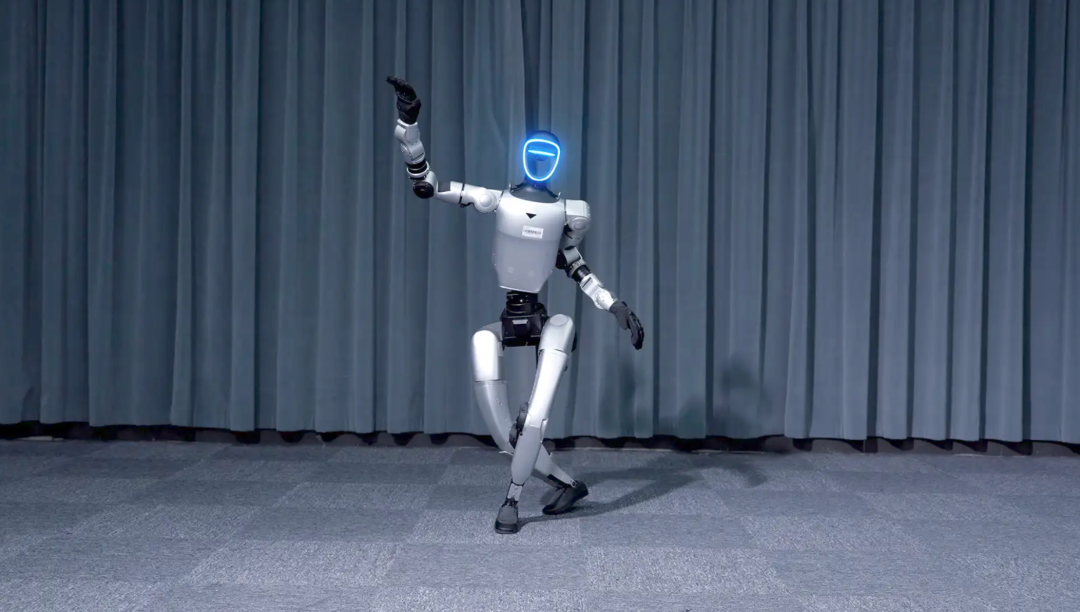
At the 2026 CCTV Spring Festival Gala, 24 Unitree G1 and H2 humanoid robots performed a fully autonomous martial arts routine, 'Wu BOT,' executing complex maneuvers like interspersed formations, explosive flips, wall-assisted movements, and weapon-based combat. However, this performance relied not on computing power but on craftsmanship. Wang Xingxing's previous remarks might now be reinterpreted: Unitree builds tools, not performances.
Unitree's success, when dissected, reveals a manufacturing puzzle unrelated to AI. Wang Xingxing priced the G1 at 99,000 yuan, carving out a previously nonexistent market while competitors sold similar products for 700,000-800,000 yuan. This was achieved through over 95% self-research of core hardware (motors, reducers, sensors, encoders) and the M107 joint motor, which costs half as much as similar imported products.
This represents the supply chain dividends accumulated through years of China's precision machinery manufacturing, integrated into Unitree's cost structure.
In Unitree's humanoid robot revenue for the first three quarters of 2025, research and education customers contributed 73.6%, while true industrial applications accounted for only 9%. The majority of the 5,500 units sold went to those studying robots themselves, not those using robots to solve production problems. No factory would adopt a robot simply because it performed martial arts on the Spring Festival Gala. Factories only ask: Can this device generate profits? Can it improve ROI?
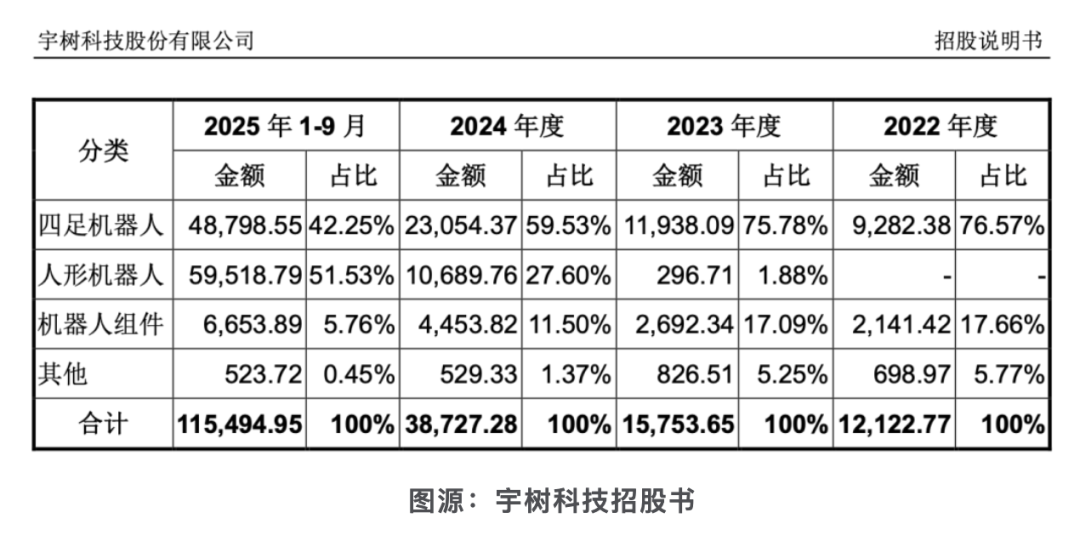
This lies beneath Unitree's glossy exterior. The 'world's first' 5,500 humanoid robots were purchased by researchers. Meanwhile, Deep Robotics is pursuing a visually distinct path—not humanoid, but four-legged robot dogs.
Zhu Qiuguo never intended to pursue general intelligence; his focus was on reliability. A professor at Zhejiang University's School of Control Science and Engineering, he founded Deep Robotics in 2017 after seeing Boston Dynamics' robot dogs leave the lab. His understanding of the field was far more sober.
Deep Robotics' revenue includes something Unitree lacks: certainty. Its Absolute X30, priced at 287,500 yuan with a cost of 130,000 yuan, boasts a 54.35% gross margin. Its primary customers are State Grid, fire brigades, and industrial parks. These clients purchase robots for operations like climbing open staircases, 40-degree slopes, and sustained high-voltage environment operations in substations.
Their procurement standards differ little from buying industrial equipment: stability, durability, and low failure rates. According to TMTPost, State Grid's 2026 procurement plans include ten times more quadruped inspection robots than humanoid live-working robots. This is the market's most honest vote on current technological maturity.
Deep Robotics' 200+ substation projects represent firm contracts, not mere orders. Its 2023 five-year, 1 billion yuan framework agreement with State Grid partially locks in future revenue, raising barriers for competitors who must rebuild trust and field case studies. Unitree's research clients offer no such lock-in. This explains the 41x price-to-sales ratio: one company's revenue is narrative-driven; the other's is contract-driven.
Yet, amid the physical AI wave, the robot future seems almost predetermined. NVIDIA unveiled GR00T N1 and Isaac Sim 3.0 at CES 2026, with nearly half of global humanoid robot startups training on its platform. Samsung Research released 'Shallow-π' in April 2026, compressing robot control AI computation steps by one-third, with a mid-to-long-term goal of 'completing the full transition to AI autonomous factories by 2030.' Tesla directly migrated its FSD perception algorithm to Optimus, with Musk stating that Optimus's value lies in its 'brain.'
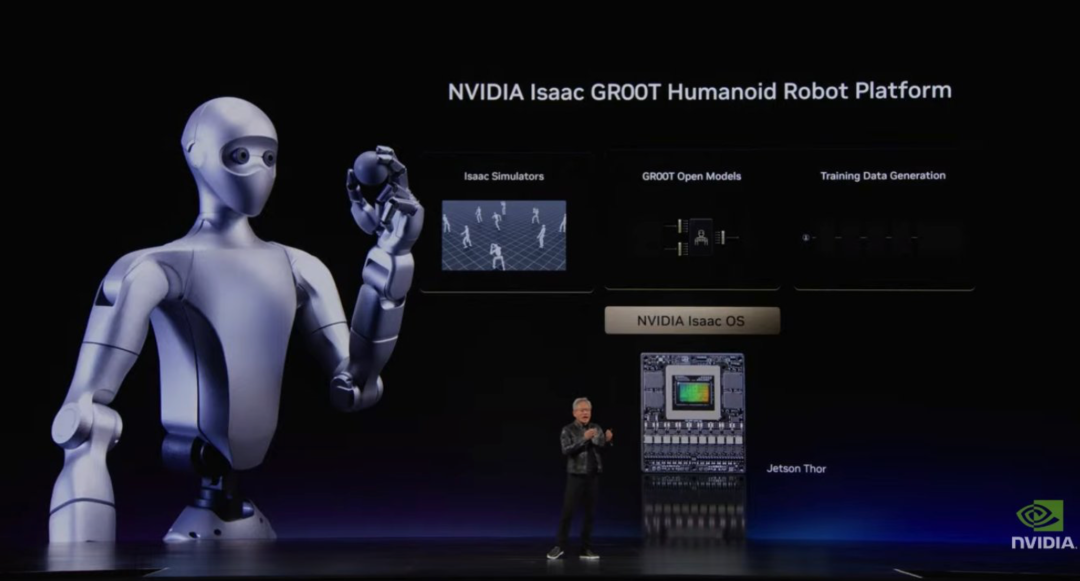
The question is not whether robots need brains, but when and where those brains can be applied. Unitree's self-developed UnifoLM-X1-0 large model, as of early 2026, had 'completed pilot deployment in its own factory for autonomous joint motor assembly.' There remains a substantial engineering path before it can be directly used by any external customer.
Smartphone Makers Understand Robot Profits
The source of Unitree's gold mine is more vulnerable to disruption by new entrants than Deep Robotics' approach.
vivo's entry at this juncture is unsurprising. Over the past five years, vivo has doubled down on optical systems, collaborating deeply with Zeiss to accumulate a suite of multi-sensor fusion and real-time 3D perception engineering capabilities spanning hardware to software. This includes real-time processing of multi-camera data, depth information synthesis, and rapid responses in dynamic scenes—core needs for robot vision systems. vivo need not start from scratch. More critically, its mass production capabilities in smartphone motor miniaturization, precision hinges, and multi-layer PCB integration can be directly applied to robot joint modules.
As early as late 2023, Hu Baishan revealed that humanoid robots represent a natural extension for the smartphone industry, citing two inherent advantages: large models provide the 'brain,' and MR technology offers spatial perception.
In 2026, this strategy deepened further. In February, Hu Baishan was promoted from Executive Vice President to Company President, assuming full responsibility for daily operations while Shen Wei remained CEO, forming a 'CEO + President' dual-governance structure at vivo. A month later, at the Boao Forum for Asia, Hu Baishan unveiled the new first-level technical support track 'Perception Capability,' integrating visual, auditory, and tactile multimodal signals to enable AI with real-time physical world perception.
Hu Baishan has repeatedly stated that robots represent the future of the smartphone industry, serving as a bridge between the physical and digital worlds. vivo is steadily building that bridge.
Honor's story begins with a trial by fire. When Honor became independent in 2020, it faced a nearly blank supply chain slate. Core components like chips, displays, and camera modules required rebuilding supply relationships from scratch. Zhao Ming described how procurement colleagues had to 'scramble for chips one by one,' producing only what was available. At its lowest point, Honor shipped just tens of thousands of units monthly—less than a single day's volume in the past.
To launch products with new chips as quickly as possible, Zhao Ming led a '211-Day Forced March' R&D effort. The Honor 50 series, developed 45 days later than competitors in receiving chip documentation amid sanctions, ultimately launched 30 days ahead of schedule, gaining a market breakthrough.
Restoring the supply chain was paralleled by an even tougher challenge: corporate survival. Even paying salaries became extremely difficult. Early offices were harsh, with employees working in newly renovated spaces with windows open in Shenzhen's cold early spring, wrapped in blankets.
The toll was immense, but Honor's supply chain team developed an ability to integrate non-standard components with extreme flexibility and rapidly adapt manufacturing processes to new hardware forms. Zhao Ming's supply chain strategy transformed qualitatively, shifting from simple procurement to 'deep coupling' with partners.
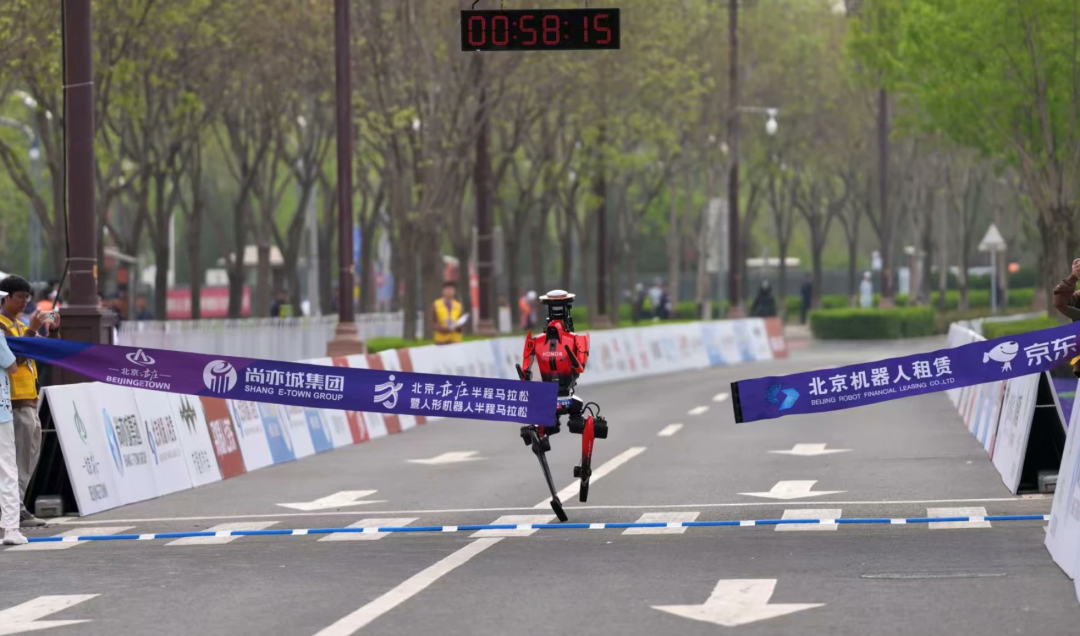
Honor Robot 'Lightning's victory in the Yizhuang Half Marathon less than a year after its release owes partly to this muscle memory. On April 19th, after 'Lightning' completed the race, Blue Si Technology (Blue Technology) disclosed in an official post that it supplied 132 core metal structural components for 'Lightning's 'steel frame,' covering key motion units like the head, arms, hips, and legs.
Hesai Technology provided LiDAR, LY ITECH supplied core structural parts, and Huake Cold Core provided high-speed suspension pumps for liquid cooling. Honor openly stated that 'Lightning' utilized its accumulated mobile phone terminal technologies in cooling materials and lightweight design.
Honor's focus on the consumer market, spanning shopping malls, factories, and households, directly overlaps with Unitree's positioning. The BOM cost structure for quadruped robots is public: drive systems account for 40%, sensors 20%, with chips, batteries, and other components each taking 10%. For a company with 15 years of precision consumer electronics experience, none of these areas are unfamiliar. Micro-motors, precision hinges, multi-layer PCBs, and IMU sensors share highly overlapping manufacturing principles and tolerance requirements with core robot components.
When manufacturing capabilities become sufficiently widespread, hardware converges on cost. The history of the smartphone industry offers the clearest parallel. In 2010, Nokia's feature phones maintained over 40% gross margins; by 2013, Xiaomi's internet-driven approach pushed smartphone margins below 5%. In less than a decade, the law of manufacturing convergence toward cost played out completely.
Unitree reduced its average robot price from 590,000 yuan in 2023 to 167,000 yuan in 2025, a drop exceeding 70%. It proved in its own way that robot hardware prices can be slashed, while showing all latecomers where the bottom line lies and the path to reach it.
This explains why both companies, after raising funds, Coincidentally, at the same time (which means ' Coincidentally, at the same time ' or 'without prior agreement, both') allocated their largest expenditures in the same direction: embodied brains. Unitree raised 4.2 billion yuan, earmarking 2 billion for 'intelligent robot model R&D.' Deep Robotics raised 2.5 billion yuan, allocating 1.169 billion to 'embodied algorithms and model R&D.' They are using manufacturing profits to buy time for brain development. Yet this approach reveals their shared challenge: the window for using hardware profits to fund brain R&D depends on how quickly smartphone makers can integrate supply chains.
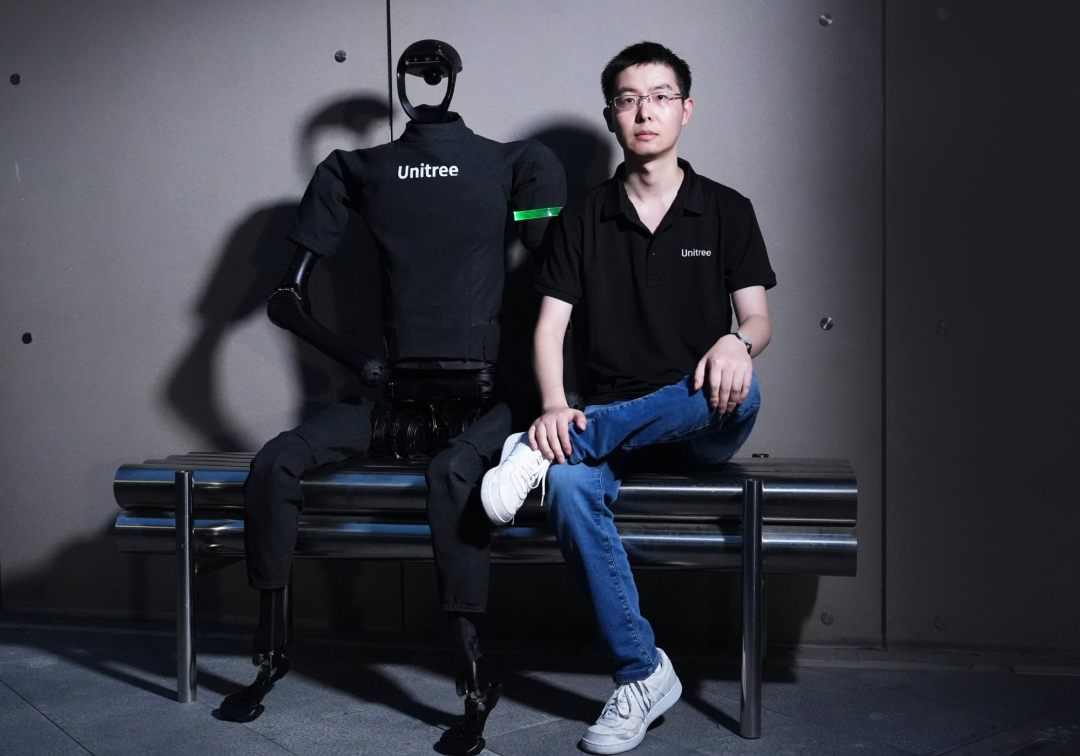
For DeepCloud Robotics, this threat has arrived relatively slowly. The Know-How developed through the State Grid projects, including how to plan inspection routes for substations, how to train fault identification in high-voltage scenarios, and what on-site operation and maintenance engineers truly care about, was honed over four years, project by project. This cannot be directly replicated through the supply chain. What vivo and Honor need to overcome is not just the technological gap, but also the gap in trust within specific scenarios.
However, "relatively slow" does not mean safety—it merely provides a slightly broader time window.
Epilogue
The simultaneous release of the two prospectuses reflects a shared assessment of the window of opportunity. After manufacturing capabilities become widespread, the gross profit margin of hardware products will inevitably converge toward cost. This logic has played out in consumer electronics and the automotive industry, and there is no reason to expect an exception in the robotics sector.
Both companies have chosen the same response strategy: using the profits from current manufacturing to buy time for developing the "brain" (advanced AI capabilities). However, the threats they face are asymmetric. Unitree's research client base has a ceiling, as procurement cycles are tied to project funding, making it difficult to achieve large-scale, continuous purchases. The consumer market (C-end) it is now exploring is also a battleground that Honor has clearly set its sights on. The target customers for both companies are the same group.
DeepCloud Robotics is in a relatively more stable position. After all, the State Grid contracts lock in not just orders but also the industry trust that competitors must build from scratch—a process that takes time. However, the ceilings in the power, firefighting, and security sectors are clearly visible, and a second growth curve has yet to emerge.
Today's robotics market is smaller than capital narratives suggest, technological progress is slower than what is showcased at product launches, but competition has arrived earlier than anyone anticipated. Zhu Qiuguo stated that it will take at least a decade for humanoid robots to mature. He was referring to the challenges faced by others. DeepCloud Robotics has bought itself some time through its State Grid contracts, and this period is roughly equivalent to the time Unitree needs for its brain development.
Clearly, the two prospectuses leave us with the same question: Can Wang Xingxing and Zhu Qiuguo make the most of this time?
*The featured image and illustrations in the text are sourced from the internet.
-
![]()
Registered Capital Slashed to 372 Million Yuan! Yutong Optical Finalizes Industrial and Commercial Change Registration
-
![]()
Zhuque-3 Successfully Lands, and 'Time Traveler' Secures Another ¥100 Million in Funding: China's Commercial Space Industry Experiences a 'Dynamic August'
-
![]()
Autohome Faces a Shrinking Window of Opportunity
-
![]()
Even a Titan Like Musk Has Faced Setbacks in Fulfilling Promises
-
![]()
AI Office: The End of the Racing Era, Context Becomes the Key to Success
-
![]()
Domestic Vehicle Chassis Revolution ②: The Steering Wheel Remains, But Mechanical Connections in the Steering System Are Decreasing
-
![]()
Exploring MiniMax Design: Can Video Editing Be as Simple as Speaking?
-
![]()
Why Can SenseTime Achieve Profitability While CloudWalk Still Faces Challenges, Despite Both Adopting Large Models?