Smartphone Prices Surge Amid Manufacturer Anxiety
 06/08 2026
 638
638
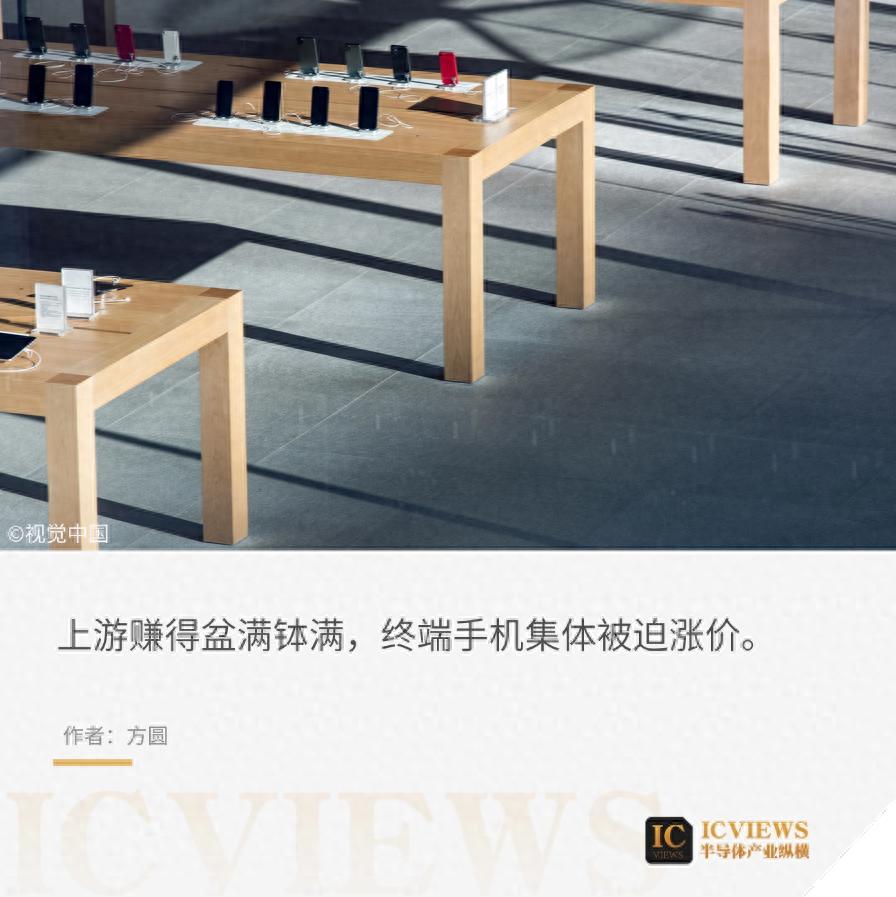
As we move beyond the midpoint of 2026, the smartphone industry is experiencing its most significant cost shock and pricing system overhaul since the inception of smartphones. On one hand, leading domestic brands like OPPO, Vivo, and Honor have successively announced price adjustments, with mid-range models generally seeing increases of RMB 300 to 1,000. On the other hand, Apple launched its most aggressive price reduction and promotion campaign in recent years on the eve of the 618 shopping festival, with the iPhone 17 Pro series witnessing a maximum direct price drop of RMB 1,000. More intriguingly, Huawei opted to maintain or even lower prices at the launch event of its Pura 90 series in April, with the Pro version seeing a price reduction. However, by June, the nova 16 series had to follow suit with price increases of RMB 300 to 500.
Behind these fluctuations in terminal prices lies a set of grim industry data. Counterpoint's latest report predicts that global smartphone shipments in 2026 will plummet by 13.9% year-on-year to approximately 1.08 billion units, marking the lowest annual level since 2013. This decline, which is even more severe than the previously forecasted 12.4%, is being dubbed by the industry as the "largest drop in history." Meanwhile, the global average wholesale price of smartphones has risen by 14% year-on-year, indicating a decline in volume but an increase in price.
To understand the root cause of the smartphone price hikes in 2026, one must examine the supply-demand imbalance of memory chips.
If one were to use an image to describe the current profit distribution in the semiconductor industry chain, it would likely depict Samsung, SK Hynix, and Micron—the three memory giants—sitting at the center of a dining table with a feast before them, while smartphone manufacturers huddle in the corner, scrambling for the crumbs that fall from the table.
Since the second half of 2025, the accelerated expansion of generative AI from cloud-based training to inference applications has spurred explosive demand for High Bandwidth Memory (HBM). Samsung, SK Hynix, and Micron have shifted a significant portion of their advanced process capacity towards HBM—a type of memory chip used in AI servers that costs hundreds of dollars per unit and boasts high gross margins, with orders already booked until after 2027. In contrast, LPDDR memory and NAND flash memory, essential for consumer electronics, have become the direct victims of this capacity squeeze.
To gauge the profitability of the upstream sector, one need only look at Samsung's financial report. In the first quarter of 2026, Samsung Electronics delivered a "super quarterly report" worthy of being recorded in the company's history: consolidated revenue reached KRW 133.9 trillion, a staggering 69% year-on-year increase, with quarterly profits surpassing the total profits of 2025. SK Hynix also performed admirably. In Q1, SK Hynix's operating revenue reached approximately KRW 52.58 trillion, with sales exceeding KRW 50 trillion for the first time, and a net profit margin as high as 77%, even surpassing NVIDIA's latest fiscal quarter performance.
This surge in performance directly translated into substantial bonuses for employees. Samsung announced an excess profit incentive scheme for 2025 at the beginning of the year, with semiconductor division employees receiving bonuses equivalent to 47% of their annual salary, nearly half a year's wages. SK Hynix was even more generous: the total performance bonuses for 2025, distributed in early 2026, reached KRW 4.72 trillion, averaging around RMB 650,000 per person. After the news spread, a humorous saying emerged on South Korean social media: Hynix employee uniforms have become a "dating artifact" (a tool for finding romantic partners).
Stock prices also soared. On May 6, 2026, Samsung Electronics' stock price surged nearly 16% intraday, closing up 14.41%, with its market capitalization exceeding USD 1 trillion, making it the second Asian tech company after TSMC to reach this milestone. On June 1, Samsung Electronics' ordinary shares surpassed KRW 2,000 trillion in total market capitalization for the first time, closing at KRW 2,219 trillion, approximately RMB 9.95 trillion. SK Hynix's stock price surge was even more dramatic—soaring 274% in 2025 and another 200%+ in 2026, reaching the KRW 2 million range on May 26, with its market capitalization also breaking through the USD 1 trillion mark. The strength of these two stocks not only pushed the Korean KOSPI index to a record high of 8,788.38 points but also propelled South Korea past India to become the world's sixth-largest stock market by market capitalization. Micron Technology's stock price also continuously hit record highs, surging over 160% year-to-date, with its market capitalization nearing USD 850 billion.
However, the situation on the other side of the dining table is vastly different.
Life for smartphone manufacturers has become unprecedentedly difficult. Xiaomi's smartphone business revenue in the first quarter of 2026 was RMB 44.3 billion, a 12.5% year-on-year decline, with shipments plummeting from 41.8 million units to 33.8 million units, a nearly 20% drop. The gross profit margin of its smartphone business fell from 12.4% to 10.1%. Transsion fared even worse. This "King of Africa," which rose to prominence through low-priced markets in Africa and is highly dependent on models priced below USD 150, is expected to see a 32% plunge in annual shipments, the largest drop among leading manufacturers. Honor is projected to decline by 20%, while OPPO and Vivo are also under pressure from both shipment volumes and profits.
What's even more frustrating is that smartphone manufacturers are raising prices not due to product upgrades but because they are being forced to by upstream suppliers. Data from CINNO Research shows that the cost of the mainstream smartphone configuration, an 8GB+128GB memory combination, has surged by up to 290%. Previously, the memory cost for a RMB 2,500 smartphone was around RMB 300, accounting for about 12% of the total device cost. Now, the same memory specification costs RMB 500 to 600, with its proportion skyrocketing to over 20%.
Thus, Lei Jun made that now-famous remark at Xiaomi's May launch event: "If you plan to buy a new smartphone within the next year, I strongly recommend doing so now." Some may dismiss this as marketing rhetoric, but it's not. The underlying message is that Xiaomi expects memory price increases to persist until at least the end of 2027.
Logically, if costs are rising for all smartphones, then everyone should just raise prices, right? But reality is always more nuanced than theory. Amid this industry-wide trend of price hikes, Apple's decision to lower prices stands out.
Apple offered its first official price reduction on the iPhone 17 Pro series at its Tmall flagship store, with discounts of up to RMB 1,000. By the eve of 618, the discounts became even more aggressive: on JD.com, the iPhone 17 Pro started at RMB 6,999, the standard version at RMB 4,499, the iPad Air 11 at RMB 3,599, and the Apple Watch S11 at just RMB 1,788, with maximum direct discounts of RMB 2,000.
Analysts point out that Apple's ability to maintain a relatively flexible pricing strategy amid soaring memory prices can be attributed to several factors: First, Apple's long-term price-locking agreements with memory suppliers like Samsung and SK Hynix provide it with a stronger cost fluctuation hedging capability compared to Android manufacturers. Second, Apple's gross profit margins are significantly higher than those of its Android competitors. According to Counterpoint, benefiting from relatively stable chip supply and higher gross profit margins, Apple is in a favorable position to compete for market share while facing relatively less pressure to raise prices. Third, the iPhone user ecosystem is highly sticky, allowing Apple to compensate for moderate profit concessions through software service revenue. Essentially, Apple's price reductions are a long-term strategy to exchange market share for ecosystem growth.
Now, let's look at Huawei. The Pura 90 series released in April resisted price hikes, with starting prices remaining the same as the previous generation and the Pro version even seeing a RMB 1,000 reduction. Yu Chengdong admitted at the time, "The average cost per unit has risen by about RMB 1,000 to 1,500. This pricing truly represents our best effort." This confidence stemmed from proactive stockpiling—Huawei had大规模 (massively) stockpiled components from the fourth quarter of last year to the first quarter of this year, buying time for subsequent new product launches. However, even generous stockpiling couldn't sustain the entire product line. On June 1, the nova 16 series arrived as scheduled, with starting prices of RMB 2,999, 3,899, and 4,699, representing increases of RMB 300, 400, and 500 compared to the previous generation, respectively. Yu Chengdong had already planted a warning on Weibo before the launch: "Smartphone costs have risen significantly. If this continues, Huawei will have to raise prices too."
In the broader domestic mid-range market, the situation is even more fragmented. The Honor 600 series, OPPO Reno16 series, and vivo S60 series have all been launched, sending a clear, unified signal: mid-range phones are also collectively raising prices. Faced with the same cost pressures, each company has adopted different strategies: OPPO has chosen to increase specifications while raising prices—offering better screens and imaging capabilities for the same price hike. Vivo has taken a different path by introducing lower-priced, reduced-specification versions alongside its existing series to maintain price points. Honor, on the other hand, has readjusted configurations, carefully weighing each trade-off while implementing price increases. Regardless of the approach, a mid-range phone with a standard 16GB+512GB configuration may now cost RMB 1,000 more than the same series did last year.
If the price hikes of memory chips represent the most pressing crisis at present, then the process node upgrade of logic chips is the next cost bomb on the horizon.
Qualcomm's flagship platform for the second half of this year, the "Snapdragon 8 Elite Gen 6," and MediaTek's Dimensity 9600 series both plan to adopt TSMC's latest 2nm process (N2P). Reports indicate that the cost of the first batch of 2nm flagship chips will be over 20% higher than existing 3nm solutions. Currently, the cost of a single Snapdragon 8 Elite Gen 5 chip is estimated to reach USD 280, with the 2nm version almost certainly surpassing USD 300.
This is a staggering price point. A single processor, combined with a memory chip costing over USD 100, brings the cost of just these two components close to USD 400, or approximately RMB 2,900. In a flagship smartphone's bill of materials (BOM), chips and memory alone account for nearly RMB 3,000—and this doesn't even include the screen, cameras, battery, structural components, or any other materials.
Why are 2nm chips so expensive? TSMC's price list reveals the following: The foundry price for a single 2nm wafer reaches USD 30,000, 50% to 62% more expensive than the approximately USD 18,500 to 20,000 for 3nm wafers. There are genuine technological reasons behind this. TSMC's transition from 3nm FinFET to 2nm GAA transistors requires more lithography steps and higher EUV usage. The cost of the first batch of 2nm flagship chips is over 20% higher than existing 3nm solutions, and with the current cost of a single Snapdragon 8 Elite Gen 5 chip already estimated at USD 280, the 2nm version breaking through USD 300 is almost a foregone conclusion.
More critically, even if manufacturers are willing to bear the high foundry costs, they may not be able to secure capacity. TSMC's initial 2nm production capacity has already been preemptively snapped up by global tech giants, with Apple alone accounting for nearly half of the initial capacity, primarily for A20 series chip mass production. The remaining scarce capacity has been divided among leading companies like Qualcomm and MediaTek. Although TSMC is accelerating factory expansions, with 2nm monthly capacity expected to reach 100,000 wafers by the end of 2026, it will still fall short of meeting the surging market demand, leaving a persistent supply-demand gap.
Faced with the exorbitant costs and capacity constraints of 2nm chips, industry players are beginning to take a more rational approach, no longer blindly chasing the latest process nodes. Most brands are opting for pragmatic and conservative iteration strategies. Xiaomi's self-developed Xuanjie O2 chip, for example, will continue to use TSMC's 3nm advanced process (industry sources indicate N3P), reflecting the mainstream trade-off currently seen across the smartphone industry.
With sales continuously declining and hardware costs steadily rising, the smartphone industry is caught in a double bind. This upheaval is unlikely to subside anytime soon. For consumers, Lei Jun's advice to "buy now" might be the most pragmatic suggestion.
In my view, the disappearance of budget smartphones could be the most silent yet brutal consequence of this cycle. Since the release of the Xiaomi Mi 1 in 2011, Chinese consumers have enjoyed 15 years of consistently declining smartphone prices. Budget phones priced at RMB 1,000, sub-RMB 1,000 models, and even free contract phones have transformed smartphones from luxury items into everyday commodities. But in 2026, this 15-year downward trend has been abruptly reversed. With memory chip prices tripling, no amount of cost-cutting on screens, camera reductions, or plastic backs can bridge the gap. The golden age of budget smartphones has ended, and it is unlikely to return. Now, when buying a new smartphone, consumers must either accept higher prices or lower specifications—there is no third option.
The annual shipment myths of 800 million, 1 billion, or even 1.2 billion units are unlikely to be repeated. But beneath this shipment cliff, concepts once considered distant—AI smartphones, foldable screens, and 2nm chips—are now accelerating towards mainstream adoption. Price hikes are inevitable, but upgrades are happening in tandem.
-
![]()
Alibaba's AI Offensive: Over Half of Investment Allocated, Time to Reap Returns
-
![]()
Alibaba’s AI Push: Over Half of Investments Made, Time to Harvest Returns
-
![]()
Chinese Enterprises Going Global 3.0: From World Factory to AI Infrastructure Builder
-
![]()
Honor RobotPhone Review: Half Movie Camera, Half Robot
-
![]()
AI-Driven Cheating Surges in Universities! Online Exams Reduced to Mere Formalities, Degree Credibility on the Line
-
Insta360’s Decade in Panoramic Imaging: Making Cameras ‘Invisible’ and Returning Creation to the Masses
-
![]()
Foreign Media Claims Apple is Concentrating Resources on AI Development: Vision Pro and Siri Teams Lay Off 200 People
-
Big News! Huaneng and Huawei Hold Talks in Shenzhen with Ren Zhengfei in Attendance; Huawei Emerging as the 'Second Brain' of China's Energy System