C-End Large Models: Reduced to Mere 'Tools'
 07/07 2026
 473
473
Produced by I Xiahai fallsea Written by I Hu Buzhi
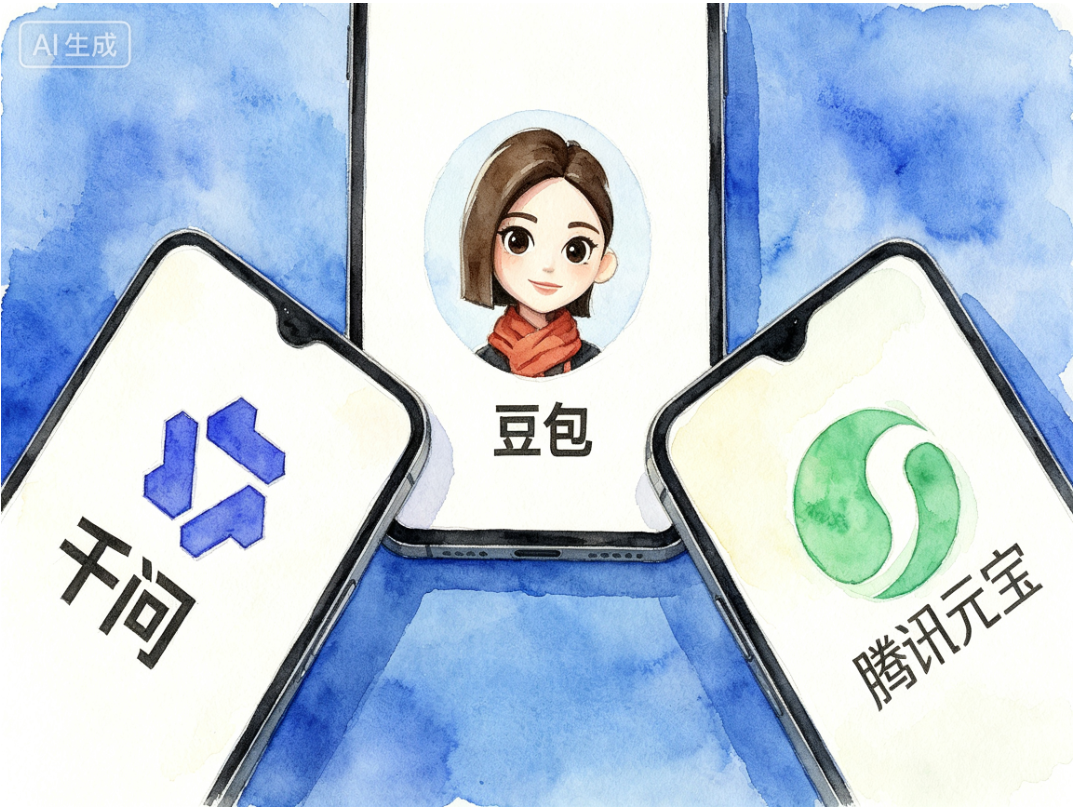
On July 15, if you opened the agent plaza on Doubao, Qianwen, or Yuanbao, you would have noticed a silent purge taking place. Tens of thousands of cyber lovers, dominant boyfriends, and anime-style waifus vanished overnight, replaced by cold official notices stating that the agent had been taken offline.
This was not an isolated decision by a single company. Doubao under ByteDance, Qianwen under Alibaba, Yuanbao under Tencent, and Miaoshi under NetEase all simultaneously discontinued their C-end user-built AI agent features.
On July 4, Doubao and Qianwen were the first to announce that the discontinuation would precisely take effect on July 15. This date was no coincidence. The Interim Measures for the Administration of AI Personified Interactive Services, jointly issued by five departments including the Cyberspace Administration of China, officially came into effect on this day. Prior to this, the Shanghai Cyberspace Administration had already taken down over 14,000 non-compliant user-built agents in advance.
A regulatory storm targeting AI emotional companionship and role-playing has completely reshaped the product landscape of C-end large models.
This was not a simple feature adjustment. It signaled the collapse of major companies' dreams for an AI-powered App Store and the inevitable fate of C-end large model apps devolving from platforms into tools. These companies had aspired to be the Apple of the AI era but found themselves to be merely the Office of the AI era.
The Collapse of the AI-Powered App Store Dream
Why did major companies once so fervently pursue user-built agents, and why did they fail? To answer this question, we must turn back the clock to the winter of 2023.
In November 2023, OpenAI introduced the GPTs feature, allowing users to create their own customized AI agents through simple natural language descriptions. This feature sparked a frenzy of discussion in the tech community on the day of its release. People excitedly envisioned a future where everyone could craft a personalized AI application based on their needs, as simple as downloading an app from the App Store.
Domestic companies followed suit at an astonishing pace. Within a few months, Doubao launched its agent plaza, Qianwen introduced its agent center, and Yuanbao opened up user-built functionality. At their respective product launches, agents were touted as the core of the next-generation human-computer interaction paradigm. The consensus was that large models would evolve from question-answering tools into autonomous agents capable of completing tasks independently. Users could customize roles and assign tasks, allowing the AI to operate autonomously.
The business vision painted by these major companies was highly enticing. The platform would provide the underlying large model capabilities, while users would contribute creativity and content, forming a UGC ecosystem. The platform would monetize through traffic distribution and revenue sharing from premium features, ultimately becoming the App Store of the AI era. This narrative was so flawless that nearly all investors bought into it.
However, reality soon delivered a harsh response. UGC agents faced three insurmountable dilemmas.
The first dilemma was the flood (proliferation) of low-quality content. When platforms lowered the barrier to creating agents to nearly zero, what flooded in were not high-quality creators but a deluge of borderline content. A vast number of softcore role-plays, vulgar chatbots, and Inducibility (seductive) emotional companionship agents inundated the platforms. The 14,000 non-compliant agents taken down by the Shanghai Cyberspace Administration served as the most direct evidence. This content not only degraded the platform's tone but also directly crossed regulatory red lines.
The second dilemma was extremely low user retention. After the novelty wore off, users discovered that self-built agents had little practical use. The dialogue quality of most UGC agents fell far short of the official default models, with so-called personalized settings being nothing more than simple repackaging of a few prompts. According to industry estimates, the proportion of daily active users in the agent sections of leading apps accounted for less than 5% of the overall DAU. Most users simply checked them out for amusement before drifting away entirely.
The third dilemma was near-zero monetization. Users were unwilling to pay for custom avatars or personas, and platforms could not generate meaningful revenue sharing from UGC agents. Internal data from a major company revealed that monthly revenue from the agent section did not even reach one million yuan. Compared to the computational power and R&D costs invested by these major companies, this was a mere drop in the bucket.
An AI product manager at a major company admitted in an anonymous interview that internal awareness of the viability of this path had faded within six months of the agent plaza's launch. Less than 1% of the hundreds of thousands of user-created agents showed sustained activity. Most agents were never opened again by their creators after the initial creation.
If commercial failure merely cost these major companies some money, the arrival of regulations directly sealed the fate of C-end agents.
The Interim Measures for the Administration of AI Personified Interactive Services explicitly prohibited AI from inducing emotional dependence in users, generating self-harm or violent content, and endangering the physical and mental health of minors. The measures also required service providers to prominently label personified interactive content and establish robust user complaint and intervention mechanisms.
Compliance costs were exorbitant. A compliance officer at a leading large model company revealed that reconstructing the entire risk control system would require tens of millions of yuan in investment and a timeline exceeding six months. This represented only the technical transformation costs. When factoring in ongoing content moderation labor costs and potential legal liability risks, the comprehensive investment would be staggering.
Faced with such prohibitive costs, major companies chose to cut their losses. Doubao and Qianwen did not even attempt compliance modifications before announcing a complete shutdown. A source close to ByteDance revealed that internal assessments concluded that the comprehensive benefits of this sector were far from sufficient to cover compliance costs, making a direct shutdown the most cost-effective solution.
The major companies had aspired to be the Apple of the AI era but found themselves to be merely the Office of the AI era. This mockery now appears to be a precise prophecy.
Why 'Tools'?
Stripping away the regulatory veneer, we must confront a more fundamental question. What is the commercial essence of C-end large model apps? Why are they destined to remain tools rather than evolve into platforms?
Over the past two years, a prevailing notion in the industry has been that AI emotional companionship represents the largest application scenario for C-end large models. Countless entrepreneurs believed that humanity's deepest desire for emotional connection would, if AI could fulfill the role of a soulmate, yield immense commercial returns.
Data tells a vastly different story. Take Character.AI, the world's most renowned AI emotional companionship product, as an example. Founded by former Google engineers, the company rapidly rose to prominence with its core feature of enabling users to converse with various AI virtual characters. In 2024, it was acquired by Google at a valuation of approximately $2.7 billion. However, its commercial performance fell far short of its valuation. Public information indicates that Character.AI's annual revenue has consistently remained in the tens of millions of dollars, creating a stark disconnect with its multi-billion-dollar valuation.
More critically, Character.AI faced multiple lawsuits stemming from AI-induced self-harm and suicide among adolescents. In 2024, a 14-year-old boy in the United States committed suicide after engaging in months of intensive conversations with a character on Character.AI. This tragedy triggered a global reckoning with AI emotional companionship products. In October 2025, Character.AI was compelled to completely prohibit minors from using its services. In early 2026, Google reached a settlement with the victim's family, with the compensation amount believed to potentially set a record for AI harm cases.
Character.AI's experience laid bare a harsh reality. While users of emotional companionship AI products do exist, their willingness to pay is extremely low, while the compliance risks and public scrutiny faced by these products are exceedingly high. This represents a classic high-risk, low-reward track (sector).
In contrast, AI products with pure tool attributes have demonstrated entirely different growth trajectories. Cursor, an AI programming tool, saw its annual recurring revenue soar from $100 million in early 2025 to $2 billion by February 2026, a twentyfold increase in just one year. Approximately 60% of this revenue came from enterprise clients, with over half of the Fortune 500 companies becoming paying users. Cursor's valuation subsequently approached $50 billion.
Character.AI took four years to achieve tens of millions in revenue and a multi-billion-dollar valuation bubble. Cursor achieved $2 billion in revenue and a $50 billion valuation in substantively less than two years. The difference between the two lies not in technical capability but in commercial essence. Emotional value is a false proposition; efficiency tools represent genuine demand.
Having a general-purpose large model serve as an emotional companion is akin to using Excel as Photoshop. It's not that it cannot be done, but the cost-effectiveness is abysmal.
The training objective of general-purpose large models is accuracy, safety, and usefulness. Their underlying optimization function is to assist users in completing tasks, not to foster emotional dependence. Providing emotional companionship requires an entirely different technological stack, including specialized affective computing models, long-term memory systems, personality consistency maintenance mechanisms, and sophisticated user psychological profiling systems.
Major companies have invested billions or even tens of billions in general-purpose large models and cannot afford to construct a separate technological system for a mere chatting feature. More critically, the core metrics for emotional companionship are user immersion duration and emotional dependence, which directly contradict the accuracy and efficiency pursued by general-purpose large models. A truly excellent emotional companionship AI should make users reluctant to leave, while a truly excellent tool AI should enable users to complete tasks as quickly as possible.
These two objectives are fundamentally opposed in product design. Major companies cannot pursue both simultaneously in a single product, and commercial data has clearly shown that the tool-oriented approach yields far higher returns than the emotional approach.
Looking at the global business models of C-end large model apps, the conclusion is crystal clear. ChatGPT Plus adopts a $20 monthly subscription model, with stable monthly revenue of approximately $200 million. It is a pure efficiency and knowledge tool, devoid of any agent ecosystem or emotional companionship features. Claude Pro also employs a $20 monthly subscription model, generating approximately $50 million in monthly revenue, similarly positioned as a pure tool.
Domestically, Doubao and Qianwen once experimented with a hybrid freemium model and invested heavily in agent ecosystems. However, with the agent ecosystem now abandoned, they are reverting to the most basic tool subscription model.
Globally, the healthiest business model for C-end large model apps is the subscription-based tool model, not the platform ecosystem. This conclusion, while disappointing to those dreaming of an AI-powered App Store, is supported by irrefutable data.
The Amputation of Major Companies
The agent discontinuation incident impacted companies of different scales in vastly different ways. For major companies, this was merely a strategic adjustment. For startups, it was a catastrophic blow. Doubao's core revenue comes from B-end API calls and enterprise-grade solutions. Qianwen's commercialization focuses on Alibaba Cloud's enterprise services and Tongyi series products. Yuanbao, backed by the WeChat ecosystem, primarily serves a strategic positioning role rather than aiming for independent monetization.
The C-end agent sector accounted for less than 1% of the overall revenue of these major companies. Its discontinuation would not affect any key financial metrics. The major companies' true AI battleground had already shifted to the B-end. Task-oriented agents, such as those for office collaboration, industrial quality inspection, code generation, and data analysis, represent their true wagers. An AI business leader at a major company explicitly stated in an internal meeting that the discontinuation of C-end agents would not impact the company's AI strategic pace. The company would concentrate the saved computational power and human resources into enterprise-grade AI solutions. The subtext was clear: C-end chatting was never the focus.
For startups, the situation was entirely different. Emotional companionship startups suffered the most severe impact. Take Xingye as an example. This AI role-playing product launched by MiniMax became a sensation in 2023, with monthly active users once surpassing 5 million. However, by 2025, its daily active users had plummeted, and downloads crashed from a peak of nearly 5 million per month to less than 1 million. The implementation of new regulatory rules directly negated its core product logic.
Zhumeng Island faced an even more tragic fate. This AI social product specializing in ancient-style role-playing was summoned by the Shanghai Cyberspace Administration in June 2025 for low-quality content issues and subsequently announced its shutdown, with the team disbanding. From a star startup product to complete closure, the journey took just over a year. Smaller AI chatting apps that merely copied the Character.AI model collapsed en masse.
Lacking the technological barriers and financial reserves of major companies, these startups found the exorbitant compliance costs insurmountable. Investors also rapidly abandoned this sector. An AI-focused investor bluntly stated that the funding window for emotional companionship AI startups had completely closed, with no institutions willing to invest at this juncture.
The fate of UGC agent platform startups was equally dire. Those that had once used the narrative of an AI-powered App Store to secure funding now faced the embarrassing reality of their platform model being thoroughly disproven. When even major companies abandoned this direction, startups had even less reason to persist.
For major companies, discontinuing a feature represented a strategic adjustment. For startups, losing a sector meant survival or extinction. Such is the ruthless law of the business world.
Who Is Still Paying?
Amidst the dual onslaught of regulation and business model challenges, an intriguing question arises. Where have the users who were once obsessed with cyber lovers and AI characters gone? The answer is that most of them had already left long ago. Industry data reveals a counterintuitive fact.
The user retention curve for C-end AI emotional companionship products is exceptionally steep. Most users engage frequently in the first three days after downloading the app, but retention rates typically fall below 15% after one week and plummet to single digits after a month.
This suggests that for the vast majority of users, the so-called AI emotional needs were merely a novelty. Once the novelty faded, they quickly realized that establishing a genuine emotional connection with a text dialogue driven by prompts was extremely difficult, if not absurd.
AI inadvertently exposes its mechanical nature, with a single ill-timed response sufficient to shatter any carefully constructed sense of immersion.
While a user group with deep dependence on AI emotional companionship does exist, their scale is far smaller than the industry imagined. Moreover, it is precisely this deeply engaged user group that has triggered the greatest social controversy and legal risks. The adolescent suicide lawsuits faced by Character.AI serve as the best illustration.
A heavy user of C-end large models stated in an interview that he had tried nearly all AI role-playing products on the market but ultimately uninstalled them all. The reason was that these products could not provide truly meaningful emotional feedback. He said, When you realize that the screen opposite (opposite you) is always just a probabilistic model generating text, that sense of loneliness is only amplified.
This observation touches upon the fundamental paradox of AI emotional companionship products. They attempt to use technology to address humanity's deepest emotional needs, yet the inherently inhuman nature of technology ensures it can never truly fulfill these needs.
The Endgame for Consumer-Facing Large Models
Stripped of anthropomorphic pretenses, the future landscape of consumer-facing large model apps has become clear. The product form is regressing from an agent plaza back to a single dialog box, from role-playing back to task processing, and from emotional companionship back to efficiency tools. These three regression paths form the main theme of the evolution of consumer-facing large model products. Those once flashy functional modules are being systematically eliminated, leaving only the core capabilities of conversation and task execution.
Product interface design is also returning to minimalism, with an input box and a generate button being all there is. This regression may seem like a step backward, but it is actually a rational correction. Over the past two years, the industry has invested excessive enthusiasm and resources in AI anthropomorphism, neglecting users' most fundamental demand for AI: to get things done and done well.
The subscription model has become the mainstream monetization approach for consumer-facing large model apps. Monthly or annual fees are the most direct method, supplemented by a freemium model where basic functions are free and advanced features require payment. The advertising model is nearly impossible to implement. Users cannot accept ads inserted into AI responses, as this would severely undermine the tool's usability and trustworthiness. Indirect monetization methods such as e-commerce referrals and content distribution have also proven highly inefficient. This means the commercial ceiling for consumer-facing large model apps is actually calculable.
Its upper limit equals the number of potential paying users multiplied by the average revenue per user. For most products, this figure ranges from billions to over a hundred billion RMB, far less grand than the platform ecosystem narratives depict. More profound changes are occurring at the user mindset level. Users will no longer expect AI to understand them but to be useful. AI's downgrade from a soulmate to an efficiency tool represents a rational regression and the fading of romance. But this fading is not necessarily a bad thing.
When users no longer harbor unrealistic emotional expectations for AI, they can better leverage it to enhance work efficiency and quality of life. An industry analyst points out that future competition in consumer-facing large models will focus on three dimensions: model capability strength, toolchain completeness, and subscription price reasonableness. Products attempting to acquire users through emotional gimmicks will be thoroughly eliminated, with only those truly capable of solving user problems surviving.
Epilogue: Looking back at the past two years of consumer-facing large model development, we see a complete cycle from frenzy to rationality. When GPTs were released at the end of 2023, the entire industry envisioned grand narratives of an AI-powered App Store. In 2024, countless entrepreneurs flooded into the AI emotional companionship and role-playing sectors, exciting capital markets. By 2025, commercialization difficulties began to surface, user growth stalled, and investor sentiment cooled.
In July 2026, regulatory changes took effect, major players collectively discontinued agent functions, and the dream officially ended. The core lesson of this cycle is that the technological essence of large models determines their commercial destiny. Large models are powerful information processing and generation tools, not digital beings capable of forming emotional connections with humans.
Attempting to build a business model against this technological essence will ultimately result in failure. Major players have buried the dream of an AI-powered App Store and written the epitaph for consumer-facing large model apps themselves. There is no poetry or distant horizon here—only documents, code, and data.
AI has finally recognized its place as a useful, obedient, and emotionless tool. But being a tool does not mean being valueless. On the contrary, when AI contentedly serves as an excellent tool, it can unleash its maximum productivity value.
Cursor has proven this with $2 billion in annual revenue. Future consumer-facing large model products that survive and thrive will undoubtedly be those that push tool attributes to the extreme. As for those cyber lovers and domineering boyfriends, let them remain in the summer of 2024. It was a beautiful dream, but dreams must eventually end.
-
![]()
Alibaba's AI Offensive: Over Half of Investment Allocated, Time to Reap Returns
-
![]()
Alibaba’s AI Push: Over Half of Investments Made, Time to Harvest Returns
-
![]()
Chinese Enterprises Going Global 3.0: From World Factory to AI Infrastructure Builder
-
![]()
Honor RobotPhone Review: Half Movie Camera, Half Robot
-
![]()
AI-Driven Cheating Surges in Universities! Online Exams Reduced to Mere Formalities, Degree Credibility on the Line
-
Insta360’s Decade in Panoramic Imaging: Making Cameras ‘Invisible’ and Returning Creation to the Masses
-
![]()
Foreign Media Claims Apple is Concentrating Resources on AI Development: Vision Pro and Siri Teams Lay Off 200 People
-
Big News! Huaneng and Huawei Hold Talks in Shenzhen with Ren Zhengfei in Attendance; Huawei Emerging as the 'Second Brain' of China's Energy System