The "Cape Verde Miracle" Can't Secure China's AI Future
 07/07 2026
 621
621
After watching the World Cup match between Cape Verde and Argentina, I, like many others, was deeply struck by the "Cape Verde Miracle." With a resilient defense, efficient offense, and a goalkeeper who performed exceptionally well in consecutive games, this island nation, boasting a population of just 500,000, managed to draw with three World Cup champions—Spain, Uruguay, and Argentina—over the course of 90-minute matches.
This inspiring story also sparked some reflections beyond the realm of football.
The essence of the "Cape Verde Miracle" can be encapsulated in one word: drawing.

In football, particularly in cup competitions, the optimal strategy for an underdog facing a powerhouse is to adopt a defensive stance, aiming for a draw as a victory, and potentially dragging the stronger team into extra time and penalties. For instance, in the first round of the group stage, Cape Verde vs. Spain, Cape Verde employed a defensive tactic without launching attacks, successfully earning a point against the former World Cup champions.
In football, a robust defense often yields unexpectedly positive results. However, in the tech world, this isn't necessarily the case. Focusing solely on "achieving a draw" can often lead to a precarious situation.
I'm curious if you've noticed that China's booming AI industry has been adhering to the "Cape Verde Tactics" for years. This means following the U.S.'s lead, closely monitoring and defending, but never taking the initiative, all in an effort to catch up and imitate, ultimately matching the progress of U.S. AI.
But can adopting the Cape Verde Tactics truly create a Cape Verde Miracle in the AI realm?

The rapid development of China's AI in recent years is undeniable. It can be said that China has been vigorously catching up with the U.S., but the issue is that it always seems to be playing catch-up.
China's AI core logic can be summarized in six words: "follow trends, make incremental advancements."
Let's first discuss incremental advancements. Although China's AI boasts a large number of patents and papers, there is rarely core innovation in foundational algorithms or underlying platforms. Even if there is, it struggles to gain industry-wide recognition and large-scale application. Over time, this has led to the famous adage, "U.S. AI goes from 0 to 1, while China's AI goes from 1 to 99."
Focusing solely on incremental advancements without foundational innovation has left China's AI fundamental technology almost entirely reliant on the U.S. For example, currently, the mainstream AI development frameworks in China are still Meta's PyTorch and Google's TensorFlow. In terms of foundational models, after LLaMA/LLaMA 2 were open-sourced, most domestic small and medium-sized AI enterprises and developers chose to fine-tune models based on the LLaMA series. This turned an American open-source model into a widely applied industrial foundation across various industries in China. In terms of AI hardware, the reliance on NVIDIA's CUDA ecosystem is a well-known topic. From training to inference, almost every layer of the AI stack is dominated by U.S. companies. China's AI can only refine incremental businesses based on currently open frameworks, models, and chips, combined with local demand.

While relying on these foundations, China's AI industry also shows a high degree of attention to and imitation of U.S. AI trends, known as "following trends." After ChatGPT became a sensation in 2022, mainstream large models in China were launched explosively in 2023, leading to a situation where hundreds of models competed. These hundreds of models were largely aligned with ChatGPT in terms of model architecture, training methods, and performance capabilities.
Subsequently, Chinese companies also kept up with trends such as multimodal models and video generation models, catching up with determination at every turn. Early this year, with the popularity of OpenClaw, the domestic scene saw a situation where "AI agents were everywhere, and every factory had its own version" (a playful reference to the trend).
While catching up technologically, China's AI is also vigorously replicating the commercialization paths of U.S. AI. Large model API services, SaaS-based AI tools, one-person companies, and token economies—these business models, validated or highly regarded in the U.S. market, have all been vigorously localized in China.
In the eyes of many domestic AI practitioners, since U.S. AI technologies and products cannot enter China, as long as they replicate a domestic version, as was done in the internet era, and pair it with China's vast market, the game can continue.
Drawing seems to be a victory.

Of course, there's nothing inherently wrong with innovation from 1 to 99. However, the best outcome of striving for a draw is often just a draw, and many times, even a draw cannot be maintained.
One of the hot topics in the AI industry in recent months is the widening generational gap in models. Around 2024, amidst the fervent competition of hundreds of models, the gap between China's and the U.S.'s foundational AI models was believed to have narrowed from a year to about three months. However, around the second half of 2025, U.S. companies intensified their efforts in updating foundational models, and new-generation models quickly took shape. At this juncture, Chinese companies were caught in an industry reshuffle phase in the large model market, focusing more on marketing than R&D. By 2026, the previously believed narrowing model generational gap had widened again, with noticeable differences in the user experience of foundational models.
Whether this viewpoint is correct or not, it at least reminds us that vigorous imitation does not guarantee success. There are significant differences between China and the U.S. in terms of AI talent, capital, and infrastructure, leading to inevitable distinctions in AI technologies. Blindly following and imitating is somewhat like cutting one's feet to fit the shoes. Once following fails, it's like a team playing a defensive "iron barrel" formation conceding the first goal. At that point, attacking is futile, and defending is meaningless, leading to a very passive situation.

Besides the risk of following failure, another issue with China's AI focusing solely on incremental advancements is the risk of supply disruption. The Chinese tech community is already familiar with the chokeholds in chips and operating systems, but this is increasingly happening within AI itself. For example, Anthropic's cybersecurity model, Mthos, is only available domestically in the U.S., and even foreign citizens within the U.S. are not allowed to use it. As the strategic significance of AI technology becomes clearer, similar closed AI strategies will only become more pronounced. The sustainability of all foundational models, development tools, and software and hardware ecosystems that China's AI industry relies on must be questioned.
Even more frightening is the stagnation of the innovation flywheel. AI development follows a complete cycle from R&D to engineering, productization, and commercialization. Any missing link in this cycle will lead to a loss of competitiveness in subsequent stages. However, at present, after investing heavily in R&D and marketing, Chinese AI companies that have gained market share are extremely eager for commercial returns. Due to long-standing adherence to a following strategy, they generally do not believe in the necessity or possibility of leading the next round of innovation, quickly becoming conservative and closed-off technologically. This year, amidst the clamor for "AI agents," core innovation in China's AI industry has significantly decreased, posing new hidden dangers for the future.
There is a peculiar phenomenon in the history of the Industrial Revolution: countries often in a state of catching up and imitating can at best achieve 80% of the results achieved by countries leading scientific and technological iterations. Japan, Europe, and the Soviet Union have all fallen into this "catch-up trap" during the Industrial Revolution race.
Most importantly, being in a constant state of following creates a persistent anxiety about falling behind and the need to closely monitor competitors.
Practitioners and policymakers are very concerned about the chain reactions caused by a single failed "close defense."
This anxiety has been pervasive in China's AI industry, and I believe practitioners can attest to it.

In fact, China's AI has not been without offensive moves in recent years, achieving some "unique to us" innovations in the Sino-U.S. AI competition. However, the results of these innovations have mostly been unsatisfactory. Often, just as we start to kindle a small flame, a raging fire of new technologies and trends from the U.S. sweeps in, drawing everyone's attention away. This small flame then quietly extinguishes without supervision.
Let me give a few examples. PaddlePaddle is the most successful deep learning development framework in China and was once a strategic focus for Baidu in the AI industry. It was the first to propose integrating models, tools, and even industry solutions at the framework layer. This idea of thickening the framework and even turning it into an operating system for the AI era was significantly different from mainstream U.S. frameworks, undoubtedly a unique creation of China's AI, and it was already very mature in the AI developer ecosystem.
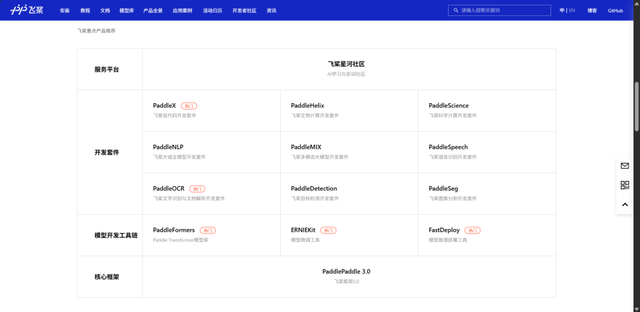
However, with the advent of the large model era, Baidu's attention shifted from the framework to large models. The resources allocated to PaddlePaddle visibly decreased. Currently, PaddlePaddle is mainly used in some domestic government and enterprise scenarios, still lagging far behind mainstream U.S. frameworks. Many successful feature developments and community operations of PaddlePaddle have entered a stagnant phase. It's truly regrettable.

Another example is Huawei's Pangu large model. Long before the era of large models, Huawei proposed the concept of industry intelligent agents, always considering the integration of AI with industries as a core direction. After the launch of the Pangu large model, this direction was adhered to. The first large models used in industries such as mining and transportation were Pangu. However, due to subsequent well-known controversies, the Pangu large model fell into a slump, casting a shadow over the core consensus that "the way out for China's AI lies in industries."
DeepSeek's explosion in popularity in 2023 is still fresh in our minds. Its core technological breakthrough was generally considered to be improvements to the MoE model. MoE was not invented by DeepSeek, but it systematically optimized the core defects of traditional MoE, forming the most mature MoE solution in the industry at the time. Many AI companies and developers worldwide believed that MoE could achieve linear growth in "parameters doubling while computational power remains unchanged," and many even thought DeepSeek was about to overturn NVIDIA's dominance.
However, the subsequent trend was that the benefits of MoE were lower than expected, and engineering optimizations could not solve its core shortcomings. For example, during the inference phase, MoE models became cumbersome, wasting a significant amount of computational power. This once highly touted ace card of China's AI quickly dissolved into the vast wave of AI innovation, becoming just one of many model upgrade solutions.
Infrastructure investment is substantial and challenging, and it's easy to be abandoned. Model innovation will be done by someone eventually if you don't do it, and then you can just learn from them. Over time, the industry has formed such an inertial perception. Gradually, poaching talent with high salaries has become the core solution for enhancing technical capabilities.
But I still appreciate these unique AI innovations from China.
Defense may prevent loss, but offense always shines.

In football, it's often said that there are strong team and weak team mentalities on the field.
A weak team mentality naturally means giving up possession and playing defensively, while a strong team mentality requires completing the game in one's own style. It means high pressing, rapid transitions, and Tiki-Taka.
China's AI must ultimately answer this question: Do we see ourselves as Cape Verde, or as Argentina, France, or Spain?
If we always want to be second, as long as we don't fall behind, and consider losing less as a win, then the current strategy is fine. But if China's AI aims to win championships and compete globally, then it's time to face the challenges. From a certain stage onward, China's AI must cultivate its own "strong team mentality."
On a side note, I personally think it would be good for the Chinese national football team to learn from Cape Verde, but I reckon they won't be able to do so in the short term.

The concept of a 'strong team mentality' entails harnessing strengths and proactively taking action. It involves striking a balance between imitation and originality, achieving a harmonious blend of the two. China's AI endeavors strive for a scenario where 'we possess what others have, and we also have what others lack.' This approach has already yielded initial successes in the realms of chips and foundational software, and now it's time to extend this exploration to AI.
So, what are the strengths that China's AI can capitalize on? At first glance, there are several notable ones:
1. A novel nationwide system.
While institutional guarantees may seem like a macro-level consideration, their impact is profound. Over the years, to address the 'bottleneck' issues in chips and foundational software, China has explored effective action strategies for implementing a new type of nationwide system in the technology sector. Leveraging this institutional advantage in AI will be a pivotal battle in transitioning from technological self-reliance to technological self-enhancement.
2. Industry intelligence integration.
The path of integrating AI into China's industries has already been firmly validated. Abandoning or weakening the industry market in favor of solely competing with U.S. AI in the individual user market is essentially counterproductive. The potential for synergizing industry scenarios with AI is far from being fully tapped. At its core, AI represents an Industrial Revolution—this could be China's ace in the hole.
3. Hardware prowess.
An often-overlooked strength of China's AI lies in its robust hardware design, manufacturing, and productization capabilities. However, it's crucial to recognize that the AI competition demands not using AI to augment hardware (as seen in the robotics sector) but rather utilizing hardware to amplify AI, making hardware a catalyst for AI. This area presents unique value potential for China to explore.
4. Engineering advancements.
The success of DeepSeek has at least demonstrated that leveraging engineering strengths remains highly pertinent in the innovation of core AI technologies. China boasts strong software engineering capabilities and a vast reservoir of software engineering talent. Employing engineering breakthroughs to establish anchors for core technologies will be a pragmatic path forward.
In the AI landscape, it's widely recognized that China lags significantly behind the United States in terms of original foundational theories, underlying software and hardware ecosystems, and disruptive innovation paradigms, necessitating a long-term commitment to catch up.
However, perhaps it's time to reconsider: Does a long-term pursuit equate to mere chasing? Is it feasible to concurrently develop a set of tactics and strategies that better align with China's unique strengths in AI? Rather than viewing parity as the sole objective, we should leverage our own advantages in the competition.
Chinese AI does not require a 'Cape Verde Miracle'—a sudden and unexpected success.
We need to demonstrate, through our own endeavors, that Chinese AI's triumph is far from a miracle; it's the result of strategic planning and relentless effort.
-
![]()
Alibaba's AI Offensive: Over Half of Investment Allocated, Time to Reap Returns
-
![]()
Alibaba’s AI Push: Over Half of Investments Made, Time to Harvest Returns
-
![]()
Chinese Enterprises Going Global 3.0: From World Factory to AI Infrastructure Builder
-
![]()
Honor RobotPhone Review: Half Movie Camera, Half Robot
-
![]()
AI-Driven Cheating Surges in Universities! Online Exams Reduced to Mere Formalities, Degree Credibility on the Line
-
Insta360’s Decade in Panoramic Imaging: Making Cameras ‘Invisible’ and Returning Creation to the Masses
-
![]()
Foreign Media Claims Apple is Concentrating Resources on AI Development: Vision Pro and Siri Teams Lay Off 200 People
-
Big News! Huaneng and Huawei Hold Talks in Shenzhen with Ren Zhengfei in Attendance; Huawei Emerging as the 'Second Brain' of China's Energy System