Meta 'Shorts' the Global AI Chain, Then 'Goes Long'
 07/10 2026
 464
464
This article is crafted based on publicly accessible information and serves purely as an avenue for informational exchange, not as any form of investment advice.
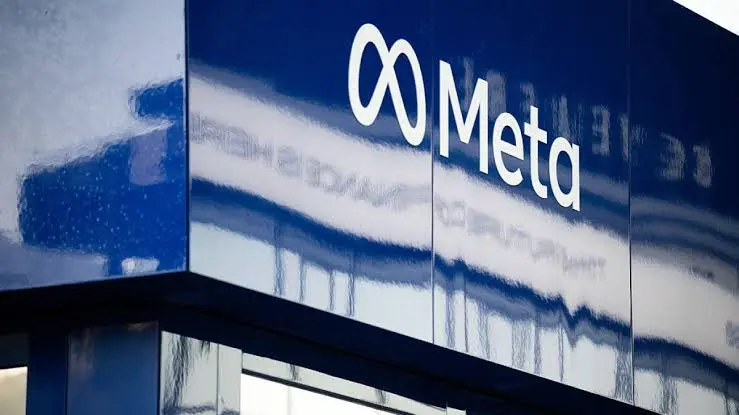
A week ago, Meta sent shockwaves through the global AI sector. It announced the leasing of its idle computing power, prompting the market to swiftly conclude: If even Meta is unable to fully utilize its own GPUs, it signals an oversupply in the computing power market. Consequently, NVIDIA's stock plummeted by over 5%, and the three leading A-share optical module companies each saw their shares drop by more than 7% in a single day, wiping out tens of billions of dollars in market value from the global AI infrastructure sector. It was a textbook 'short' play, as Meta, without selling a single share, simply listed its idle assets for rent and disrupted the valuation logic of the entire sector.
A week later, Meta took another significant step. On July 8, it announced plans to construct a 1GW-scale data center in Alberta, Canada, with a total investment of approximately $9 billion and a construction timeline spanning two to three years. This will mark Meta's 33rd data center and its inaugural facility in Canada.
Meanwhile, Reuters reported that a memo disclosed Meta's intention to launch AI chips in September, aiming to double its computing power. These chips, codenamed 'Iris,' are part of the fourth-generation iteration of Meta's self-designed Training and Inference Accelerator (MTIA). The company anticipates investing up to $145 billion in AI infrastructure this year.
First, it released excess capacity, then stockpiled resources. First, it shook the market, then bolstered its positions. What exactly is Meta up to?
01 The 'Bidirectional Movement' of Computing Power
When analyzing these two events, the market has fallen into a binary mindset: renting out computing power is seen as bearish, while constructing new data centers is viewed as bullish. Meta cannot simultaneously be both short and long, so one of these interpretations must be flawed.
However, this line of reasoning overlooks the unique characteristics of computing power assets. Computing power is not a standardized commodity; the same batch of GPUs can yield vastly different values under varying operational models. Renting out idle computing power is Meta's strategy to monetize the excess capacity it has accumulated over the past two years. The growth rate of Llama's usage has sharply declined, and training demand has contracted, leaving these GPUs unable to generate sufficient marginal returns within Meta. Renting them out is a means to halt the financial bleeding.
Constructing new data centers is Meta's approach to securing its foothold for AI infrastructure demand over the next five years. The Canadian data center, situated in Alberta, was chosen for its abundant energy supply and favorable regulatory climate. With a capacity of 1GW, it can support the training and inference needs of next-generation large models. The two-to-three-year construction period indicates preparation for demand beyond 2029.
Halting the financial losses and injecting new vitality occur on two distinct time scales. Meta is not grappling with the question of 'whether there is too much or too little computing power,' but rather 'whether the computing power is misallocated in time.' In the short term, there is an excess of GPUs that have already been deployed. In the long term, there will be a shortage of energy and computing clusters required for the next generation of models. These two issues are not mutually exclusive.

Image source: Internet
02 Between Two Narratives Lies a Trillion-Dollar Valuation Gap
But the real challenge lies not in the temporal mismatch of computing power but in Meta's inherent dilemma.
A staggering 98% of Meta's revenue stems from advertising. The Llama open-source model has been downloaded over 100 million times yet generates no revenue. Capital expenditures for 2025 are nearing $100 billion, with projections for 2026 ranging from $125 billion to $145 billion, pushing free cash flow to its lowest point since 2014. Billions of dollars in annual R&D and computing power investments are all being funneled into data center equipment and GPUs, resembling an increasingly opulent production facility—but one whose sole output has been advertising.
Even more awkwardly, advertising does not necessitate such an extravagant setup. Precision targeting, content recommendation, and user growth tasks demand significantly less computing power than training cutting-edge models. Meta has constructed an industrial-grade bakery but is only baking one type of cake, with all the excess heat dissipating uselessly.
Now, it is attempting to sell that excess heat to others. The logic is sound, but the challenges are daunting. AWS, Azure, and Google Cloud collectively dominate more than two-thirds of the global cloud market, boasting mature customer bases, compliance certifications, direct sales teams, and decade-long relationships with governments and large enterprises. Meta, a company primarily focused on social networking, is assembling a sales team to approach these major clients and persuade them to purchase its computing power.
However, Meta holds a trump card: open source. Llama does not charge model fees, meaning customers only pay for the pure computing power costs. For data-privacy-sensitive and compliance-demanding clients in Europe and Asia-Pacific, open source equates to controllability, auditability, and private deployment, without the fear of being locked into a closed-source model from a single supplier. Moreover, in the consumer market with hundreds of millions of users, open-source free models reign supreme. Whether this advantage can translate into market share depends on Meta's ability to swiftly establish a new business model within a comprehensible timeframe.
Meta's total revenue target for Metamate is $15 billion, a figure that will not significantly impact its financial model in the short term. But it will alter how investors perceive Meta. If Metamate succeeds, Meta will transform from 'a social network company propped up by advertising' into 'a tech infrastructure company with an open-source AI ecosystem.'
Between these two narratives lies a trillion-dollar valuation ceiling.

-
![]()
MiniMax Shares Unlock: Cornerstone Shareholders Show Long-Term Optimism, Yet Stock Plummets Nearly 30% in Two Days; Zhipu Also Sees Nearly 20% Drop Today
-
![]()
Single-Day Plunge of 40%: The 'First AGI Stock' Faces More Than Just Share Price Concerns
-
![]()
Ricoh and Fuji Hike Prices on Legacy Edge; Insta360 Poised to Disrupt Mirrorless Camera Market
-
![]()
Ricoh and Fujifilm Raise Prices in Tandem, Relying on Established Reputations; Insta360 Poised to Disrupt Mirrorless Camera Market
-
![]()
Strategic Shift in Photoelectric Sensing: Maxvision Secures Controlling Stake in CAS Optotech
-
![]()
Optical Communication and Robot Vision: OFILM’s Bold Transformation Amid a 460 Million Yuan Loss
-
![]()
From 100,000-GPU Computing Might to Industrial Efficiency: The Logic Behind AI4S-Driven Intelligence
-
![]()
OpenAI, Grok, and Meta Release Three Major Models: Who is the King of Cost-Effectiveness?