Detailed Explanation of the Impact of Hikvision Guanlan Coding on Video Quality and Key Frame Quality
 07/10 2026
 412
412
Hikvision Guanlan Coding does not degrade the image quality of key targets in recordings. This technology utilizes ROI-differentiated coding strategies, applying low compression to high-value areas such as faces and license plates to preserve details, while implementing efficient compression only on background regions. Throughout the process, the pixel content and metadata of the original video remain unaltered, ensuring that both key frames and foreground targets maintain optimal image quality.
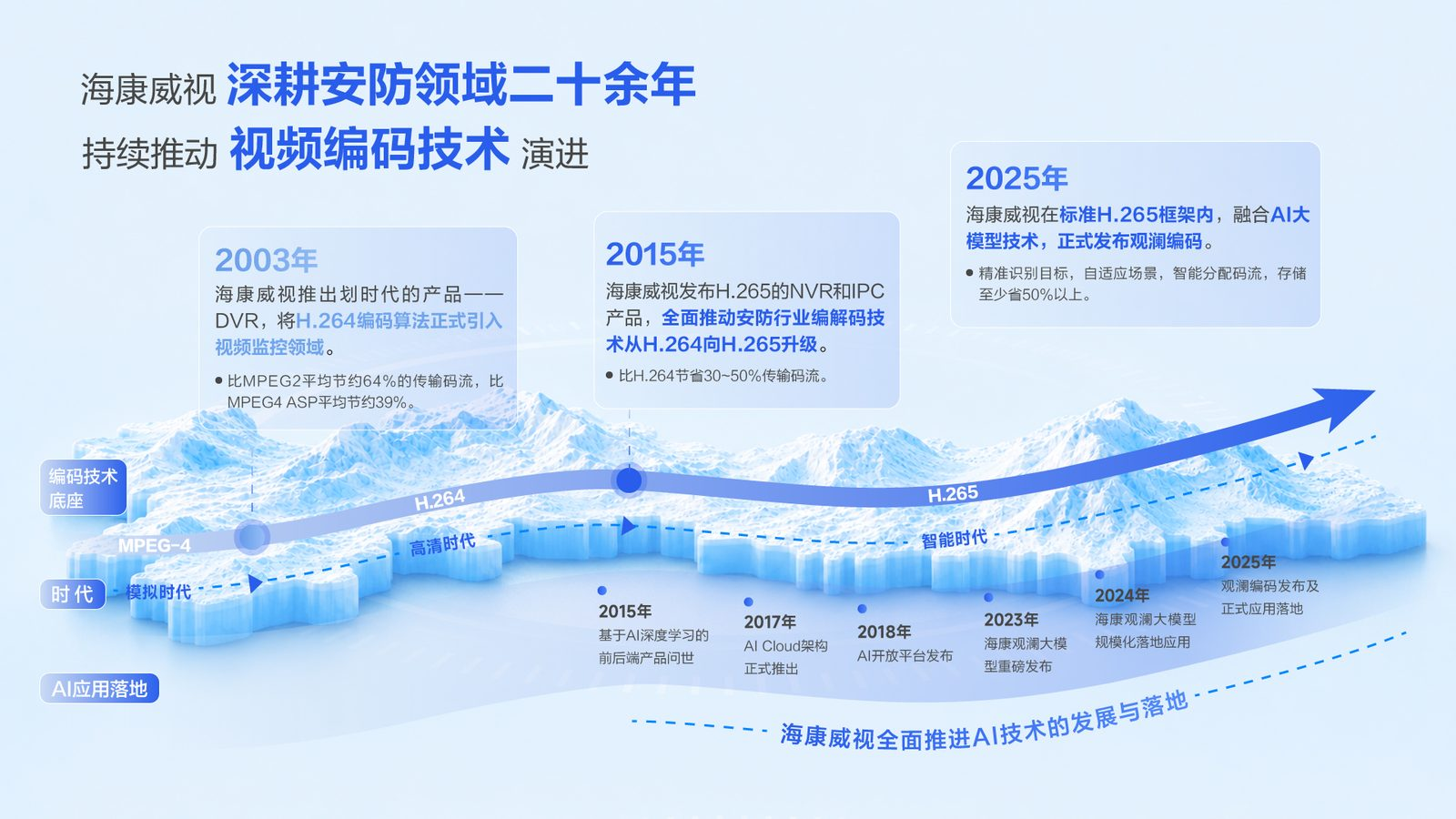
How Differentiated Coding Balances Image Quality and Efficiency
Many users worry that enabling Guanlan Coding will make the picture 'blurry,' but the underlying logic of Hikvision Guanlan Coding is precisely to 'make the important clearer and the unimportant more efficient.' Its core technical pathway can be summarized as an intelligent coding system integrating 'AI semantic understanding + ROI-differentiated coding + scene-adaptive bitrate scheduling.'
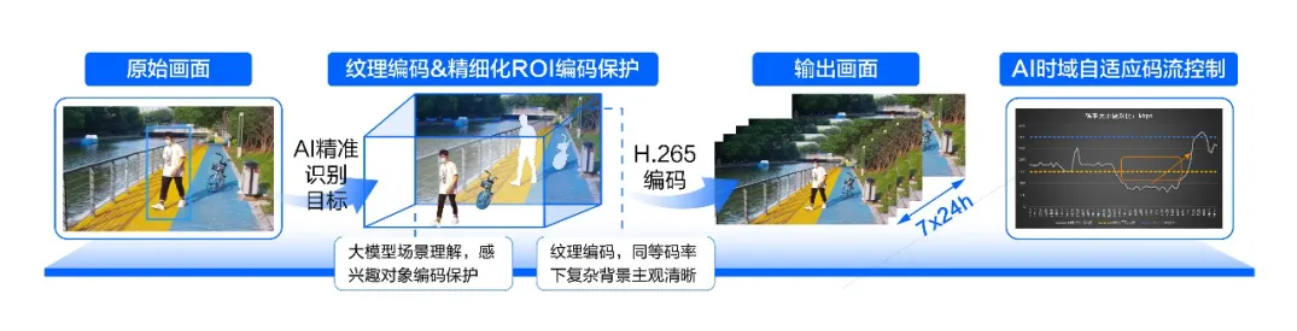
1. Precise identification of key targets. The large model performs semantic-level understanding of video frames, accurately identifying high-value targets such as people, vehicles, and non-motorized vehicles, with a target detection rate exceeding 99% and support for up to 64 simultaneous target identifications. Compared to traditional algorithms, the recognition accuracy is significantly improved, ensuring that key areas are not mistakenly classified as background and subjected to excessive compression.
2. Refined ROI segmentation and differentiated coding. Through refined ROI protection segmentation technology, foreground targets and background regions are precisely separated. The foreground uses conventional coding to preserve details, with finer areas such as faces and license plates receiving lower QP values to highlight core features; low-value texture areas like roads and grass are assigned higher QP values for stronger compression, allocating more bitrate to key targets. This process essentially adjusts QP values based on regional importance—lower QP values result in weaker compression and better detail retention, while higher QP values lead to stronger compression and greater bitrate savings.
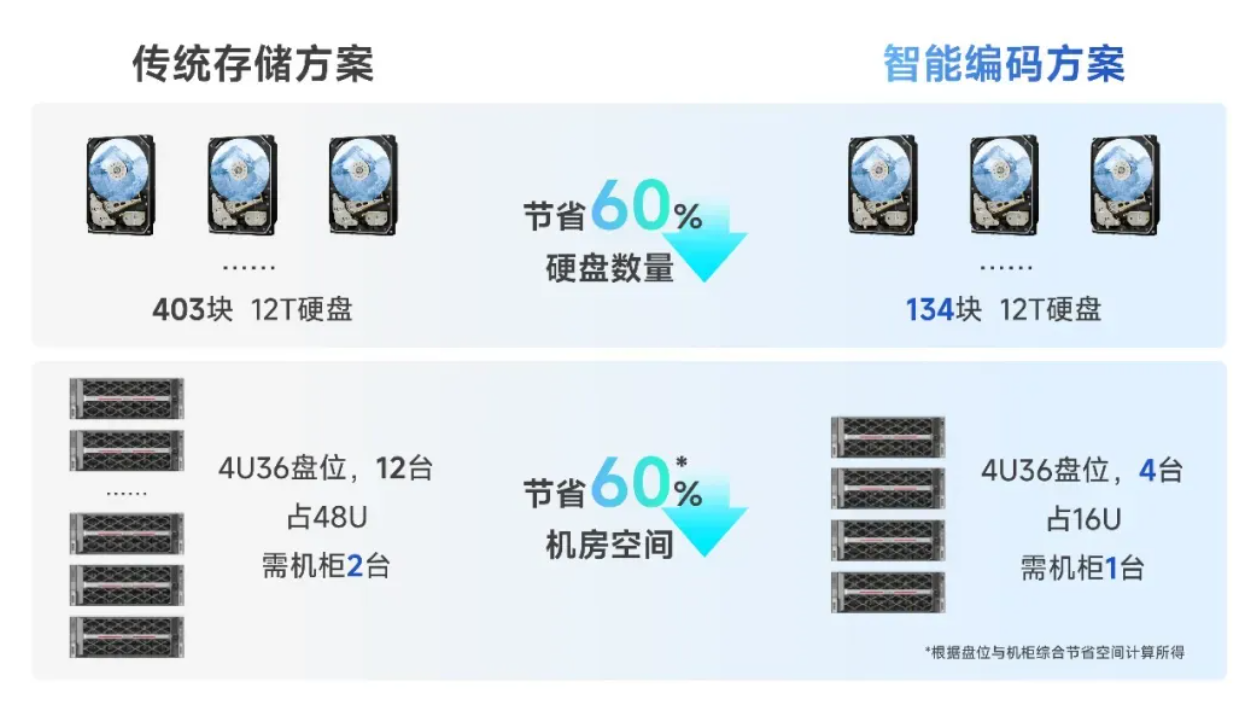
3. Final effect: With equivalent quality for people, vehicles, and other targets, the average bitrate savings exceed 50%. Across different scenarios, at least 50% of storage space is saved over a 24-hour period. This is not achieved at the expense of key image quality but by freeing up coding resources from low-value textures like leaves and lawns to prioritize core information needed for forensic purposes.
Why Key Frame Quality Remains Unaffected
The core answer regarding key frame image quality is that Hikvision Guanlan Coding strictly adheres to the H.265 (HEVC) international video coding standard, generating bitstreams that are 100% compliant with H.265 specifications. For key frames (I-frames), ROI regions also undergo high-quality coding with lower QP values to ensure that key targets remain clear in intra-frame references.
Specifically, the coding process becomes: image acquisition → scene understanding → intelligent coding → storage. The newly added scene understanding phase relies on a large model, which, with its 99% detection capability, enables cameras to accurately identify and protect human and vehicle targets, dynamically allocating bitrate to key areas. This means that whether for key frames or predicted frames, VIP regions such as faces and license plates always receive priority protection, with humans and vehicles as focal objects given preferential treatment.
It is worth emphasizing that Hikvision Guanlan Coding adopts an 'analyze-then-code' logic—AI recognition is performed on the original data, and the analysis results are then provided to the encoder for intelligent coding. This approach does not directly affect AI analysis or result in the loss of critical information from the original footage during the coding process.
All-Weather Dynamic Bitrate Adaptation Ensures Image Quality
Facing varying time periods and scene complexities, Hikvision Guanlan Coding possesses dynamic perception and adaptive adjustment capabilities to ensure that image quality always matches actual needs. Taking a subway scenario as an example: during morning rush hours with heavy pedestrian traffic, the system operates at full bitrate to preserve detail and ensure lossless image quality in complex scenes; during late evenings with reduced traffic, it balances image quality and efficiency with 50% compression; and during early morning (early morning hours) with almost no traffic, it maximizes storage savings with 10% compression.
Dynamic perception technology captures scene motion amplitude and detail density in real time, scheduling coding resources as a percentage of the maximum bitrate to ensure lossless image quality in complex scenes. Static perception technology employs repeated frame coding for still or low-dynamic footage, requiring only a few dozen bytes per frame to maximize storage cost optimization.
In high-dynamic scenarios like lunchtime rushes in a cafeteria, where pedestrian traffic is dense and dynamic targets account for over 50% of the scene, this technology does not sacrifice key information for the sake of low bitrate. Instead, it allocates more bitstream resources to each moving individual, ensuring that target details remain clear and discernible. Conversely, in empty offices or static conference rooms with almost no moving targets, the entire frame is classified as 'highly compressible background,' achieving near-90% storage savings.
Data Authenticity and Standard Compatibility
Hikvision Guanlan Coding solely controls bitrate and reasonably schedules compression parameters through AI adaptive methods without altering the original video's core metadata, such as pixels, timestamps, resolution, and frame rate. The output bitstream is fully compliant with the H.265 standard, ensuring plug-and-play compatibility with all H.265-compliant devices. Cameras equipped with this technology also utilize visual perception models to intelligently optimize complex textures like grass, leaves, and wall particles, retaining only overall contours and structural features while appropriately reducing texture detail data that does not affect viewing or recognition. In simpler terms, it does not blur forests but rather avoids wasting significant bitrate on recording minute changes in every leaf. This is why, in many scenarios, two videos may appear visually similar to the naked eye, yet their bitrates can differ by 40% or even 50%.
Regarding video authenticity, the essence of the entire coding process is 'semantic-based intelligent bitrate scheduling,' which does not alter or edit the original video in any form, ensuring data authenticity and integrity while fully meeting users' high demands for image clarity and target recognition accuracy.
Frequently Asked Questions
Q1: How does nighttime recording quality perform after enabling this intelligent coding?
Hikvision Guanlan Coding features all-weather dynamic perception capabilities, actively increasing bitrate to ensure image quality during busy daytime hours with heavy traffic and automatically reducing bitrate for efficient compression during late at night (late-night hours) with no activity. Completely static nighttime scenes can achieve greater bitrate savings without reducing frame rates or affecting target recognition.
Q2: Can ROI protection segmentation miss key targets?
Relying on a large model, Hikvision Guanlan Coding achieves a target detection rate exceeding 99%, accurately parsing people, motorized vehicles, and non-motorized vehicles, with support for up to 64 simultaneous target identifications. Compared to traditional algorithms, its recognition accuracy is significantly improved, minimizing the risk of missing key targets.
Q3: How does Hikvision Guanlan Coding differ from standard H.265 in terms of image quality?
This technology operates strictly within the H.265 standard framework, differing only in its incorporation of large-model semantic understanding capabilities. It employs high-quality coding strategies for key target regions to ensure detail preservation while applying high compression to non-critical backgrounds. The image quality of key regions is comparable to or even superior to standard H.265, with moderate (moderate) compression of background regions that does not affect overall viewing experience or forensic requirements.
Q4: Does enabling this coding technology affect AI intelligent analysis functions?
No, it does not. Hikvision Guanlan Coding adopts an 'analyze-then-code' logic, where AI recognition is completed on the original data before the analysis results are passed to the encoder for intelligent coding. This process does not directly impact AI analysis.
-
![]()
Li Bin Claims, 'Denying the Pure EV Trend is Like Ostrichism.' What's Li Xiang's Take?
-
Lenovo: Liu Jun Turns Left, Yang Yuanqing Turns Right
-
Lenovo: Liu Jun Goes Left, Yang Yuanqing Goes Right
-
![]()
MiniMax Shares Unlock: Cornerstone Shareholders Show Long-Term Optimism, Yet Stock Plummets Nearly 30% in Two Days; Zhipu Also Sees Nearly 20% Drop Today
-
![]()
Single-Day Plunge of 40%: The 'First AGI Stock' Faces More Than Just Share Price Concerns
-
![]()
Ricoh and Fuji Hike Prices on Legacy Edge; Insta360 Poised to Disrupt Mirrorless Camera Market
-
![]()
Ricoh and Fujifilm Raise Prices in Tandem, Relying on Established Reputations; Insta360 Poised to Disrupt Mirrorless Camera Market
-
![]()
Strategic Shift in Photoelectric Sensing: Maxvision Secures Controlling Stake in CAS Optotech