Li Bin Claims, 'Denying the Pure EV Trend is Like Ostrichism.' What's Li Xiang's Take?
 07/12 2026
 553
553
Despite being close friends, NIO CEO Li Bin and Li Auto CEO Li Xiang hold markedly different views on the current technological trajectory of the new energy vehicle (NEV) market. Li Xiang contends that pure electric and extended-range technologies are designed to cater to users' diverse travel needs and should not be pitted against each other. Li Bin, however, appears to hold a contrasting opinion.
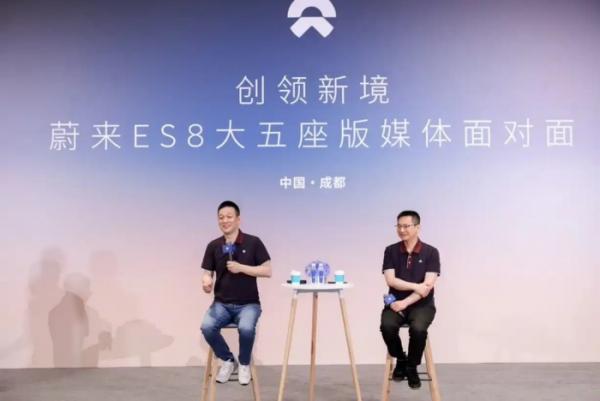
"The technological trajectory is unmistakably converging towards pure electric vehicles. Persisting in denying this, I believe, is akin to burying one's head in the sand," Li Bin stated during a media briefing following the launch of the NIO ES8 large five-seater model.
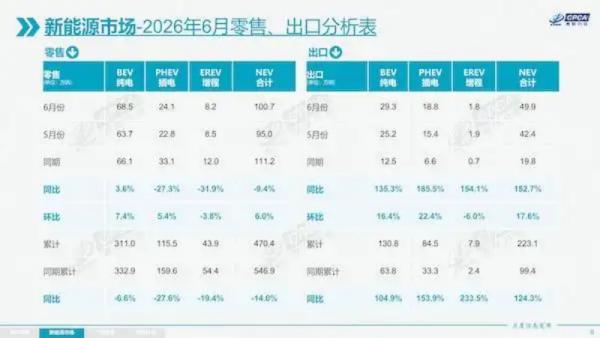
Li Bin's assertion is not baseless but is grounded in data from the China Passenger Car Association (CPCA) for June of this year. In June, retail sales of pure electric vehicles (BEVs) soared to 685,000 units, marking a 3.6% year-on-year increase. This made BEVs the sole category among the three major technological routes to achieve positive year-on-year growth. In contrast, retail sales of plug-in hybrid vehicles (PHEVs) declined by 27.3% year-on-year to 241,000 units, while extended-range electric vehicles (EREVs) experienced a significant 31.9% year-on-year drop, selling 82,000 units.
Over a more extended period, from January to May this year, cumulative wholesale volumes of extended-range models declined by 9.7% year-on-year, with their market share shrinking from 10.3% to 7%. In May, pure electric vehicles accounted for 67.1% of NEV sales, surpassing fuel vehicles in penetration rate for the first time and becoming the dominant powertrain category.
Li Bin also referenced Norway as a benchmark—where the NEV penetration rate has reached 98%, with 98% of those being pure electric, translating to a pure electric penetration rate of approximately 96%. Based on this, he predicts that by 2030, the NEV penetration rate in China's new car market will exceed 90%, with pure electric vehicles accounting for over 90% of NEV sales.
In my opinion, Li Bin's recent remarks carry some weight for a straightforward reason: the data trend is unequivocal. Amidst overall market pressure (passenger vehicle retail sales fell by 23.2% year-on-year in June), pure electric vehicles are the only powertrain type to achieve positive growth, signaling a shift in consumer preferences towards pure electric. NIO, as a participant in this trend, is both a driver and a beneficiary.
On one hand, infrastructure is rapidly improving. As of May this year, the total number of charging infrastructure facilities in China reached 22.497 million, up 44.9% year-on-year. Charging stations in highway service areas boast over 98% coverage, and 800V high-voltage platforms and ultra-fast charging technologies have been widely adopted, systematically alleviating range anxiety for pure electric vehicles. On the other hand, NIO's battery swap model offers a differentiated advantage, with 3,959 battery swap stations built, enabling a swap to be completed in 3 minutes, directly competing with the refueling experience in terms of efficiency.
However, Li Bin's remarks should also be approached with caution and not taken at face value. I summarize four reasons for this:
① Perspective is influenced by stance: NIO is a pure electric vehicle-only automaker, and Li Bin's judgment naturally reflects his strategic stance. As he said, "We only do pure electric; there are no gaps to fill," implying that pure electric route companies do not need to manage two sets of systems like extended-range/plug-in hybrid companies.
② Single-month data can be misleading: June is a mid-year sales push period, and strategies vary among automakers. Single-month data may not fully capture long-term trends.
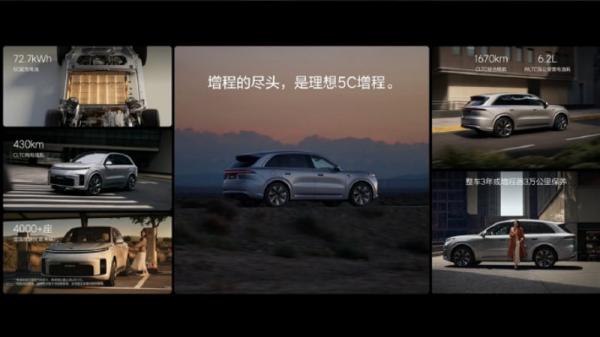
③ There remains a genuine demand for extended-range vehicles: In large SUVs, MPVs, and regions with inadequate charging infrastructure, extended-range vehicles still offer clear user value. Li Auto's proposed 5C extended-range approach (daily electric use, long-distance fuel use) aims to elevate extended-range from a transitional solution to a long-term one.
④ Cost paradox: Extended-range vehicles incorporate three systems—large batteries, ultra-fast charging, and range extenders—which involve trade-offs in weight, space, and price. While battery costs continue to decline and ultra-fast charging networks expand rapidly, the competitive edge of extended-range vehicles will indeed be eroded, but this process takes time.
In reality, Li Bin's "burying one's head in the sand" argument is essentially an industry judgment based on data, not an emotional outburst. From a trend perspective, pure electric is indeed accelerating towards dominance, which is an indisputable fact, but market stratification is being overlooked. It's crucial to recognize that automakers adopting extended-range technology are not denying the pure electric trend but are making differentiated market layouts:
Li Auto and Seres rely on extended-range technology to capture the family SUV market, a pragmatic business decision that does not imply blindness to the long-term pure electric endgame—it's about balancing short-term sales. Most extended-range brands are also developing pure electric models, pursuing a dual-track strategy rather than resisting pure electric.
To be candid, trends do not equate to a predetermined outcome. Extended-range and plug-in hybrids still hold irreplaceable value in specific scenarios, and no one can definitively say how long the transitional period will last. A more accurate statement might be: Pure electric is the long-term direction, but a transitional period with multiple powertrains coexisting will persist for quite some time.
For consumers, the choice of powertrain ultimately hinges on their actual usage scenarios, not the predictions of any entrepreneur. In short, while Li Bin's "burying one's head in the sand" argument holds merit in terms of medium-to-long-term industry logic, his short-term market judgment is overly absolute, and at least Li Xiang and other Li Auto executives certainly disagree.
Not long ago, at the launch of the all-new Li Auto L8, Liu Jie, President of Li Auto's product line, publicly refuted the industry's mainstream view that "extended-range is just a transition; the endgame is pure electric," proposing the core viewpoint: The endgame for extended-range is Li Auto's 5C extended-range, directly challenging competitors' sales rhetoric that "the endgame for extended-range is pure electric."
For the new energy vehicle industry, the pure electric and extended-range technology routes will coexist for an extended period, with no clear winner eliminating the other. What's your take?
-
![]()
Li Bin Claims, 'Denying the Pure EV Trend is Like Ostrichism.' What's Li Xiang's Take?
-
Lenovo: Liu Jun Turns Left, Yang Yuanqing Turns Right
-
Lenovo: Liu Jun Goes Left, Yang Yuanqing Goes Right
-
![]()
MiniMax Shares Unlock: Cornerstone Shareholders Show Long-Term Optimism, Yet Stock Plummets Nearly 30% in Two Days; Zhipu Also Sees Nearly 20% Drop Today
-
![]()
Single-Day Plunge of 40%: The 'First AGI Stock' Faces More Than Just Share Price Concerns
-
![]()
Ricoh and Fuji Hike Prices on Legacy Edge; Insta360 Poised to Disrupt Mirrorless Camera Market
-
![]()
Ricoh and Fujifilm Raise Prices in Tandem, Relying on Established Reputations; Insta360 Poised to Disrupt Mirrorless Camera Market
-
![]()
Strategic Shift in Photoelectric Sensing: Maxvision Secures Controlling Stake in CAS Optotech