China’s AI Computing Power: Embracing a New Organizational Paradigm
 07/10 2026
 368
368
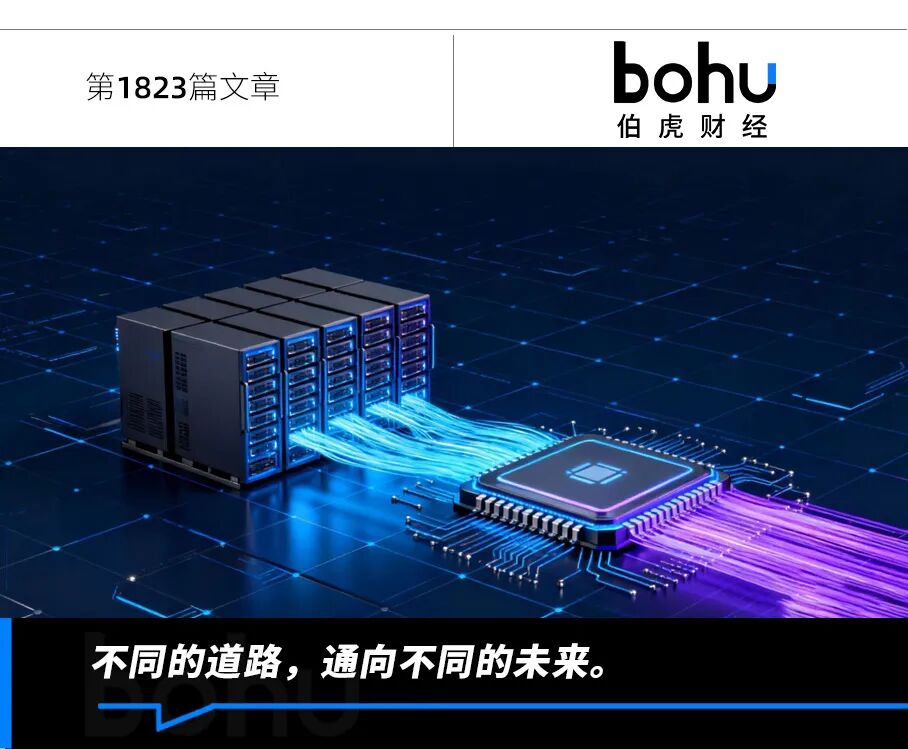
Over the past year, a recurring theme has dominated global tech headlines: a company is constructing another massive cluster with tens of thousands of cards, setting a new benchmark in investment. The figures continue to escalate, to the point where their sheer magnitude becomes abstract. Hundreds of thousands, even millions, of cards, and investments reaching into the hundreds of billions of dollars, undoubtedly signify strength. Yet, amidst this relentless surge of ever-larger numbers, the truly pertinent question may not be “who builds the biggest,” but rather, a more fundamental inquiry: Who ultimately controls this computing power, and who gets to harness it?
Centred around this question, the world is gravitating towards two distinct organizational models.
The First Approach: Computing Power as a Competitive Moat
Tech behemoths leverage substantial capital to construct their own clusters, which they build, utilize, and safeguard independently. The larger the cluster, the more robust the model capabilities, the higher the commercial returns, and the more confident the subsequent round of investment becomes. Once this cycle commences, it becomes increasingly challenging for newcomers to catch up. In this model, computing power transcends being a mere resource; it becomes a threshold, one of its key values being to keep others at bay.
This rationale is straightforward and undeniably effective. Major corporations possess the capital, data, and engineering teams to concentrate computing power for their models and products, often achieving high efficiency. However, the cost is evident: computing power becomes further concentrated among a select few, leaving universities, research institutions, small and medium-sized teams, and developers constrained by the interfaces, pricing, and rules dictated by these giants.
This is not merely a moral dilemma. Commercial entities naturally seek to transform scarce resources into competitive advantages. The real issue arises when computing power increasingly mirrors the infrastructure of the AI era; if organized solely through private means, the entry barrier for innovation will continue to rise.
The Second Approach: Organizing Computing Power into a Public Network
This approach shifts the focus from ownership of individual clusters to whether these clusters can be interconnected, scheduled, and utilized by a broader user base. China’s National Supercomputing Internet is pioneering this path. With over 3.5 million CPU cores, 250,000 GPU cards, and 1.4 million registered users, these figures, when viewed individually, denote scale; collectively, they represent a novel resource organization method. Computing power is no longer confined to being a fixed asset on an institution’s balance sheet but begins to morph into a public capability that can be mobilized and utilized.
History has witnessed similar transformations. In the 1950s, it was not the construction of a single, larger cargo ship that revolutionized global trade but the standardization of containers. By packing goods into uniformly sized boxes, they could seamlessly transition between ships, trains, and trucks. The ships and ports remained unchanged, but the organizational shift altered the cost structure of global trade.
The supercomputing internet’s endeavor resembles the “containerization” of computing power. Scientific computing, model training, and inference services traditionally operated on disparate systems with separate interfaces, rules, and queues. The current challenge is to enable these tasks to flow across a unified network. What truly transforms the landscape may not be the expansion of a single point but the interconnection of these points.
Viewed through this lens, the significance of the Sugon 8000 becomes more apparent.
As China’s inaugural fully domestically produced AI supercluster with 100,000 cards, the Sugon 8000 is undeniably an engineering marvel. Its scale and newsworthiness are undeniable. Yet, engineering feats alone do not constitute the most enduring narrative. Records will be broken, and parameters will inevitably be surpassed by subsequent entrants.

What holds greater importance is the trajectory it has embarked upon.
If it were a private cluster, it would typically cater to a single master, a set of business objectives, and a core task. The objective would be unambiguous: to expedite model training, accelerate iteration, and enhance commercialization.
However, as a 100,000-card AI supercluster linked to the core nodes of the National Supercomputing Internet, it confronts a different set of challenges. It must serve not just a singular model but also scientific computing, model training, inference services, and industry applications. Scientific computing demands high precision, model training requires substantial throughput, and inference services necessitate low latency. The needs of diverse tasks vary and occasionally even clash.
This is the quintessential question that “superintelligence integration” must address.
It is not a concept suited for posters but a tangible systems challenge: Can scientific and AI computing be harmonized on the same foundation? Can different task types no longer operate in isolation? Can large-scale computing power evolve into a stable, mobilizable service?
What the Sugon 8000 must demonstrate is not merely whether a domestically produced 100,000-card cluster can be constructed—that question has already been answered. The more arduous task lies ahead: Can computing power organized through a public route match the efficiency of private routes? Under the real-world pressures of multiple users, tasks, and scenarios, can it operate stably, be dispatched effectively, and be utilized widely?
This answer will not emerge at a press conference. The true metric may be one rarely discussed publicly: social computing utilization rate. It is not about the peak performance of a single cluster but how much of a country’s advanced computing power is genuinely utilized by research and industry. It is not about the quantity of resources housed in data centers but whether these resources ultimately translate into tangible outcomes: papers, models, simulation results, industrial applications, and enterprise services.
The private model can achieve high efficiency at a single point but inherently creates barriers. The public model faces the opposite challenge: access is facile, but usability is arduous; connectivity is straightforward, but scheduling is intricate; constructing a system is uncomplicated, but sustaining long-term stable operations is demanding.
Bringing 100,000 cards online is merely the commencement. The real challenges lie ahead: how to schedule under mixed workloads, whether long-term operations remain stable, how to allocate resources among diverse users, and whether service quality diminishes as user scale expands.
Thus, the Sugon 8000 is not just a colossal machine—it is a stress test for China’s public computing route.

To be candid, the public computing route is more arduous to pursue.
The private model’s logic is much simpler: invest capital, set clear objectives, and serve oneself. As long as commercial returns are substantial, continued expansion is a rational choice.
The public model is far more intricate. It necessitates standards, collaboration, software and hardware ecosystem adaptation, and long-term operational patience. Its outcomes may not manifest in a single, impressive announcement. Often, they materialize in less conspicuous changes: shorter task queues, more experiments conducted by research teams, reduced costs for enterprises to validate models, and enhanced access for developers to large-scale computing environments that were once difficult to reach.
Conversely, if this path falters, it may not result in an immediate, high-profile collapse. More likely, the system will be constructed but underutilized; resources will be connected but poorly dispatched; the platform will exist but be deemed unusable by users. Ultimately, it will quietly reflect on a balance sheet: high investment, insufficient output.
This is the true litmus test of the public computing route. Connecting computing power into a network does not guarantee its automatic flow. Constructing a 100,000-card cluster does not ensure that research and industry will immediately reap the benefits. Between these milestones lie scheduling systems, software ecosystems, task adaptation, pricing mechanisms, data security, and operational capabilities.
But if this path succeeds, the changes it brings will be more profound than any single model.
The barriers to innovation will be redefined. A laboratory, a startup, or a developer will no longer need to own a data center to compete in AI and scientific intelligence. They can mobilize computing power by task, allocating more resources and energy towards solving problems themselves rather than on the infrastructure required merely to enter the fray.
When containers first emerged, few heralded them as revolutionary beyond being mere iron boxes. Their true value became apparent only years later, as global trade costs plummeted, goods flowed more swiftly from port to port, and the world economy reconnected.
Computing power has now reached a similar juncture.
One hundred thousand cards undoubtedly matter. But what matters more is how they are organized. They could become an insurmountable wall for a select few or a network accessible to many for innovation. They could remain a narrative of scale confined to data centers or transform into capabilities genuinely usable by research, industry, and developers.
The era of computing power has only just begun.
The copyright of the article's cover image and accompanying pictures belongs to their respective owners. If the copyright holders believe their works are unsuitable for public browsing or should not be used without compensation, please contact us promptly, and our platform will make immediate corrections.
-
![]()
Li Bin Claims, 'Denying the Pure EV Trend is Like Ostrichism.' What's Li Xiang's Take?
-
Lenovo: Liu Jun Turns Left, Yang Yuanqing Turns Right
-
Lenovo: Liu Jun Goes Left, Yang Yuanqing Goes Right
-
![]()
MiniMax Shares Unlock: Cornerstone Shareholders Show Long-Term Optimism, Yet Stock Plummets Nearly 30% in Two Days; Zhipu Also Sees Nearly 20% Drop Today
-
![]()
Single-Day Plunge of 40%: The 'First AGI Stock' Faces More Than Just Share Price Concerns
-
![]()
Ricoh and Fuji Hike Prices on Legacy Edge; Insta360 Poised to Disrupt Mirrorless Camera Market
-
![]()
Ricoh and Fujifilm Raise Prices in Tandem, Relying on Established Reputations; Insta360 Poised to Disrupt Mirrorless Camera Market
-
![]()
Strategic Shift in Photoelectric Sensing: Maxvision Secures Controlling Stake in CAS Optotech