From Profit to Loss: What's Wrong with the 'Rising Star' of Computing Power on BSE?
 04/09 2026
 597
597
Summary: Revenue soars by 70%, but non-GAAP net profit turns negative.
Source: Chaoyang Capital Theory

If one looks solely at revenue figures, Parallella Technology (920493) may seem to be experiencing its heyday.
On November 1, 2023, Parallella Technology made its debut on the Beijing Stock Exchange (BSE) with an issue price of RMB 29 per share. The stock opened at RMB 60.07 and closed at RMB 44 on the first day, valuing the company at RMB 2.496 billion.
At the time, the company was still incurring losses, making it the first non-biotech loss-making company to list on the BSE—a status that sparked considerable controversy over its IPO.
Few anticipated that two years later, the company would emerge as one of the most aggressive players in the AI computing power boom.
The 2025 annual report revealed that Parallella Technology's revenue soared to RMB 1.11 billion, up nearly 70% year-on-year, with a four-year compound annual growth rate (CAGR) approaching 50%.
In 2025, a year marked by explosive demand for computing power, this 'rising star' on the BSE indeed capitalized on the trend.
However, its profit statement told a less favorable story.
Financial results showed that Parallella Technology's net profit attributable to shareholders increased by just 1.34% year-on-year in 2025, while its non-GAAP net profit swung from profit to loss, recording a deficit of RMB 74,600.
From a secondary market perspective, capital remains optimistic.
Following the release of the performance correction announcement, Parallella Technology's stock price did not plummet significantly; instead, it consolidated at elevated levels.
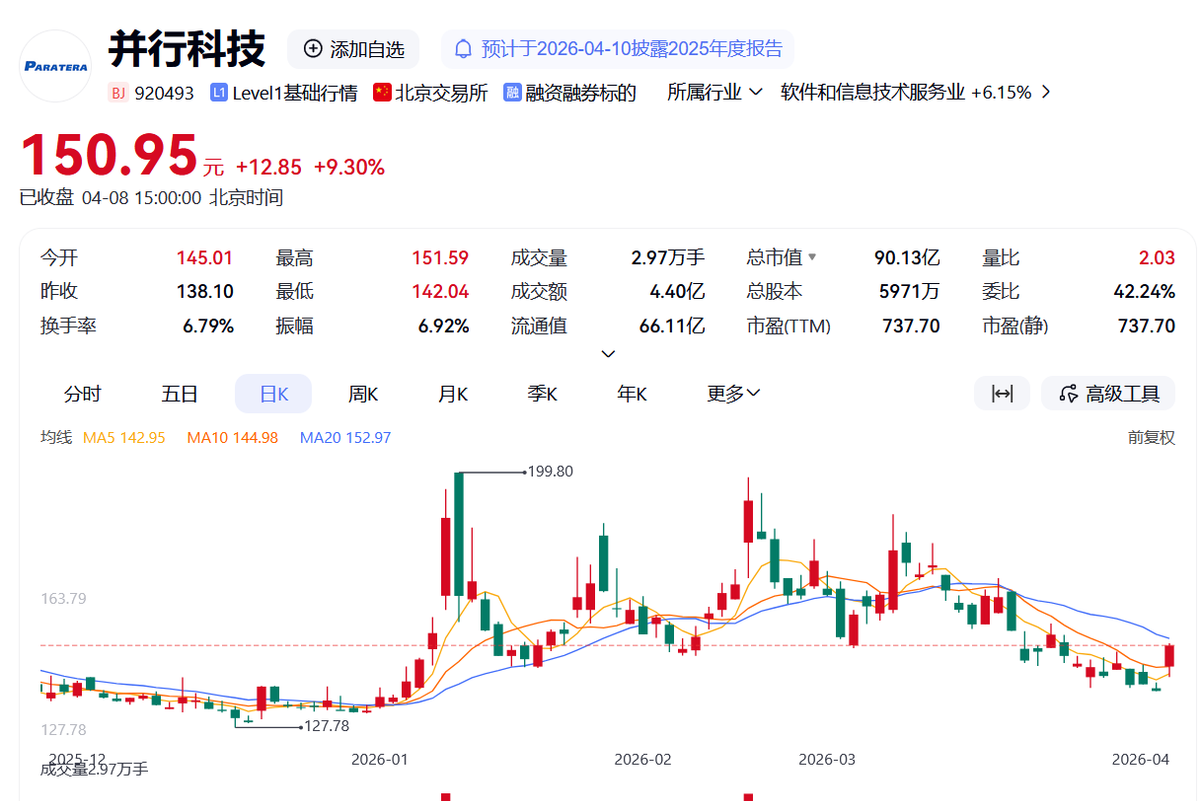
In 2025, Parallella Technology was both a beneficiary of the AI computing power boom and a quintessential example of the 'burn cash for growth' model driven by heavy-asset expansion.
The profit stagnation amid soaring revenue is not the end of the story but rather the starting point for understanding the computing power business.
The Real Ledger of the Computing Power 'Water Seller': Revenue Surges, Profits Lag
A review of Parallella Technology's data over the past few years leaves the impression that it is 'moving too fast.'
Revenue jumped from RMB 220 million in 2021 to RMB 1.11 billion in 2025, with a four-year CAGR nearing 50%.
During this period, the company underwent a strategic transformation.
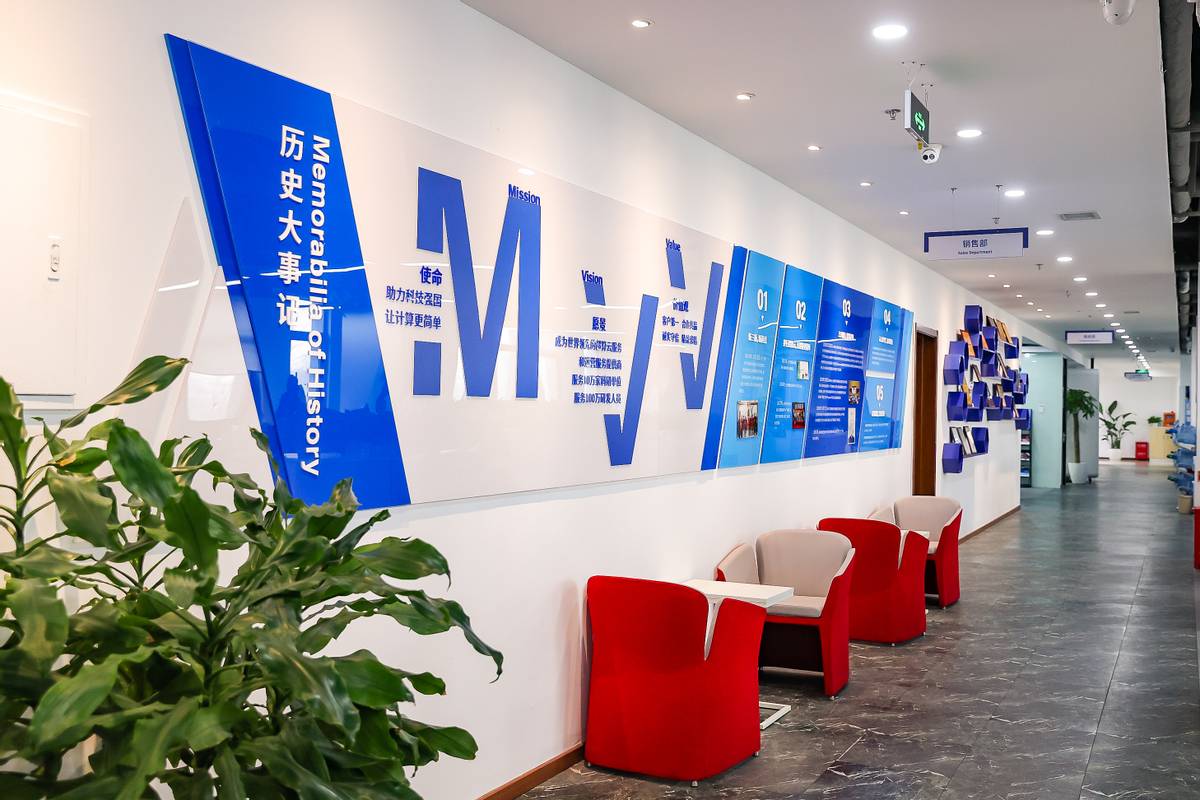
Before 2023, the company functioned more like a 'computing power broker,' relying on self-developed scheduling software to integrate idle resources from national supercomputing centers and third-party IDCs, serving scientific research and industrial users.
However, the advent of generative AI disrupted the rules of the game—merely aggregating resources was no longer sufficient.
After listing in 2023, Parallella Technology aggressively pursued a hybrid computing power model combining 'self-owned + outsourced + co-constructed' resources. It invested heavily in building its own intelligent computing bases and procuring GPU servers, transitioning from a scientific research service provider to an AI computing power infrastructure provider.
By the first half of 2025, revenue from intelligent computing cloud services had reached RMB 265 million, up 175% year-on-year, accounting for nearly 60% of total computing power service revenue and completely replacing traditional supercomputing cloud services as the core growth engine.
The timing of this transformation was impeccable.
IDC data showed that China's AI IaaS market reached RMB 19.87 billion in the first half of 2025, up 122.4% year-on-year, with generative AI IaaS surging by 219.3%. Computing power had become the scarcest and most valuable commodity in the AI supply chain.
Yet, the challenge lay in the difficulty of being a 'water seller.' Computing power infrastructure is a typical 'high-investment, high-depreciation' industry.
Parallella Technology's heavy-asset expansion path triggered drastic changes in its cost structure.
In 2025, the company's operating costs surged to RMB 841 million from RMB 439 million in the same period last year, a 91.38% increase that far outpaced the 69.56% revenue growth. The direct consequence was a decline in gross margin from 32.87% to 24.23%, with the gross margin of core computing power services plummeting by more than 10 percentage points.
The pain of 'digesting' heavy assets is evident in the balance sheet. By the end of 2025, Parallella Technology's total assets had climbed to RMB 2.221 billion, but total liabilities had ballooned to RMB 1.762 billion, resulting in a debt-to-asset ratio of 79.3%. Fixed assets increased by 23.6% year-on-year, while construction in progress skyrocketed by 209%. This debt-to-asset ratio is not uncommon in the computing power industry—third-party service providers such as UCloud, QingCloud, and Tongniu Information generally hover between 70%-90%—but it underscores that the company is in the most challenging phase of 'burning cash to expand capacity.'
The most intriguing development was the 'performance reversal.'
On March 31, Parallella Technology issued a performance correction announcement, revising its net profit attributable to shareholders downward from RMB 21.8112 million to RMB 12.218 million, while its non-GAAP net profit swung from a profit of RMB 9.5186 million to a loss of RMB 74,600.
The company attributed the changes to two accounting errors: misclassification of equity incentive income tax expenses and failure to allocate costs of certain outsourced contracts on an accrual basis.
However, regardless of accounting adjustments, the core contradiction remains: revenue surged by 70%, yet profits barely grew.
Net cash from operating activities reached RMB 245 million, up 100.46% year-on-year—a positive sign. Yet, net cash used in investing activities amounted to RMB -531 million, more than double the operating cash flow.
In other words, the cash generated by the company lagged far behind its cash-burning pace.
Parallella Technology is not unwilling to turn a profit; rather, it cannot yet do so. The company may currently be in a critical window of 'trading cash flow for market share.'
The Trapped Computing Power 'Middleman'
The fundamental issue facing Parallella Technology is its unfavorable competitive position within the industry.
The upstream players in the computing power industry are chip manufacturers (NVIDIA, Huawei Ascend, etc.) and computing power infrastructure providers (China's three major telecom operators, Sugon, etc.), while the downstream consists of large AI model companies and internet giants.
As a third-party aggregator, Parallella Technology is sandwiched in the middle, lacking exclusive control over upstream resources and lacking downstream application ecosystem stickiness. Its profit margins are squeezed on both ends.
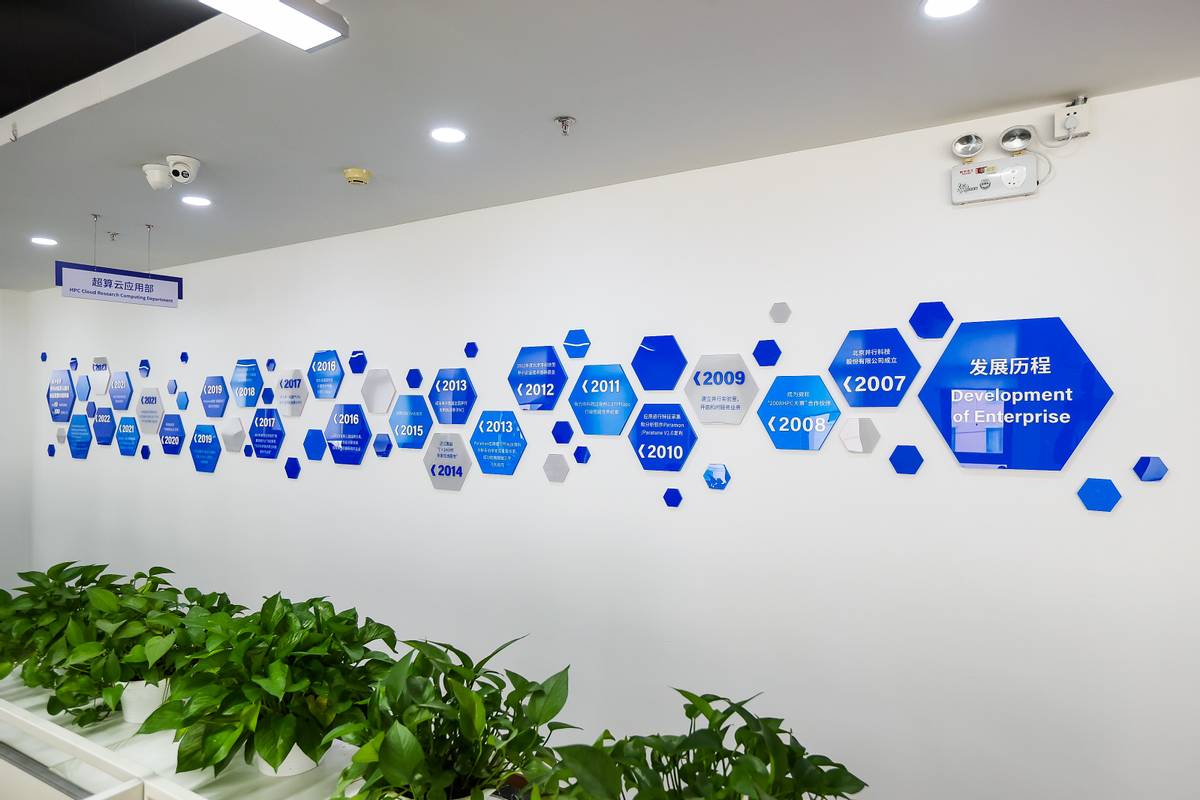
Consider the layout (strategic layout ) of the 'national team.'
The three major telecom operators control nationwide IDC data centers, backbone networks, and key nodes in the 'East Data, West Computing' initiative, making them the dominant forces in computing power infrastructure. Leading cloud providers such as Alibaba Cloud, Huawei Cloud, and Tencent Cloud not only operate large-scale computing power pools but also Firmly bound (firmly bind) government and enterprise (government and enterprise) large customers through ecosystem entry points.
A significant portion of Parallella Technology's computing power services comes from 'outsourcing'—procuring computing power from third-party supercomputing centers and cloud providers for resale—meaning its gross margins are inherently constrained.
This dilemma is not unique to Parallella Technology. Across the third-party independent cloud services sector, players are struggling with losses.
UCloud reported RMB 1.7 billion in revenue in 2025 but incurred a net loss of RMB 76.6832 million attributable to shareholders. While this marked a 68% reduction in losses year-on-year, profitability remains elusive. Tongniu Information, burdened by heavy-asset IDC investments, faces immense input-output pressure; QingCloud Technology, despite strong technical capabilities, has struggled to scale revenue.
By comparison, Parallella Technology's nearly 70% revenue growth places it among the top performers in the sector.
However, 'running fast' does not equate to 'running sustainably.' The nature of the computing power business dictates that third-party aggregators will find it difficult to secure excess profit (excess profits).
Computing power is a standardized commodity; users care only about 'price, quantity, and speed,' not the origin or scheduling of the resources. Once computing power becomes abundant, price wars will become the norm.
Indeed, this is already happening.
In 2025, the AI computing power market experienced a sharp reversal from 'price wars' to 'price hikes.'
In the first half of the year, Alibaba Cloud led a 60% price cut, prompting other major players to follow suit. By early 2026, however, the market shifted abruptly, with Tencent Cloud, Alibaba Cloud, and Baidu Cloud collectively raising prices within 10 days by 30%-50%. The reason was simple: computing power supply was insufficient.
China's daily Token calls surged from 100 billion in early 2024 to 140 trillion in March 2026, a thousandfold increase over two years and a 40% rise in just three months.
For third-party service providers like Parallella Technology, which rely heavily on outsourced computing power, price hikes are a double-edged sword. While they can adjust prices upward with the market, their outsourcing costs rise simultaneously, leaving profit margins largely unchanged.
The Ambitions and Risks of the Token Factory
Faced with profitability challenges and pressure from tech giants, Parallella Technology has charted its own course: transitioning from a computing power lessor to a 'Token factory.'
In the second half of 2025, the company launched a MaaS (Model as a Service) platform built on its 'Parallella Computing Network,' aiming to enable users to obtain results via API calls without concerning themselves with the origin or scheduling of computing power. The platform currently connects 62 computing centers (including 47 intelligent computing centers and 15 supercomputing centers), can schedule 2 million CPU cores and over 50,000 GPU cards, and integrates nearly 90 mainstream large models.
This direction is logically sound.
The AI industry is shifting from 'training-driven' to 'inference- and service-dominated.'
IDC data shows that in the first half of 2025, inference scenarios accounted for 42% of the generative AI IaaS market, with inference computing power projected to comprise nearly 80% of China's AI IaaS market by 2029. As inference becomes mainstream, 'usability' of computing power matters more than 'availability'—precisely where scheduling optimization and MaaS platforms add value.
Parallella Technology has recognized this trend. The company established a physical entity in Wuhan focused on MaaS and computing power operations. Chairman Chen Jian publicly stated that AI agent users ultimately consume Tokens generated by computing power, not computing power itself. The shift from 'leasing computing power' to 'selling Tokens' represents a correct upgrade in business model.
Yet, the risks are equally apparent. MaaS is not a 'unique' track ( track , track/field). Alibaba Cloud's BaiLian Platform, Tencent Cloud's TI Platform, and Baidu Intelligent Cloud's QianFan Platform are all pursuing the same strategy, armed with richer model ecosystems, larger customer bases, and deeper pockets.
As an independent third party, Parallella Technology is at a natural disadvantage in ecosystem integration. Giants can lock in customers through bundled sales of 'models + computing power + platforms,' while Parallella Technology must compete solely on scheduling efficiency and cost-effectiveness.
Meanwhile, shareholder activities warrant attention.
From December 2025 to February 2026, two major shareholders offloaded RMB 163 million worth of shares. Despite this, the stock price remained resilient, creating an intriguing contradiction.
The 'golden age' of the computing power industry has indeed arrived.
In March 2026, China's daily Token calls exceeded 140 trillion, with the explosion of intelligent agent applications driving computing power demand to new heights.
Parallella Technology has positioned itself correctly, but its ability to achieve profitability hinges on two factors: whether scheduling efficiency can translate into sustainable profit margins, and whether its role in China's domestic computing power ecosystem can evolve from 'participant' to 'indispensable player.'
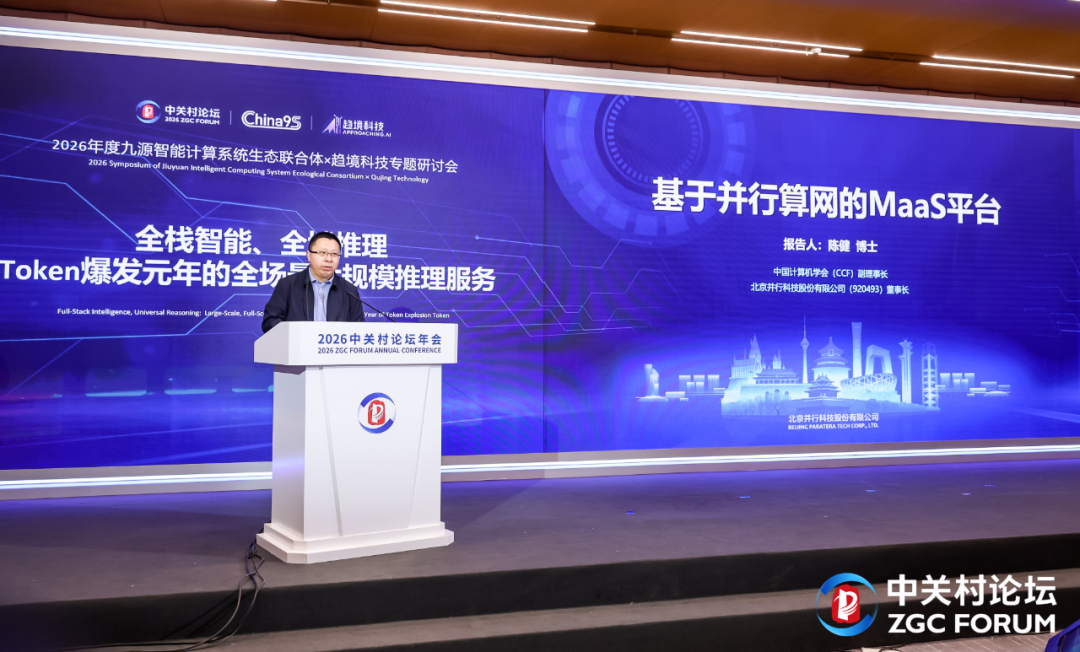
Chairman Chen Jian has publicly stated that the company's low net asset total has contributed to its high debt-to-asset ratio, necessitating broader financing channels.
This comment highlights the core dilemma: Parallella Technology lacks neither orders nor direction—it lacks time. Surviving long enough to transition from 'burning cash' to 'generating cash' is the battle it must win.
If the Token factory model succeeds, Parallella Technology could become the indispensable 'scheduling hub' of AI infrastructure. If not, it may remain stuck in the 'resource-selling' phase, struggling to secure reasonable profit margins amid the ecosystem barriers erected by tech giants.
The era of AI computing power hypergrowth has presented Parallella Technology with an unprecedented opportunity—and an equally unforgiving test.
-
Alibaba’s Earnings Soar with Triple Catalysts: Full-Stack AI Hits Maturity, Capital Efficiency Drives Sustainable Growth
-
![]()
Raking in Big Profits Overseas! Chery’s Overseas Revenue Makes Up 70% in H1, with Gross Margin Climbing to 16.1%
-
![]()
Alibaba’s New Fiscal Quarter: 45% Revenue Surge in Alibaba Cloud, Enhanced Profitability in AI Cloud, but Widening Losses in the Application Layer
-
![]()
The AI Version of 'PayPal Mafia' Has Arrived: 20 AI Startups Raise Over $4.6 Billion in Funding
-
![]()
Wang Jian's Vision: Paving a Pathway for Alibaba Through AI
-
![]()
Hyundai Motor Workers Strike Today, Fearing Job Losses to Robots
-
![]()
Embracing 'Light': O-film Unveils Its 'Illuminating the Future' Strategy
-
![]()
SenseTime’s SenseNova U1.5 Lite Goes Open Source: Ushering in a New Era of Predictable AI Image Generation