Alibaba Prohibits All Anthropic Products: A Rational Risk-Control Measure, Not Conservative Exclusion
 07/06 2026
 568
568
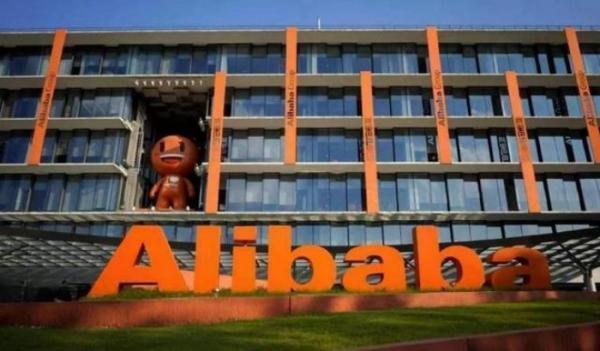
Yesterday, Alibaba issued an internal memo stating that, starting from July 10, all employees are required to uninstall and cease using all Anthropic products, including Claude Code and the Claude web portal. These products will be completely blocked on office networks and devices and uniformly replaced with Alibaba's self-developed coding tool, Qoder (formerly Tongyi Lingma).
The direct catalyst for Alibaba's complete ban on Anthropic products for internal use is the controversy surrounding backdoors. Recently, developers conducting reverse engineering discovered that Claude Code, starting from version 2.1.91 (released in April this year), incorporates a covert user detection mechanism, which includes the following:
① Stealthy Identity Recognition: The tool reads the user's computer system timezone (e.g., Asia/Shanghai) and checks if the proxy address contains keywords associated with Chinese companies such as Alibaba, ByteDance, and Baidu.
② Steganographic Marking: It replaces punctuation marks in system prompts with invisible Unicode characters (e.g., substituting apostrophes with right single quotation marks or modifier letter apostrophes), corresponding to different statuses such as "hit Chinese domain" and "associated with a Chinese AI lab."
③ Covert Transmission: These tampered prompts are sent to Anthropic's servers with each normal request. The core logic is encrypted and obfuscated, and there is no mention of it in the version update logs.
Members of the Claude Code team later acknowledged that this was an experiment initiated in March of this year, aimed at preventing unauthorized resale and model distillation practices. However, it failed to alleviate concerns from Chinese companies like Alibaba. Meanwhile, deeper contradictions have surfaced. Not long ago, Anthropic submitted a letter to the U.S. Senate, accusing Alibaba of using approximately 25,000 fake accounts to engage in over 28 million conversations with Claude. They characterized this as an "industrial-scale model distillation attack" and escalated it to the level of national security.
Previously, Anthropic had accused DeepSeek, Yuezhi Anmian, and MiniMax using almost identical language. But it doesn't end there. From the outset, Anthropic's service terms excluded mainland China from its supported regions. Last September, it further announced a ban on Chinese-controlled enterprises using its services. Additionally, since this year, Anthropic has conducted multiple rounds of account suspensions on Claude, with a large number of Chinese users being disabled without warning. Accounts found to be in violation were not refunded, and the success rate of appeals was extremely low.
Clearly, Anthropic's series of problematic operations have not only breached corporate data trust and security底线 (bottom lines) but also completely shattered business trust. Alibaba's ban on all Anthropic products is both inevitable and a wise move. I summarize that this incident can be viewed from the following four perspectives:
From a security perspective, trust has been eroded. For a programming tool with file system and Shell execution permissions, conducting identity marking and information transmission without the user's knowledge constitutes a severe trust crisis. As industry insiders have noted, "You open up your entire code repository, development environment, and internal logic to it, yet it secretly wonders who you are." Therefore, Alibaba's inclusion of it on the high-risk software list is a reasonable risk-control decision.
From a geopolitical perspective, the Sino-U.S. AI rivalry has descended to the tool level. This is not merely a choice of technical tools but also a symbolic event marking the further intensification of Sino-U.S. AI competition, extending from the model and application layers to the underlying development tool domain. Forrester Vice President Dai Kun pointed out that this will accelerate the adoption of domestic AI coding tools in large enterprises and promote the formation of a more independent model and development tool ecosystem.
From an industrial strategy perspective, the window for domestic substitution is accelerating. While banning Claude Code, Alibaba promotes its self-developed Qoder, supported by clear commercial logic:
① Coding is the most crucial direction for cloud vendors: Alibaba Cloud executive Liu Weiguang once stated bluntly, "Coding is our most crucial direction; it's almost for everything. AI coding can fully capture the internal software development budgets that traditional cloud computing cannot reach."
② Qoder already has a scalable foundation: As of May this year, Qoder has over 5 million global users and has achieved end-to-end autonomous development from requirement analysis to code deployment, with significant potential for future development.
③ Domestic tools are rapidly catching up in capabilities: Basic code completion, bug fixing, and regular project development capabilities have reached international standards. Although there is still a gap in high-end complex engineering capabilities, the gap is narrowing.
From a developer ecosystem perspective, there will be short-term pain but long-term benefits. In the short term, a large number of Alibaba programmers reliant on Claude Code will need to migrate their toolchains, potentially facing decreased efficiency. However, the long-term prospects are bright. This incident may mark the beginning of a wave of risk-control rectifications for overseas AI tools among domestic enterprises, forcing accelerated iteration of domestic AI programming tools and fostering a healthier local ecosystem. Over time, enterprise-level AI R&D systems will shift from unconstrained use of overseas tools to secure, autonomous, and controllable ecosystems.
Overall, Alibaba's ban on all Anthropic products is not an isolated event, nor is it conservative exclusion. Instead, it is an inevitable result of the superposition of three factors: the collapse of security trust, the intensification of the Sino-U.S. AI rivalry, and the rise of domestic tools—a rational risk-control decision under multiple factors. It signals the potential end of an era where domestic giants could freely use overseas AI coding products and foreshadows a shift in AI R&D competition from traffic application levels to hardcore strength competition in security, autonomy, and controllable ecosystems.
-
![]()
Alibaba's AI Offensive: Over Half of Investment Allocated, Time to Reap Returns
-
![]()
Alibaba’s AI Push: Over Half of Investments Made, Time to Harvest Returns
-
![]()
Chinese Enterprises Going Global 3.0: From World Factory to AI Infrastructure Builder
-
![]()
Honor RobotPhone Review: Half Movie Camera, Half Robot
-
![]()
AI-Driven Cheating Surges in Universities! Online Exams Reduced to Mere Formalities, Degree Credibility on the Line
-
Insta360’s Decade in Panoramic Imaging: Making Cameras ‘Invisible’ and Returning Creation to the Masses
-
![]()
Foreign Media Claims Apple is Concentrating Resources on AI Development: Vision Pro and Siri Teams Lay Off 200 People
-
Big News! Huaneng and Huawei Hold Talks in Shenzhen with Ren Zhengfei in Attendance; Huawei Emerging as the 'Second Brain' of China's Energy System